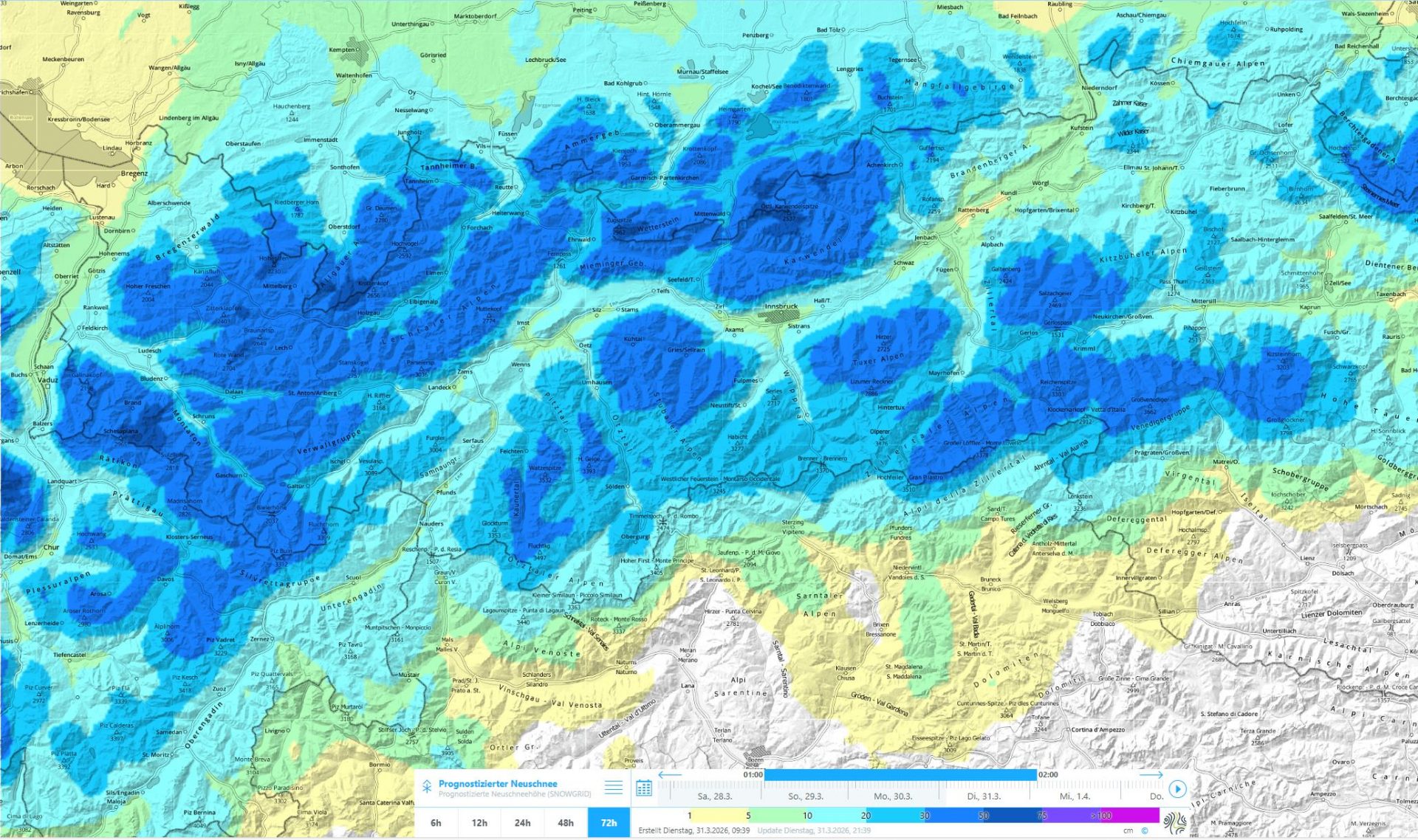
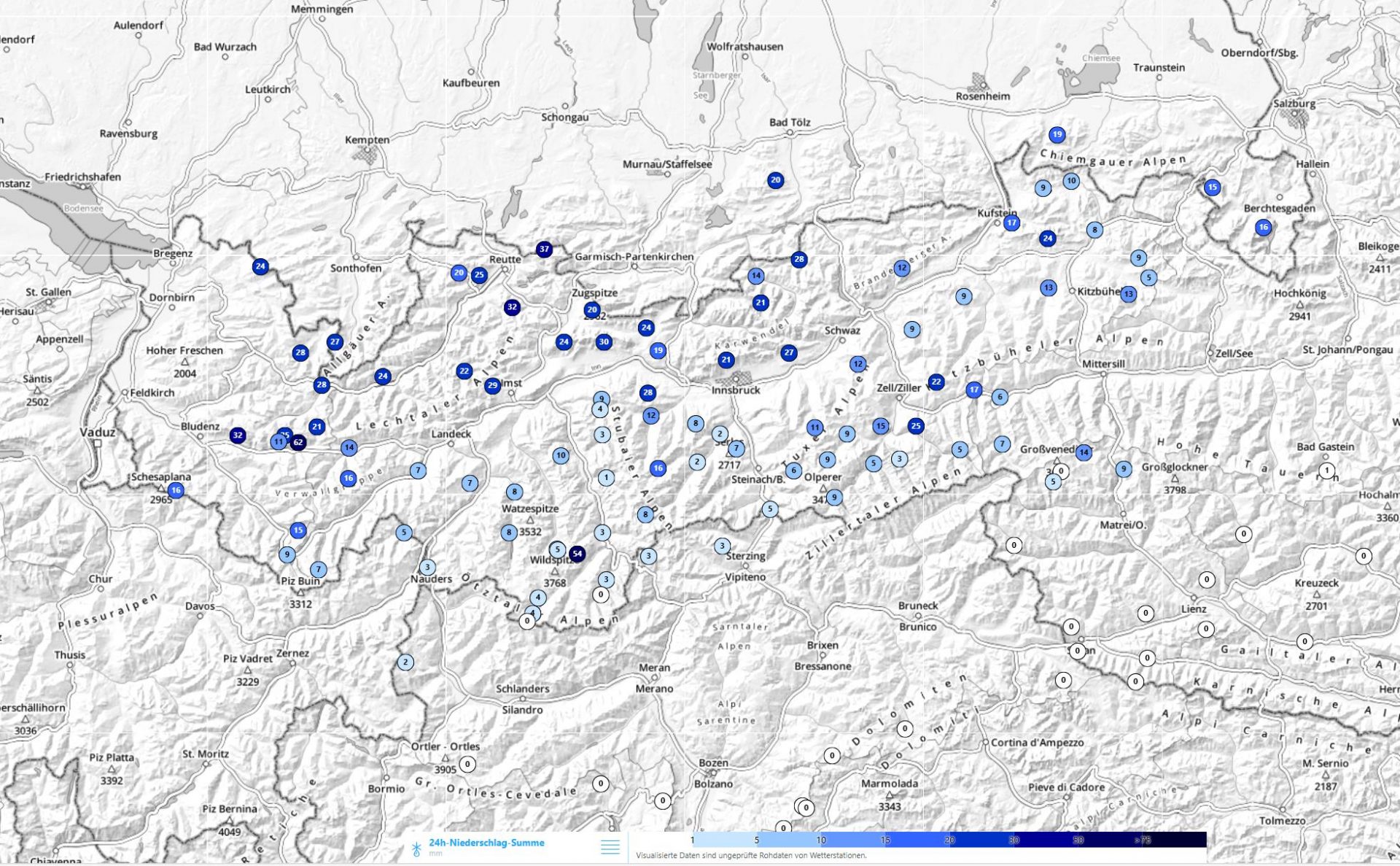
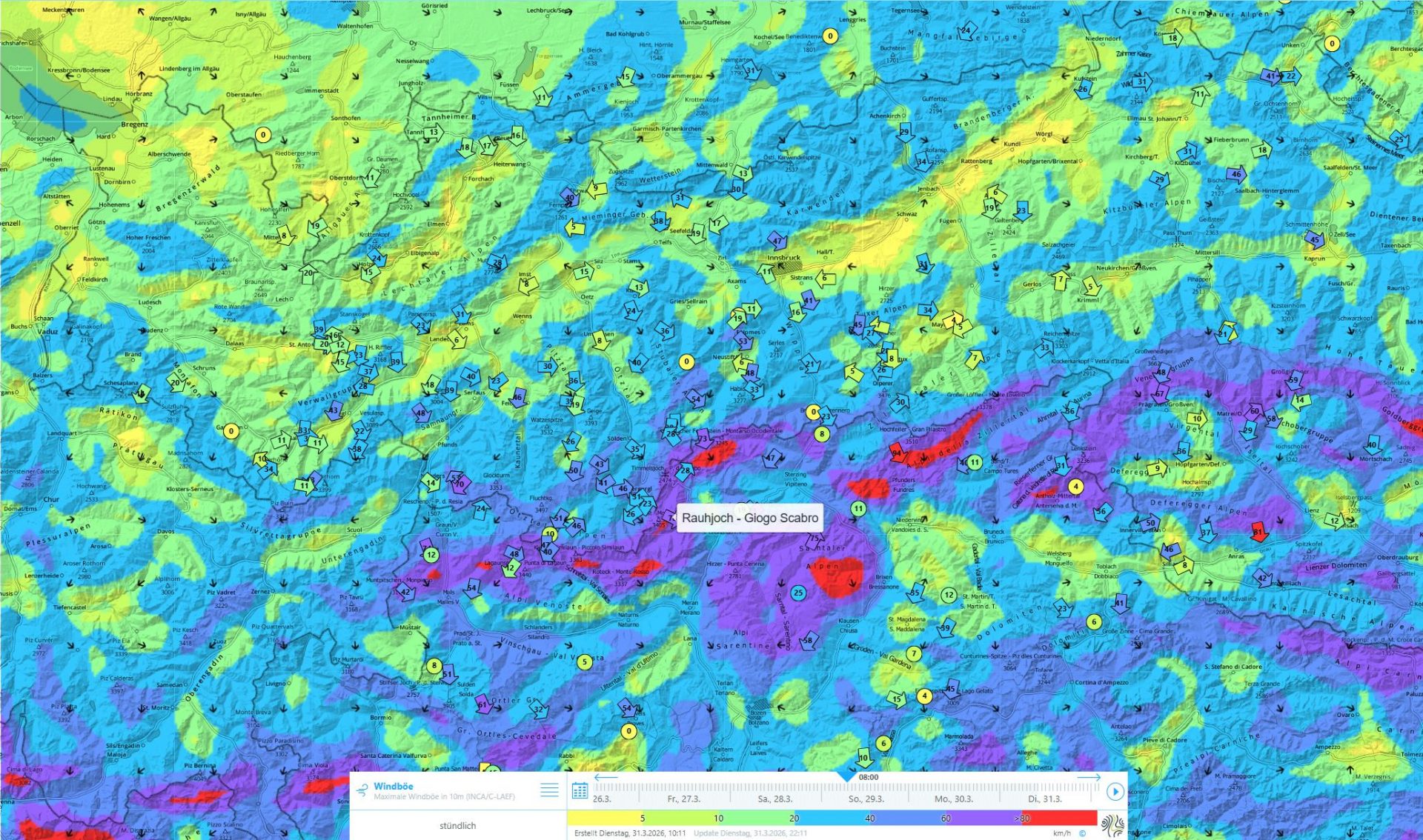
Below the 2499m high Marchkopf in the “Tux Alps East” region on Saturday, 28.03.2026, two persons were swept along by a large-sized slab avalanche. One person suffered injuries, the second person did not survive the avalanche.
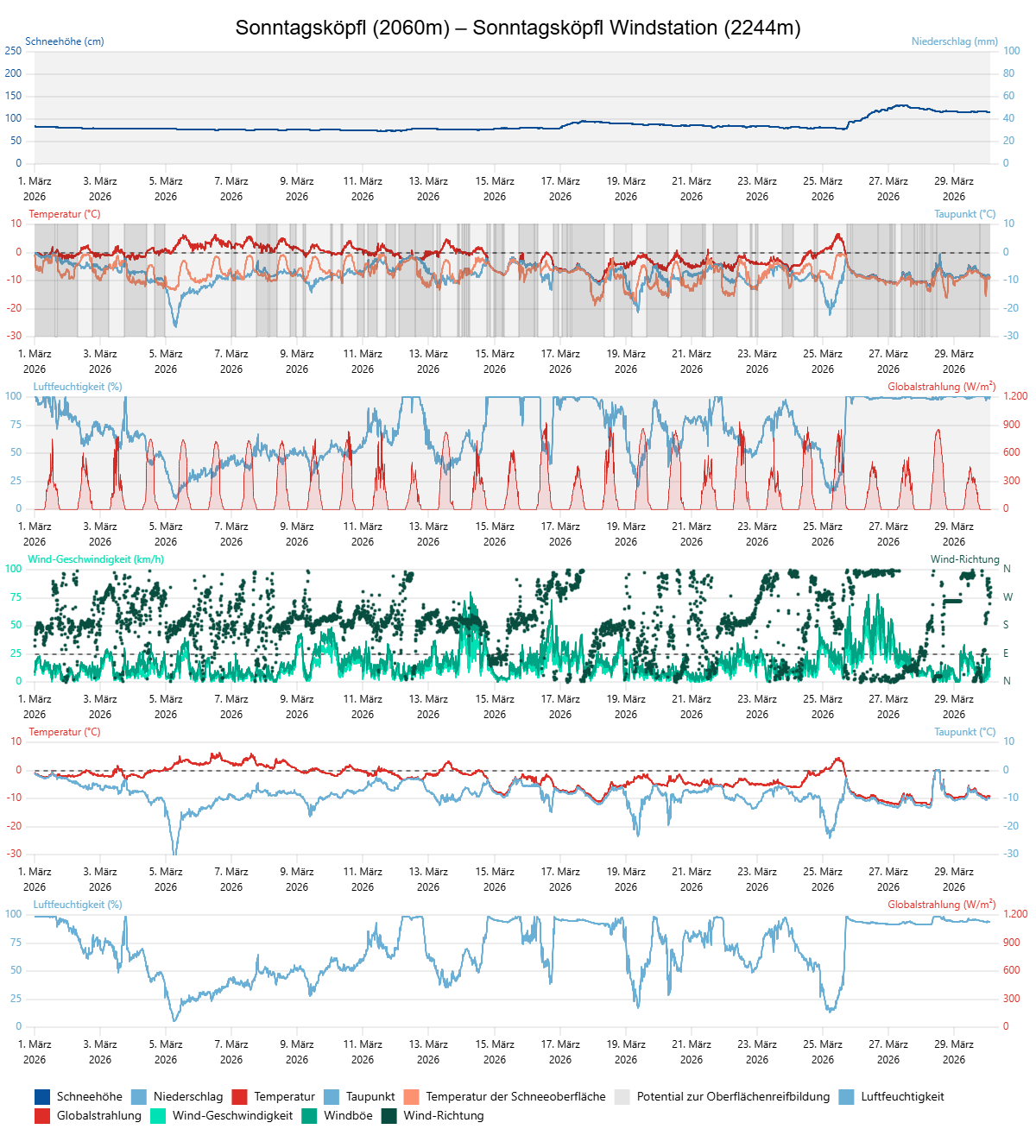
What was most significant for the release was a near-surface weak layer which had formed at mid-March. Atop of it, a solid slab was deposited, generated especially by the snowfall and wind impact starting on 25.03.2026.
Unfolding of the event
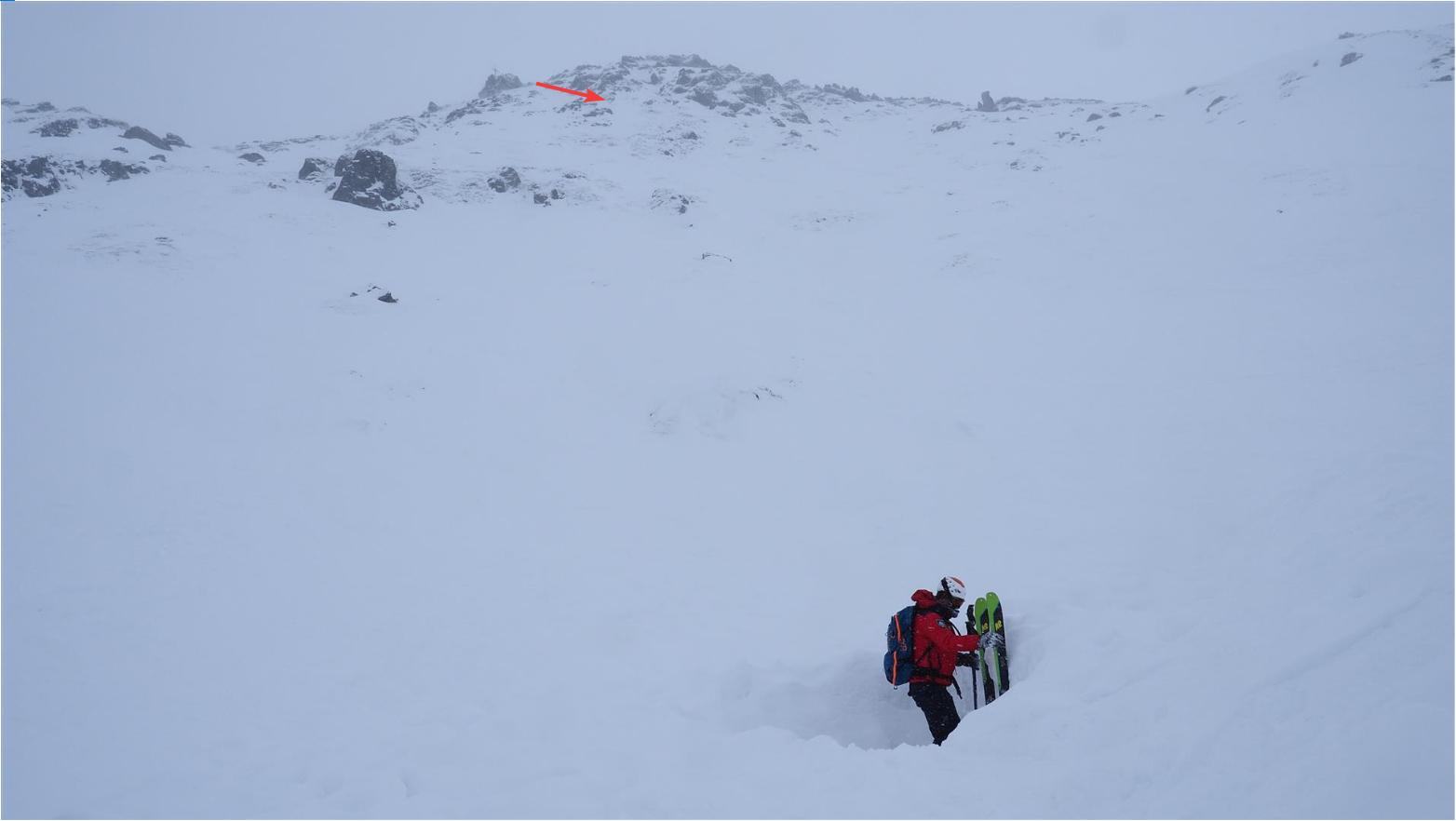
Two persons were in the Hochfügen ski area on Saturday, 28.03.2026. Both were active in the freeriding zone during the day and were outfitted with emergency equipment. At the end of their day of skiing they decided to ascend with the “Zillertal Shuttle” cablecar, then climb over the ridge to the 2499m Marchkopf, and from there descend in the direction of Hochfügen. South of the summit, both of them skied into an extremely steep northwest-facing slope. At an altitude of about 2460m, one of them paused below a rock precipice while the other skied down the slope. After a few turns, a large-sized slab avalanche (Magnitude 3) triggered which swept along the person skiing and the person waiting. The latter person tumbled and flipped several times, lost a ski, and landed partly buried in snow masses in the upper area of the avalanche release, was able to scramble free of the snow and immediately launched a search for the other person via LVS beaming device. The buried person was soon located. Together with the rescue team which in the interim had arrived at the scene, the buried person was dug out from 1.5-metres of snow over the next 30 minutes. All reanimation efforts carried out on the spot were without success.

The avalanche
The avalanche was a large-sized slab avalanche (Magnitude 3) with a breadth of 230m and a length of 400m. The average fracture depth was about 40cm. The avalanche fractured on an extremely steep northwest-facing slope.


The snowpack
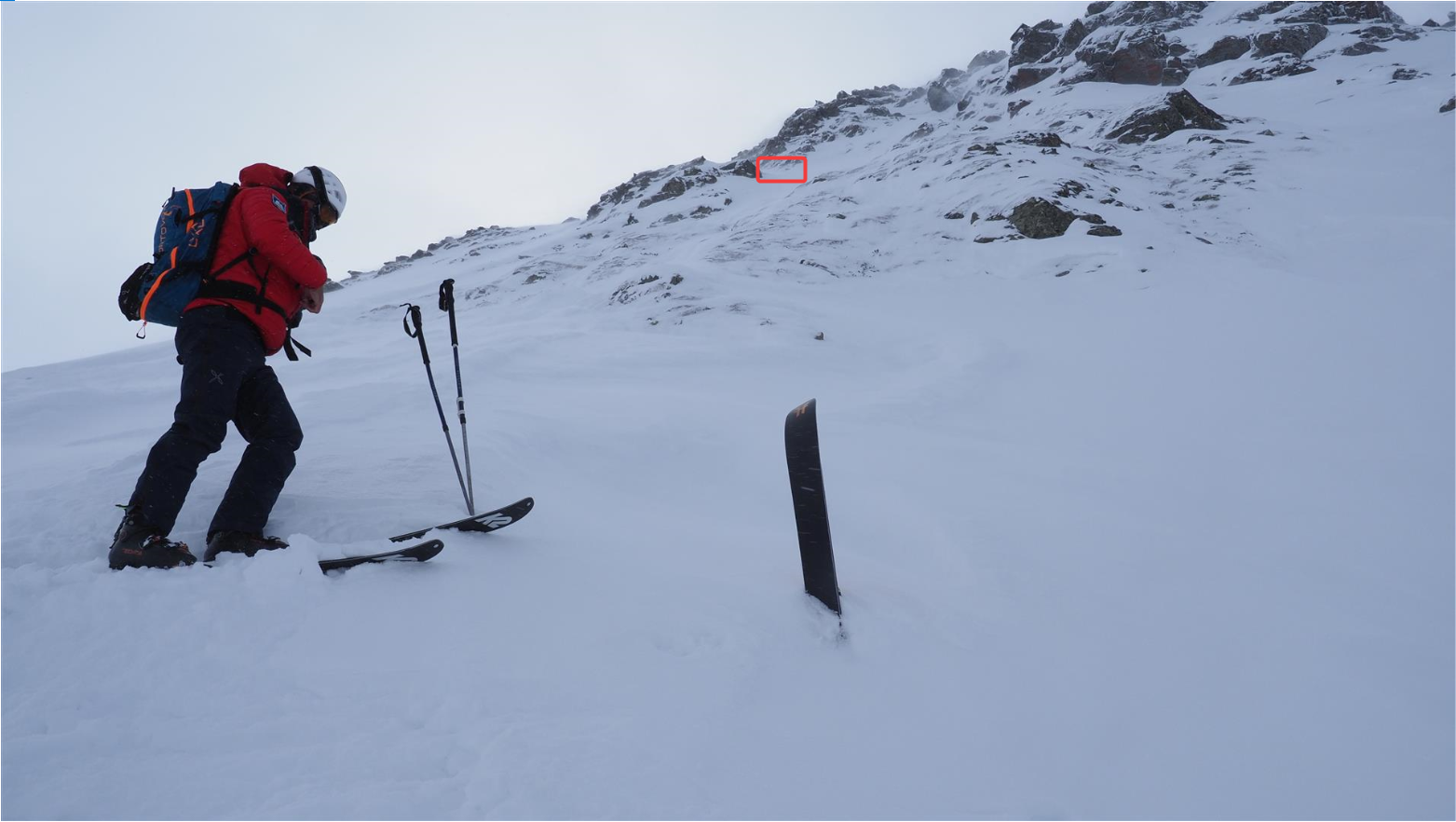
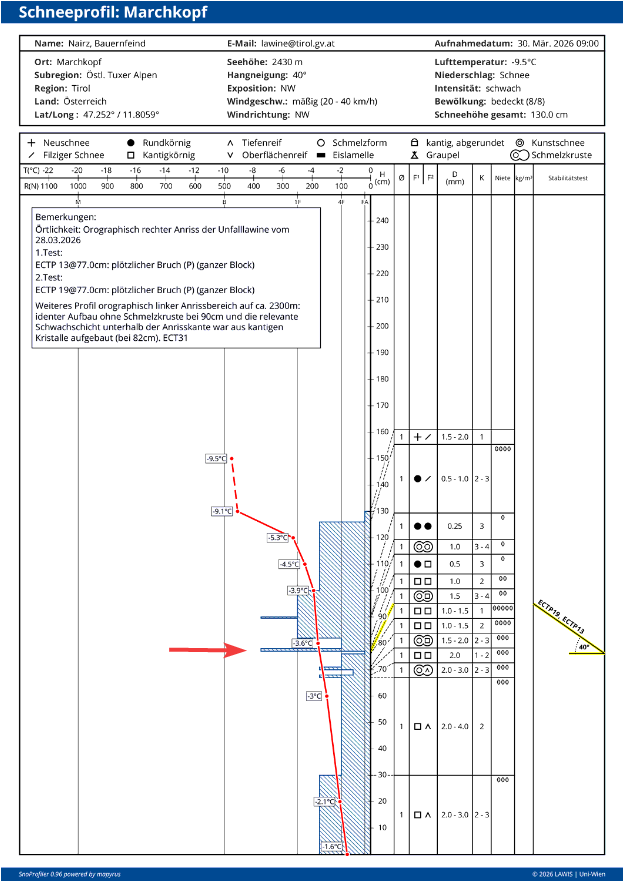
Together with the Alpine Police, we carried out an analysis of the incident including a thorough examination of the snowpack. In this we were able to confirm the evidence of a near-surface weak layer which was generated in the period of fine weather during the first half of March. This weak layer of faceted crystals was evident both above and below a thin melt-freeze crust. Our stability tests had varying results. At one spot where a snow profile was taken the snowpack was extremely prone to triggering, at another snow profile no fracture could be generated in the weak layer. (In the latter instance directly at the point the avalanche fractured, the primary fracture occurred in the thin, faceted layer above the melt-freeze crust.) Nevertheless, the weak layer(s) bordering the thin melt-freeze crust were continuous throughout the slope so that far-reaching fracture propagation was possible.

Saturday, 28.03: an accident prone day
The first day of beautiful weather following a phase of stormy winds and heavy snowfall very frequently bears a higher risk of avalanches. This was confirmed by the reports of avalanches received at Tirol Headquarters last Saturday. All in all, there were 23 avalanches reported, most of them negative events, one avalanche release – on the Marchkopf – was the single event with injuries and one death.
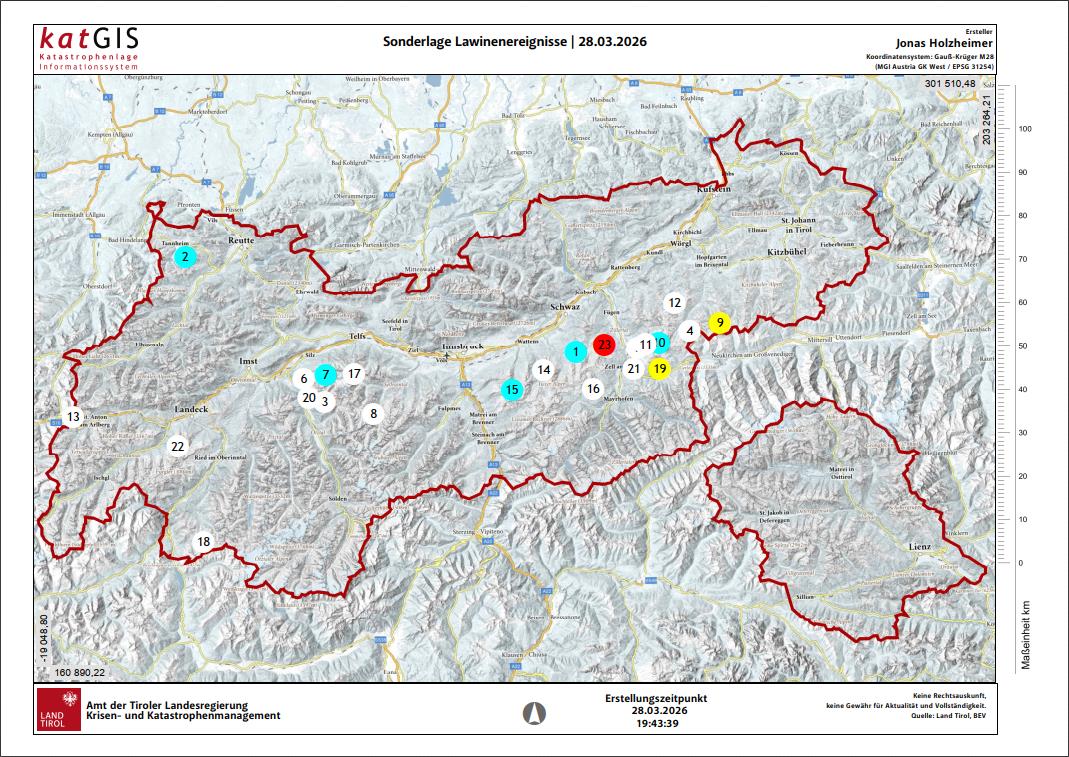
All the avalanches we’re aware of were results of the near-surface persistent weak layer problem discussed in two different blogs (20.03. and 26.03.), which was also corroborated by the snowpack examination and analysis we carried out on Saturday 28.03.2026 with the Alpine and Airbourne Police. The area which was most prone to triggering was clearly west-facing and north-facing slopes at an altitude between 2200m and 2800m.
Newly added to this: freshly generated snowdrifts, prone to triggering