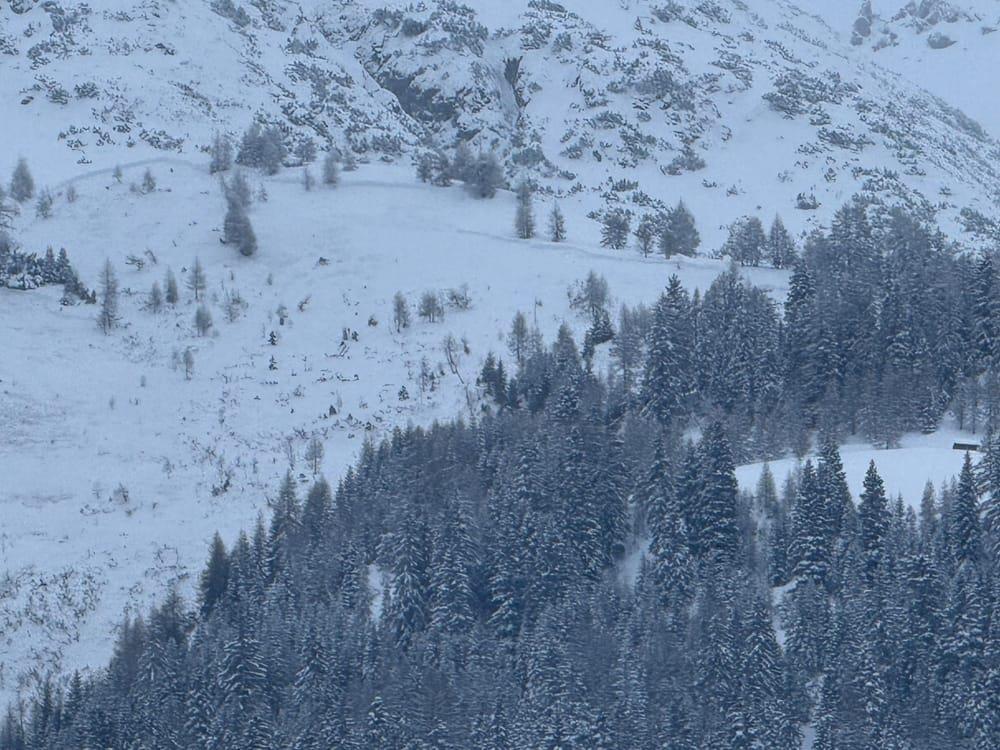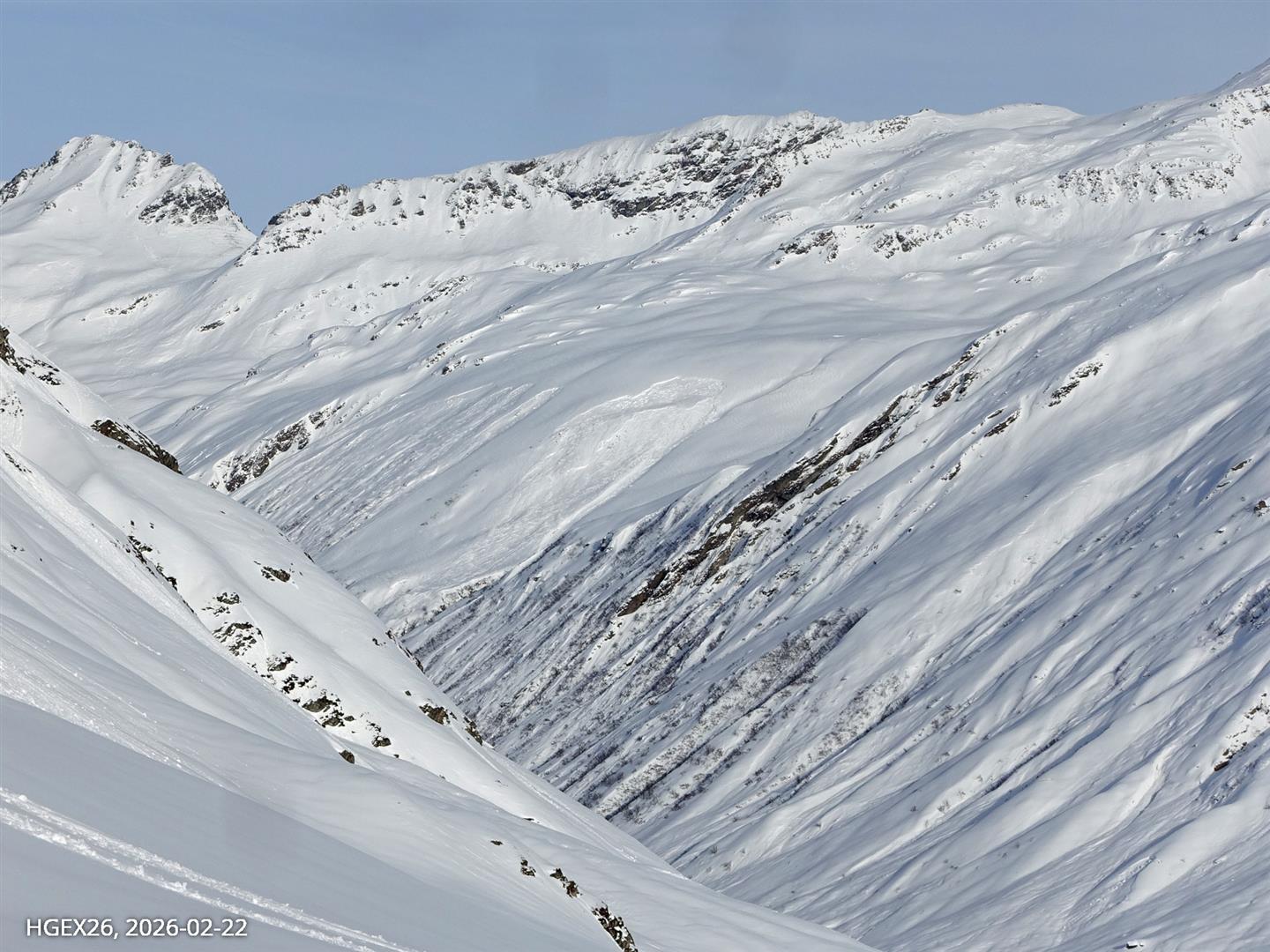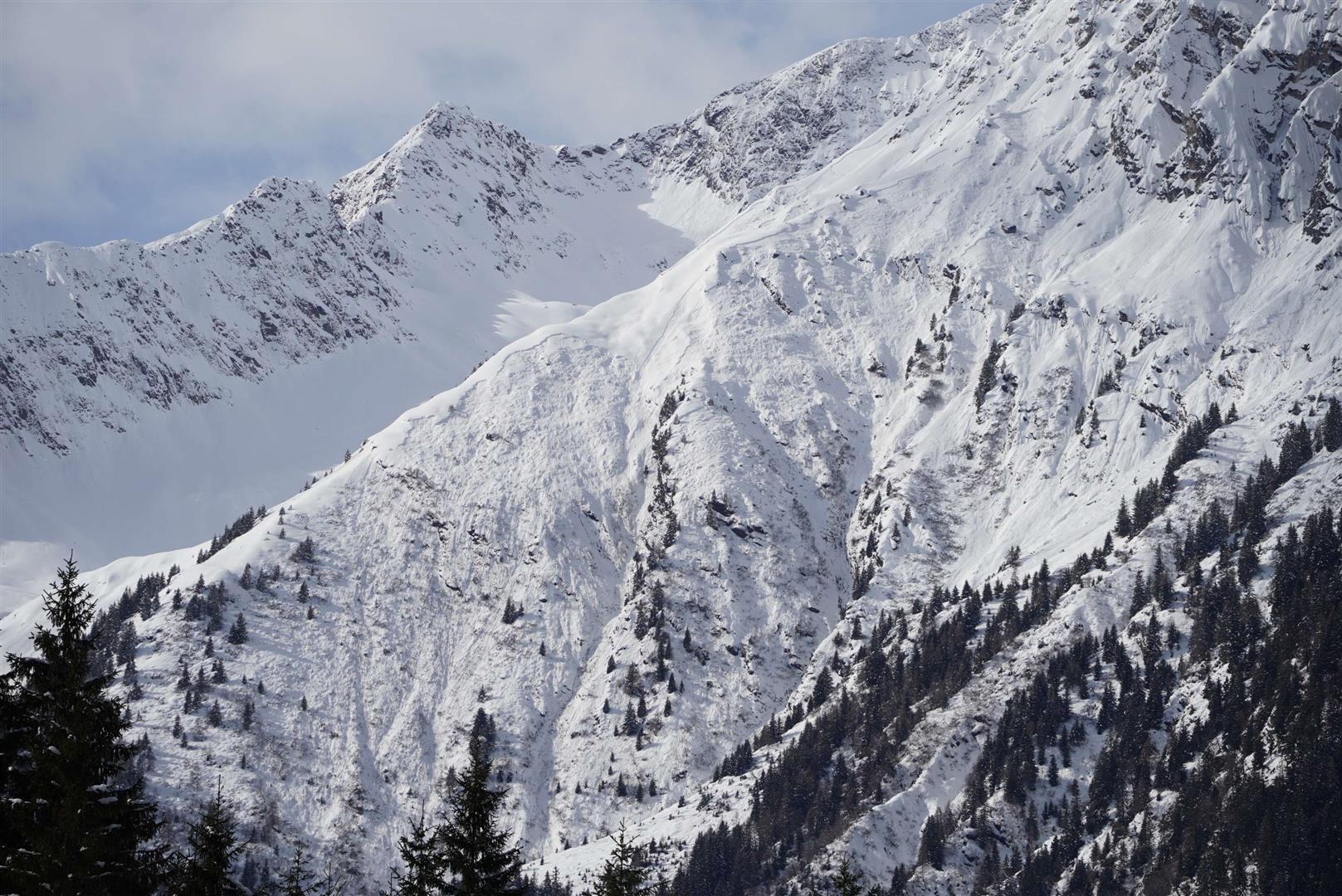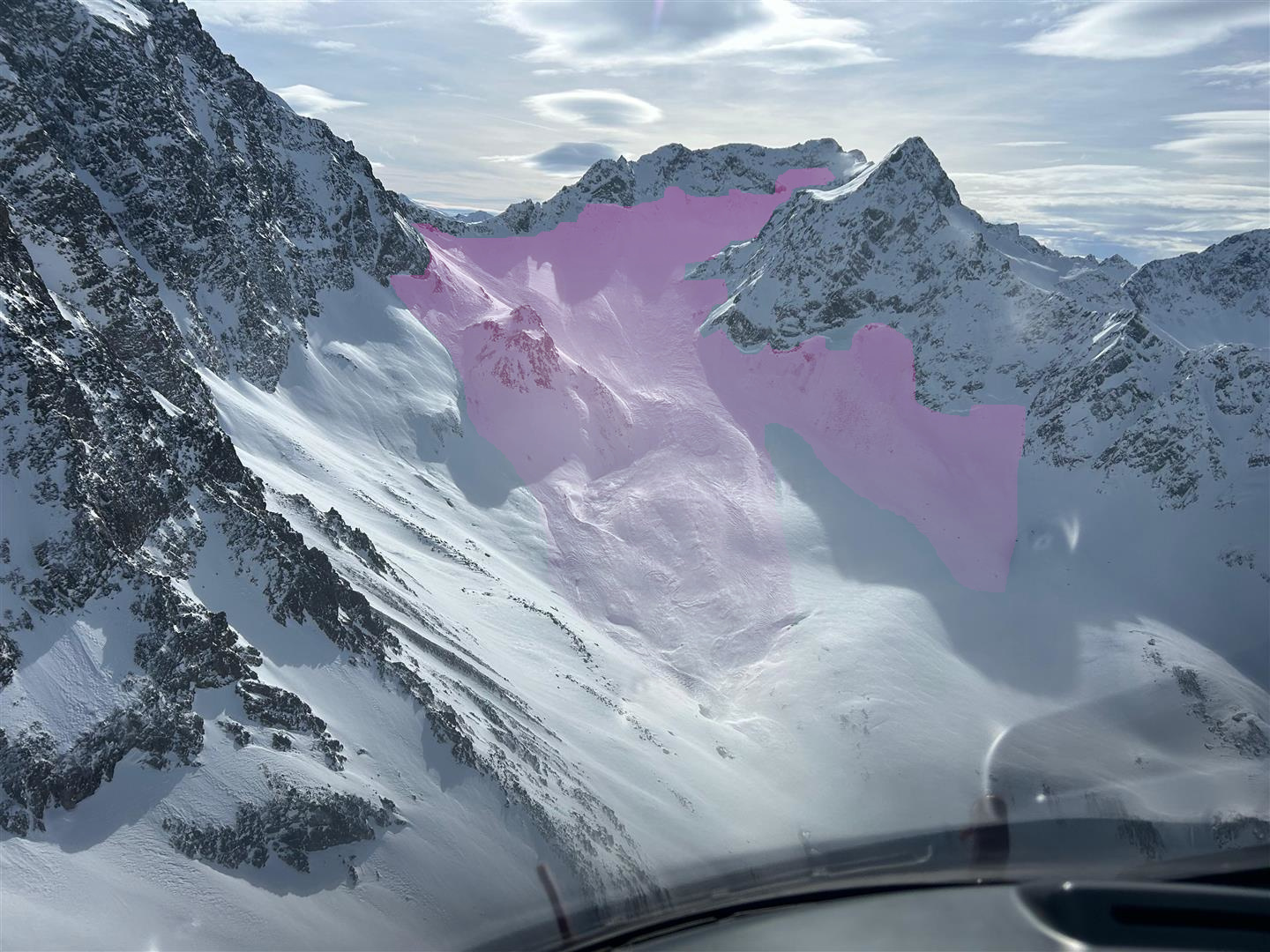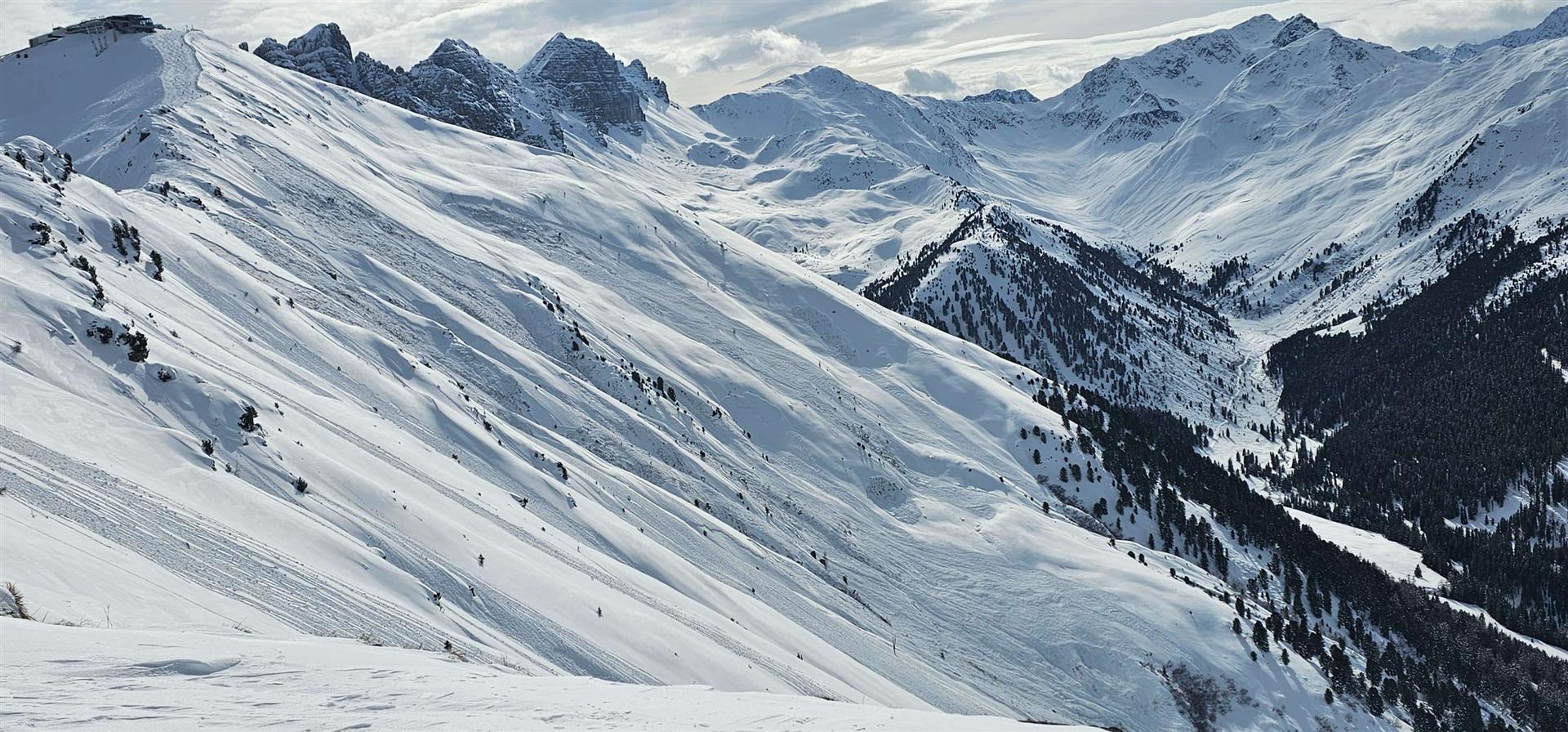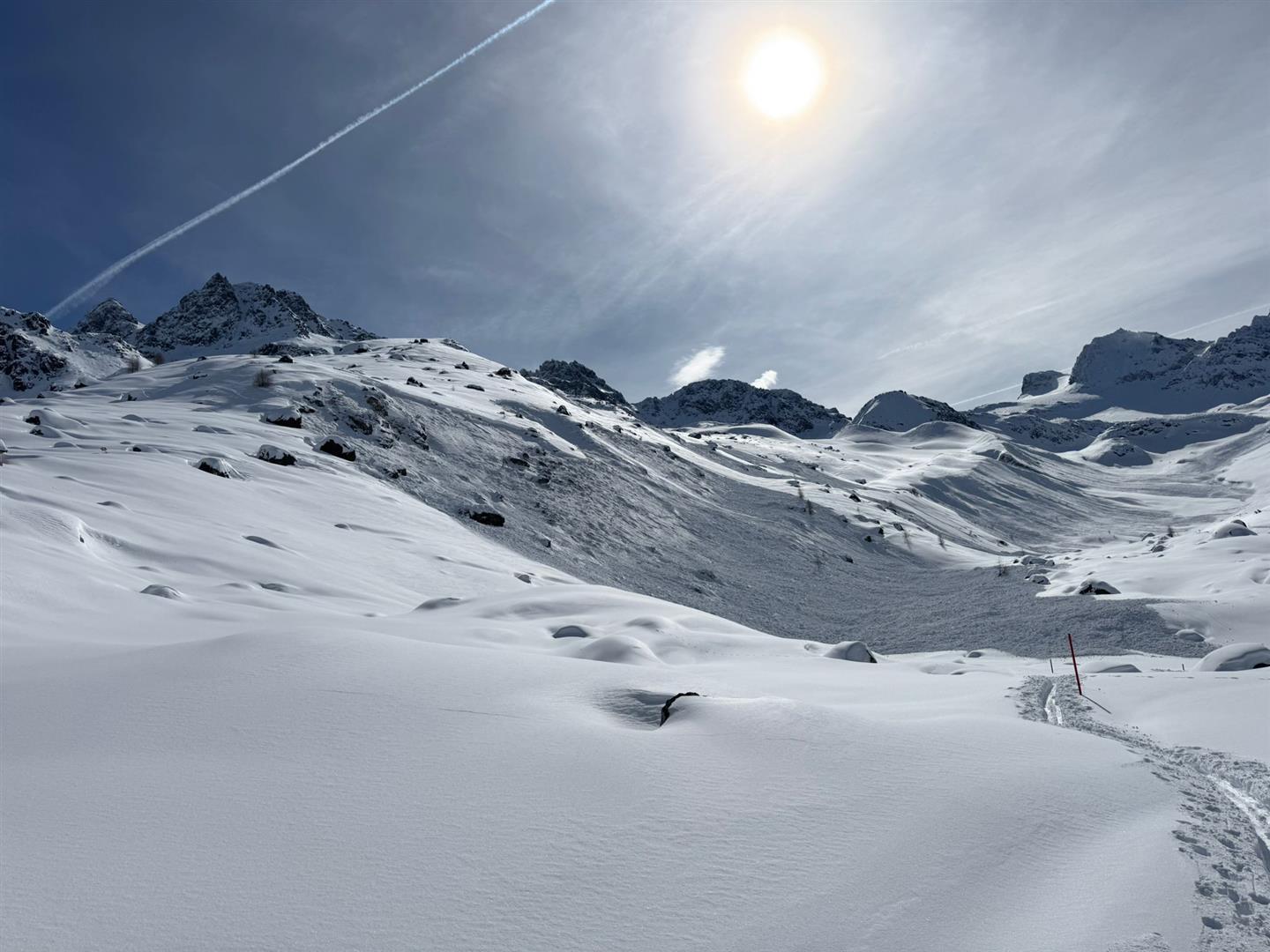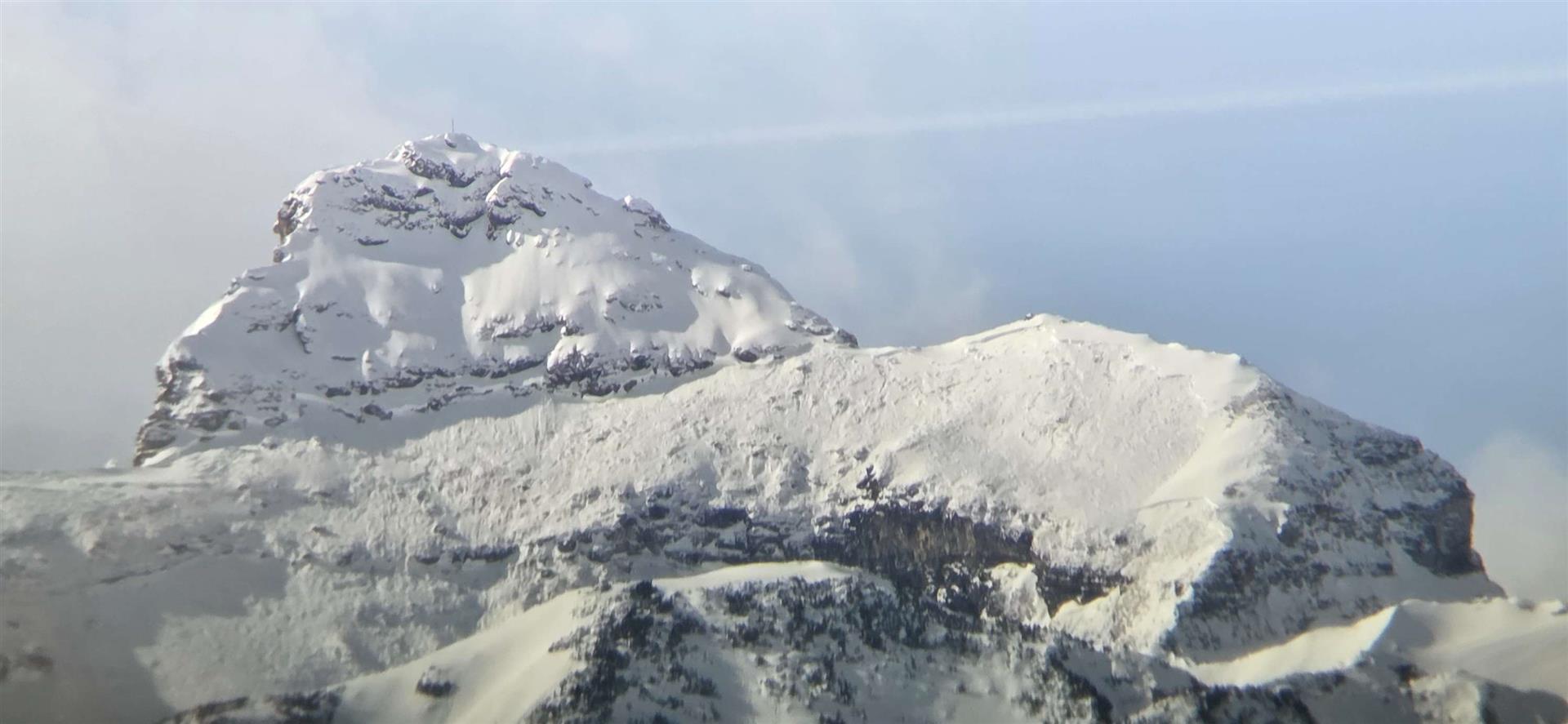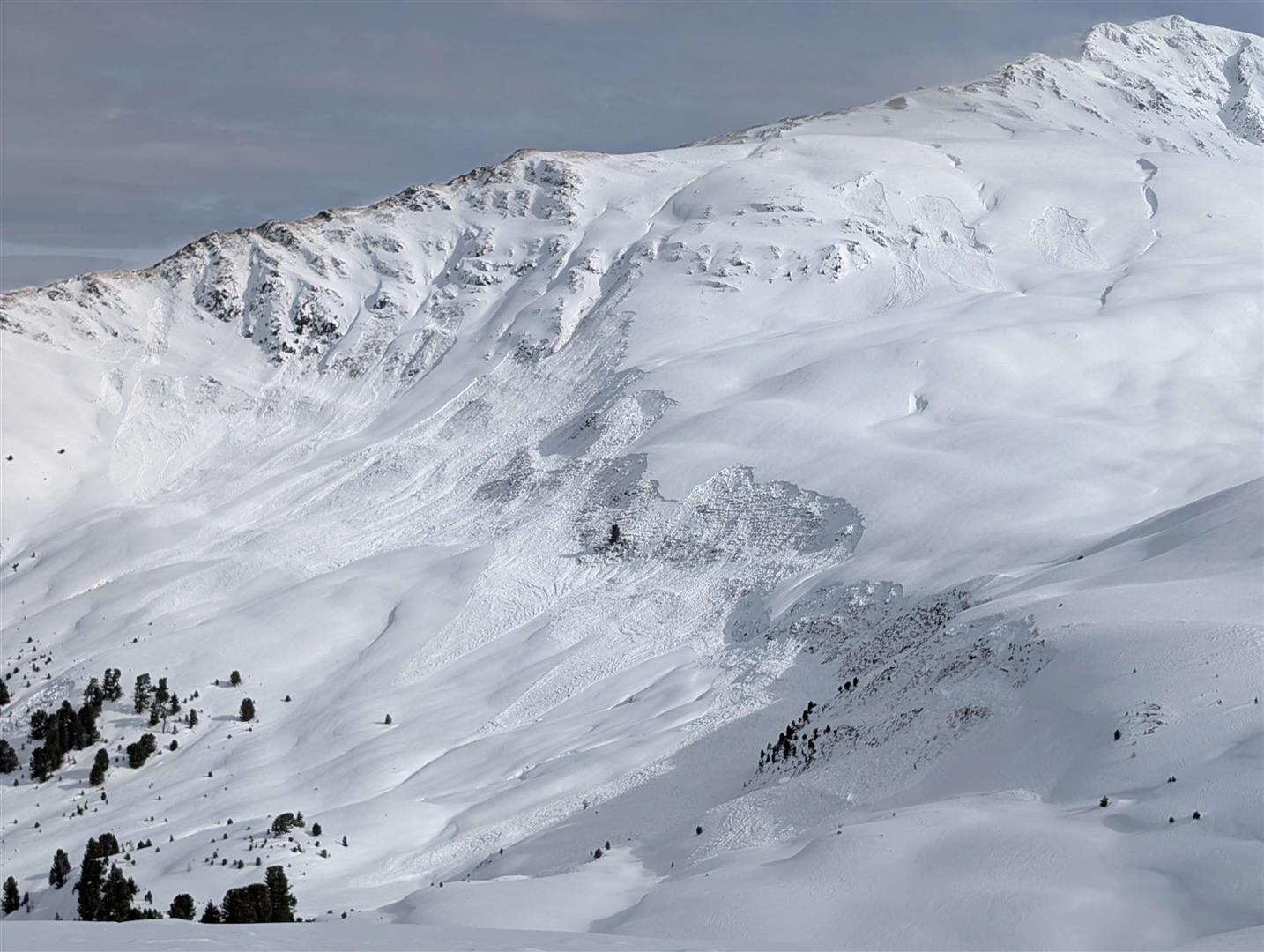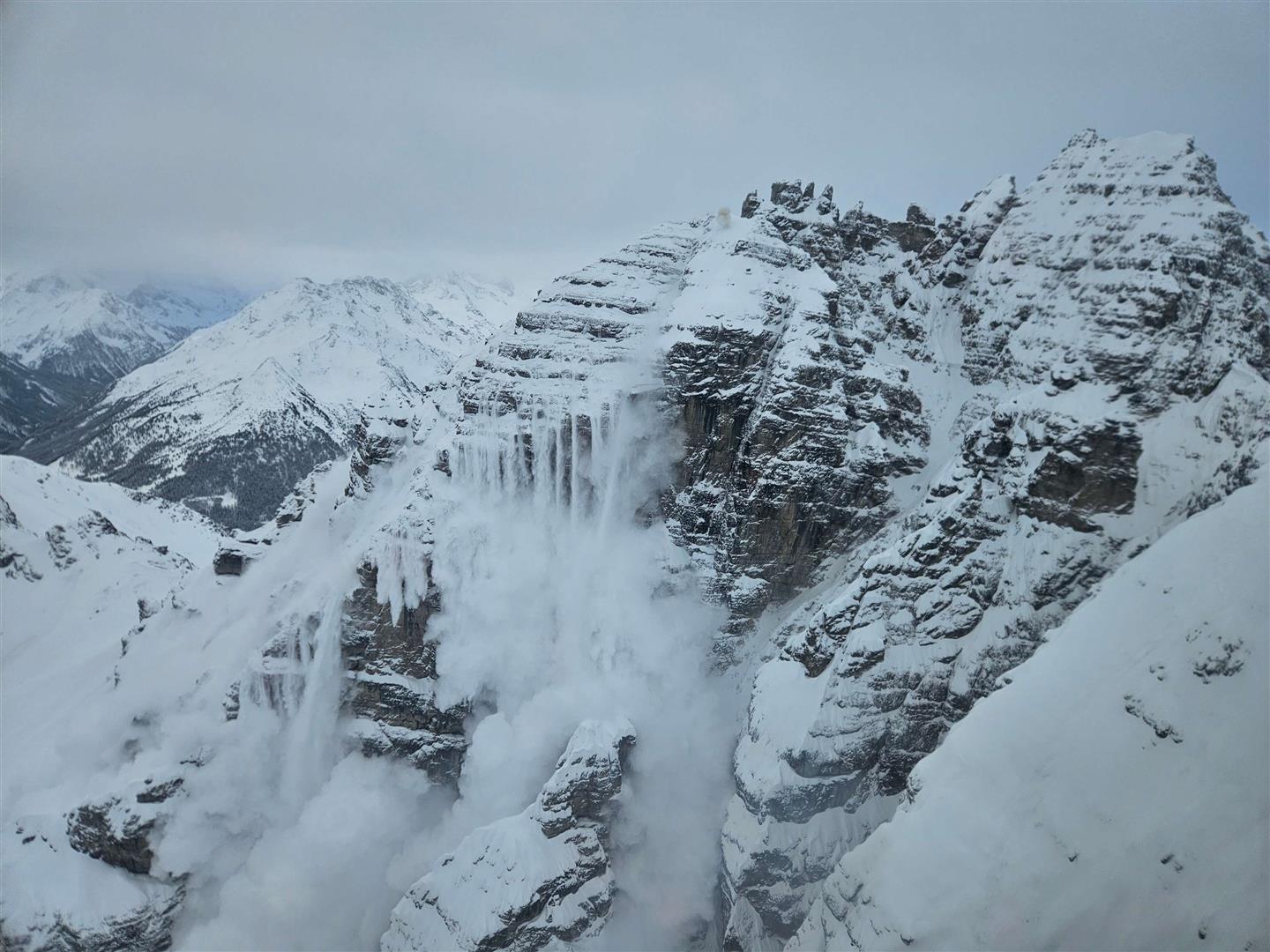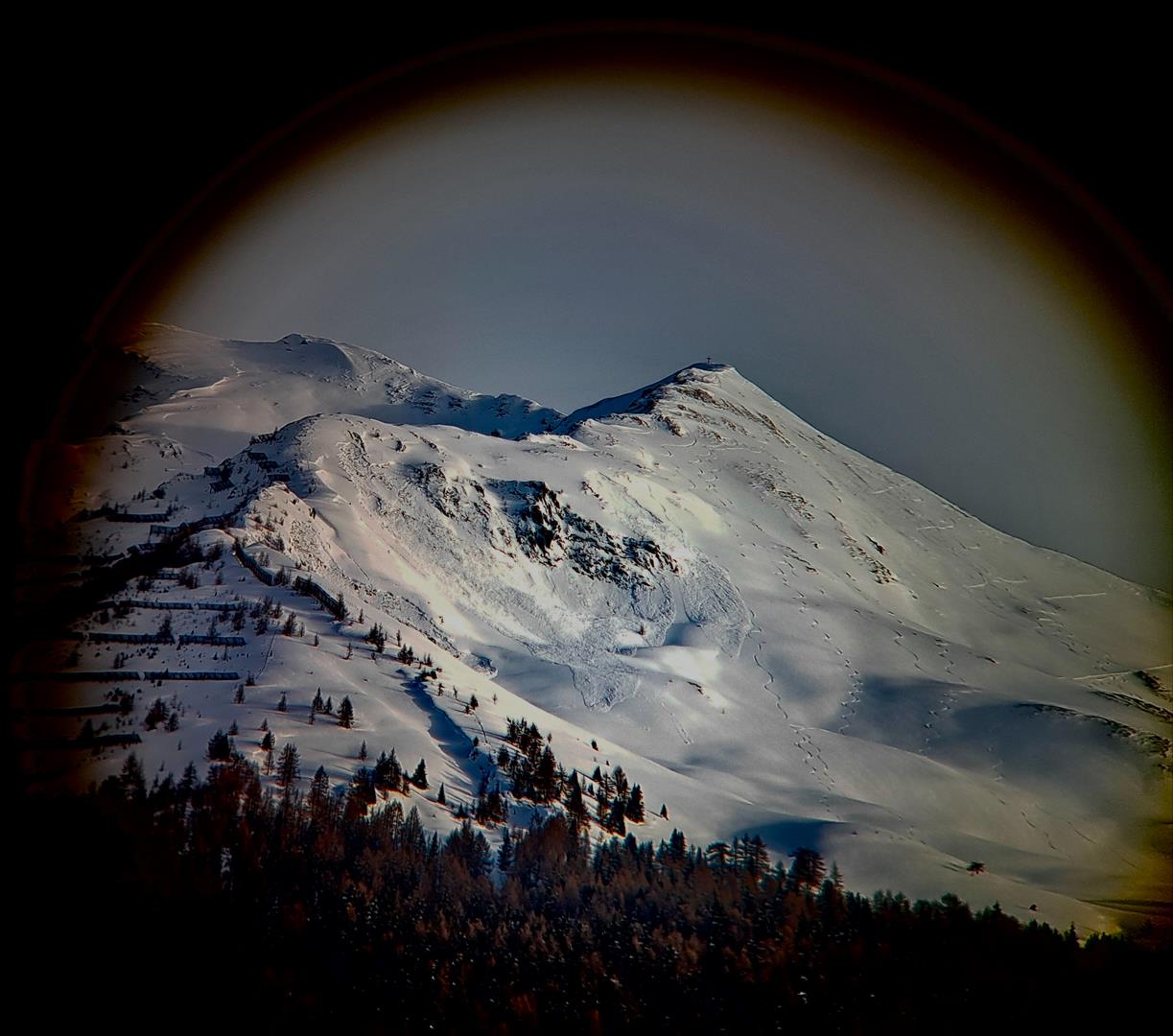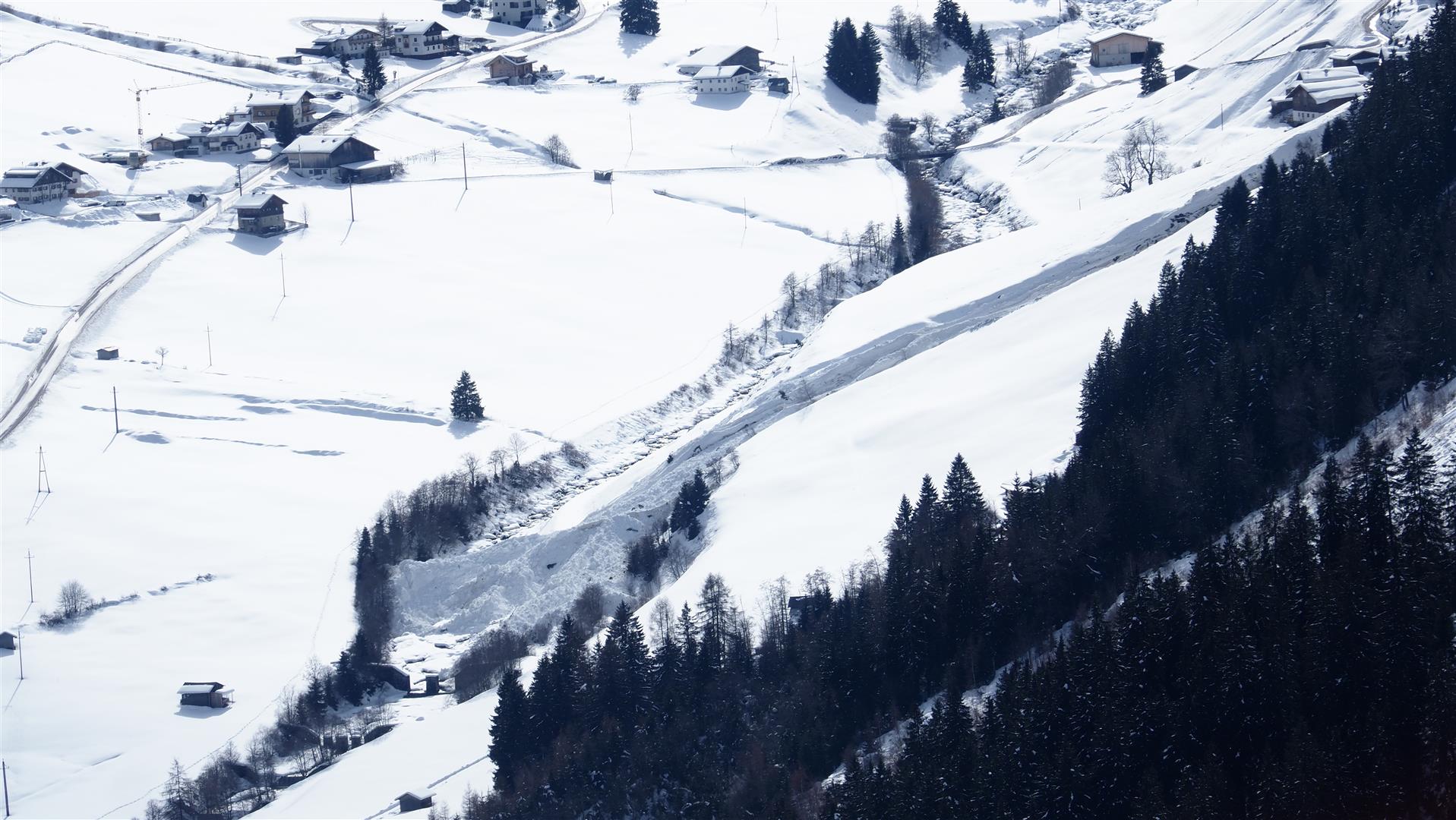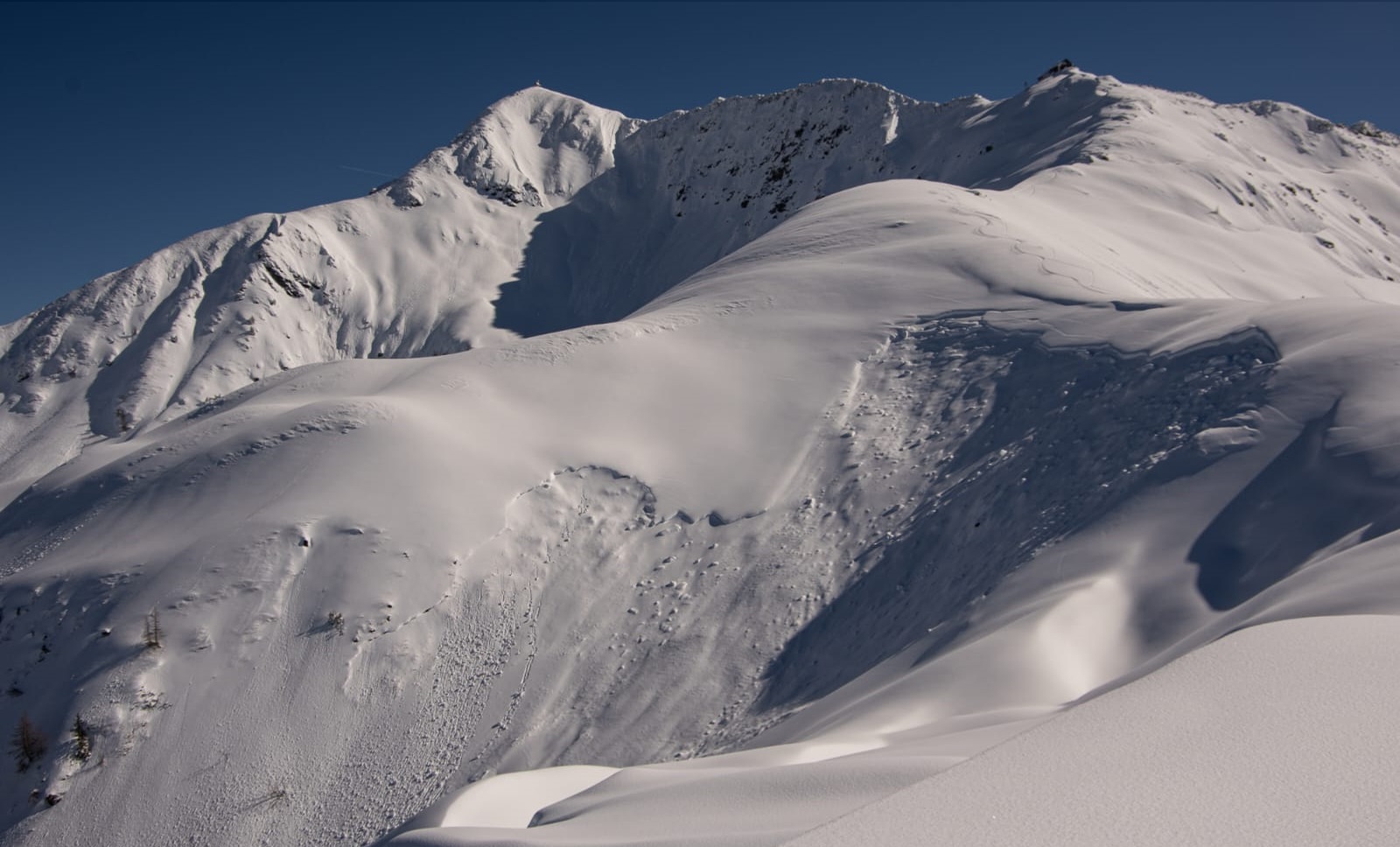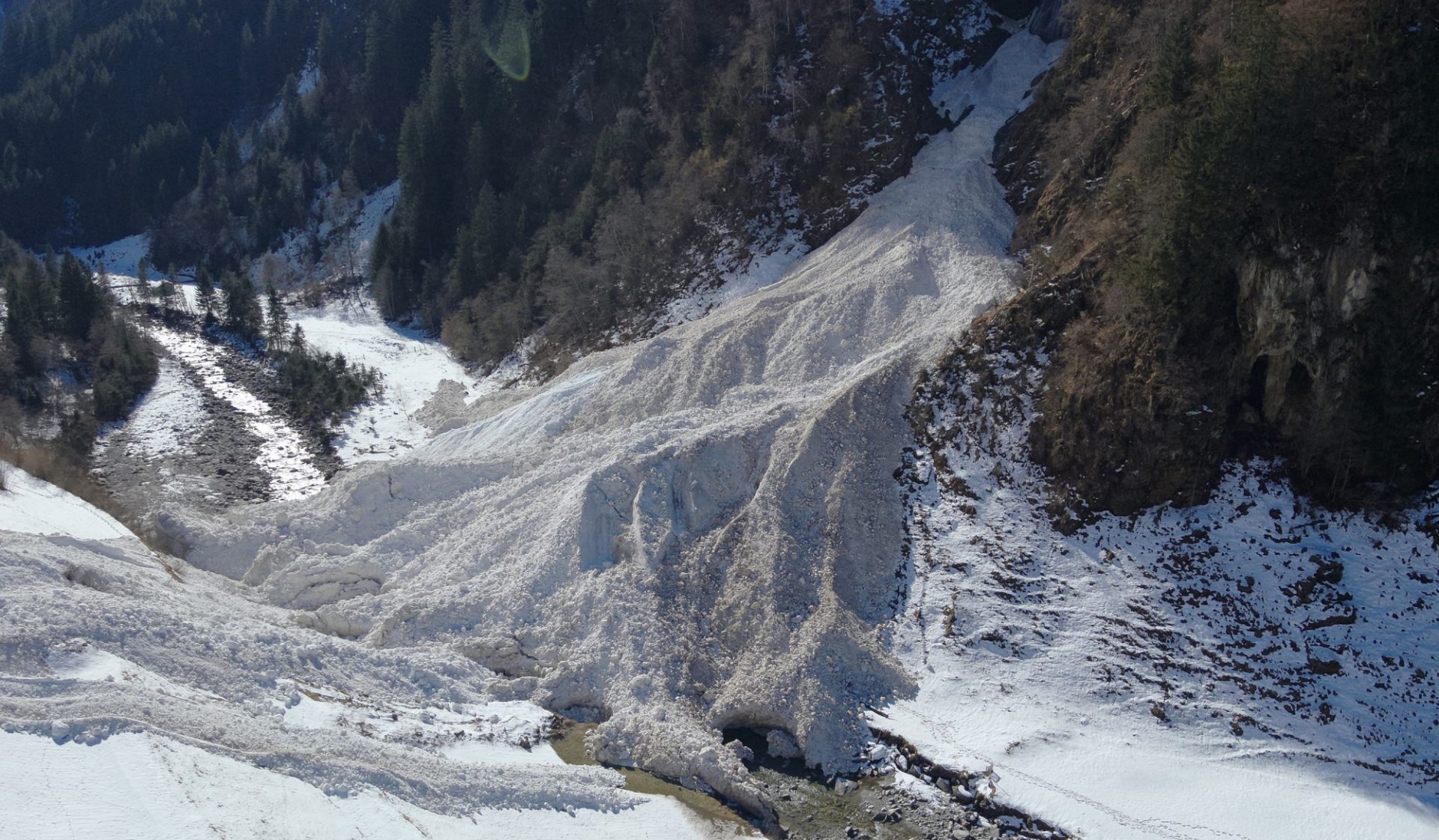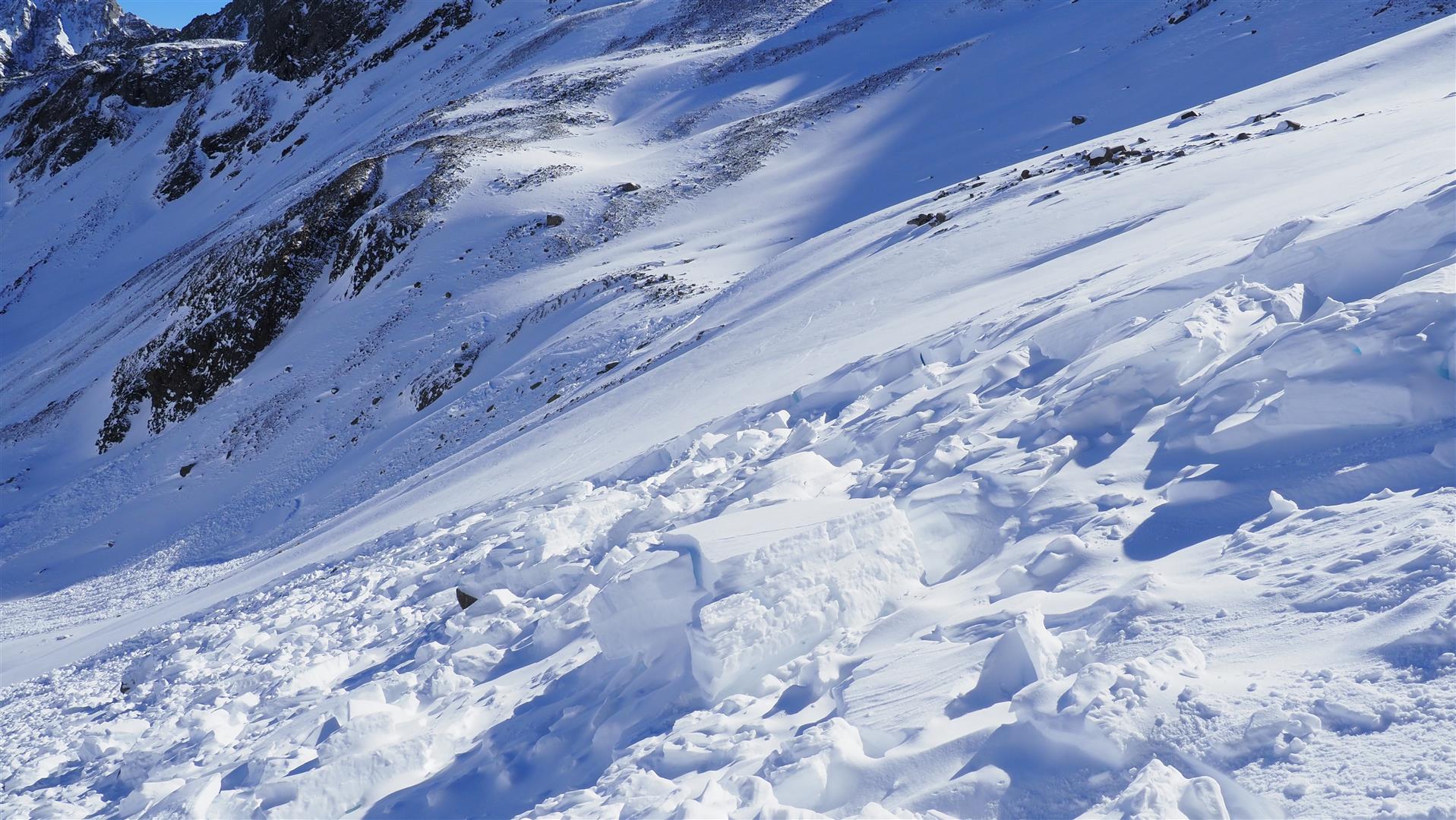
In retrospect, it all began with turbulent conditions on 11.02, then intensified starting on 16.02: a truly marked avalanche period. Extraordinary interval: 10 days (16-25.02) of persistently high avalanche danger.
Since 15.02, 10 persons in Tirol have lost their lives in avalanches (including the person who was totally buried in snow masses below the Jufenkamm on 18.02 who died on 25.02). What stands out was the high number of 9 fatalities in freeriding terrain. An explanation for this can be read in the blog of 20.02.2026, coupled with our observation that the backcountry tourers heeded our warnings in exemplary fashion. Even in the most popular backcountry ski touring regions, we found practically no ski tracks on slopes normally full of them.
Extremely turbulent weather
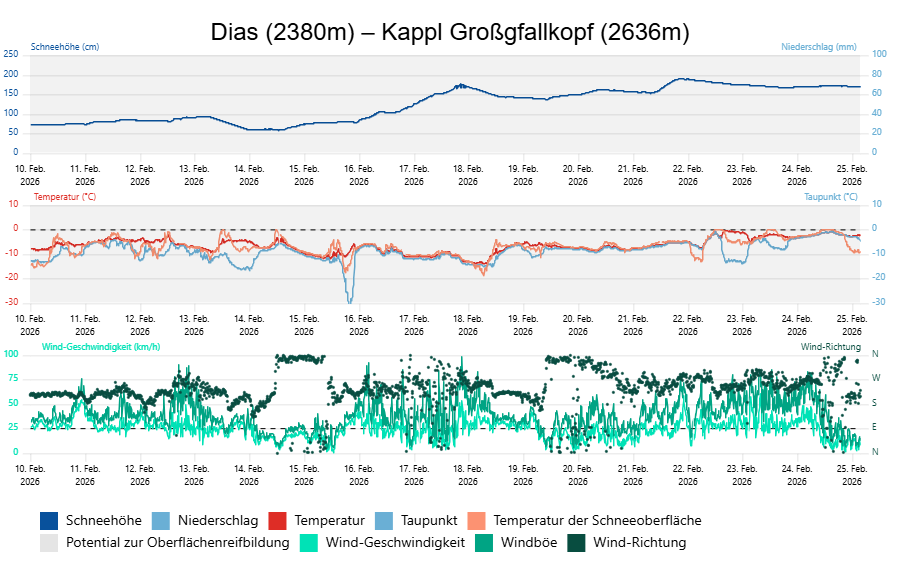
A whole series of unusual of weather events were responsible for the heavy precipitation over the last 14 days: the first bout occurred on 11-12 February, with its focus in western North Tirol. Most of the precipitation came in the barrier cloud situation which followed on 15-17 February, where there was between 60 and 90cm of fresh snow registered in the western and northern regions of North Tirol. On 19-20 February, a combined front – to start with from the south, then shifting to north/northwest – brought far-reaching snowfall. During this period, also central and southern East Tirol were struck by snowfall. And finally, as the result of two warm fronts on 21.02 and on 24.02, there was widespread precipitation in North Tirol, including rainfall up to 1800-2200m.
Winds were often blowing at strong to storm strength during the rounds of precipitation, thus transporting the fresh snow intensively. Corresponding to the direction of the air currents, winds mostly came from the west.

High avalanche activity
The outlined turbulent conditions full of precipitation of recent days brought us a period of unusually heightened avalanche activity: 673 reports arrived of avalanche releases between 15.02 and 26.02. As mentioned, 10 persons lost their lives between 15 and 21 February in 7 difference avalanches; 20 persons were injured in 15 different avalanches between 15 and 26 February. We will here analyse the fatal avalanche incidents which were not treated in earlier blogs; and also outline further select avalanches. At the end, some impressions of this extraordinary avalanche period wrap up the blog.
Fatal avalanche incident Piengkopf / Nauders / Glockturm Massif region (20.02.2026)
The unfolding event
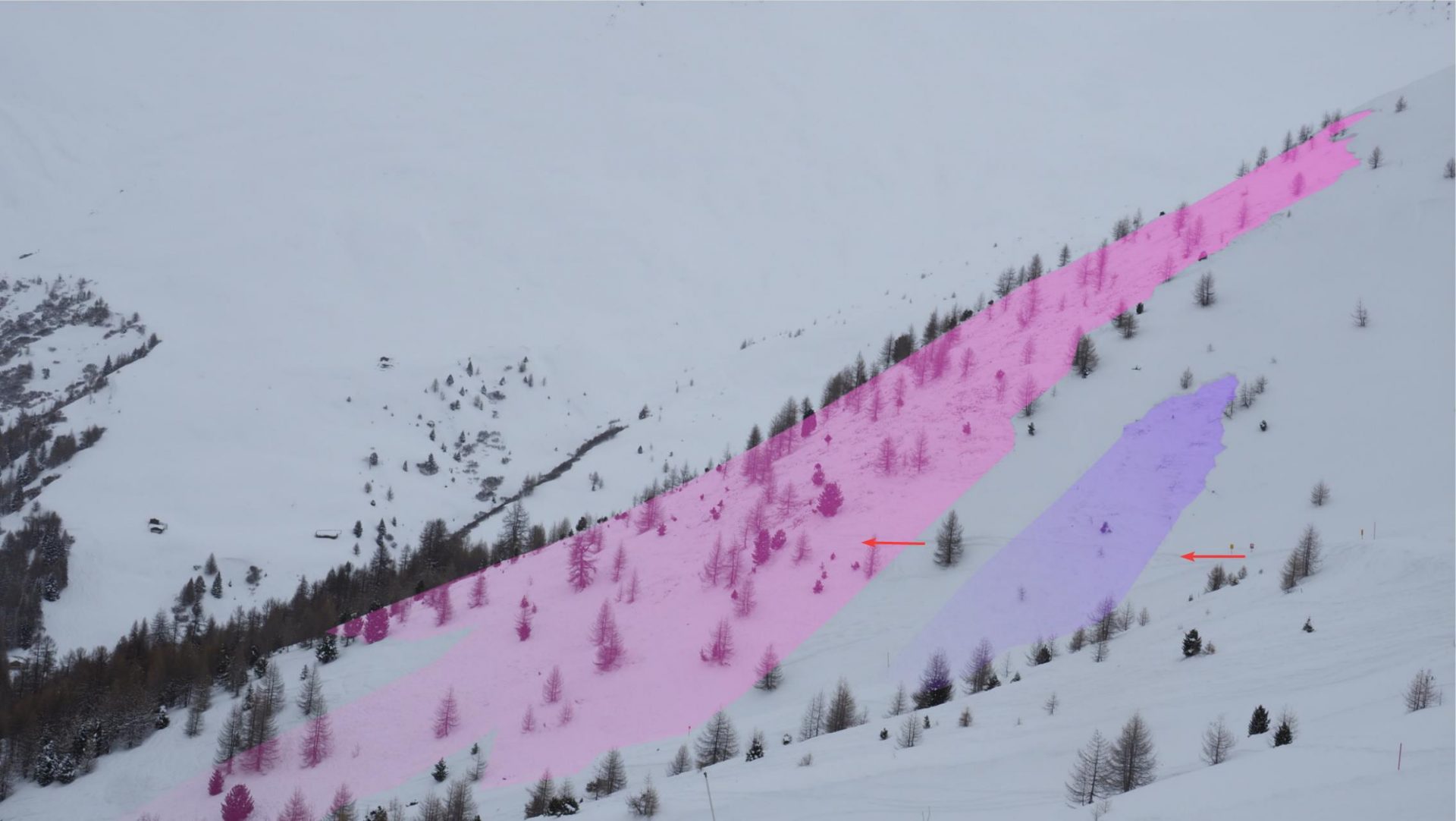
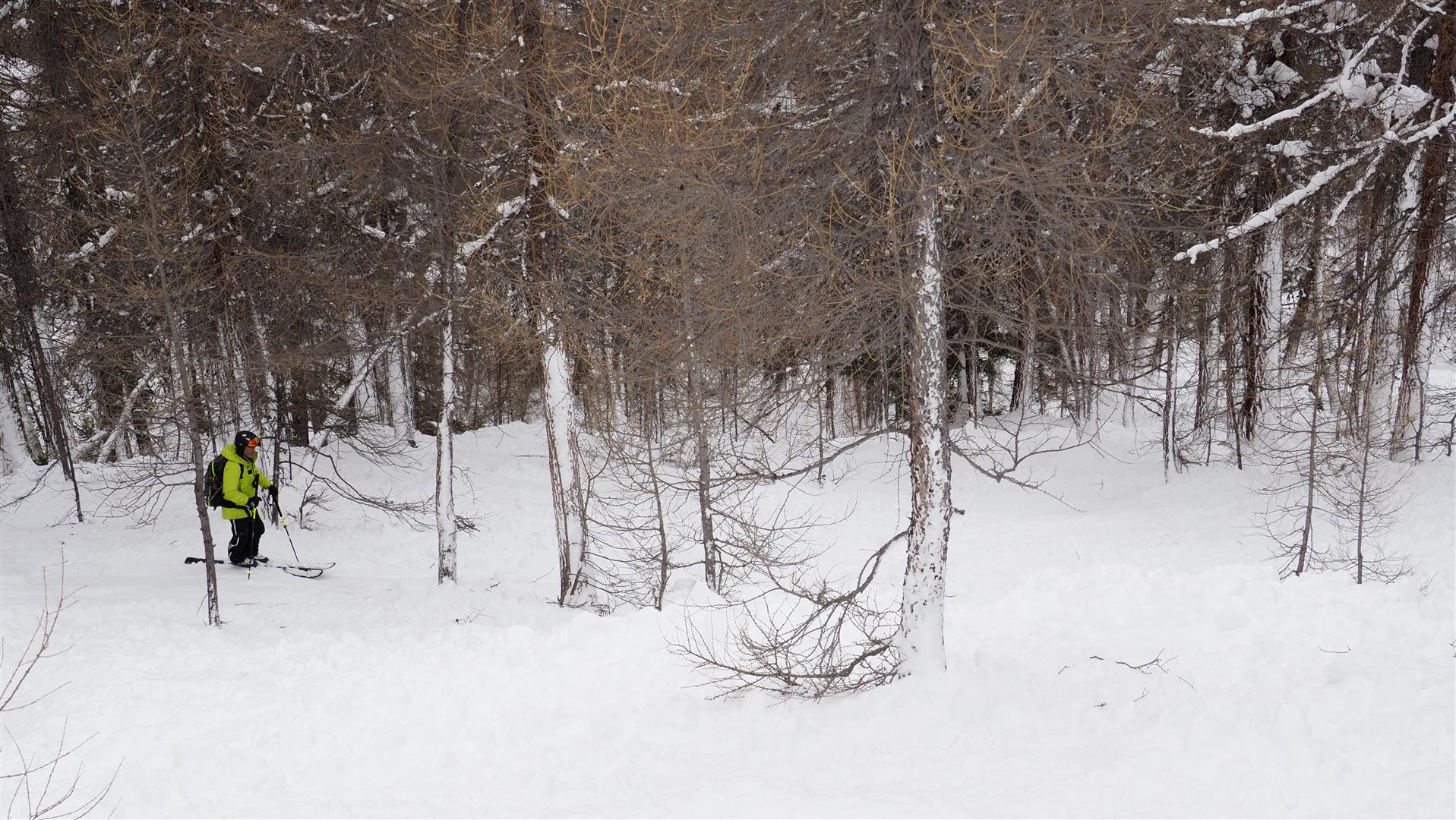
Father and son were in the Nauders-Bergkastl ski area, they left red ski run number 12 and entered open skiing terrain. After they had traversed the first steep slope, they skied down into a sparsely wooded zone. A large slab avalanche then triggered which swept both persons into the forest below. The son was not buried in snow, injured his leg; the father was partially buried and suffered fatal injuries from being slammed into a tree.
The avalanche
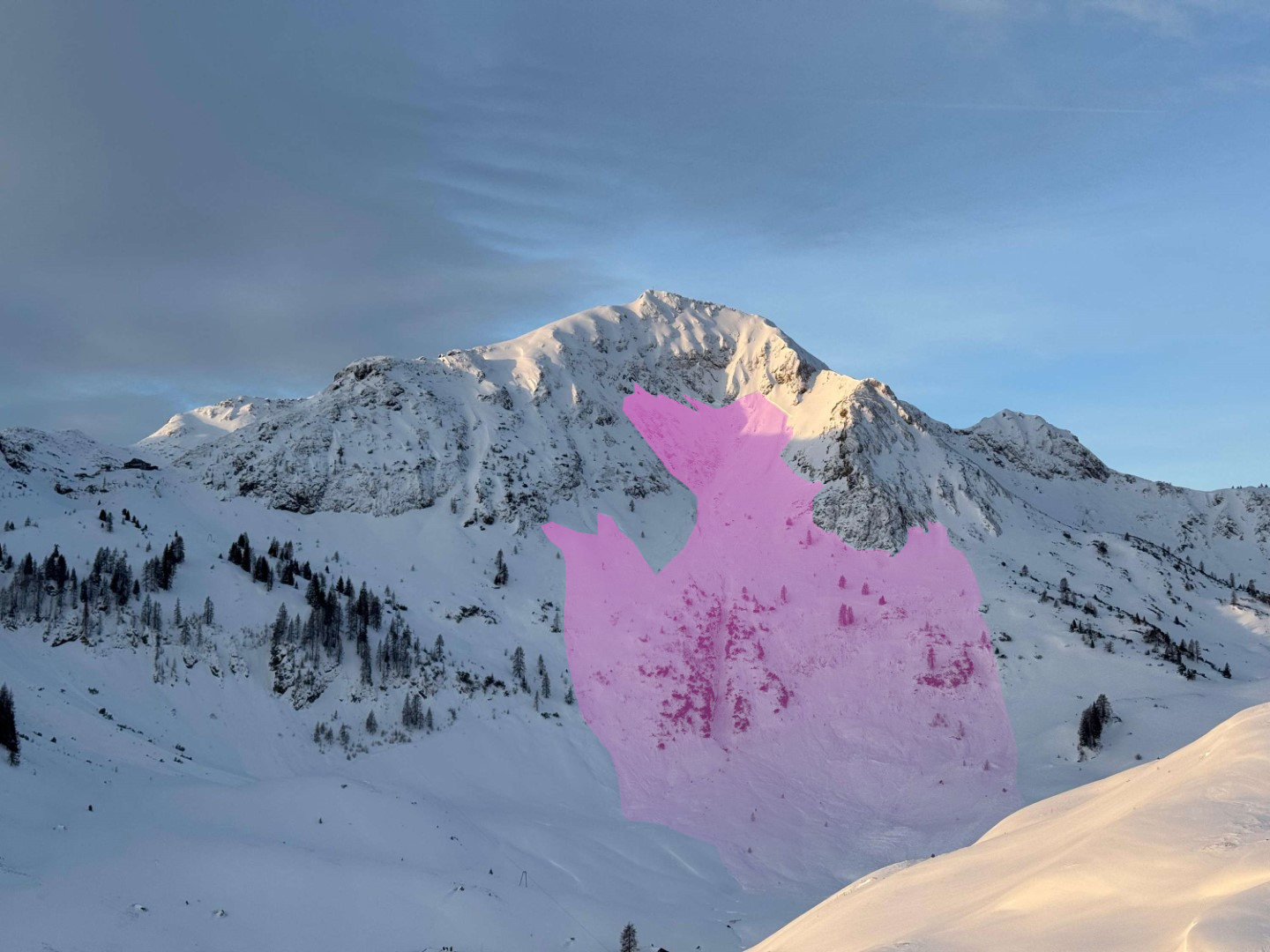
The avalanche was a large-sized slab avalanche with a length of 500m and a breadth of 400m. The size of the avalanche is explained by the combination of a solid slab above an equally marked and regularly spread weak layer. The avalanche slope faced northwest, had an average 35° steepness gradient. The fracture was at 2340m, the average fracture depth was 50cm.


The snowpack
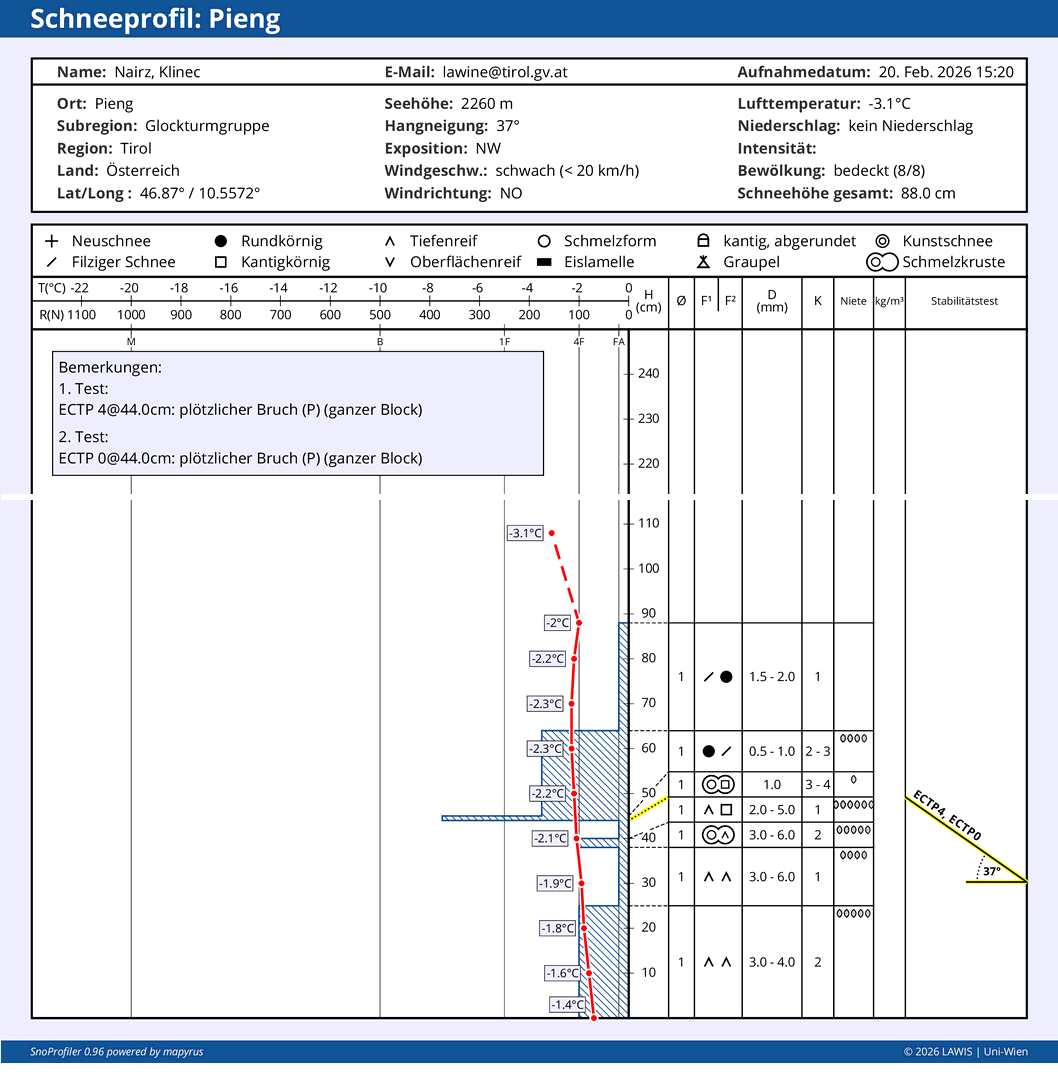
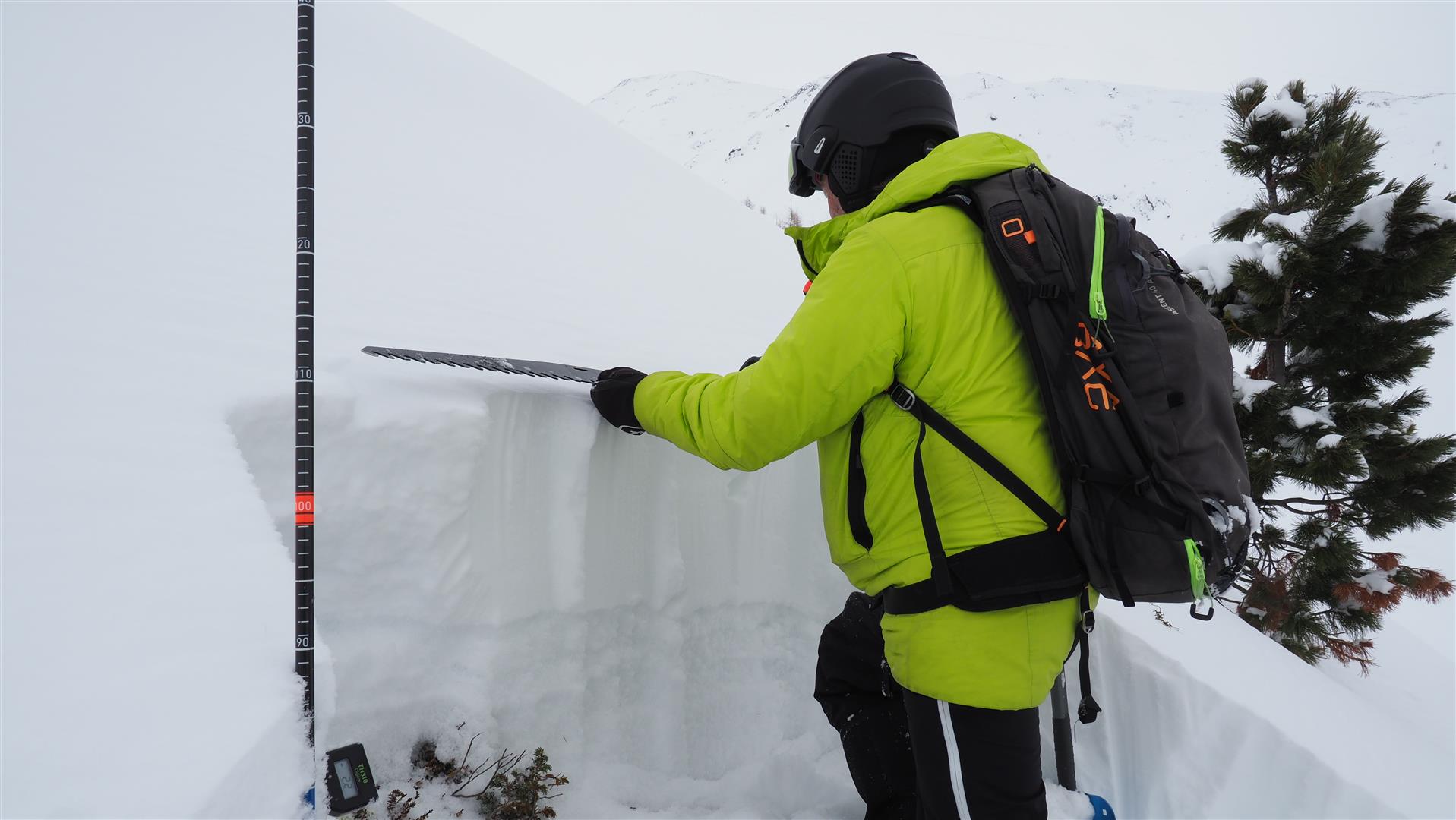
During our examinations of the snowpack, we once again found a snowpack which was extremely prone to triggering and a marked persistent weak layer. The primary weak layer consisted of faceted crystals and rotten snow which was embedded between old melt-freeze crusts. Secondarily, the avalanche fractured at the relatively loosely-packed fundament near ground level.
Fatal avalanche incident Gampberg / St. Anton / Mid-Verwall Massif region (20.02.2026)
The unfolding event
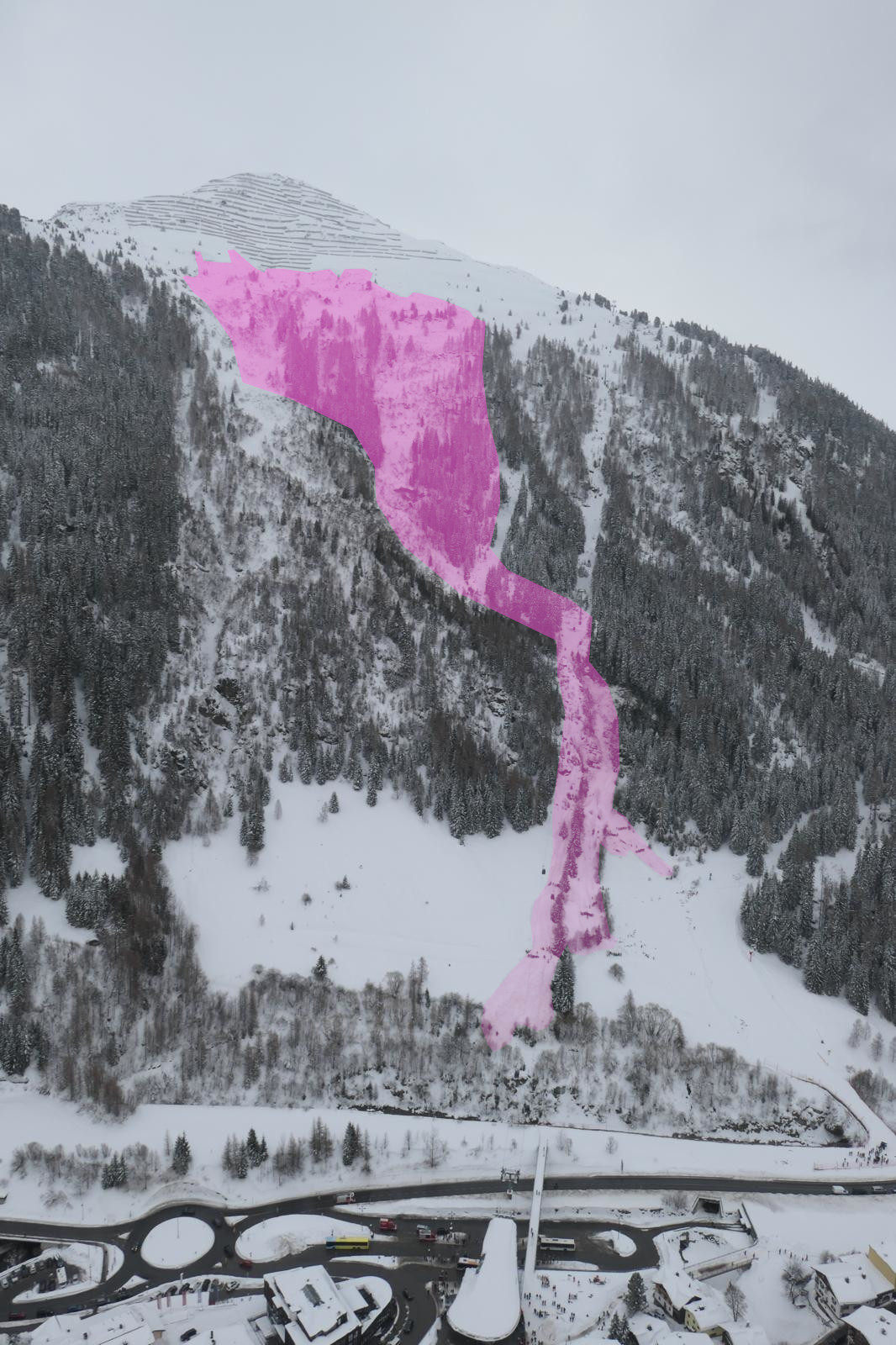
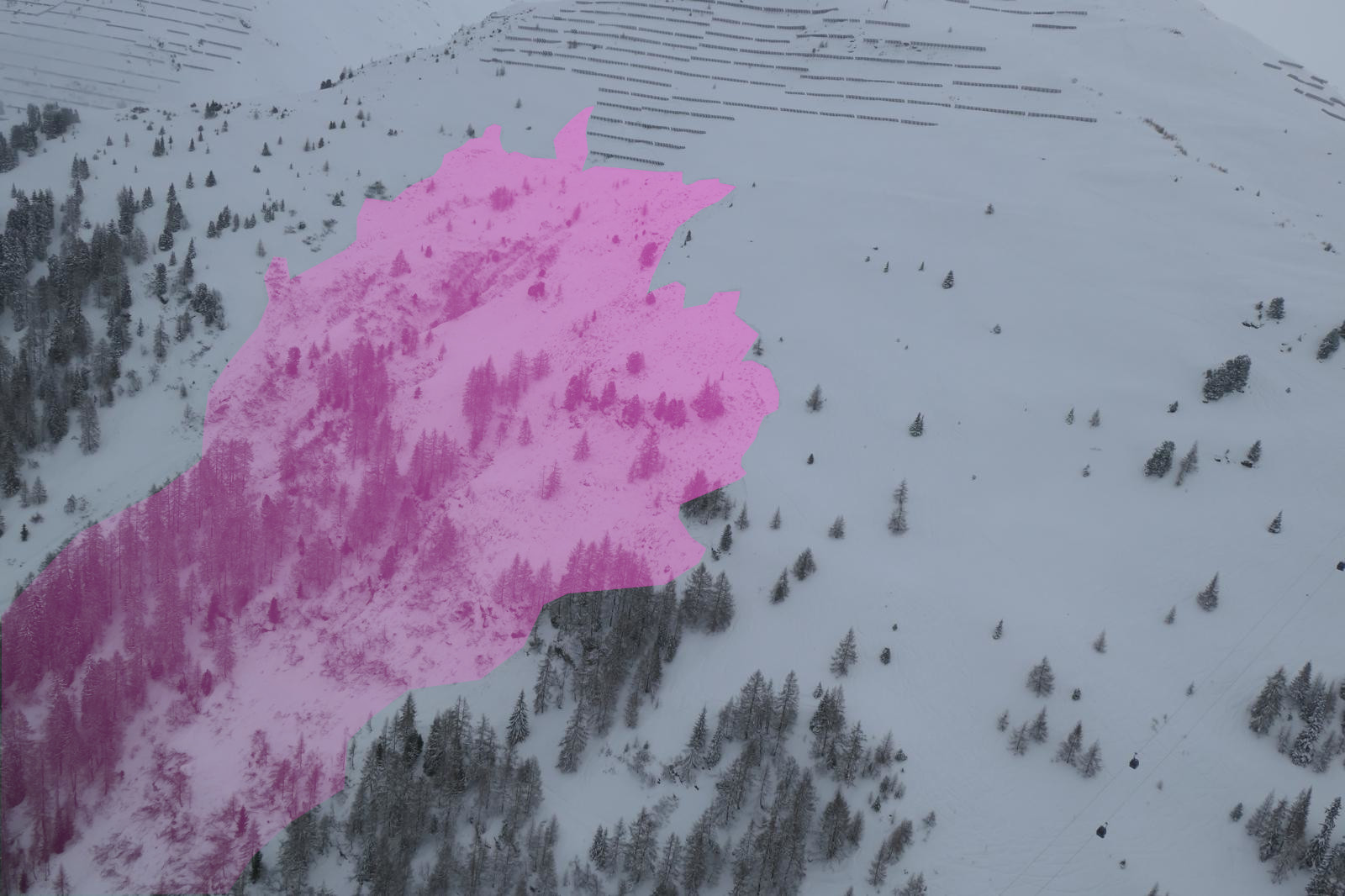
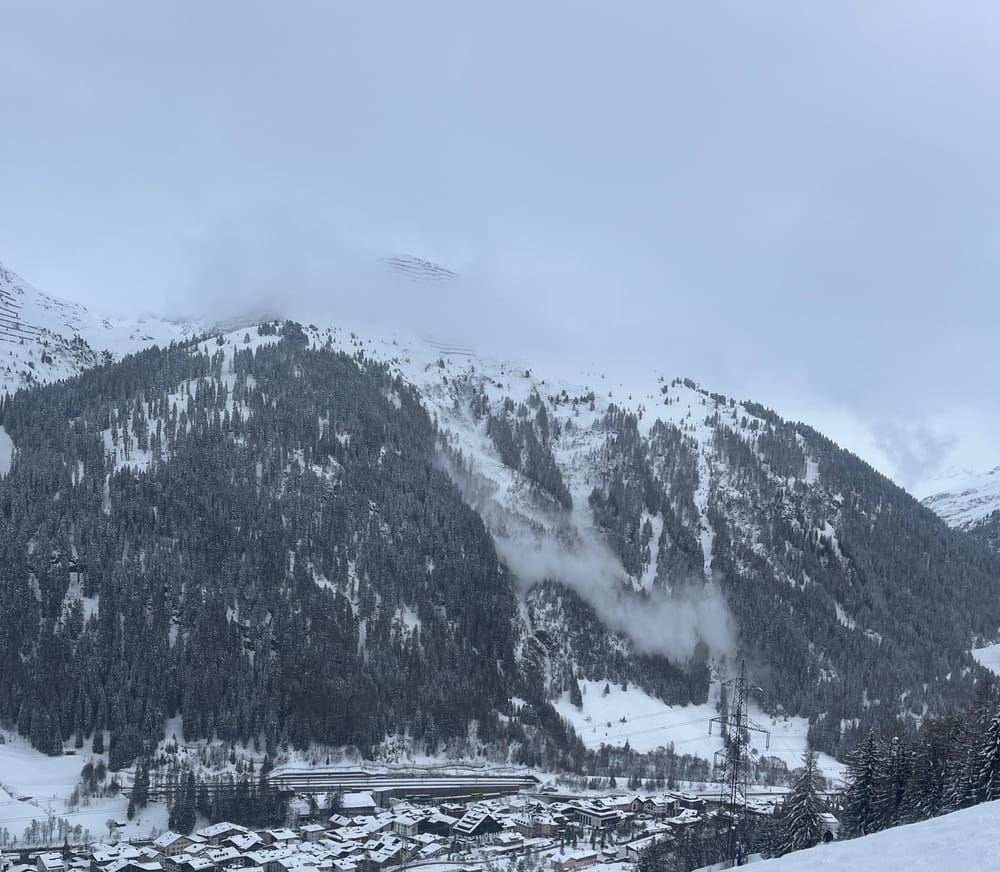
A group of five freeriders had already descended a number of times in the St. Anton am Arlberg ski area during the course of the day. In early afternoon they left the secured ski area below the Gampberg near the “Gertrud-Gabl-Rinne,” when one of them triggered a large-sized slab avalanche. All five persons were caught in the avalanche and swept along. The avalanche was seen by a number of observers and the powder cloud was visible from the valley. A large-scale rescue operation was immediately set in motion with numerous groups taking part, including Mountain Rescue, Ski-slope Rescue, Mountain Guides, Ski Teachers, Fire Department, Ambulance Team, Emergency Doctors, (Alpine) Police, Dog Guides, and various helicopters. Two persons were quickly located by means of LVS beamers at an altitude of 1340m and 1560m and dug out of 1.2 metres and 1.6 metres-deep snow. Both had already died. A further person had no LVS beamer and was found by means of plungers about 2 hours after the avalanche released at a depth of 1.8 metres. After reanimation attempts were undertaken, the person was flown to the hospital in Innsbruck, where he died the same day. The fourth person, who was partially buried and injured, was flown to the hospital in Zams. The fifth person was not buried in snow masses.
The avalanche
It was a large to very large-sized slab avalanche with a breadth of about 450m and a length of about 1200m. In this case as well, the size of the avalanche can be explained by the interaction of a marked slab on top and an equally marked and widely expansive weak layer. The slab avalanche triggered on a very steep to extremely steep northwest-facing slope at an altitude of 2040m. The plummet path of the avalanche can be characterized as a marked, extremely steep gully and gorge system with high disparities. The avalanche divided into several cones, some of which ended in huge deposits.
The snowpack
Due to the unusual avalanche situation it was not possible to carry out analysis at the spot of the release. Nevertheless, it is possible to say with near certainty that the avalanche’s cause is to be found in the well known persistent weak layer problem.
Fatal avalanche incident Untermotzwiesen / Serfaus / Samnaun Massif region (21.02.2026)
The unfolding event
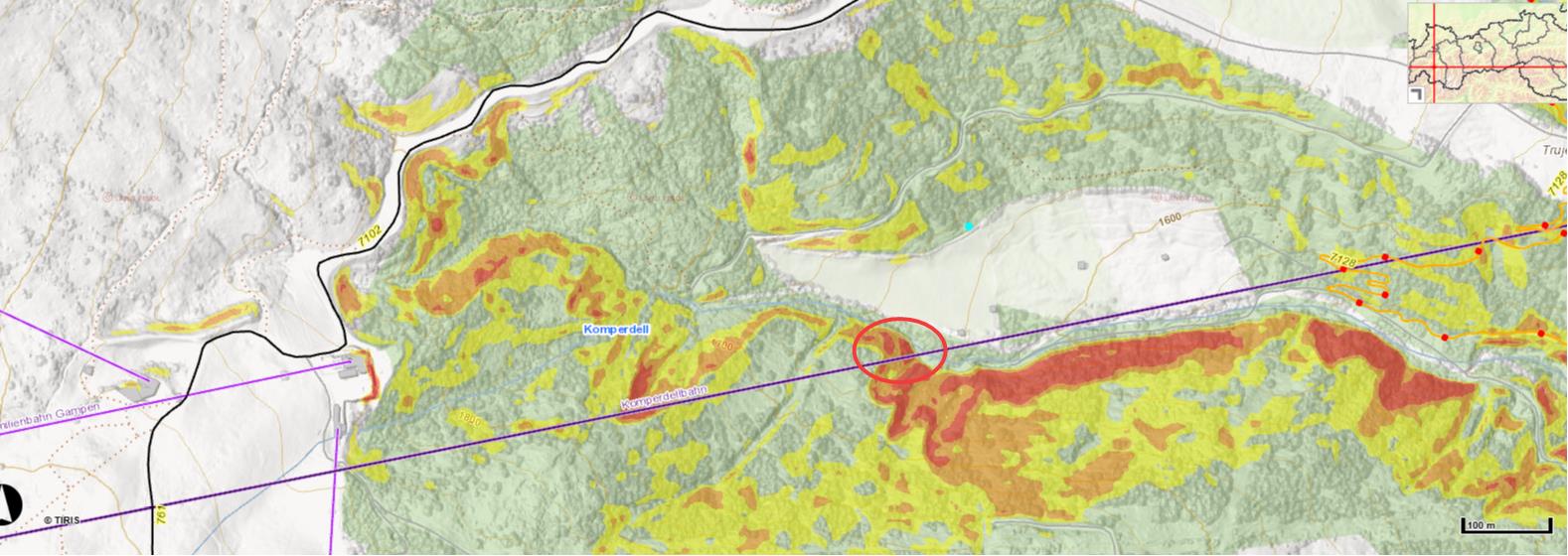
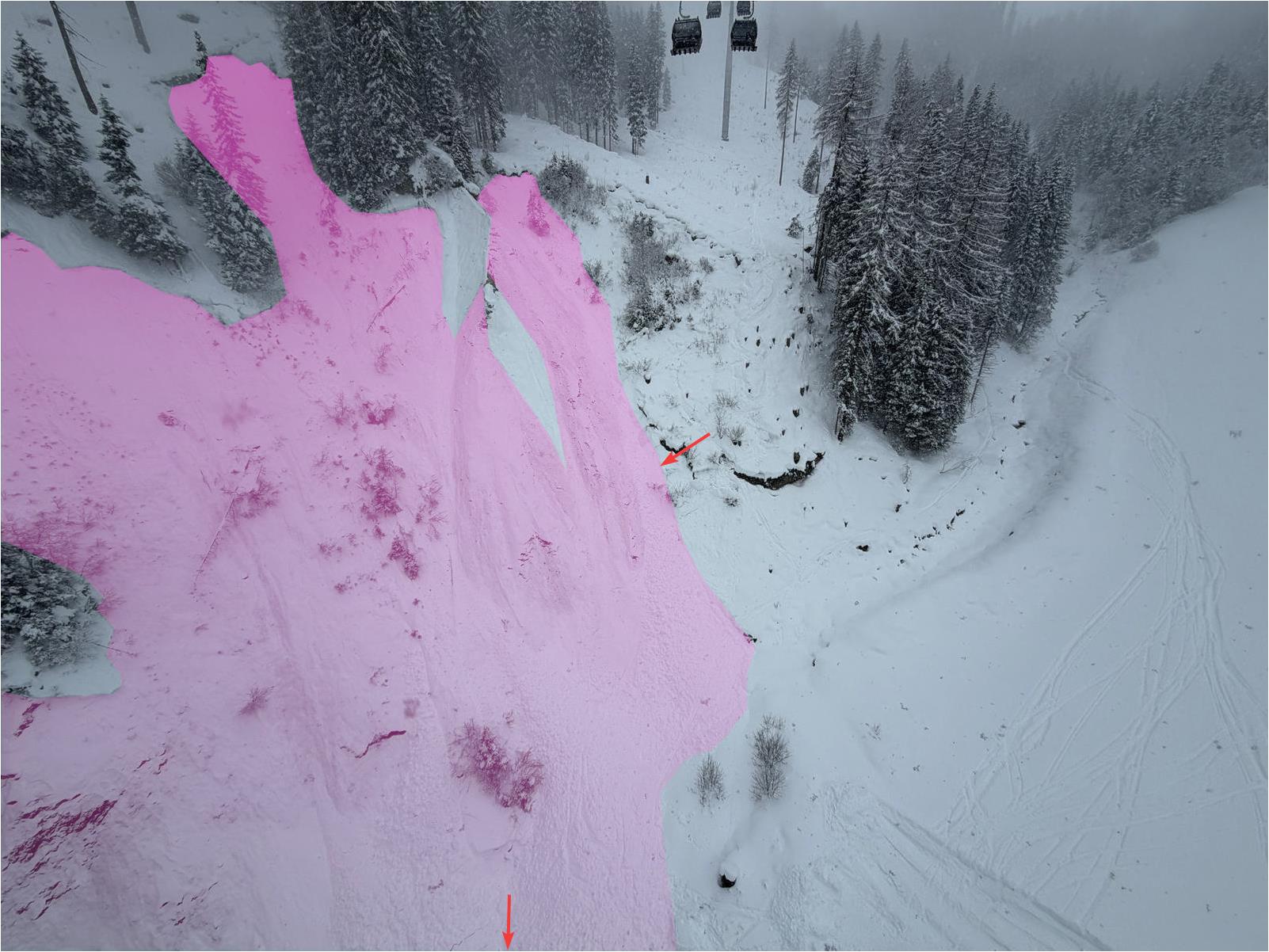
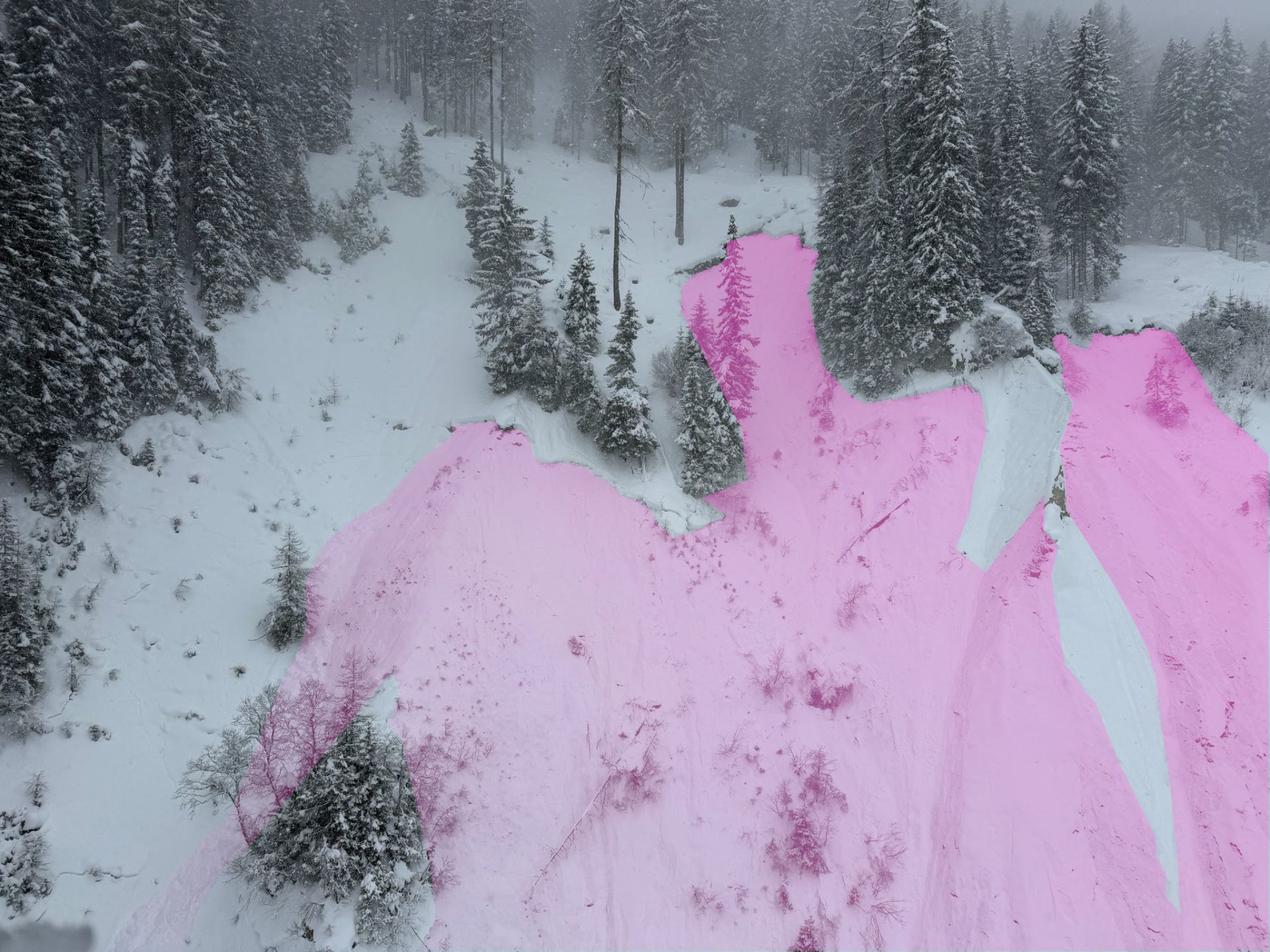
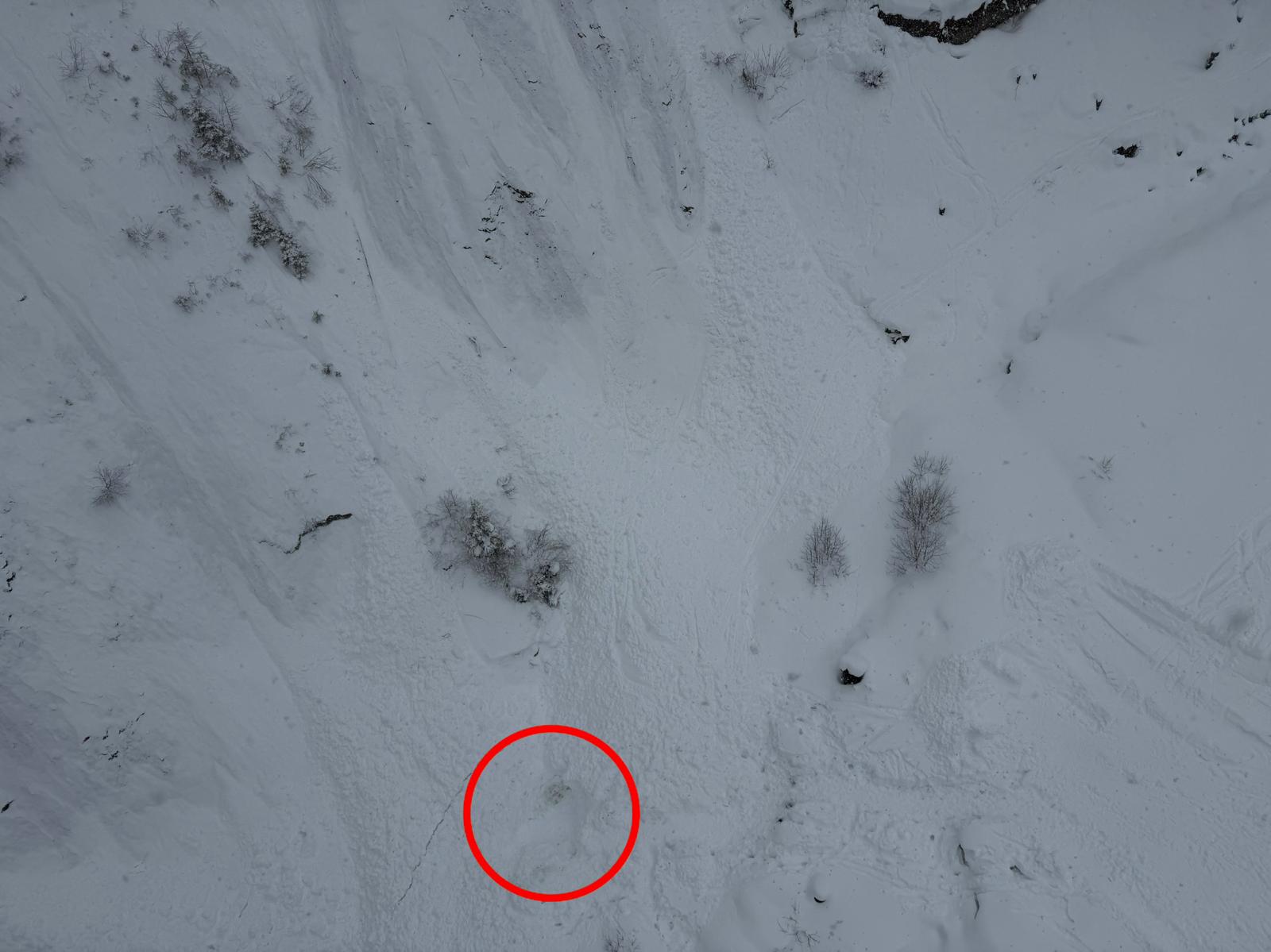
Two persons left the secured ski run of the Serfaus ski area and skied beneath the Komperdellbahn into freeriding terrain in a sparsely wooded area. Above the Untermotzwiesen at an altitude of approximately xxx, one person traversed an extremely steep northeast-facing slope and came to a stop in a flat zone at the foot of the slope in order to wait for the second person. At that moment, a slab avalanche triggered above the waiting person, who was completely buried in snow masses. The second person, who was outside the avalanche path, immediately skied to the spot where the other person was buried in snow and began to search with the LVS beamer. Other persons in the vicinity participated in the search. By means of the LVS beamer, the person buried in snow was dug out from a depth of about 2.4 metres and with reanimation measures was flown to the hospital in Innsbruck, where the person died.
The Avalanche
The avalanche was a medium-sized, approximately 60m broad and 50m long slab avalanche. It triggered on an extremely steep northeast-facing hillside (earth pyramid) at an altitude of approximately 1670m. The average depth of the fracture is estimated to have been about 40-50cm.
The snowpack
Due to the unusual avalanche situation it was not possible to carry out examinations of the snowpack directly at the scene. However, we can say with near certainty that the avalanche was caused by the persistent weak layer as main underlying problem. The snowpack was further weakened, moreover, due to the ascending snowfall level. According to reports on location there is reason to believe that ultimately the avalanche was unleashed by a remote triggering in the flat terrain of the stream bed.
Avalanche Diasalpe / Kappl / Verwall Massif East region (20.02.2026)
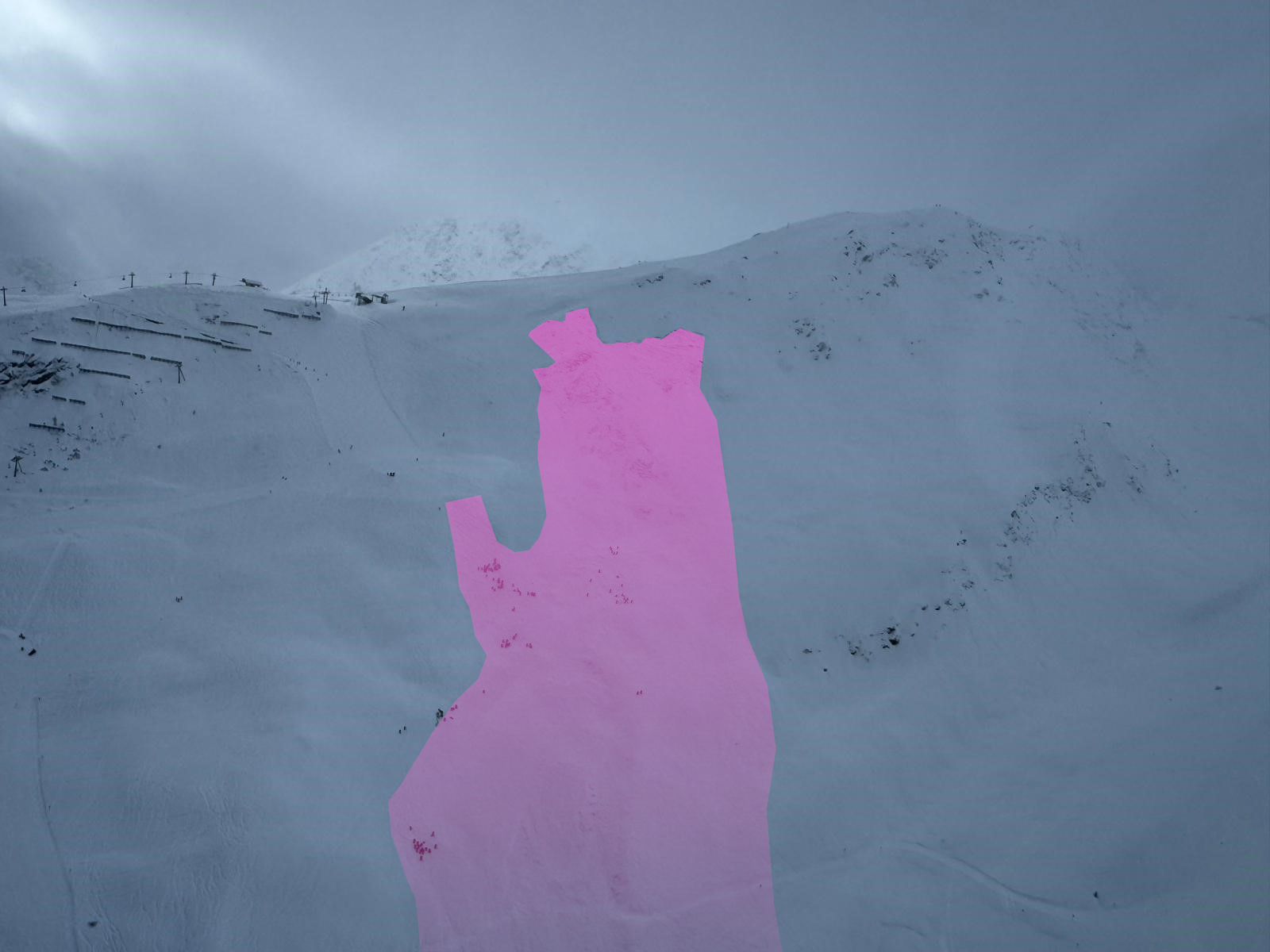
Shortly after midday, 12 persons were in freeriding terrain on a very steep east-facing slope above the Diasalpe when a slab avalanche triggered at an altitude of 2260m. All the persons were struck by the plummeting snow masses and swept along with them, 9 persons were partially buried in snow, 3 persons completely buried. The latter 3 could be rapidly located and dug out by their companions thanks to LVS beamers. Two persons suffered (slight) injuries.
Avalanche operations near Lärmstange / Zillertaler Alps Northwest region
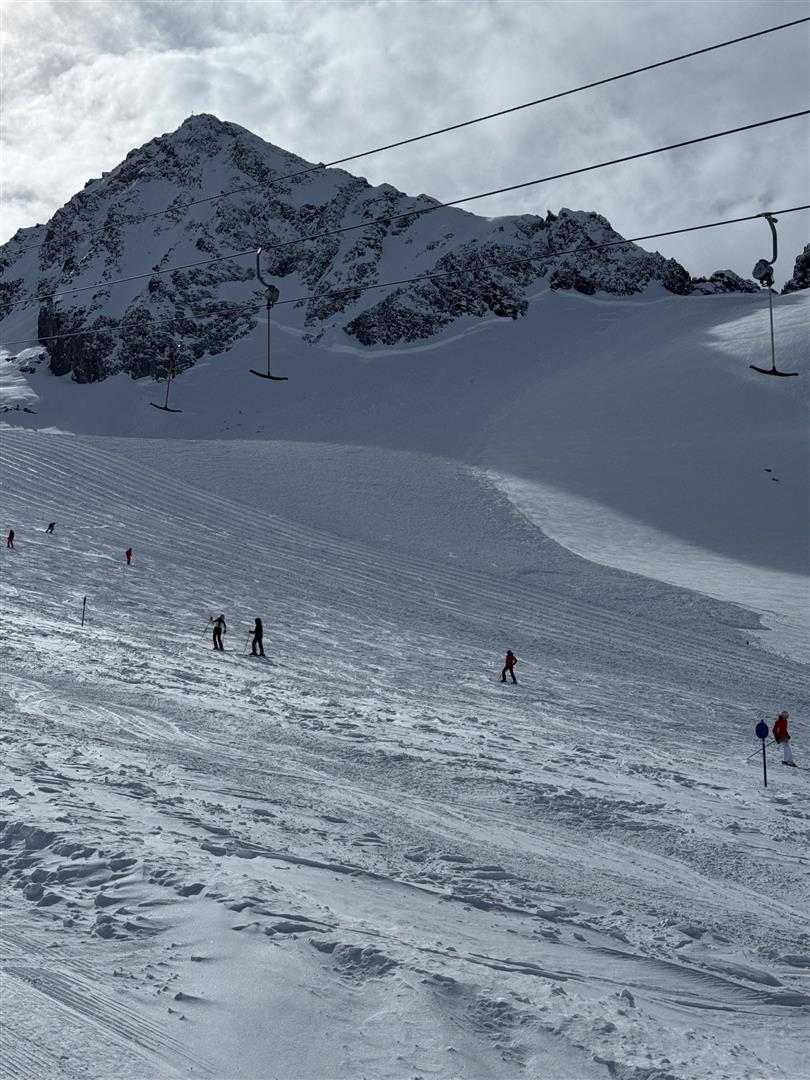
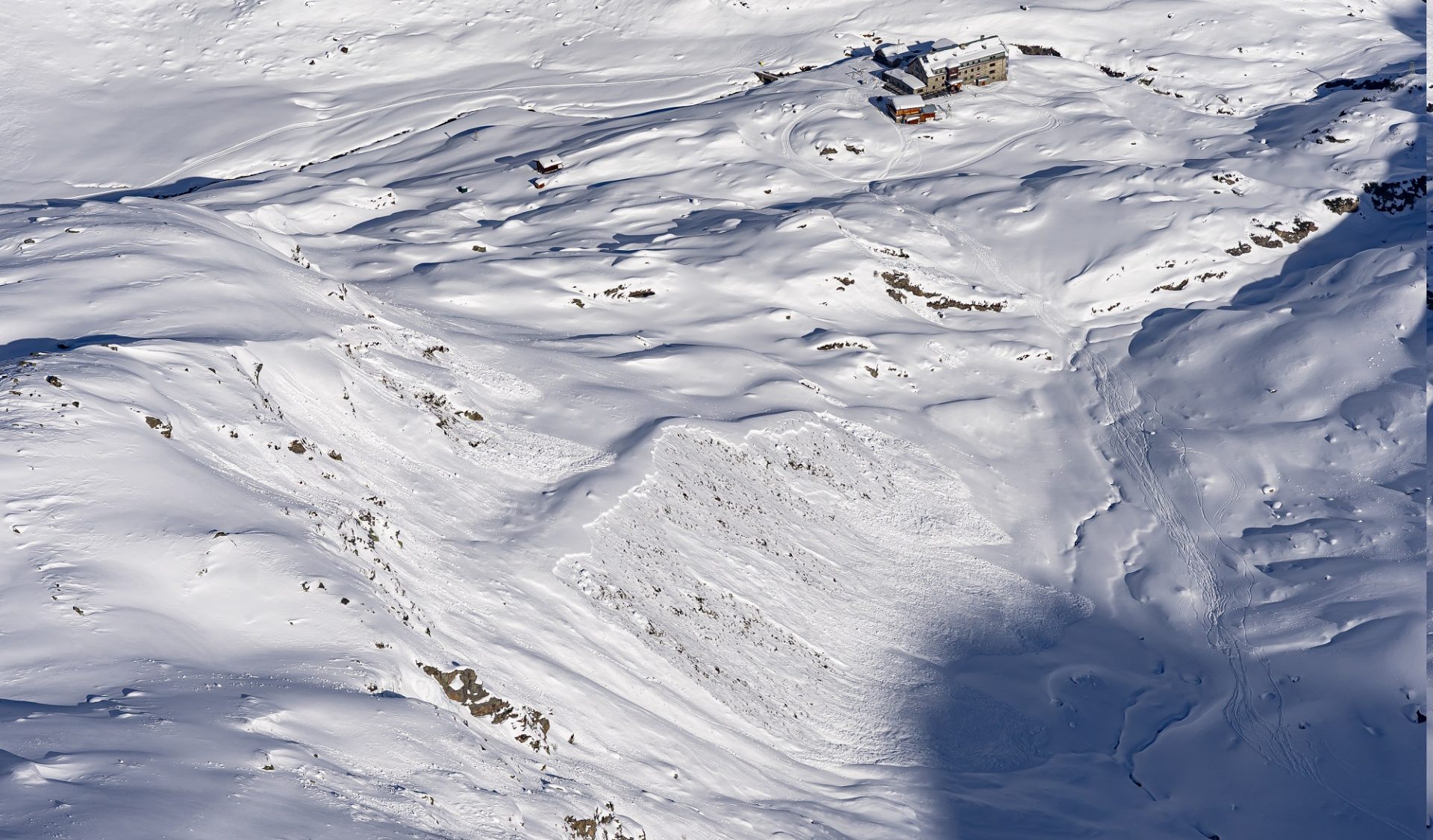
In the Lärmstange zone of the Hintertux Glacier ski area there were two avalanche operations conducted on two different days. One was on 21.02, in which two winter sports enthusiasts were injured; another was on 25.02 without anyone being buried in snow masses, nevertheless necessitating a large-scale search operation.
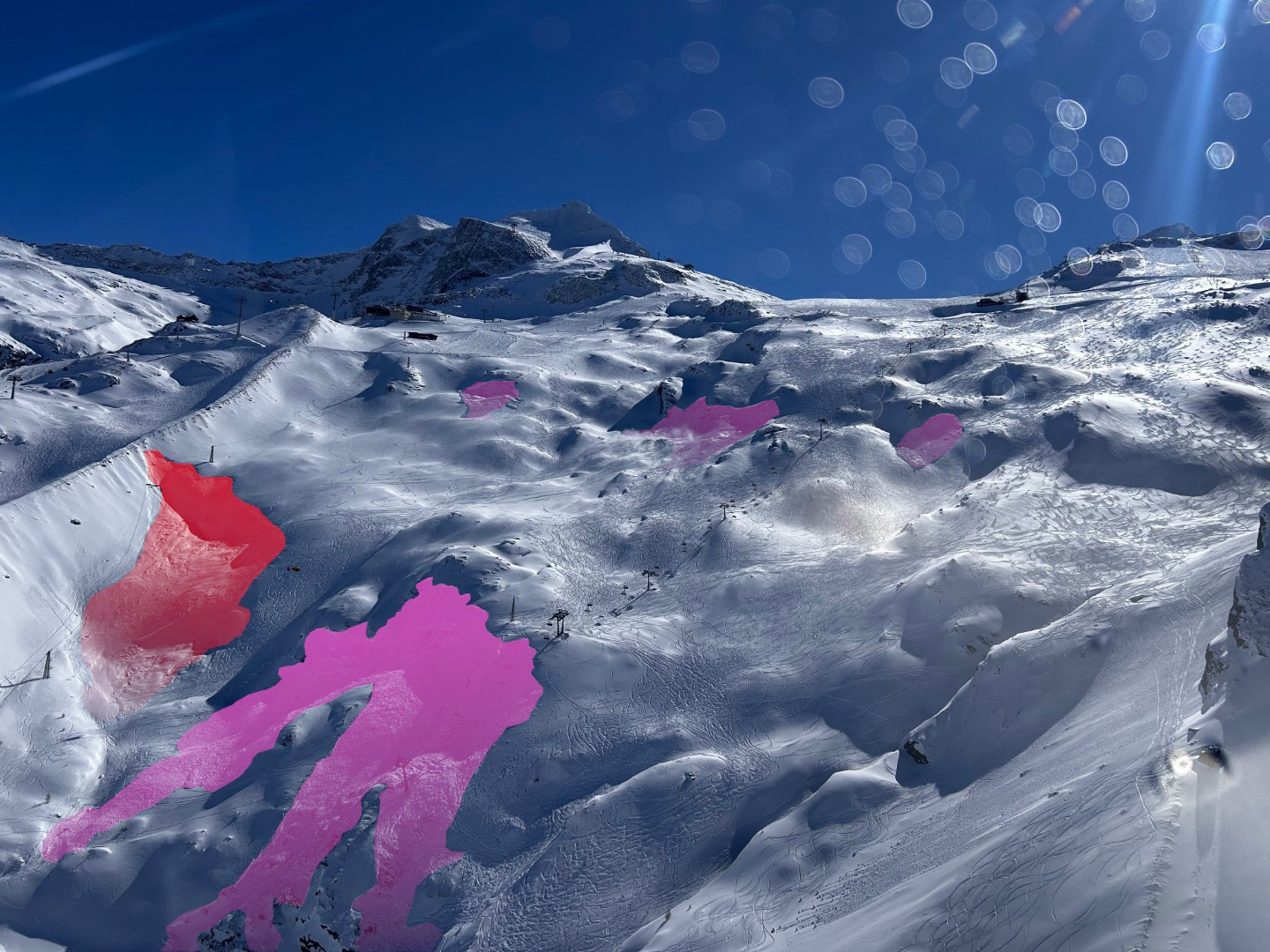
Innumerable naturally triggered avalanches. A long period of high avalanche danger.
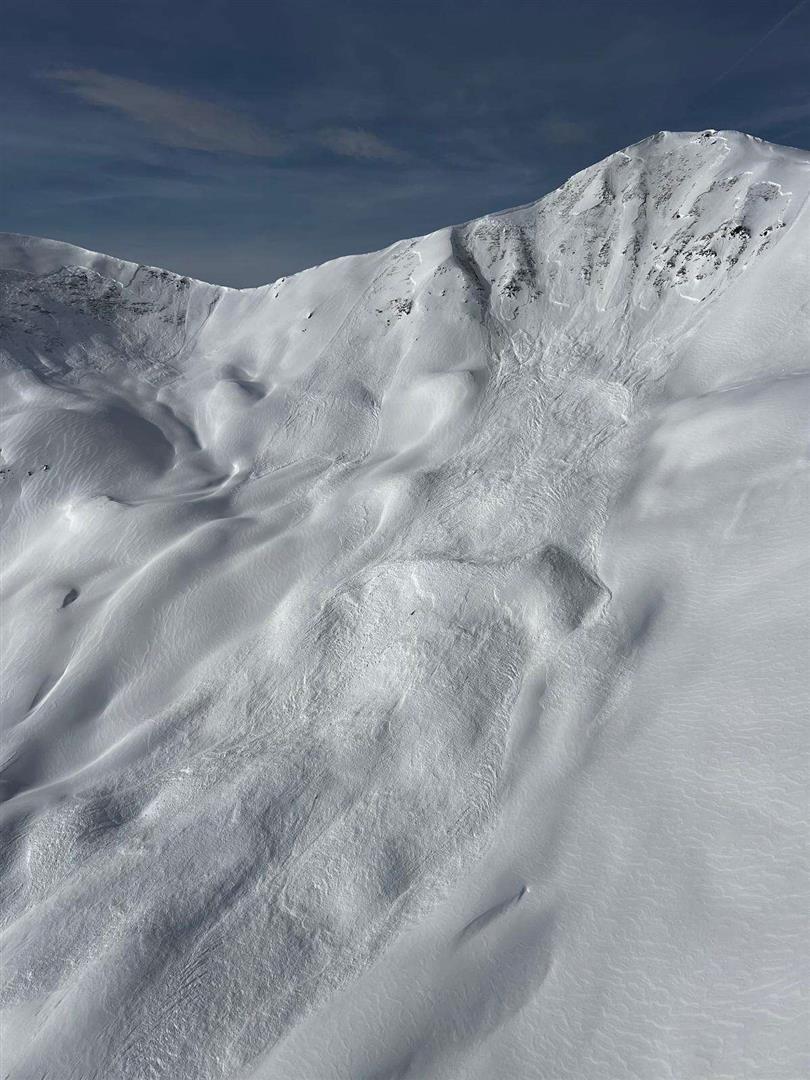
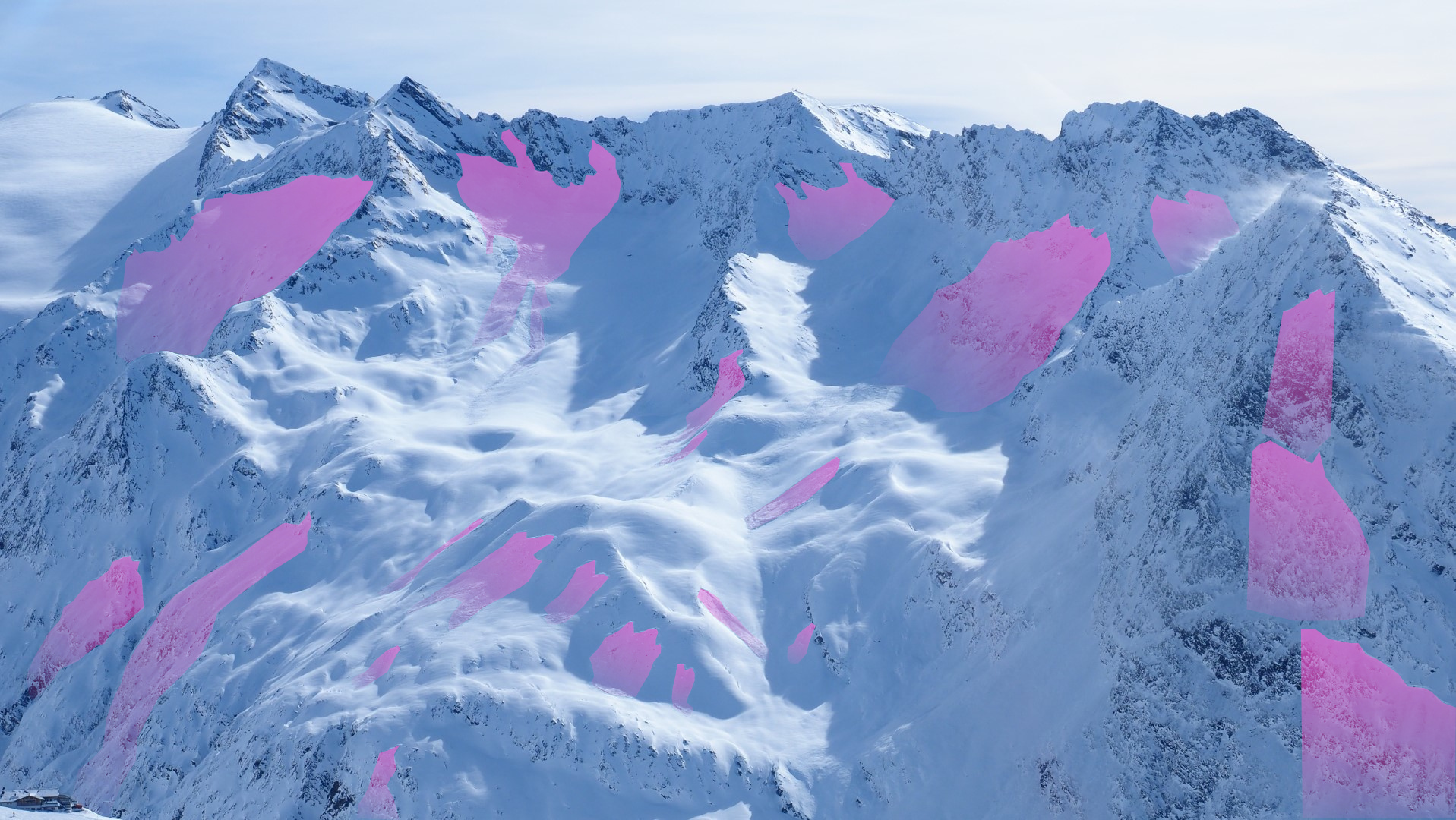
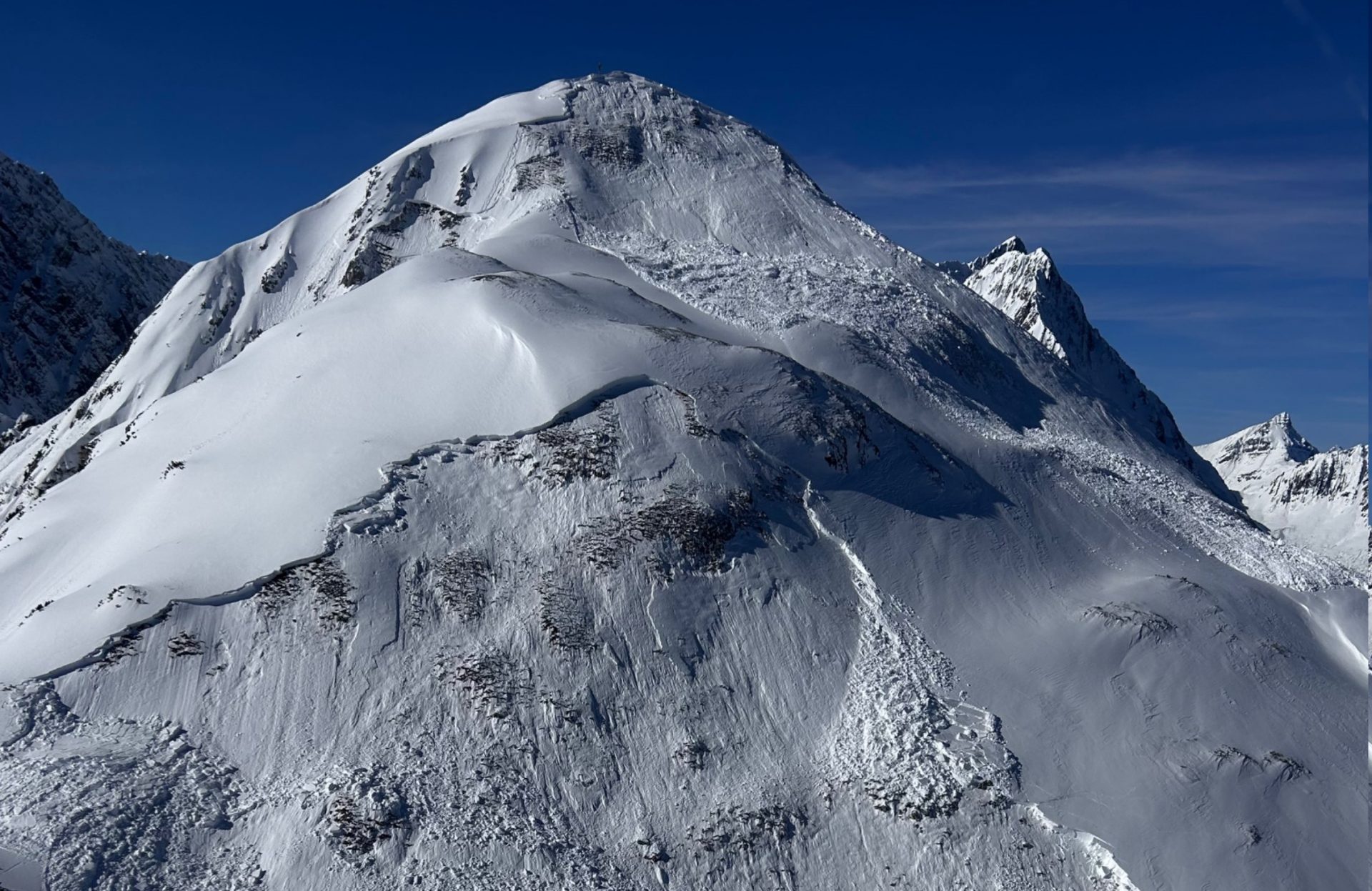
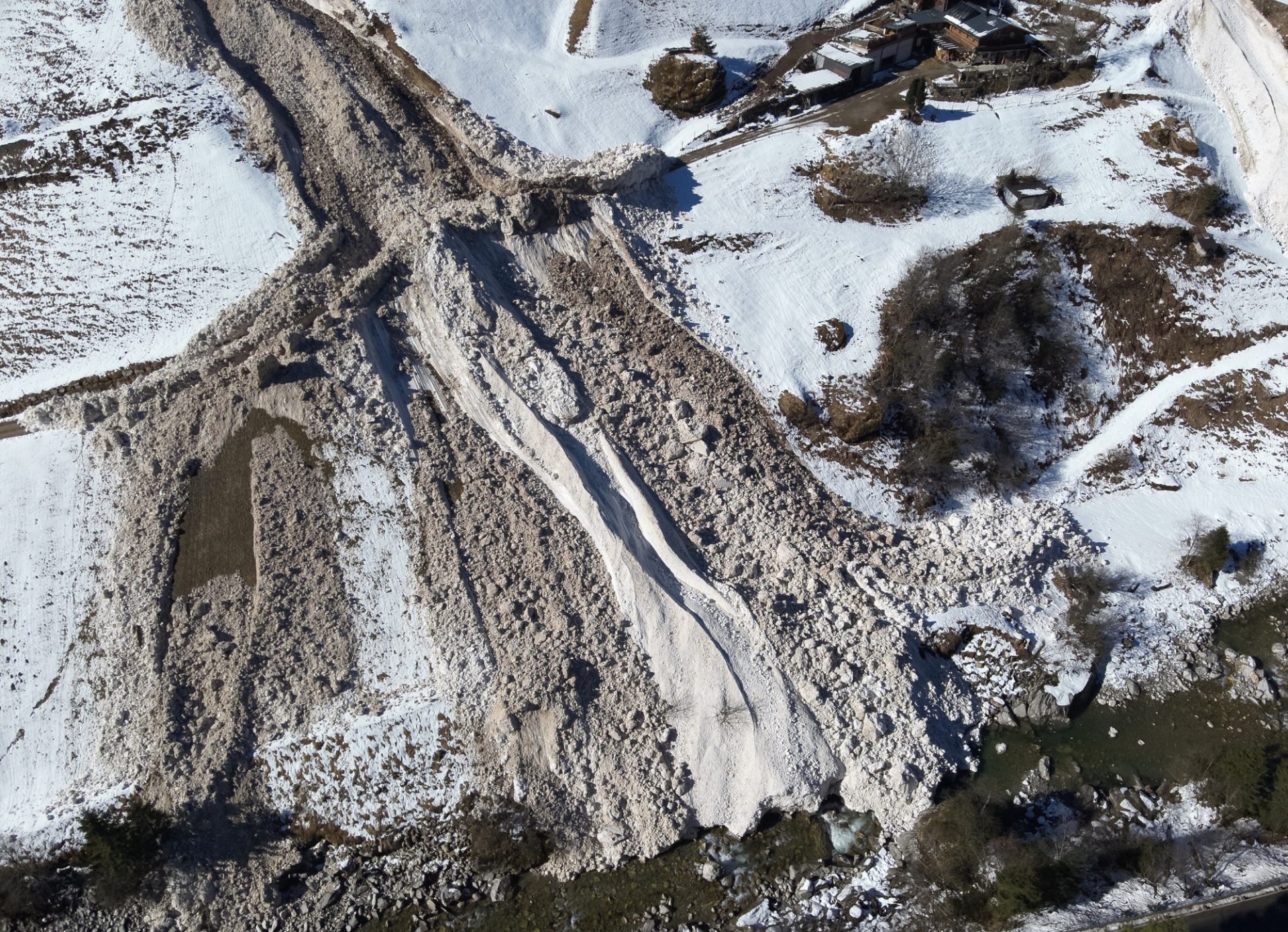
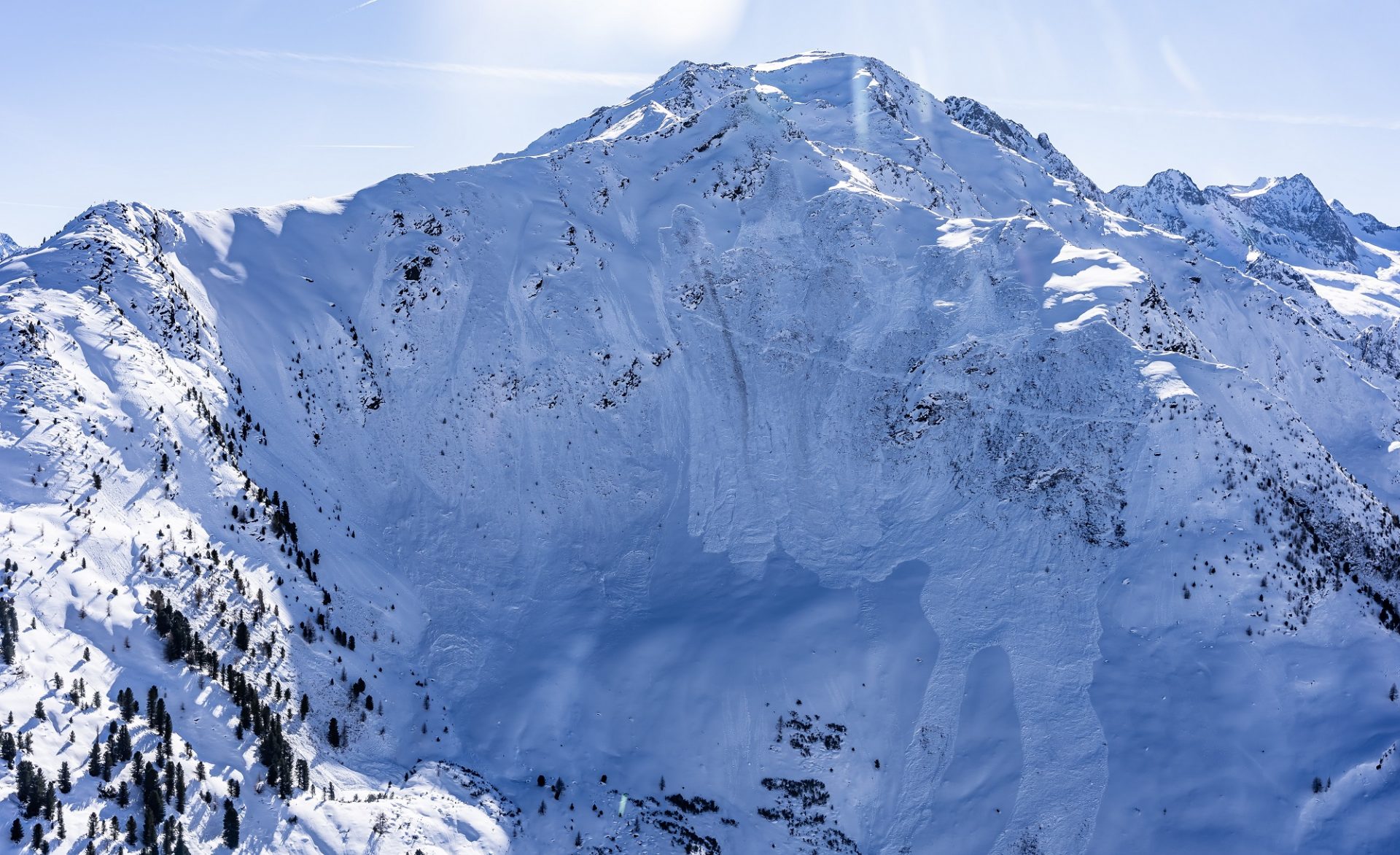
Apart from the avalanche incidents described above, some of which ended tragically, countless naturally triggered dry-snow slab avalanches released in particular during and just following the period of precipitation which started on Tuesday, 17 February and lasted through Tuesday, 24 February. Some of the avalanches grew to Magnitude No. 4, very large-sized. What was astonishing was the huge fracture propagation potential and the correspondingly far-reaching, cohesive fractures. This, as has already been noted, can be explained by the fact that an extremely widespread weak layer that was prone to triggering had an area-wide slab deposited on top of it.
Due to the extremely poor snowpack layering, coupled with a sequence of precipitation bouts and persistently strong winds between the events, the assigned and published avalanche danger in far-reaching parts of Tirol was HIGH, danger level 4, for the unusually long period of time of 10 days (16.02 – 25.02). The naturally triggered avalanche activity, avalanches triggered by persons and artificially triggered avalanches by means of explosives in combination with the observed magnitude of the avalanches confirm this assessment. In the major areas of precipitation in western regions, the danger estimate lay in the uppermost part of Danger Level 4. We are aware of no extremely large-sized avalanches having triggered, also of no damages to forests, fields or crops having been caused.