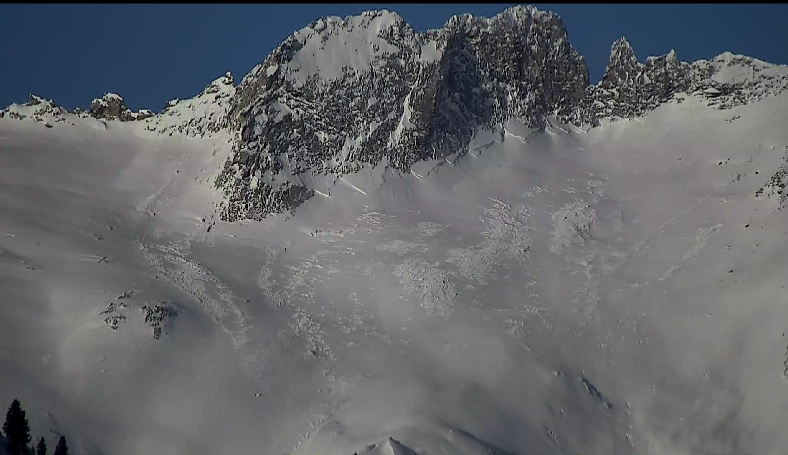
Persistent avalanche period. Two fatal avalanche incidents. Beware natural and remote triggerings. Avalanche on B198 (Lechtalstrasse). Other grave incidents on 20.02.2026.

We are confronted by an unusually long enduring avalanche period and it continues to persist. As a result of fresh snow and wind together with a very trigger-sensitive snowpack widespread, high avalanche danger prevails above the timberline in many parts of the land. In many places, slab avalanches are extremely easy to trigger. On top of that, naturally triggered avalanches can be expected. Remote triggerings present a serious danger.

“It’s brutally tense at the moment!”

…thus a mountain guide’s report from the Tux Alps on Thursday, 19.02.2026. The situation – extremely dangerous in many different ways – can’t be described any better than this to winter sports enthusiasts. And corresponding to the description is also the possibly record-breaking frequency of 33 avalanches reported to headquarters in Tirol yesterday, Wednesday, 18.02.2026, in a brief time window of fine weather between bouts of snowfall. Internally last week (13.02 to 19.02), 174 avalanches were registered! In two avalanche releases on 18.02, two people lost their lives, one in Navistal near the Obere Knappenkuchl, one in Urgtal on the northern flank of the Zwölferkopf. Beneath the Pengelstein (Kitzbühel Alps / Brixental) a person was seriously injured. On the Berglealpe (Samnaun Massif) a person was gravely injured. On 20.02 at 5:10 am, a company bus of Planseegruppe was struck on B198 (Lechtalstrasse) by an avalanche in which there were 12 passengers. The passengers escaped without injuries.

Avalanche incidents

Fatal avalanche incident Knappenkuchl / Tarntaler Köpfe (Tux Alps West region)

On 18.02, two persons were en route from Navis to climb the 2857m Hohe Geiger. Due to avalanche danger they changed their plan, decided to head towards Klammjoch instead. In relatively flat terrain near the Obere Knappenkuchl, a medium-sized slab avalanche triggered remotely at about 2150m altitude and buried both persons in snow masses, one completely, the other partially, who was not injured and able to get free of the snow masses and notify the rescue operation team. By the time the rescue team arrived, the totally buried person had been located and dug out up to his head. Nevertheless, all attempts at reanimating the person failed.
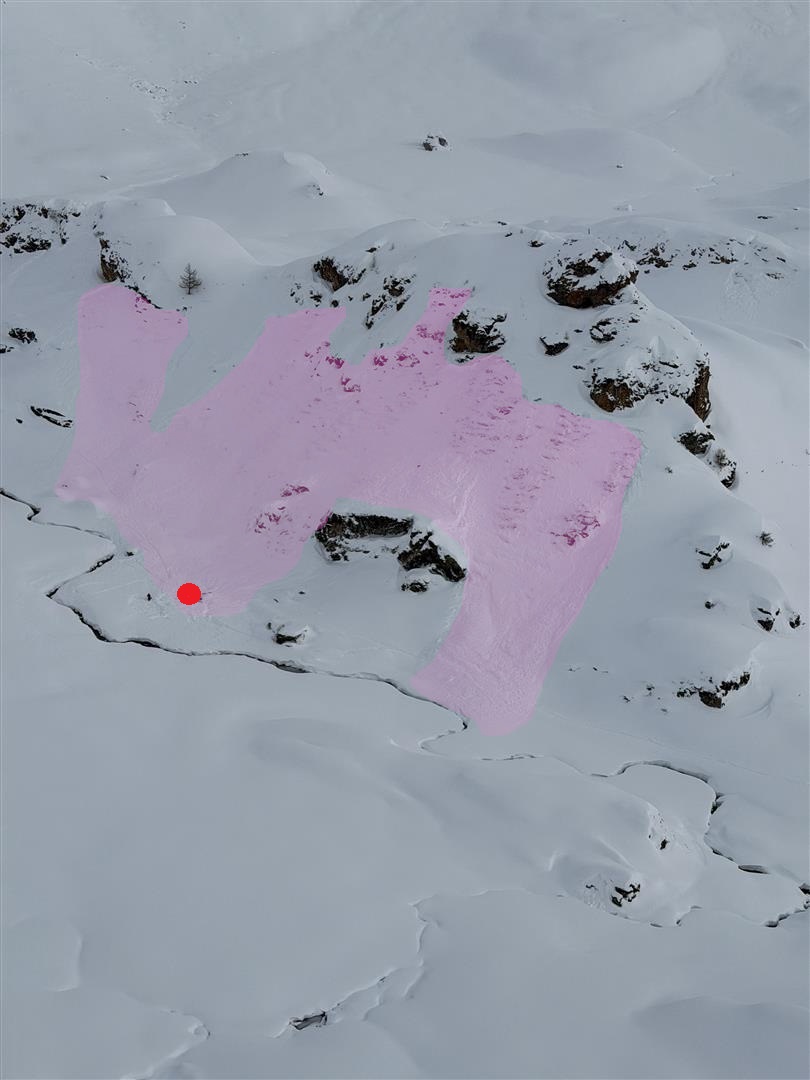
Lawinenunfall Obere Knappenkuchl im Nahbereich der Tarntaler Köpfe in der Region Tuxer Alpen West. Die Personen befanden sich in der Abfahrt im relativ flachen Gelände. Der rote Punke symbolisiert die Verschüttungsstelle. (© Alpinpolizei, 18.02.2026)
Avalanche incident Obere Knappenkuchl near the Tarntaler Köpfe in the region Tux Alps West. The persons were ascending to a refuge in relatively flat terrain. The red dot depicts the spot where they were buried in snow. (© Alpinpolizei, 18.02.2026)

Fatal avalanche incident Zwölferkopf / Urgtal (Samnaun Massif region)

Three skiers were en route outside of the secured ski runs of the Serfaus-Fiss-Ladis ski area on the northern flank of the Zwölferkopf in the direction of Urgtal when during their descent a large-sized slab avalanche triggered at an altitude of about 2250m. All three persons were caught in the avalanche and swept along. One of them was partially buried in snow masses but was able to get free and succeeded by means of an LVS beamer to rapidly find a totally buried person and free him from the snow masses. The third person had no LVS beamer and was found by an avalanche dog an hour after the avalanche had triggered. That person did not survive.
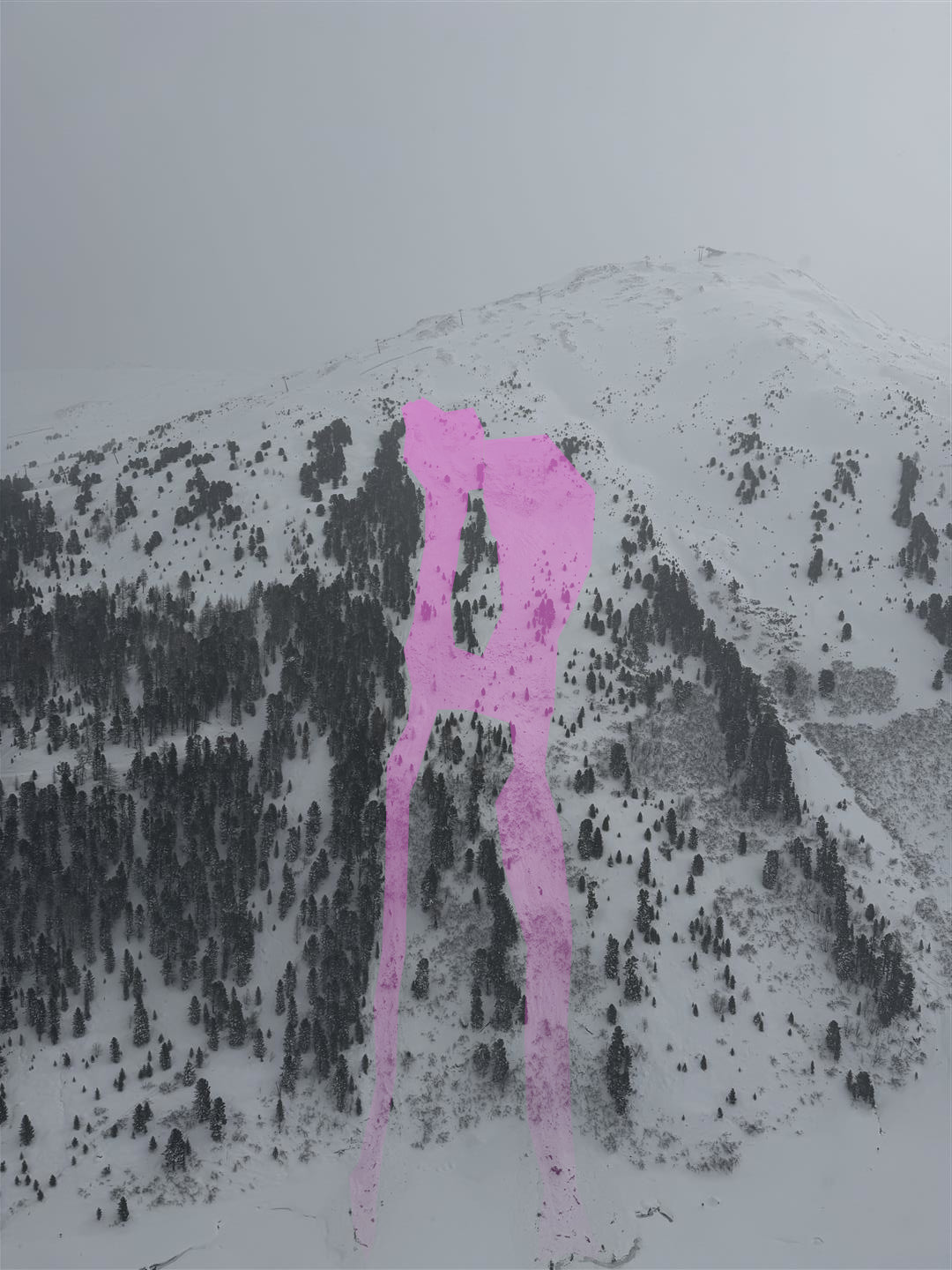
Lawinenabgang Zwölferkopf - Urgtal: Die Personen fuhren orographisch rechts in den Hang ein. Die verstorbene Person wurde etwa 300m von der Lawine mitgerissen. (© Alpinpolizei, 18.02.2026)
Avalanche incident Zwölferkopf – Urgtal: the persons skied orographically right into the slope. The deceased person was swept along in the avalanche for about 300m. (© Alpinpolizei, 18.02.2026)

Avalanche incident Pengelstein – Jufenkamm (Kitzbühel Alps/Brixental region)

Two well-equipped freeriders were descending outside the KitzSki ski area in open terrain on the northern flank of the Jufenkamm/Pengelstein in the direction of “Brunn.” One of them observed the other person on a 40°-steep slope which became narrower towards the bottom. That was when a slab avalanche triggered that swept along the freerider, who was buried about 2m deep in a drop in the terrain. The person was located swiftly and freed from the snow masses in about 20 minutes. Following successful reanimation measures that person was flown to the Innsbruck Clinic.
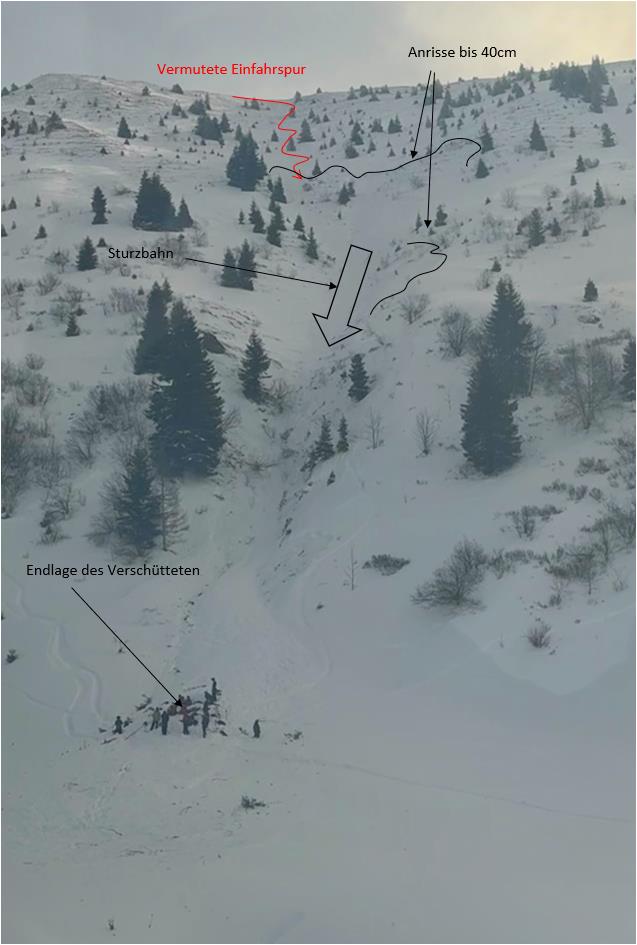
Lawinenunfall Jufenkamm / Pengelstein mit vermuteter Einfahrtsspur und Verschüttungsstelle (© Alpinpolizei, 18.02.2026)
Avalanche incident Jufenkamm / Pengelstein with the assumed entry track and spot of burial (© Alpinpolizei, 18.02.2026)

Avalanche incident Berglealpe (Silvretta East region)

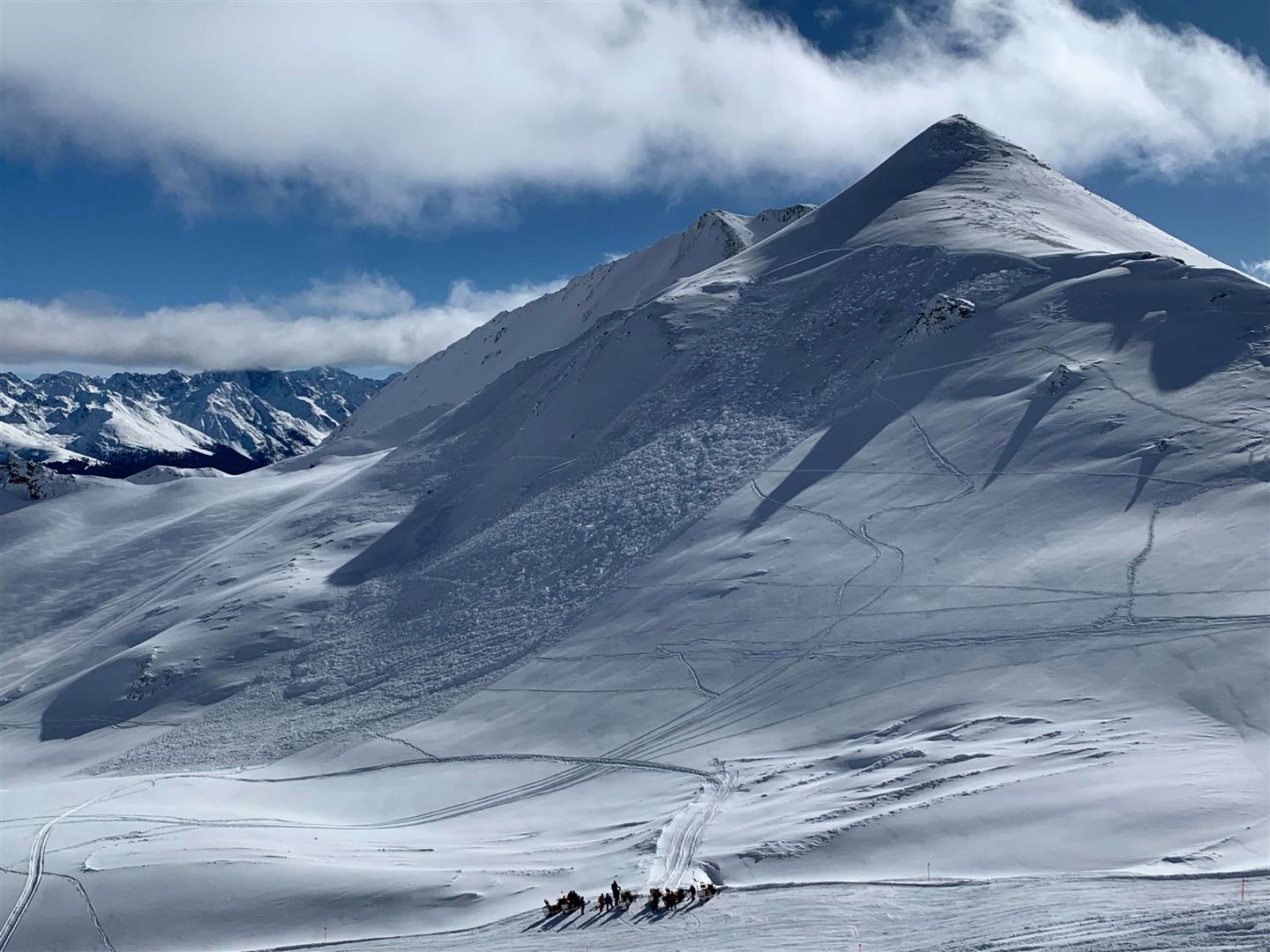
Three friends were in the Galtür ski area, where ski runs were increasingly being closed due to avalanche danger. For that reason the group decided to go to Mathon and from there to undertake a tour towards Berglealpe as far as the timberline. When they were at about 2150m in an approximately 20°-gradient slope, maintaining safety distances, a slab avalanche triggered above them on an approximately 35°-gradient slope, swept along two of the persons and buried them completely in masses of snow. Both could be rapidly located and unburied, one suffered thigh injuries. The avalanche was a slab release about 190m wide and 450m long, with a fracture depth between 80cm and 110cm.
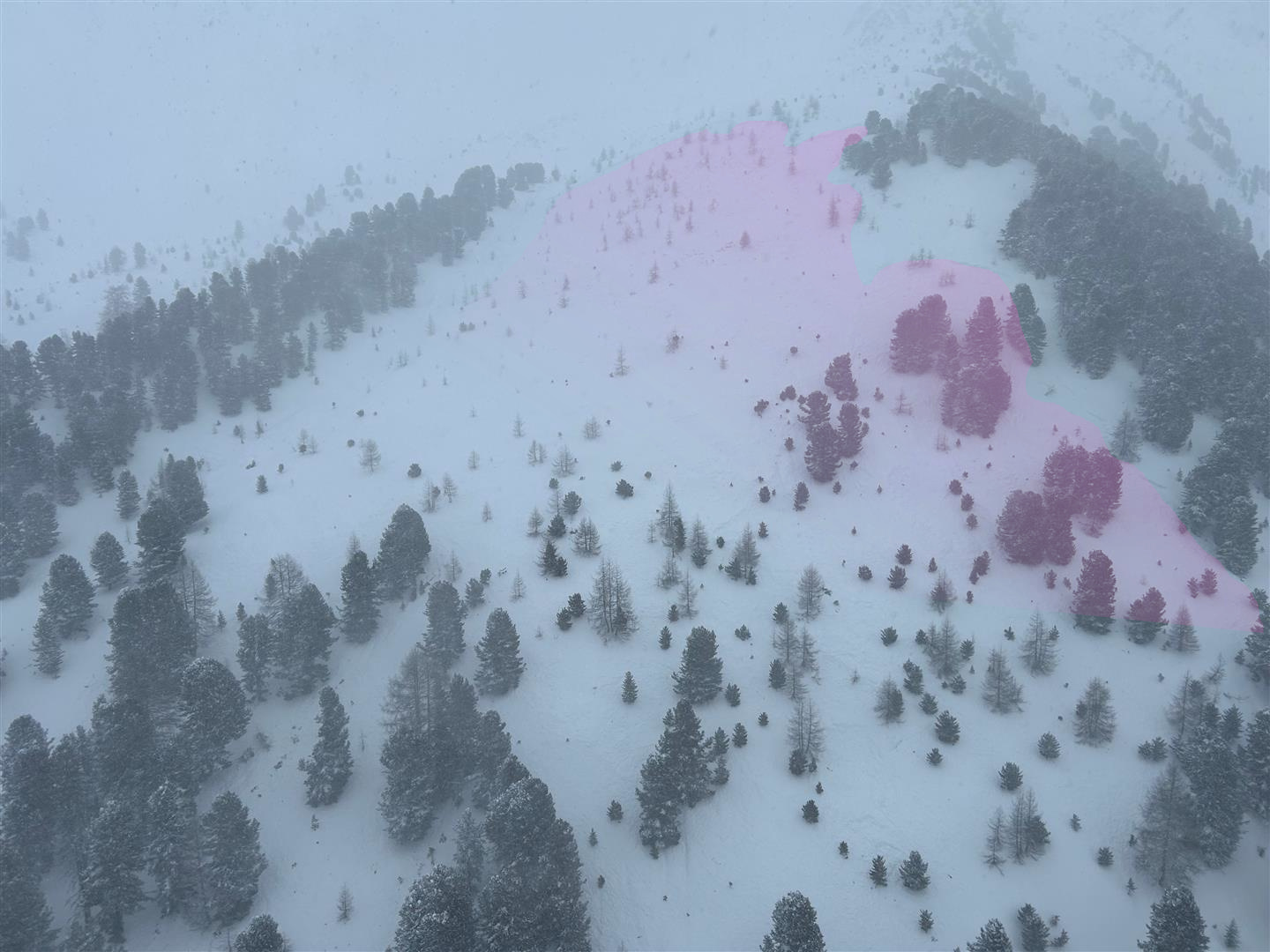
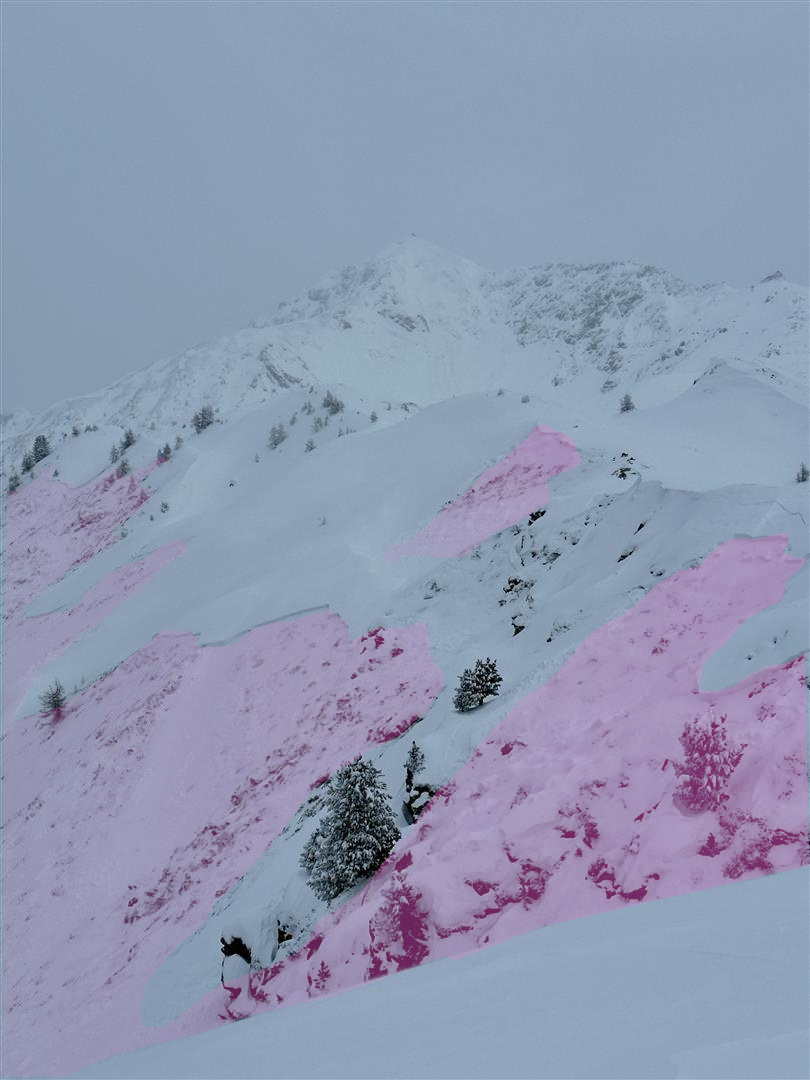
Lawinenabgang Berglealpe im Waldgrenzbereich mit beachtlicher Ausdehnung. (© Alpinpolizei, 17.02.2026)
Avalanche release Berglealpe near the timberline, revealing an imposing spread. (© Alpinpolizei, 17.02.2026)

We’ve often referred to the extremely poor snowpack layering. Due to the additional burden of the snowfall, usually accompanied by wind, increasing numbers of slab avalanches released naturally in the regions where snowfall was heaviest, both from 16-17.02 and from 19-20.02.2026.Spontane Schneebrettlawinen auf der Nordseite des Arbeserkogels in der Region Tuxer Alpen Ost (© Thomas Keck, 18.02.2026)
Naturally triggered slab avalanches on northern flank of Arbeserkogel in the  Tux Alps west region (© Thomas Keck, 18.02.2026)
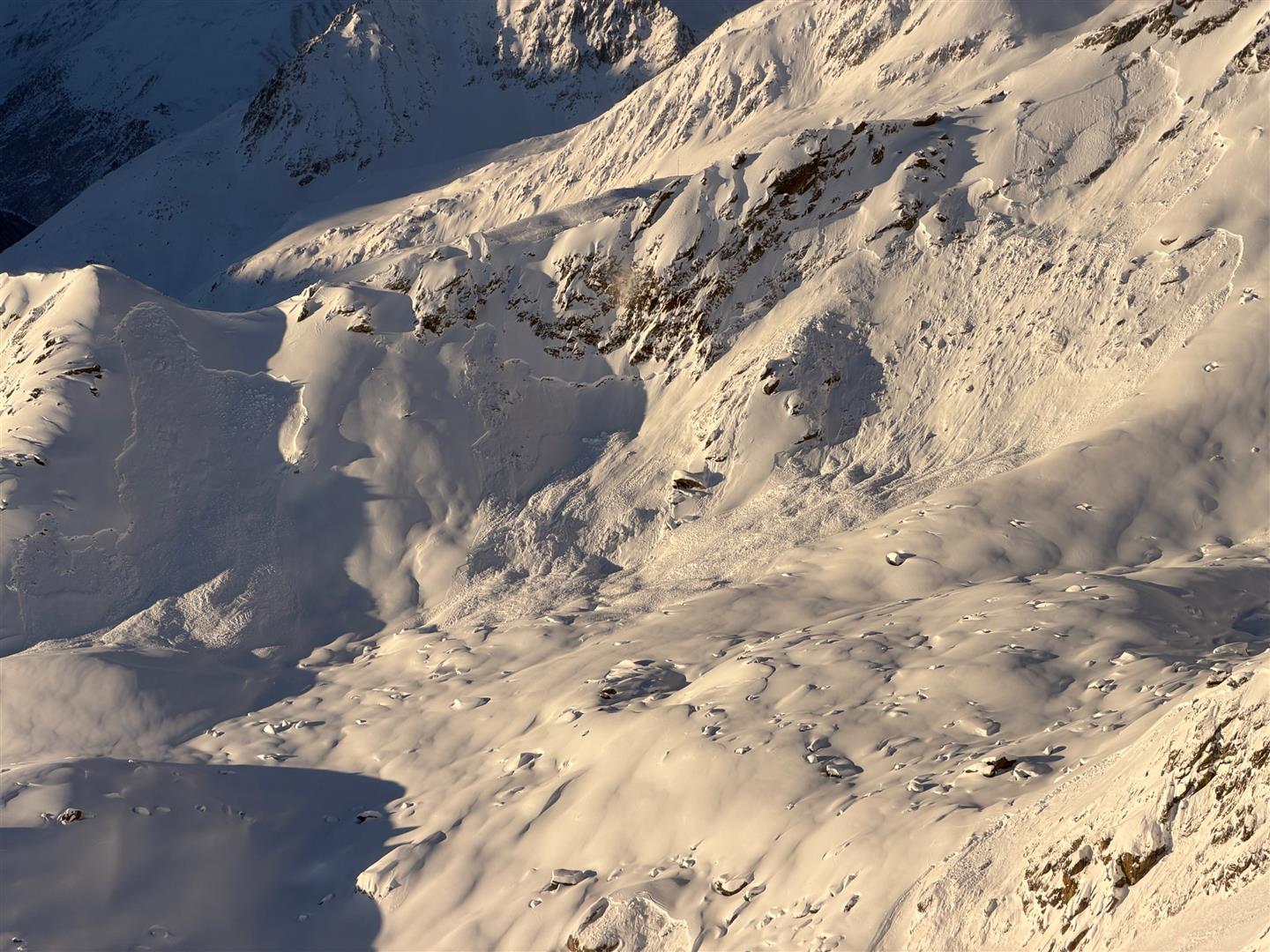
Stürmischer Wind  verfrachtete hier viel Neuschnee ins Lee, wo sich unter Felswandfüßen eine beachtlich große Schneebrettlawine löste. Zillergrund in der Region Zillertaler Alpen Nordost (© Thomas Eder, 18.02.2026)
Storm-strength winds transported lots of fresh fallen snow to leeward slopes, where beneath rock walls an impressively large-sized slab avalanche triggered. Zillergrund in the Zillertal Alps Northeast region (© Thomas Eder, 18.02.2026)
Very successful artificial triggerings

“Gatter” Avalanche, Stockach (Allgau Alps East region)

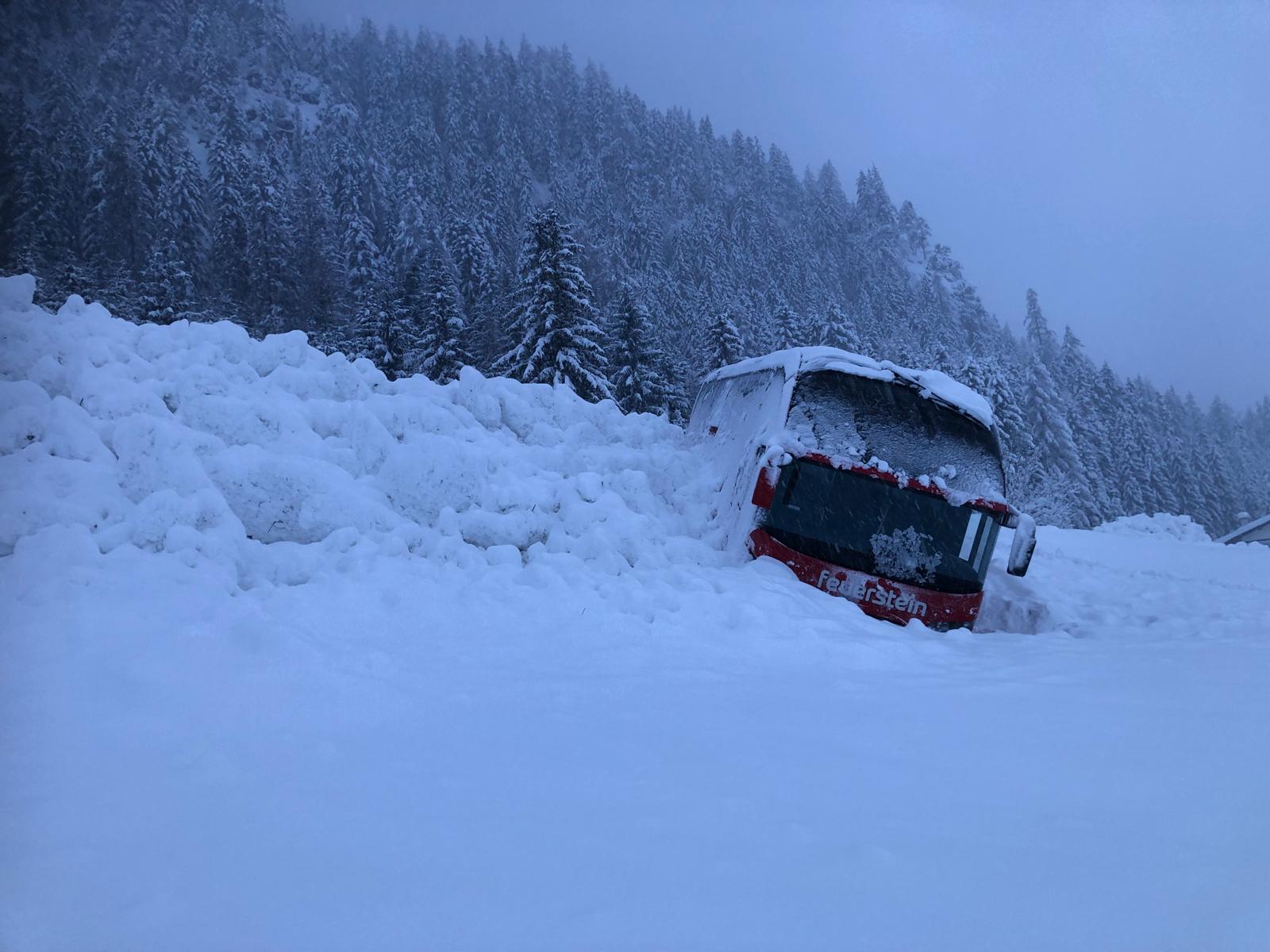
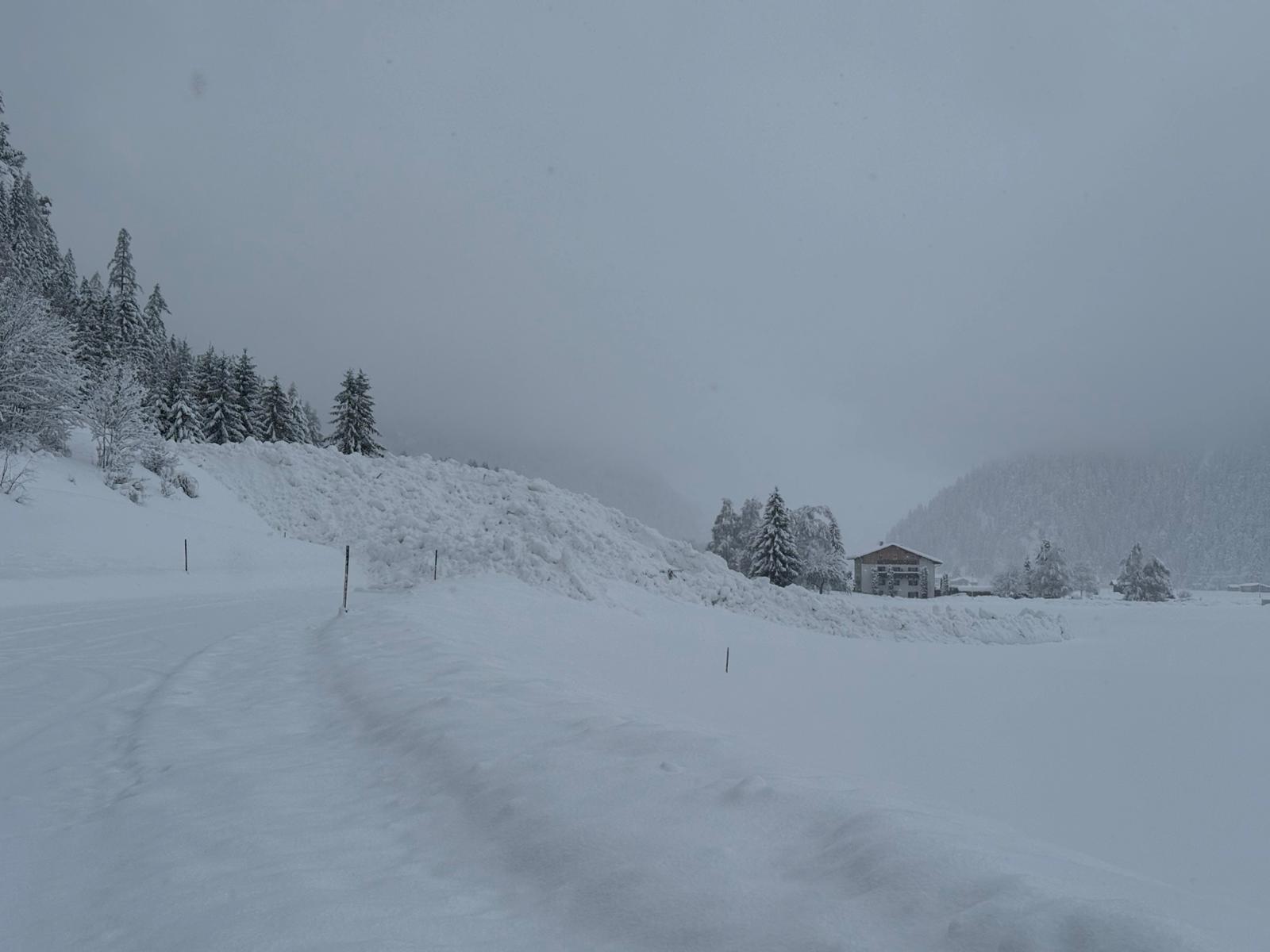
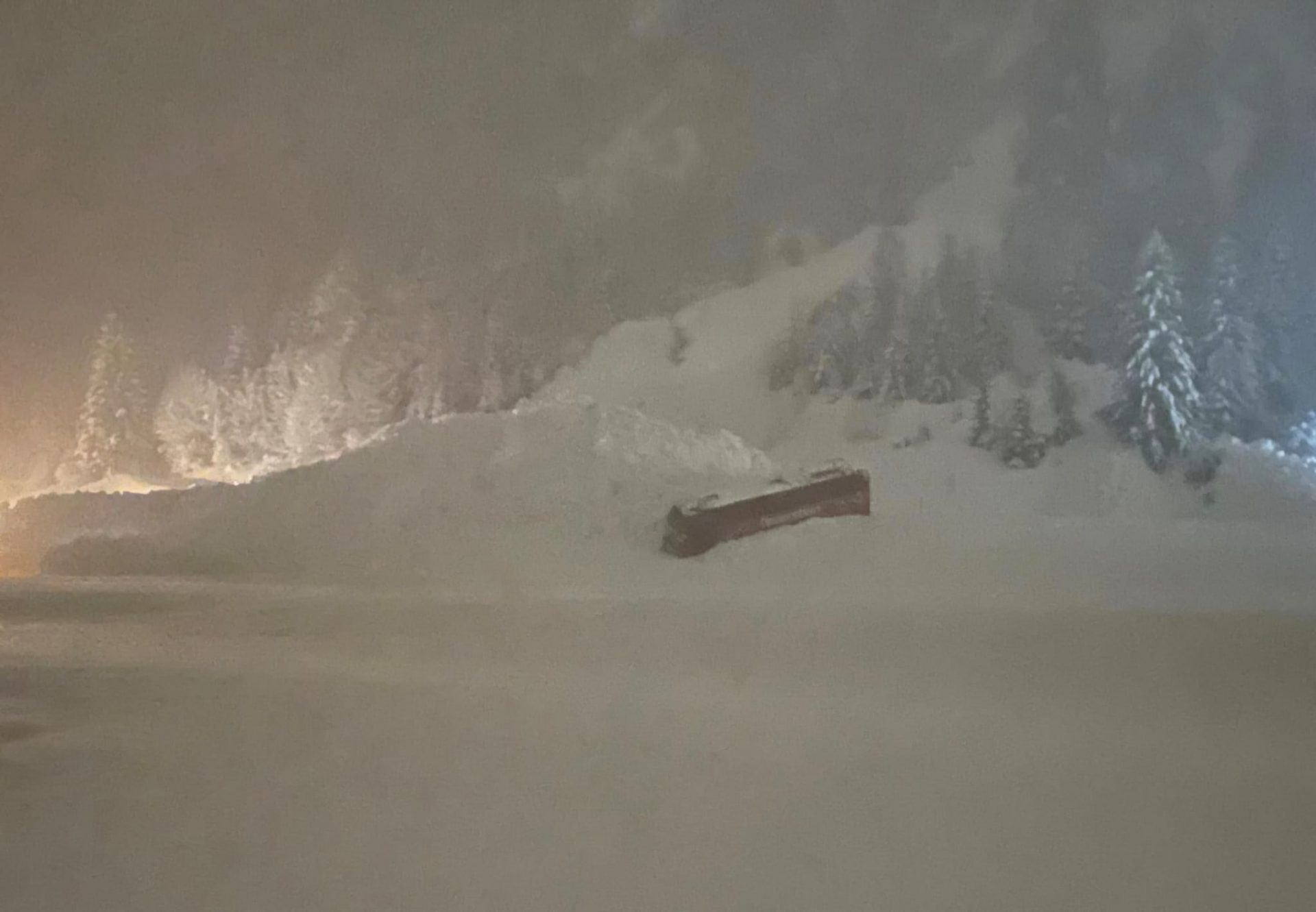
On 20.02 at 5:10 am, a company bus of Planseewerke was driving westwards towards Reutte. Near Stockach, a section of the town of Bach im Lechtal the bus was struck by a naturally triggered slab avalanche which overturned the bus onto its side and partly buried it in snow. The 12 passengers inside the bus escaped unscathed, without injuries. The authoritative avalanche commmission had examined the situation carefully the previous evening and was about to evaluate the site again when the avalanche occurred.
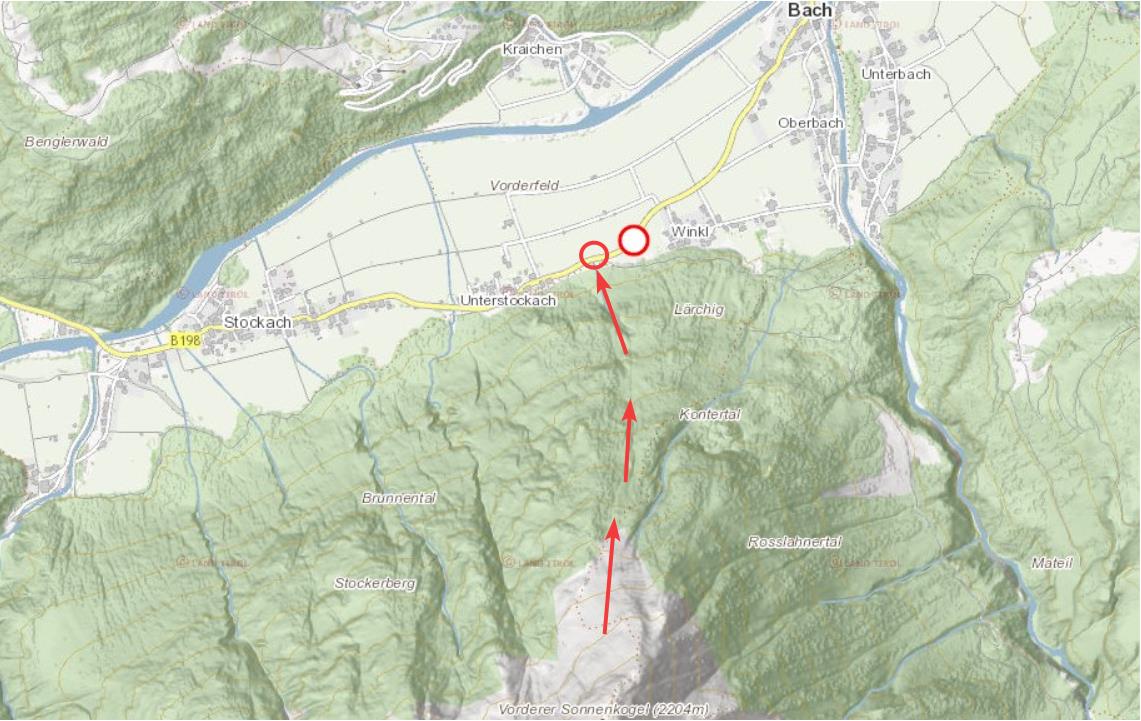
Übersichtskarte: Die Lawine löste sich auf einem Nordhang im Bereich des Vorderen Sonnenkogels. Der rote Kreis symbolisiert den Bereich des Lawinenkegels und des verschütteten Busses. (© tiris)
Overview map: the avalanche triggered on a north-facing slope near the Vordere Sonnenkogel. The ride circles denote the spots of the avalanche cone and the half-buried bus.(© tiris)
Lawinenablagerung der "Gatter"-Lawine mit dem verschütteten Bus im Vordergrund. (© BH Reutte, 20.02.2026)
Avalanche deposit of the “Gatter” avalanche. In foreground, the partially buried bus (© BH Reutte, 20.02.2026)
Detailansicht des von der "Gatter"-Lawine erfassten Busses. (© BH Reutte, 20.02.2026)
Detailed view of the bus struck by the “Gatter” avalanche. (© BH Reutte, 20.02.2026)
"Gatter"-Lawine: Blick von der B198 (Lechtalstraße) Richtung Westen und Lawinenkegel. (© Marvin Kärle, 20.02.2026)
“Gatter” avalanche: view of the B198 (Lechtalstrasse) seen towards the west and the avalanche cone. (© Marvin Kärle, 20.02.2026)

Heavy snowfall + wind + fluctuating temperatures + very weak snowpack = avalanches


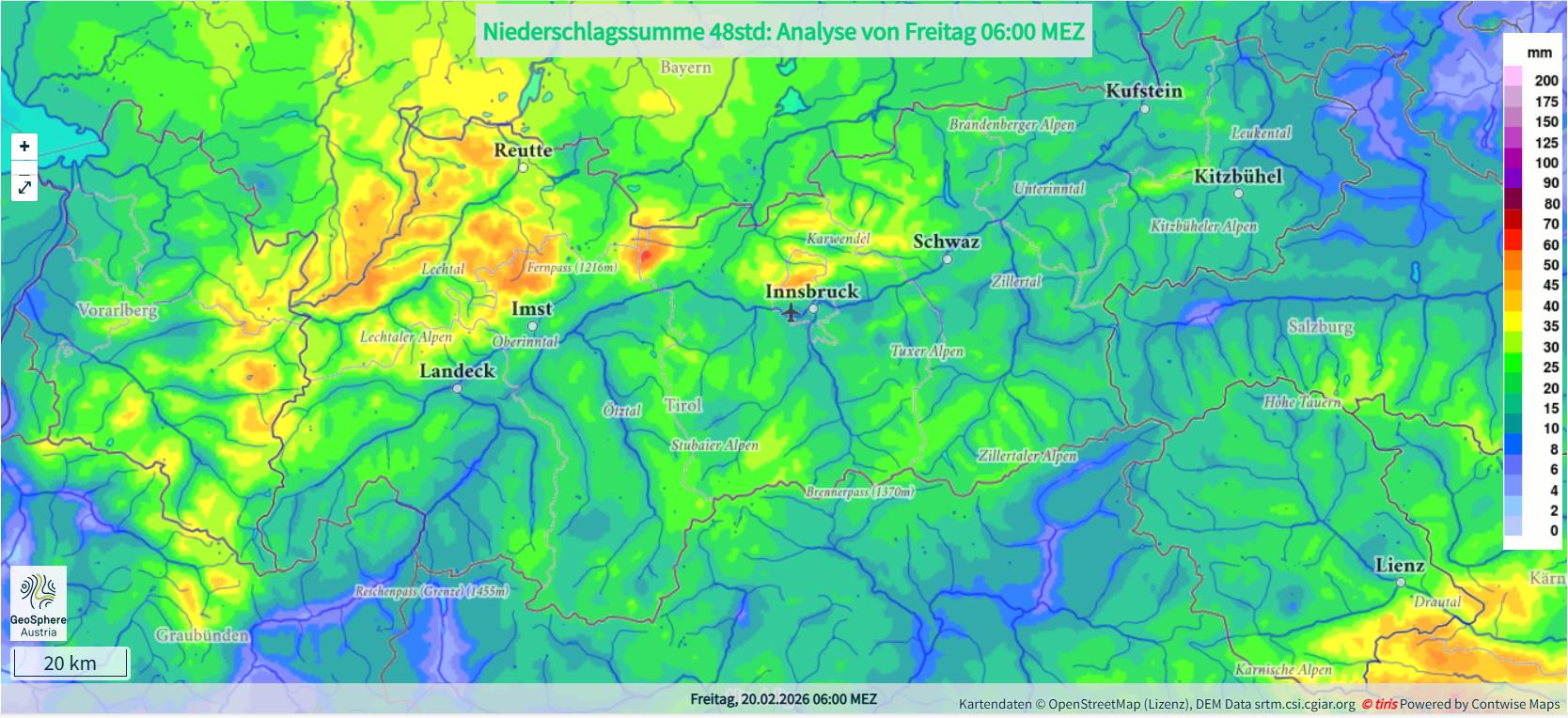
Last week there was intensive precipitation from place to place, and thus, large masses of fresh snow. Most of it fell in western and northwestern parts of North Tirol: 100-150cm widespread. In the other regions, mostly 30-70cm of fresh snow was registered.
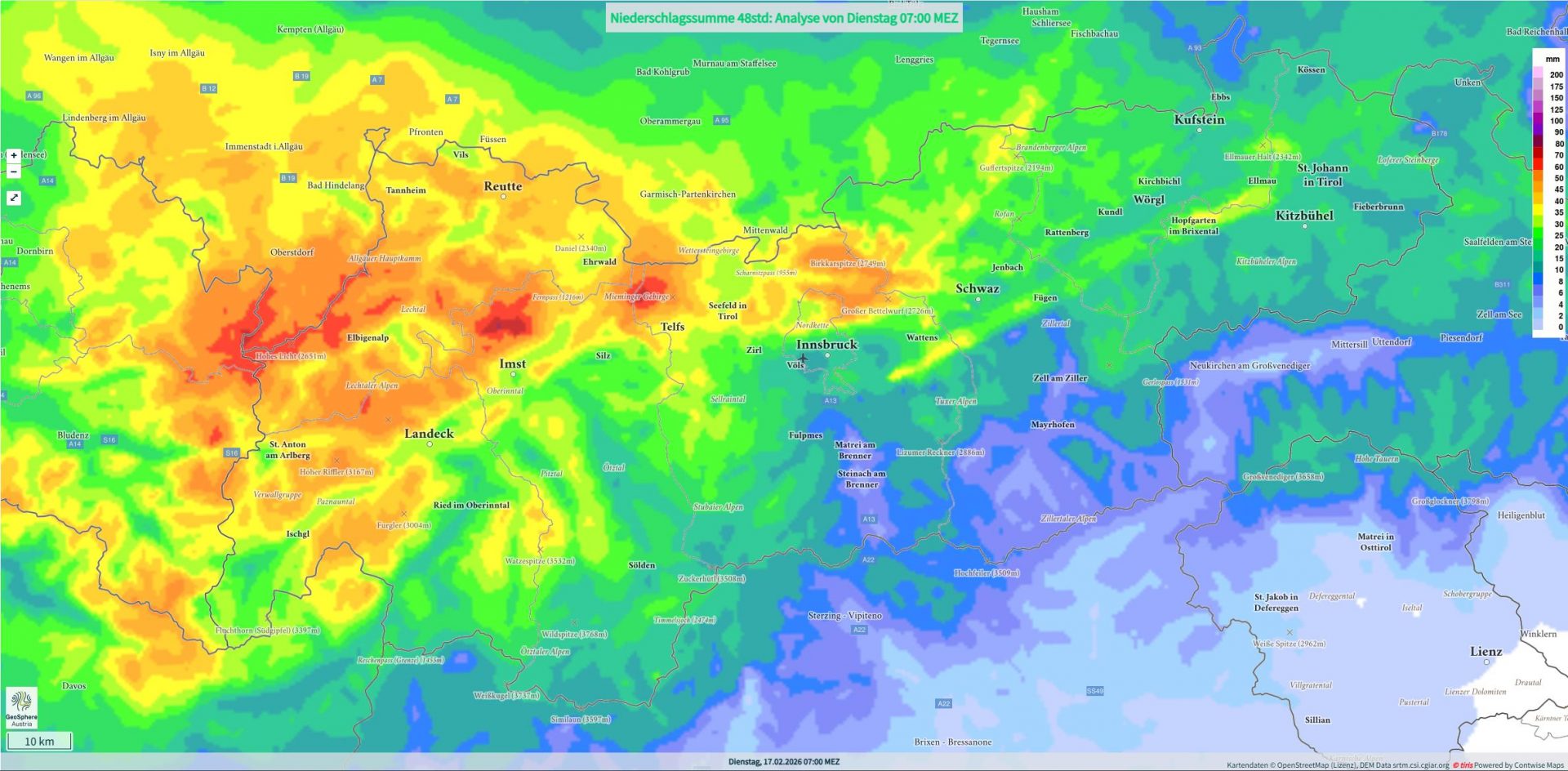
48h Niederschlagssumme vom 16.02. auf den 17.02.2026 (© GSA)
48-hr sum of precipitation on 16-17.02.2026 (© GSA)
48h Niederschlagssumme vom 18.02. auf den 20.02.2026 (© GSA)
48-hr sum of precipitation on 19.-20.02.2026 (© GSA)
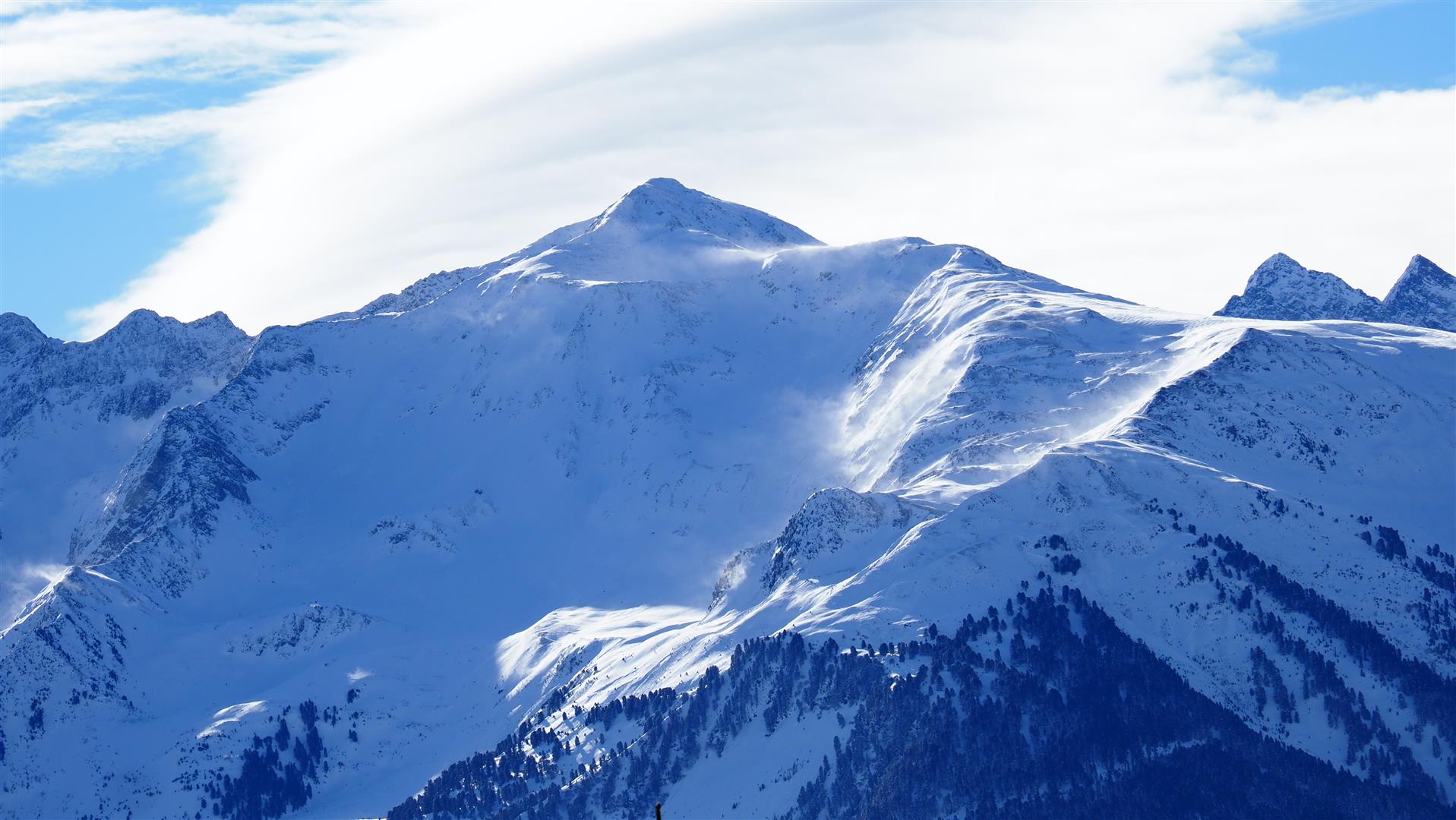
Wind verfrachtete vergangene Woche sehr viel Schnee. Grießkogelgruppe (© LWD Tirol, 19.02.2026)
Winds transported great amounts of snow last week. Griesskogel Massif (© LWD Tirol, 19.02.2026)
Rückblick auf die vergangene turbulente Woche.
Review of the last turbulent week

Naturally triggered avalanches

In recent blogs, we’ve often discussed and analyzed the extremely poor snowpack layering. Due to the additional burden of the fresh snow on the snowpack, mostly accompanied by wind impact, increasingly frequent avalanches triggered naturally in the regions where snowfall was heaviest, both on 16-17.02 and on 19-20.02.2026.

Spontane Schneebrettlawinen auf der Nordseite des Arbeserkogels in der Region Tuxer Alpen Ost (© Thomas Keck, 18.02.2026)
Naturally triggered slab avalanches on the northern flank of Arbeserkogel in the Tux Alps West region (© Thomas Keck, 18.02.2026)
Stürmischer Wind  verfrachtete hier viel Neuschnee ins Lee, wo sich unter Felswandfüßen eine beachtlich große Schneebrettlawine löste. Zillergrund in der Region Zillertaler Alpen Nordost (© Thomas Eder, 18.02.2026)
Storm-velocity winds transported lots of fresh fallen snow to leeward slopes, where they triggered an imposing, large-sized slab avalanche at the foot of a rock wall. Zillergrund, in the Zillertal Alps Northeast region (© Thomas Eder, 18.02.2026)

Successful artificial triggerings by explosions

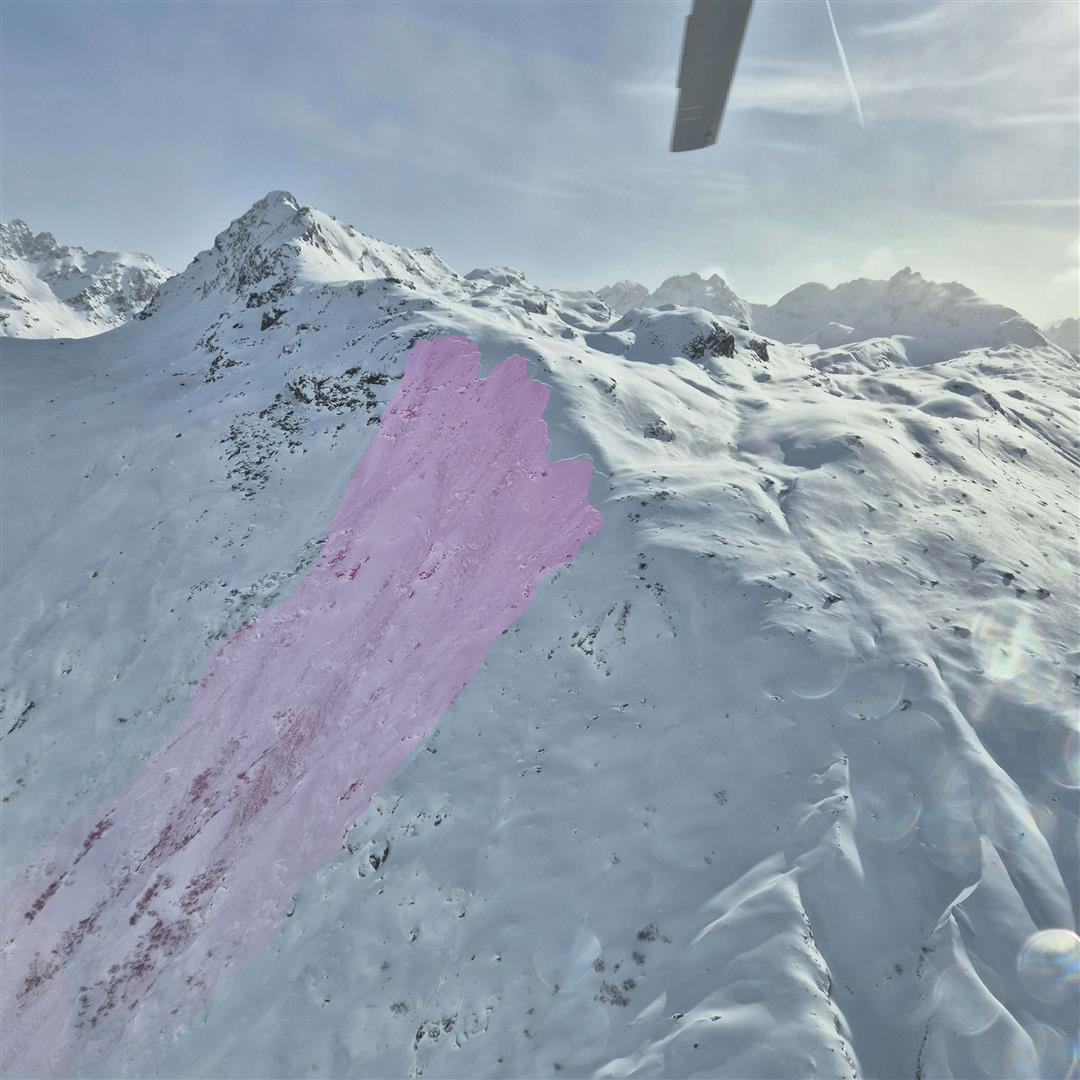
It is not surprising that in the tiny time window of fine weather on 18.02 in many parts of Tirol, large-scale avalanches were artificially triggered by explosives with great success.
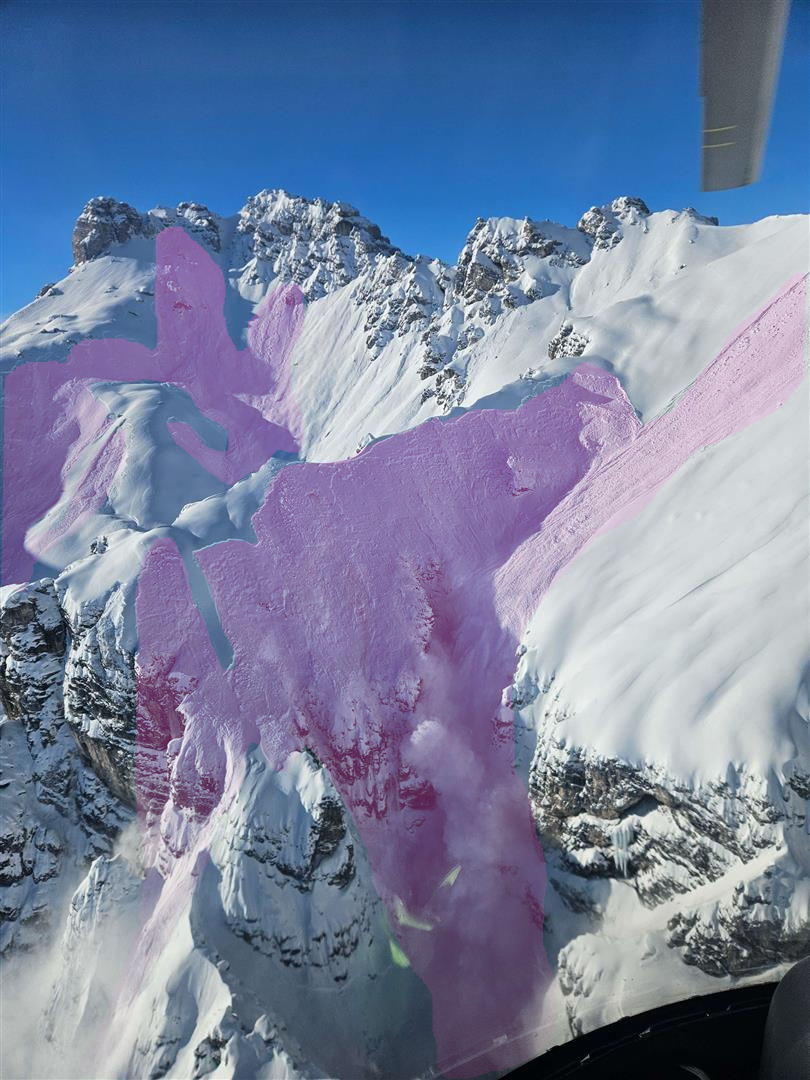
Artificial avalanche triggering by explosion in Sölden ski area (© Tobias Holzknecht, 18.02.2026)
Sehr gute Sprengerfolge in der Schlick in der Region Kalkkögel. Im Vordergrund erkennt man noch die Staubwolke einer der gerade gesprengten Lawinen. (© Dominik Jenewein, 18.02.2026)
Successfully exploded avalanches in the Schlick in the Kalkkögel region. Visible in foreground: the powder-snow plume of a just unleased artificial triggering. (© Dominik Jenewein, 18.02.2026)
Sprengerfolg im Vermunttal in der Region Silvretta (© Christoph Pfeifer, 18.02.2026)
Successful artificial triggering in Vermunttal in the Silvretta region (© Christoph Pfeifer, 18.02.2026)
Sehr gute Sprengerfolge auch im Skigebiet Sölden. Bezeichnend für die aktuelle Situation sind auch die zum Teil großflächigen Bruchfortpflanzungen. (© Tobias Holzknecht, 18.02.2026)
Highly successful artificial triggerings in the Sölden ski area. What characterizes the current situation are the often large-scale, far-reaching fracture propagations. (© Tobias Holzknecht, 18.02.2026)

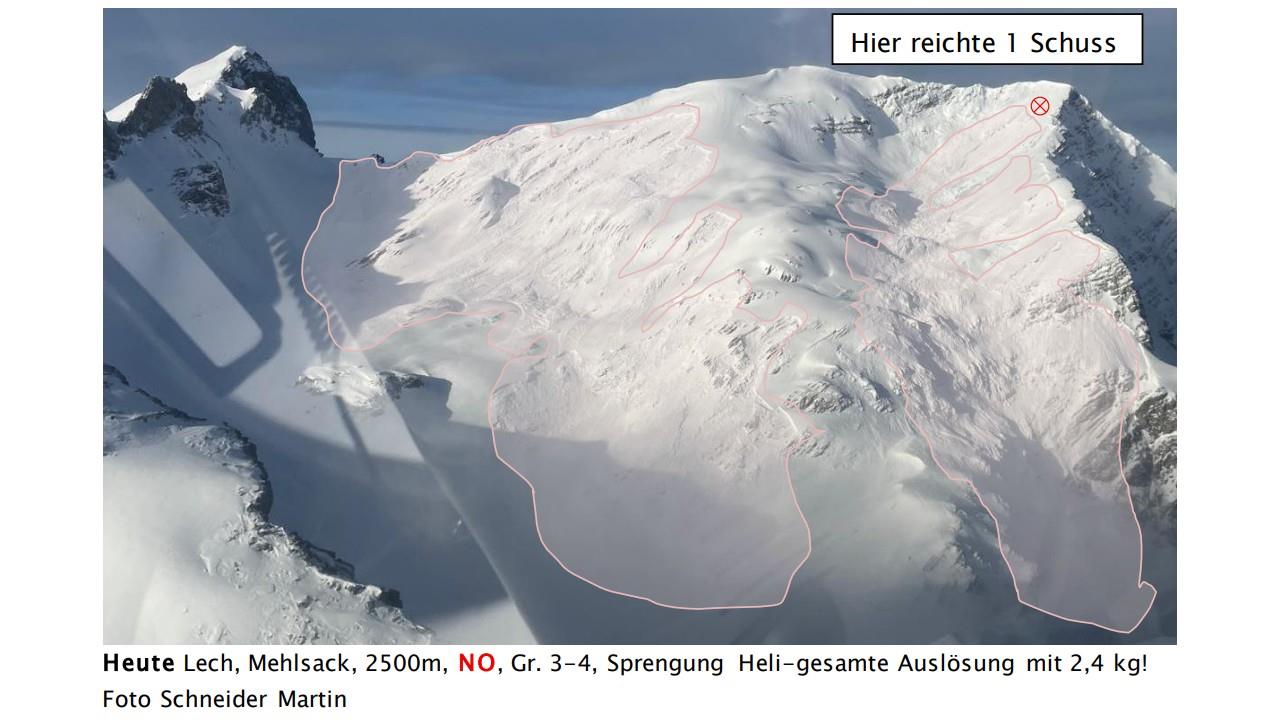
Ein sehr eindrucksvolles Bild einer Lawinensprengung aus dem benachbarten Vorarlberg: Mit einem Schuss (rechts oben markiert) lösten sich zwei sehr große Schneebrettlawinen beim Mehlsack in benachbarten Kesseln. Entsprechend erfolgte die Bruchausbreitung über den Rücken. (© Martin Schneider, 18.02.2026)

Very imposing picture of intentionally-exploded avalanche from Vorarlberg: through one shot (marked at upper right), two very large-sized slab avalanches were artificially triggered near Mehlsack in neighboring Kesseln. Correspondingly, the fracture propagation unfolded over the broad ridge. (© Martin Schneider, 18.02.2026)

Numerous avalanches triggered by persons

To complete the picture of a veritably stark avalanche interval described above, here is a selection of photos and an overview of the reported avalanches received.
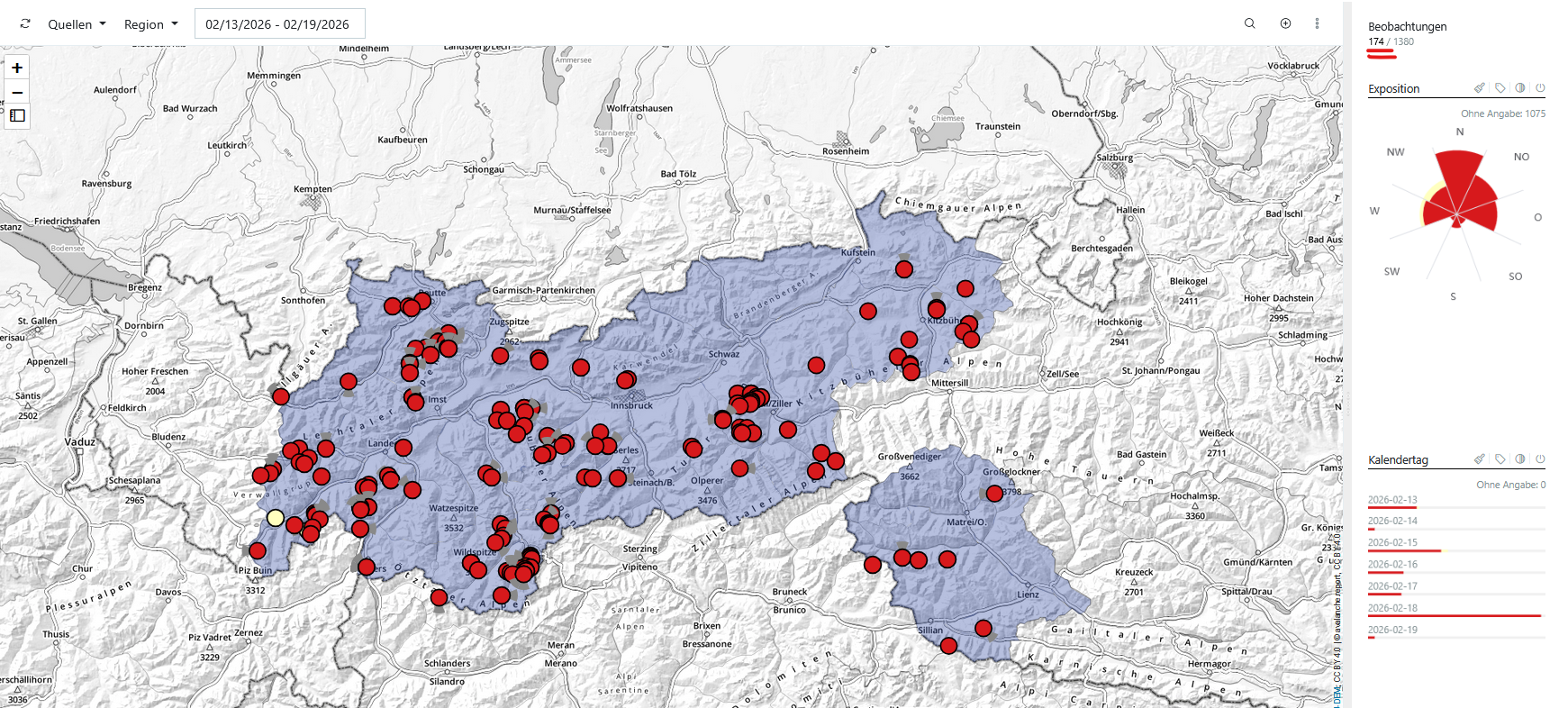
Beim LWD Tirol zwischen dem 13.02. und dem 19.02. eingegangene Lawinenmeldungen. In Summe waren es 174.
Above, reports of avalanches received at Avalanche Warning Service Tirol headquarters between 13.02 and 19.02. All in all, 174 avalanches.
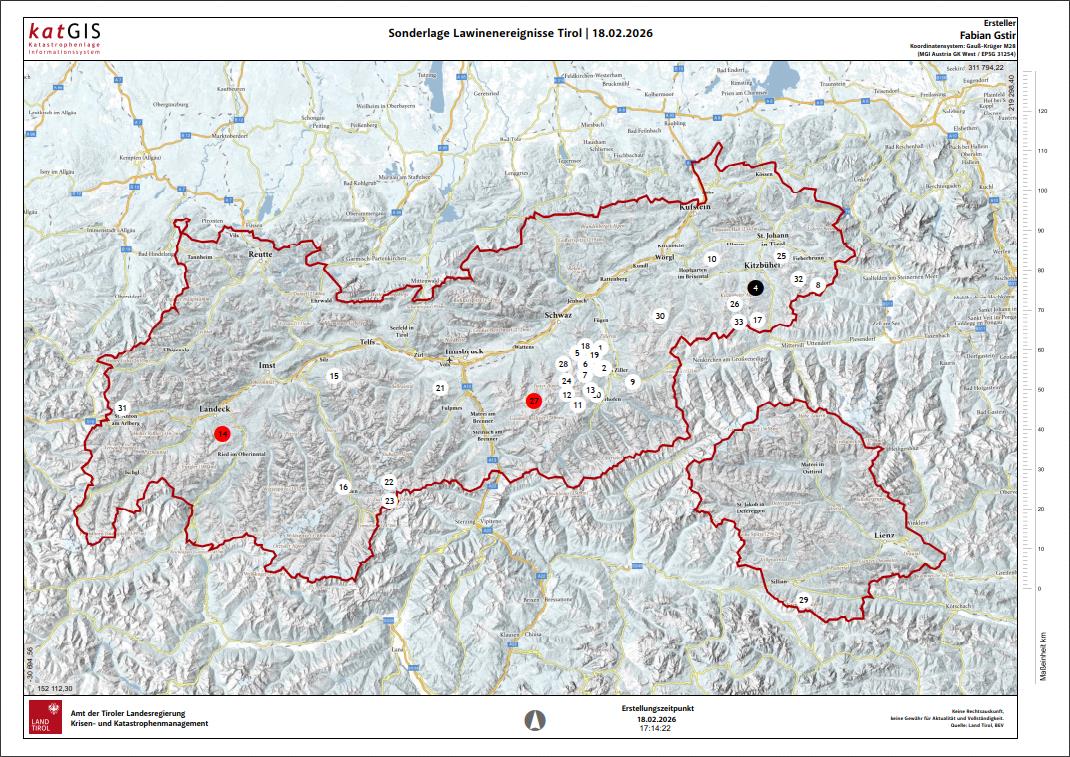
33 von der Leitstelle Tirol am 18.02. gemeldete Lawinenereignisse. In rot (14 und 27) die tödlichen Lawinenunfälle, in schwarz (4) der Unfall mit einer sehr schwer verletzten Person (© Landes- Warn- und Lagezentrum Tirol)
Above map: 33 of the avalanches reported to headquarters on 18.02. In red: (14 and 27) the fatal avalanche incidents. In black: (4) the incident with one gravely injured person. (© Landes- Warn- und Lagezentrum Tirol)
Personenausgelöste Schneebrettlawine samt Fernauslösung bei der Grahnsleite in Obergurgl (© Hugo Reindl, 15.02.2026)
Slab avalanche triggered by a person plus remote triggering at Grahnsleite in Obergurgl (© Hugo Reindl, 15.02.2026)
Personenausgelöste Lawine (samt Fernauslösungen im Hintergrund) am Minderskopf in der Samnaungruppe (© Jonas Hangl, 13.02.2026)
Avalanche triggered by a person (plus remote triggerings in background) on Minderskopf in the Samnaun Massif (© Jonas Hangl, 13.02.2026)
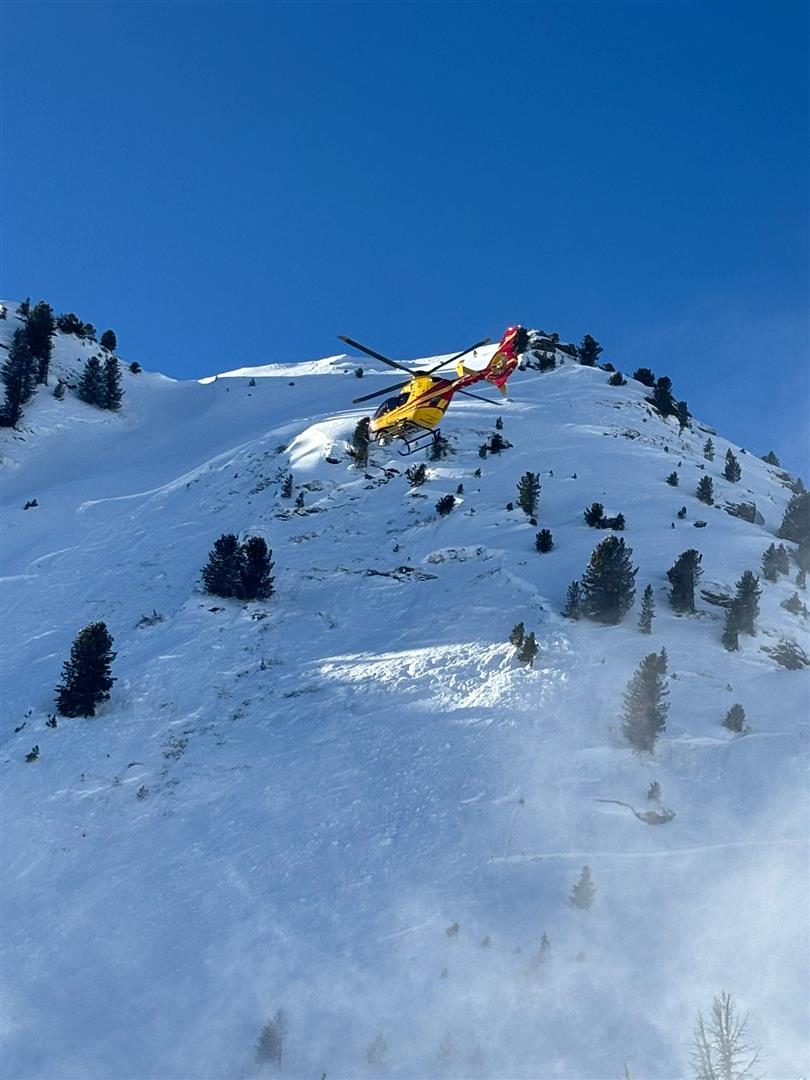
Die Hubschrauber waren am 18.02. im Dauereinsatz. Zillertal [© Stefan Wierer)
Helicopters were in constant demand on 18.02, their flights were ongoing. Zillertal [© Stefan Wierer)

Highly unusual: danger near ski runs

This winter is quite unusual in many ways. On the one hand, the persistent, long enduring reports of alarm signals (avalanches, settling noises, fractures on the surface) which have rarely occurred before now. On the other hand, the comparatively high danger to winter sports enthusiasts very near secured ski runs. How is that possible? It is because there has been so little snow this season, the consequence of which being that in most of the ski areas of Tirol (exception: western Tirol, Kalkkögel Massif, parts of Sellrain) skiing in freeriding terrain was not possible without “sharks” and the high risk of injuries from them. For that reason, the snowpack there remained untouched, just like in outlying terrain. Whereas in a “normal” winter the ski runs are generally filled after the firsts round of snowfall, so that the interconnected weak layers inside the snowpack can rarely survive. The only exception to this is during huge rounds of snowfall, during which short-lived weak layers can be generated inside the fresh snow in the form of loose powder snow in a phase with little wind.
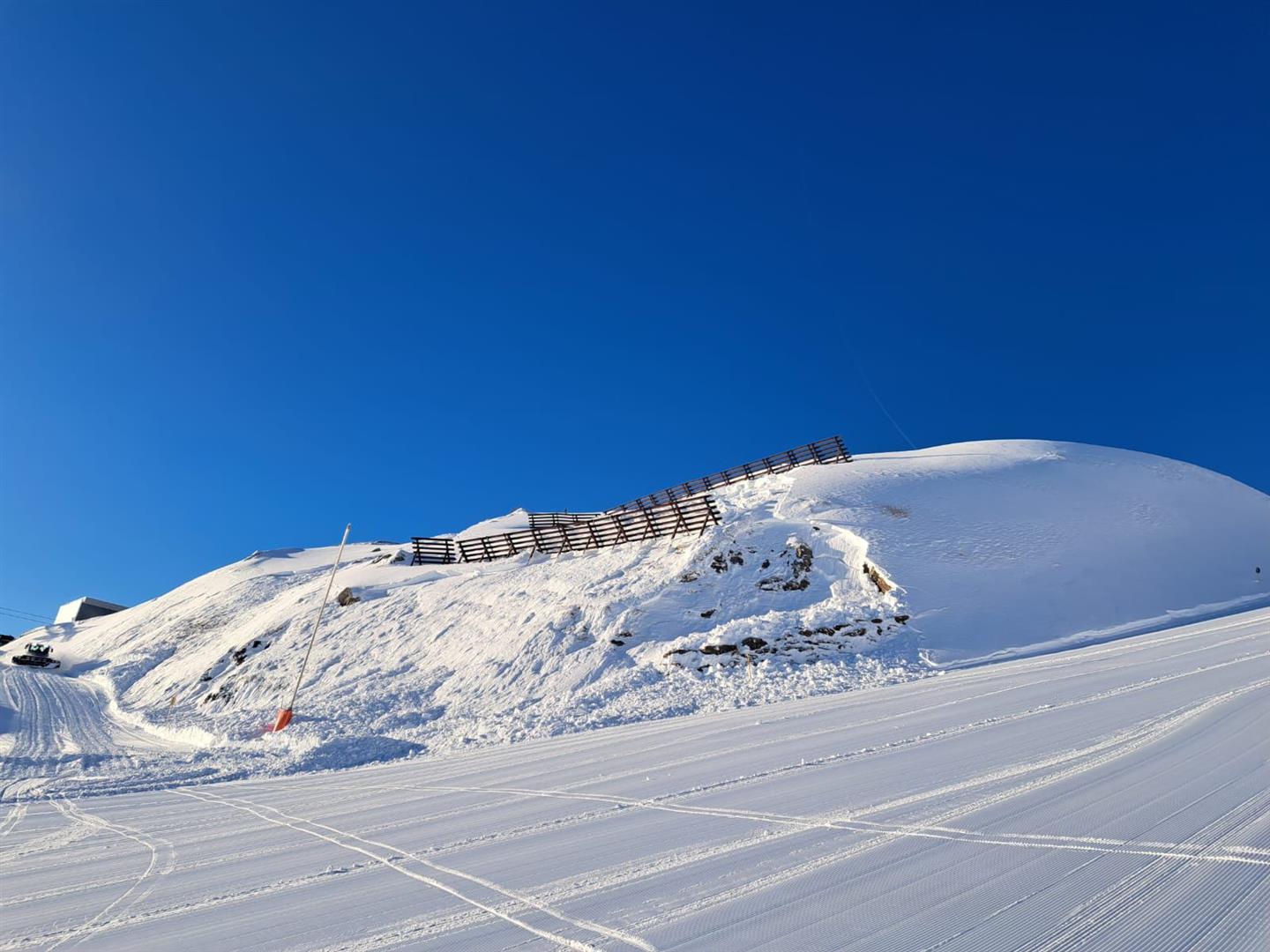
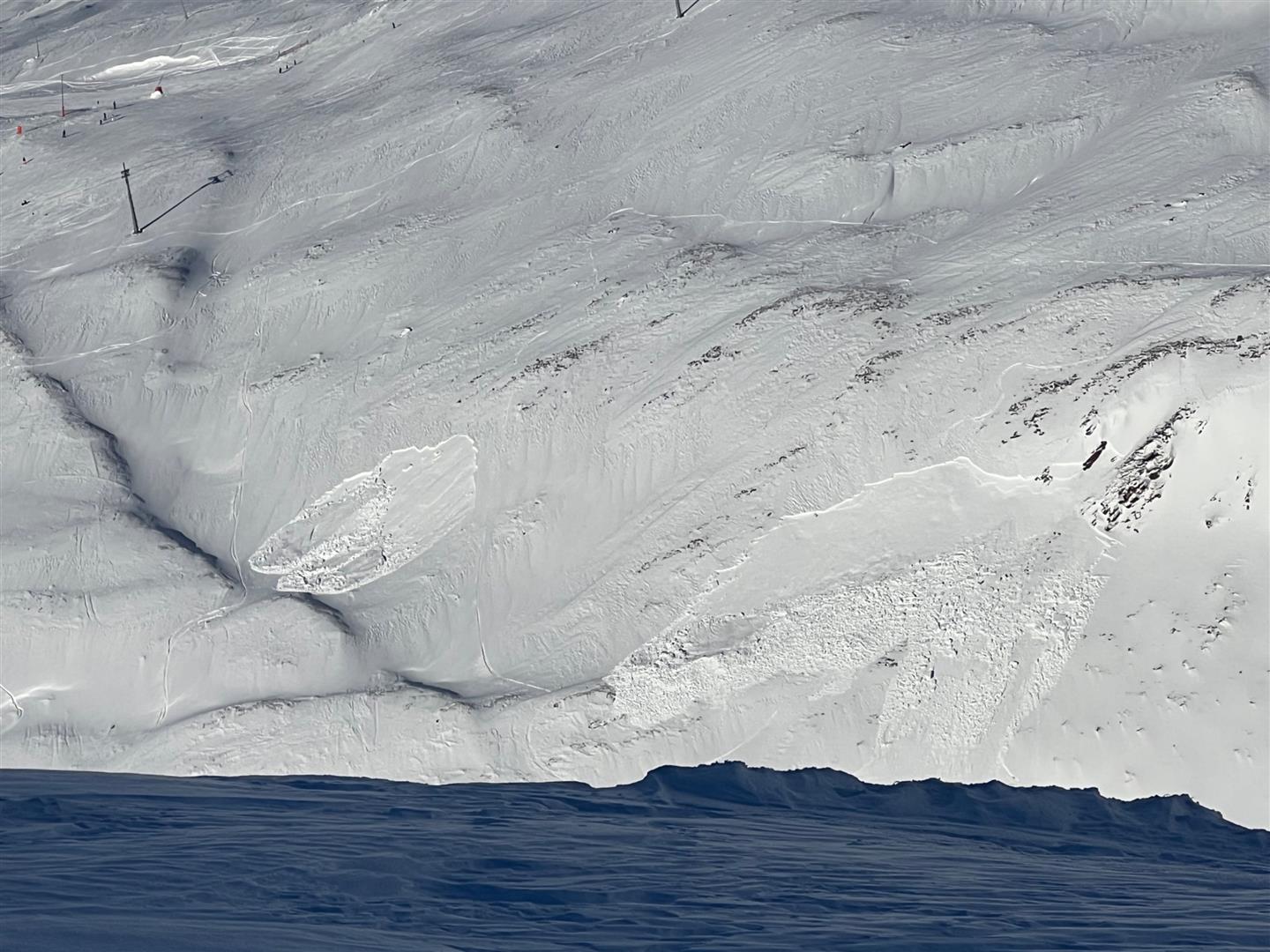
Lawinenabgang im Pistennahbereich in der Region Tuxer Alpen Ost. Wichtig: Lawinenverbauungen sind nicht gegen Lawinen für WintersportlerInnen errichtet worden. Somit: Auch im Bereich von Lawinenbrücken können Lawinen ausgelöst werden. (© Stefan Wierer, 18.02.2026)
Avalanche release near a secured ski run in the Tux Alps East region. Important: avalanche barriers are not built for winter sports enthusiasts. Therefore: avalanches can also be triggered in the vicinity of avalanche bridges. (© Stefan Wierer, 18.02.2026)

Another view into the (often and in most places) poorly-structured snowpack

Here, a few (in the interim well-known) views into the snowpack:
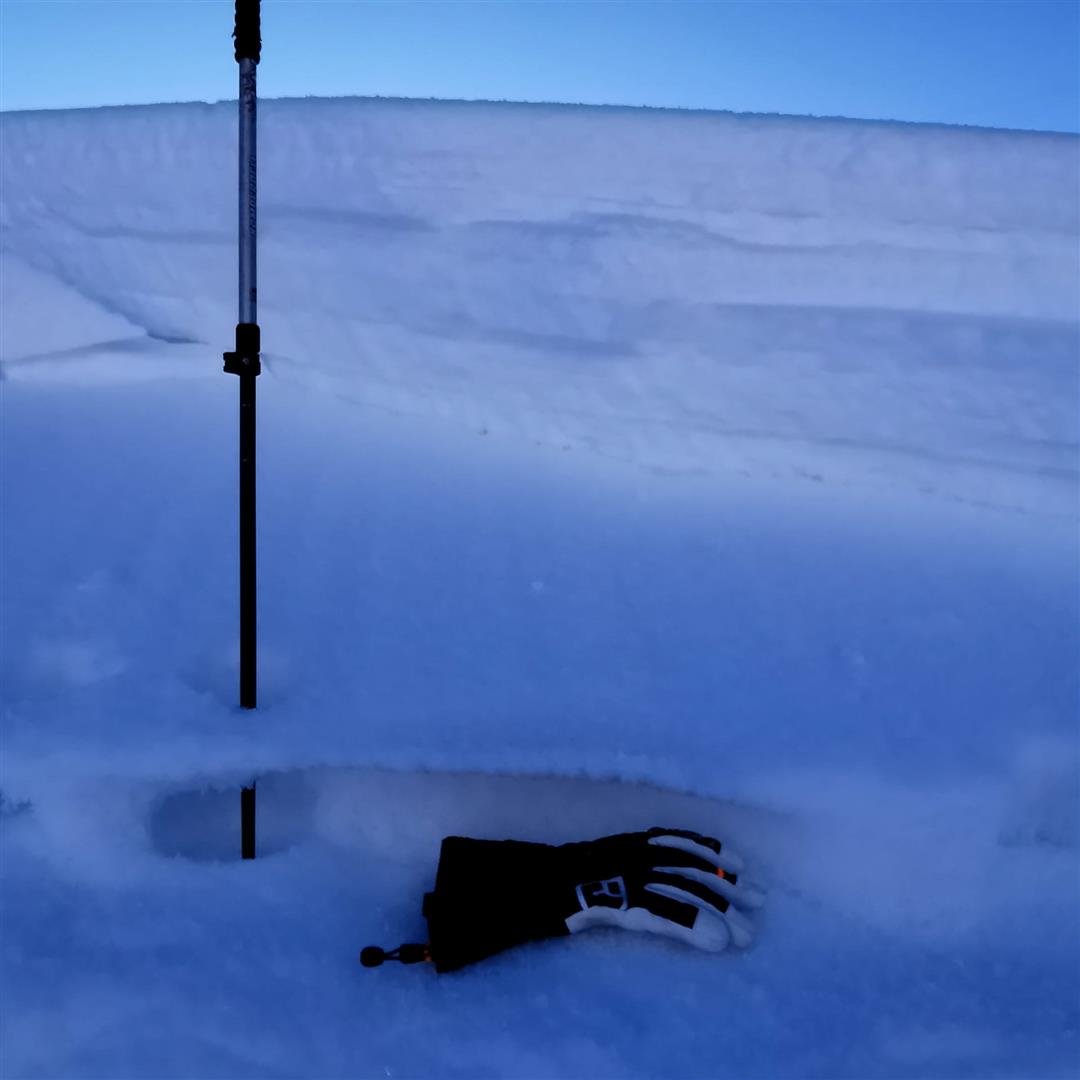
Bedeutsam für sehr viele der Lawinenabgänge sind ausgeprägte Schwachschichten meist im Nahbereich von Krusten, hier beim  Handschuhs. Das Bild wurde bei einer personenausgelösten Lawine unterhalb der Breslauer Hütte auf etwa 2700m in einem Osthang aufgenommen. (© Peter Raich, 15.02.2026)
What is most significant for very many of the avalanches: marked weak layers, mostly near crusts, in above photo visible at the glove. Photo was taken at the site of an avalanche triggered by a person below the Breslau Refuge at about 2700m on an east-facing slope. (© Peter Raich, 15.02.2026)
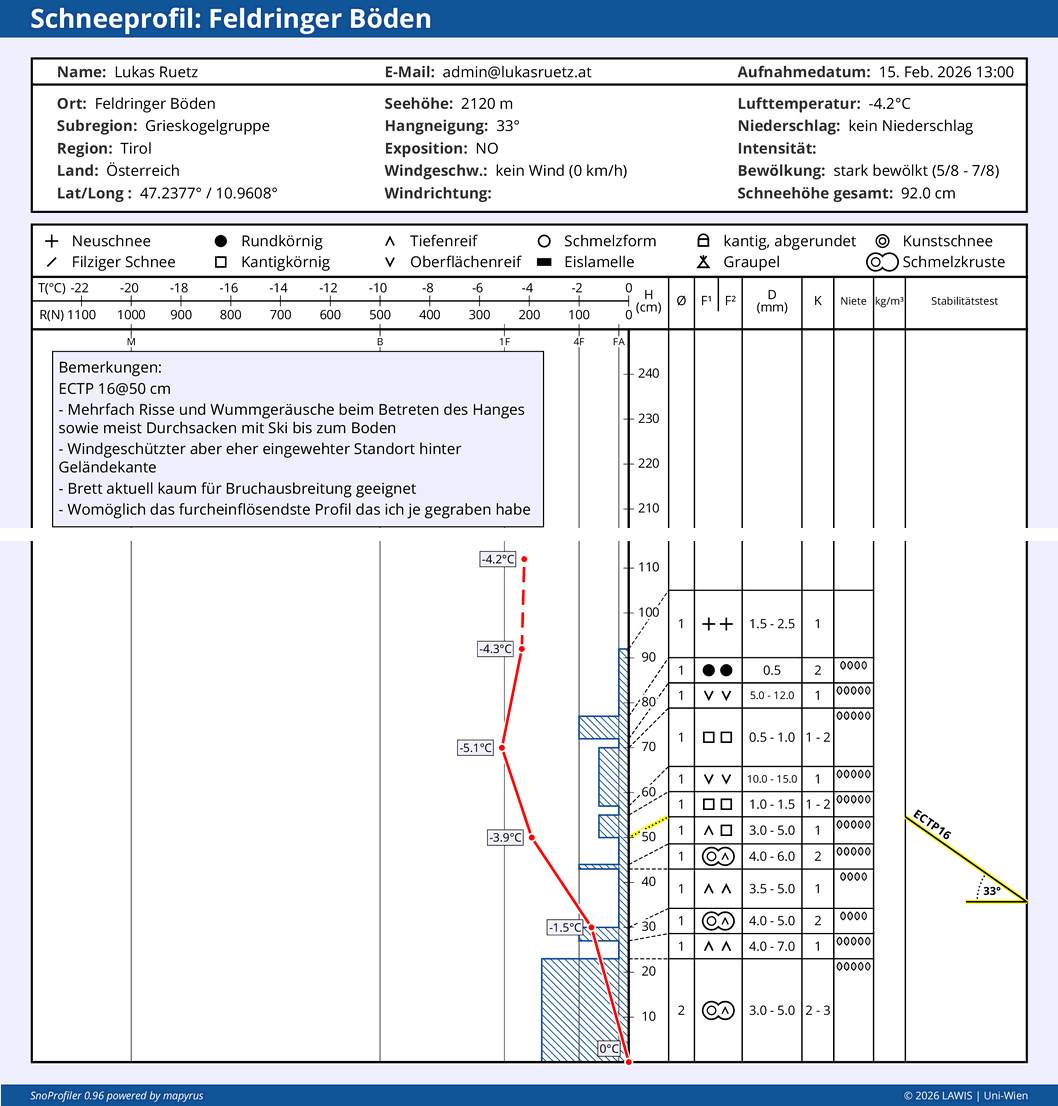
Der unterste Kommentar eines der profiliertesten "Schneeprofil-Grabers" von Tirol sagt alles über den Schneedeckenaufbau aus.
The lowermost comment about the snowpack layering by one of the most celebrated “profile-takers” in Tirol says it all: “possibly the most horrendous snow-profile I have ever taken”.
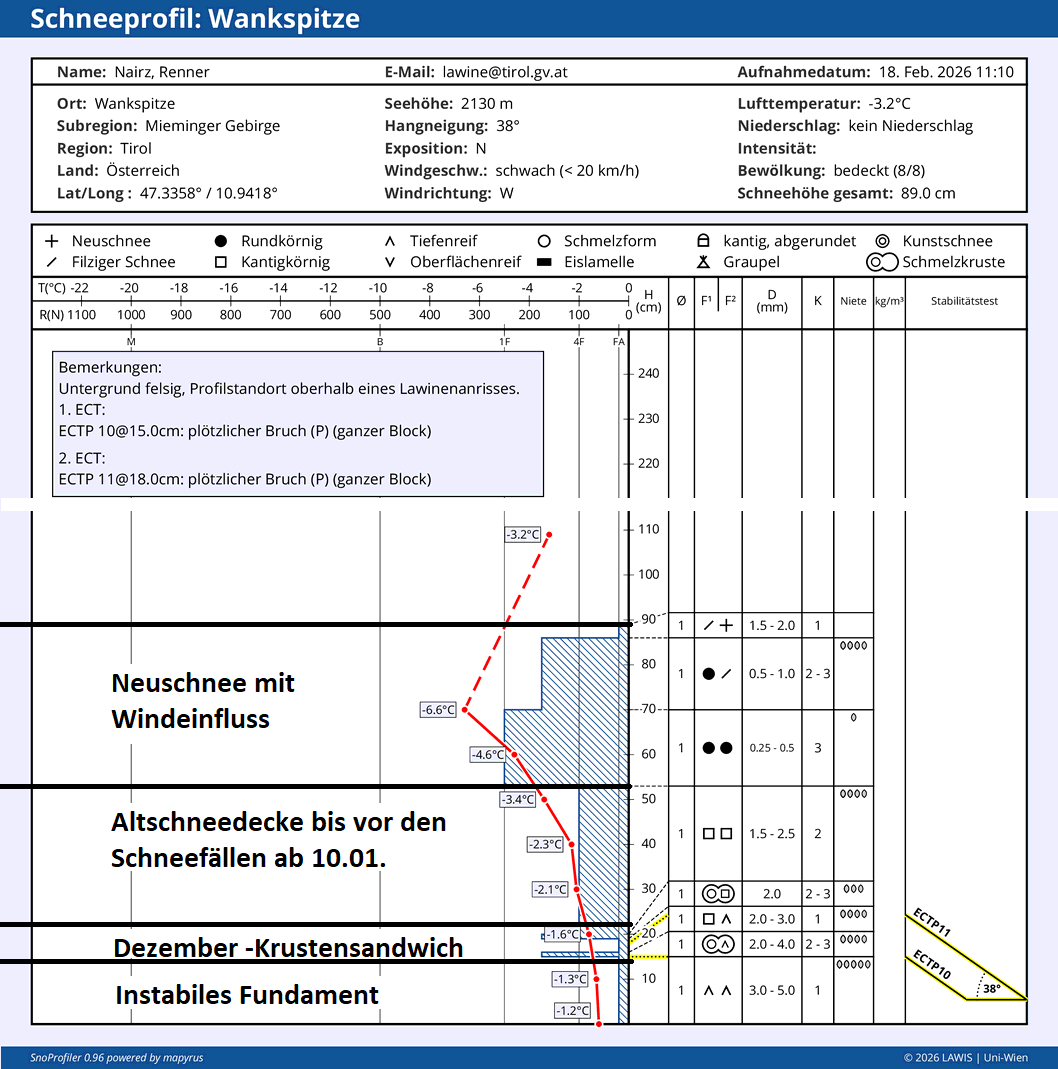
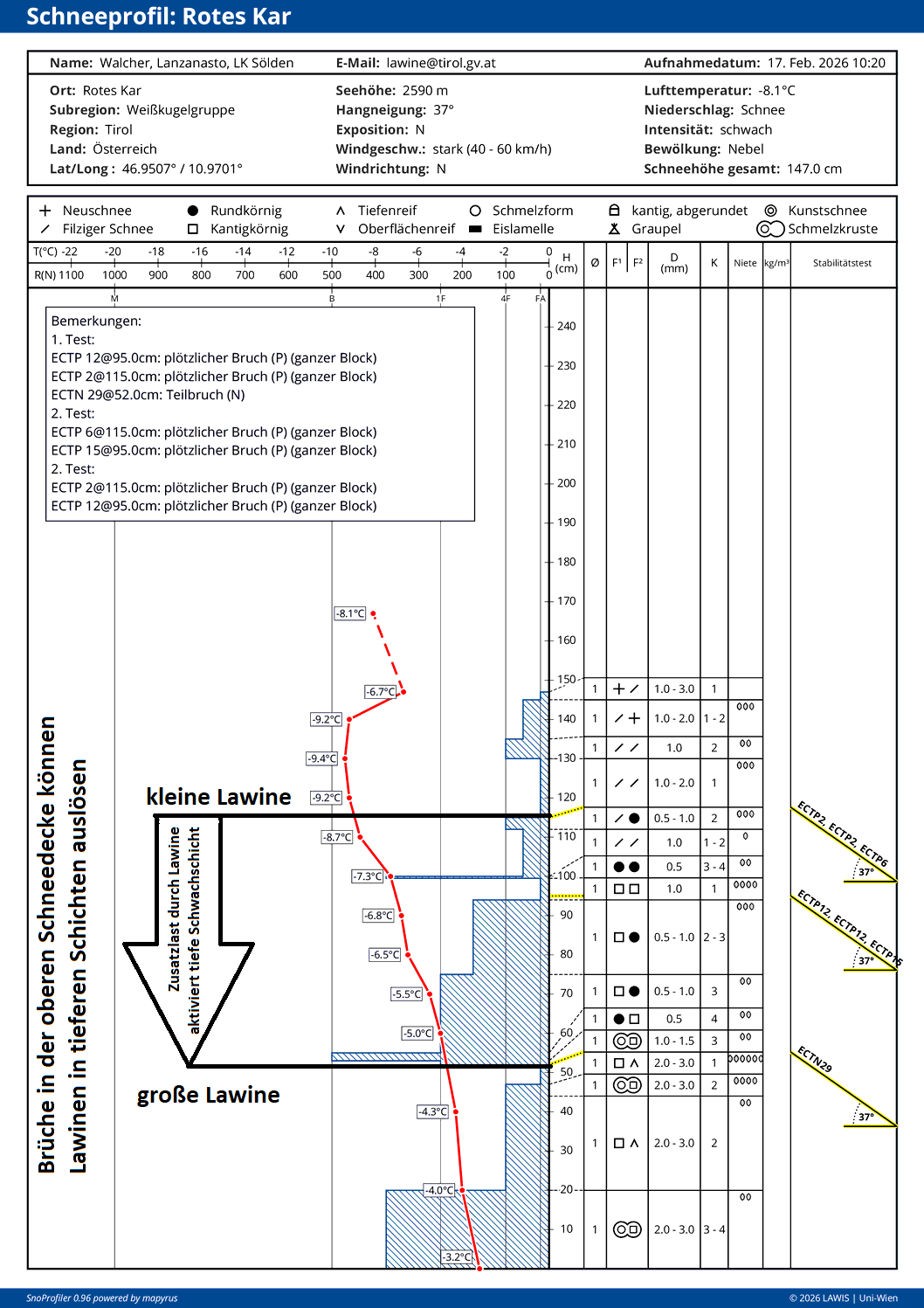
Ein ziemlich typisches Profil oberhalb der Waldgrenze für Ost-, Nord- und Westhänge.
A rather typical snow-profile above the treeline for east-facing, north-facing and west-facing slopes.
Ein gerade während des vergangenen Schneefälle häufig beobachtetes Szenario: Primärbruch oberflächennah auf Oberflächenreif bzw. Filz, dann Durchbrechen in tiefere Schichten.
A scenario which has often been observed during the recent bouts of snowfall: a primary fracture near to the upper surface atop surface hoar or decomposed snow, followed by a further fracture down to more deeply embedded layers.

Outlook: avalanche interval will persist! As a result of warm front, increasingly frequent naturally triggered avalanches. It will remain dangerous!

Weather conditions will remain turbulent. Here is the forecast of GSA (Geosphere Austria) for Saturday, 21.02: “A warm front will soon bring to the moutains of North Tirol and the East Tirolean Tauern poor visibility with fog, winds and moderate, intermittently also heavy snowfall. During the daytime hours, temperatures will rise, the snowfall level will ascend by afternoon to nearly 1500m or higher. Temperature at 2000m: rising from -5 to -2 degrees, at 3000m approximately -9 degrees. Strong to storm-strength northwesterly winds at high altitudes.” On Sunday, 22.02, conditions are expected to be calmer with higher temperatures, and winds shifting to westerly.
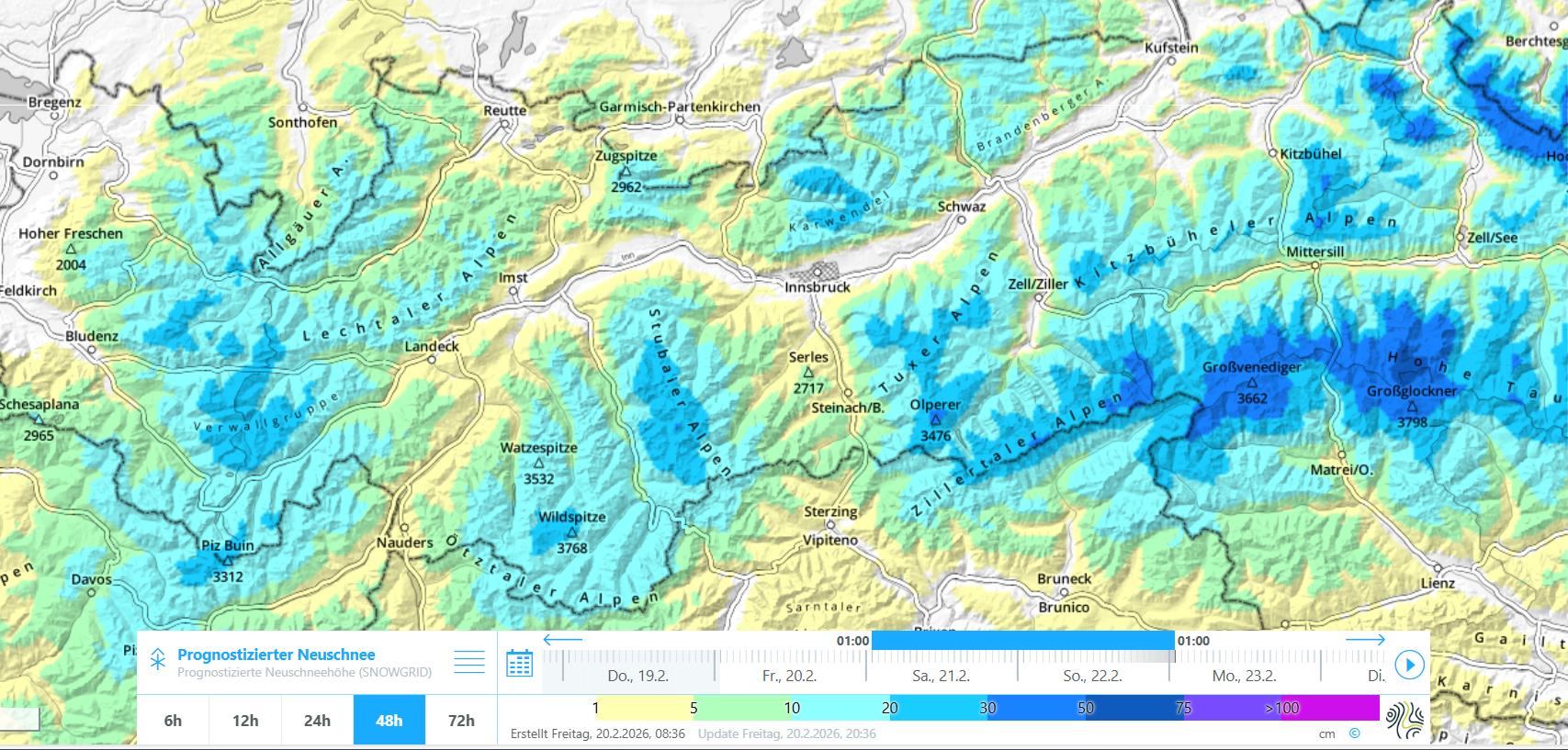
Neuerlich kommt Schnee in höheren Lagen dazu. Meist sollen es zwischen 20cm und 40cm, lokal mitunter auch mehr sein.
Once again, snowfall is expected at high altitudes. Generally, 20cm to 40cm is anticipated, but locally more is possible.

Effect on avalanche danger: the danger remains!

We expect – in particular as a result of the warm front passing through on 21.02 and 22.02 – heightened naturally triggered avalanche activity once again. Avalanches will be large, in isolated cases also very large-sized. The avalanche situation remains highly dangerous. For current information, please see the avalanche.report.

Breaking news: more grave avalanche incidents!

The latest:  We just received reports of further avalanches. One person died today, 20.02, in an avalanche in the Nauders ski area. Three persons were buried in snow masses in an avalanche in Alpbach near the Hahnkopf. One of these persons was uncovered, needed to be reanimated. The search still continues for the other two persons.