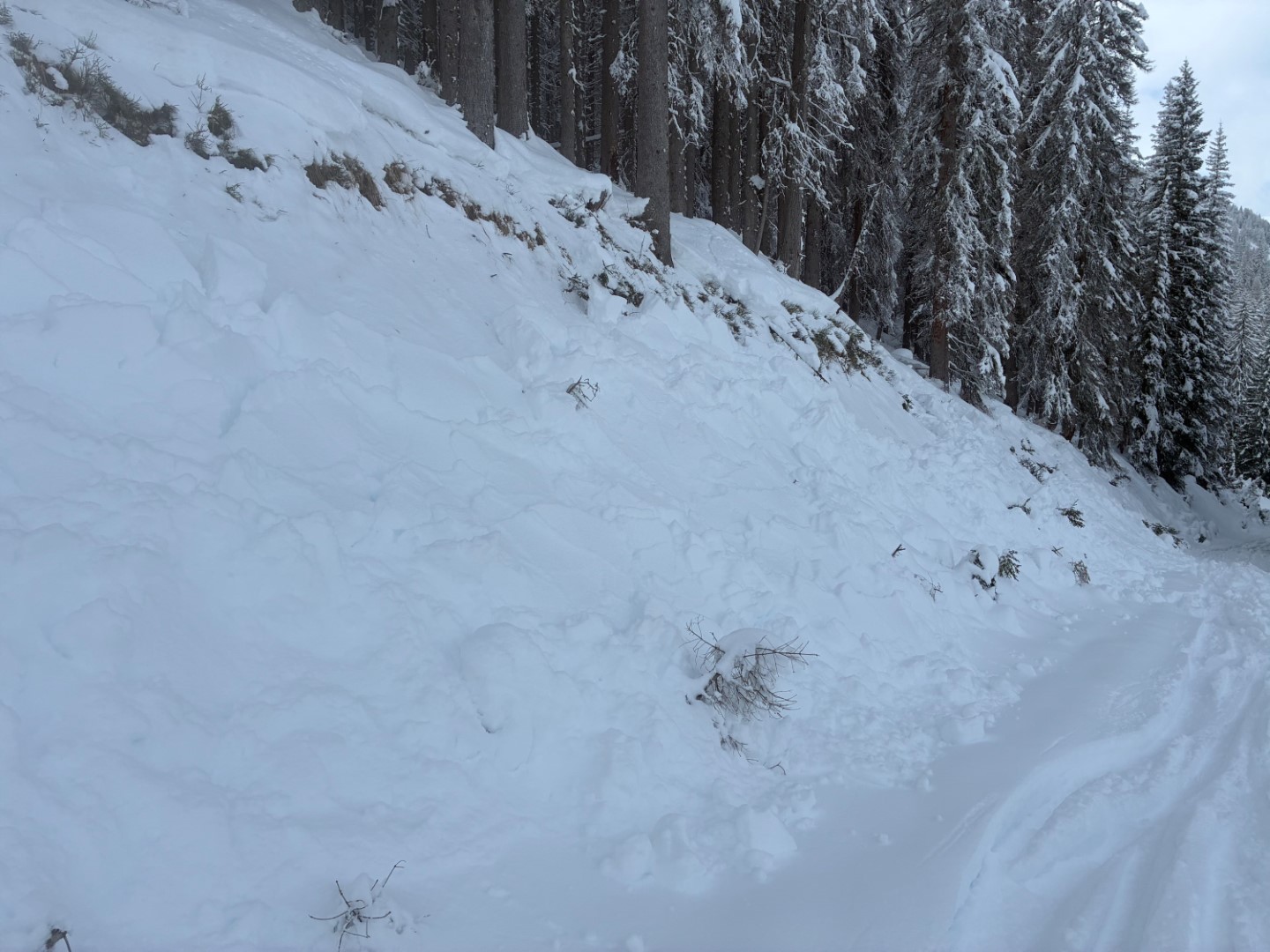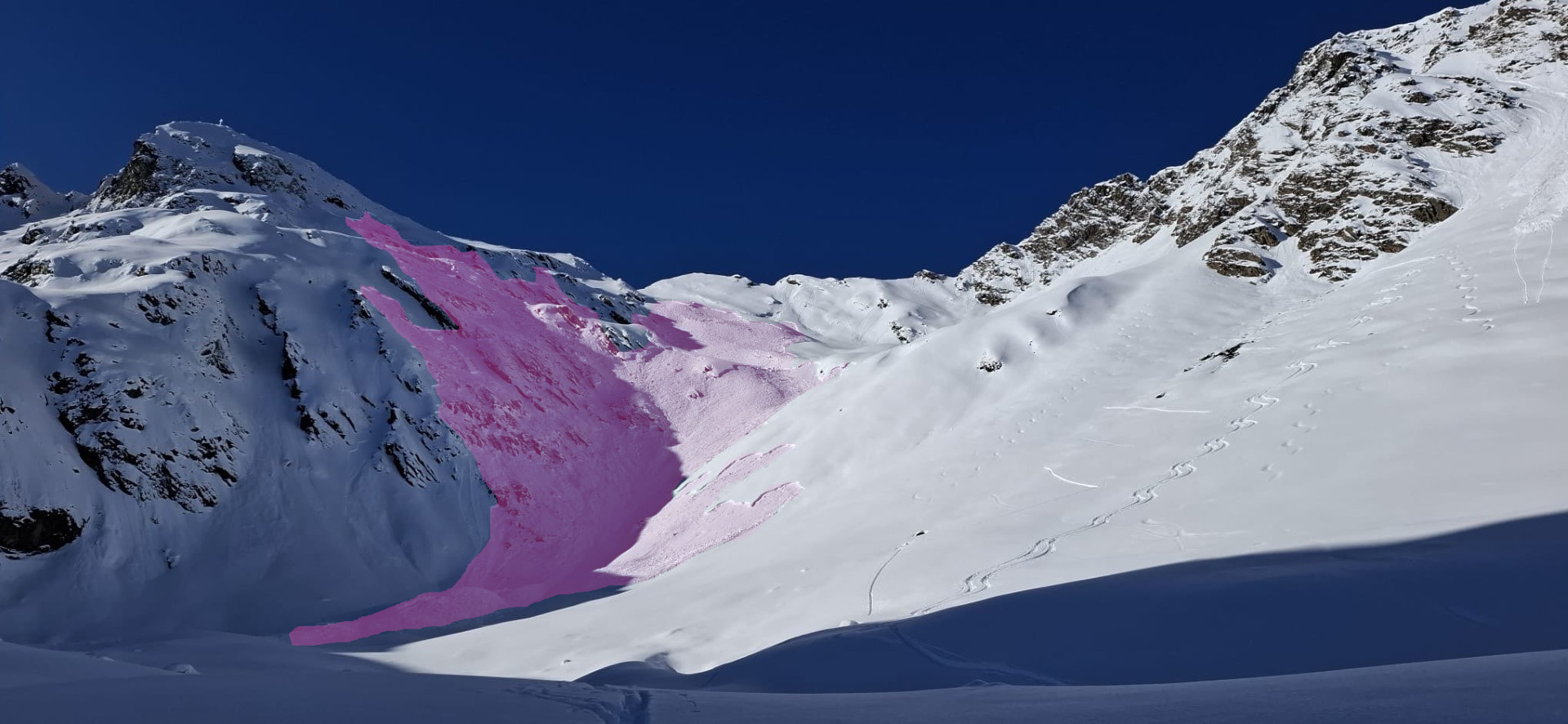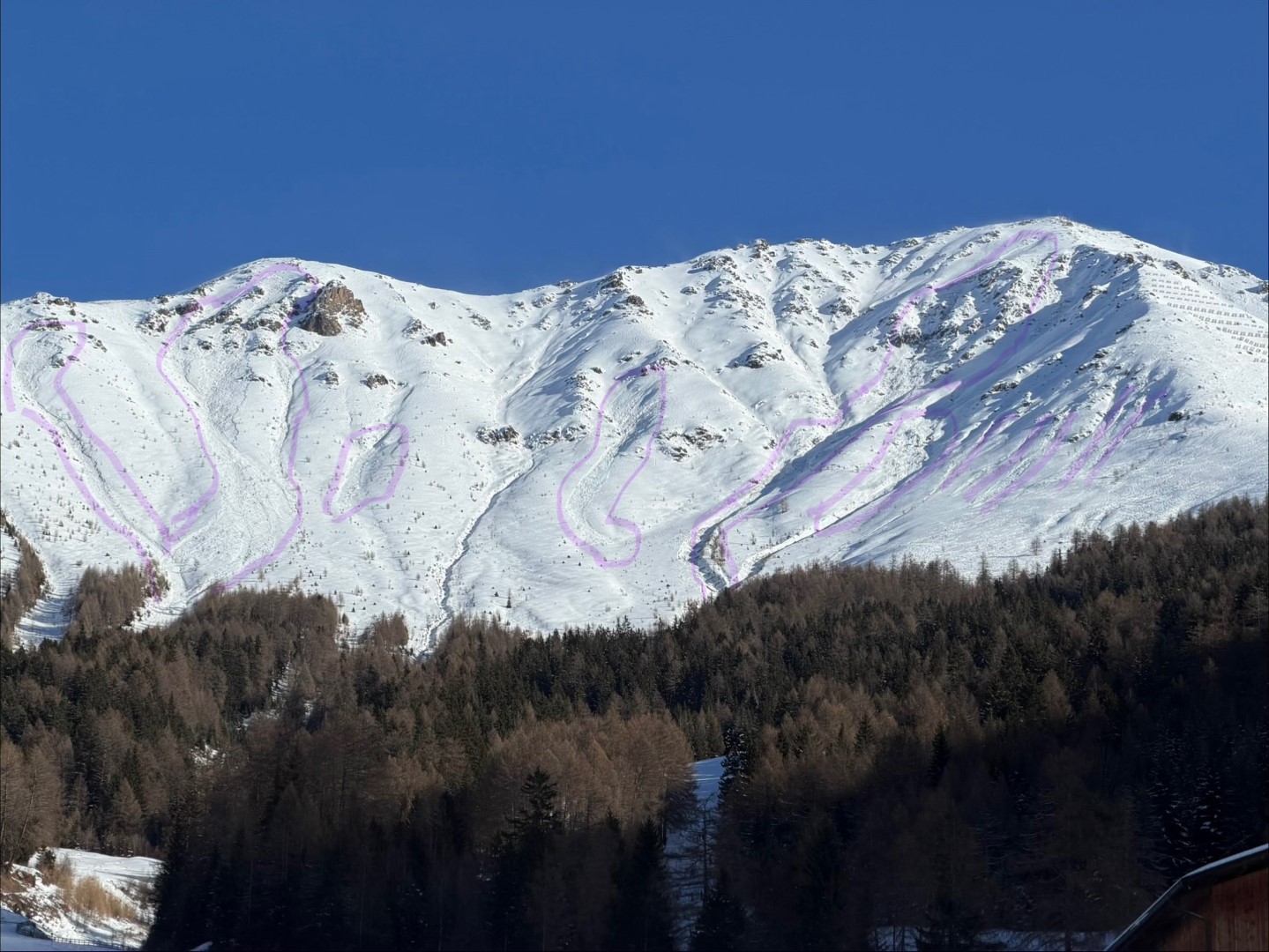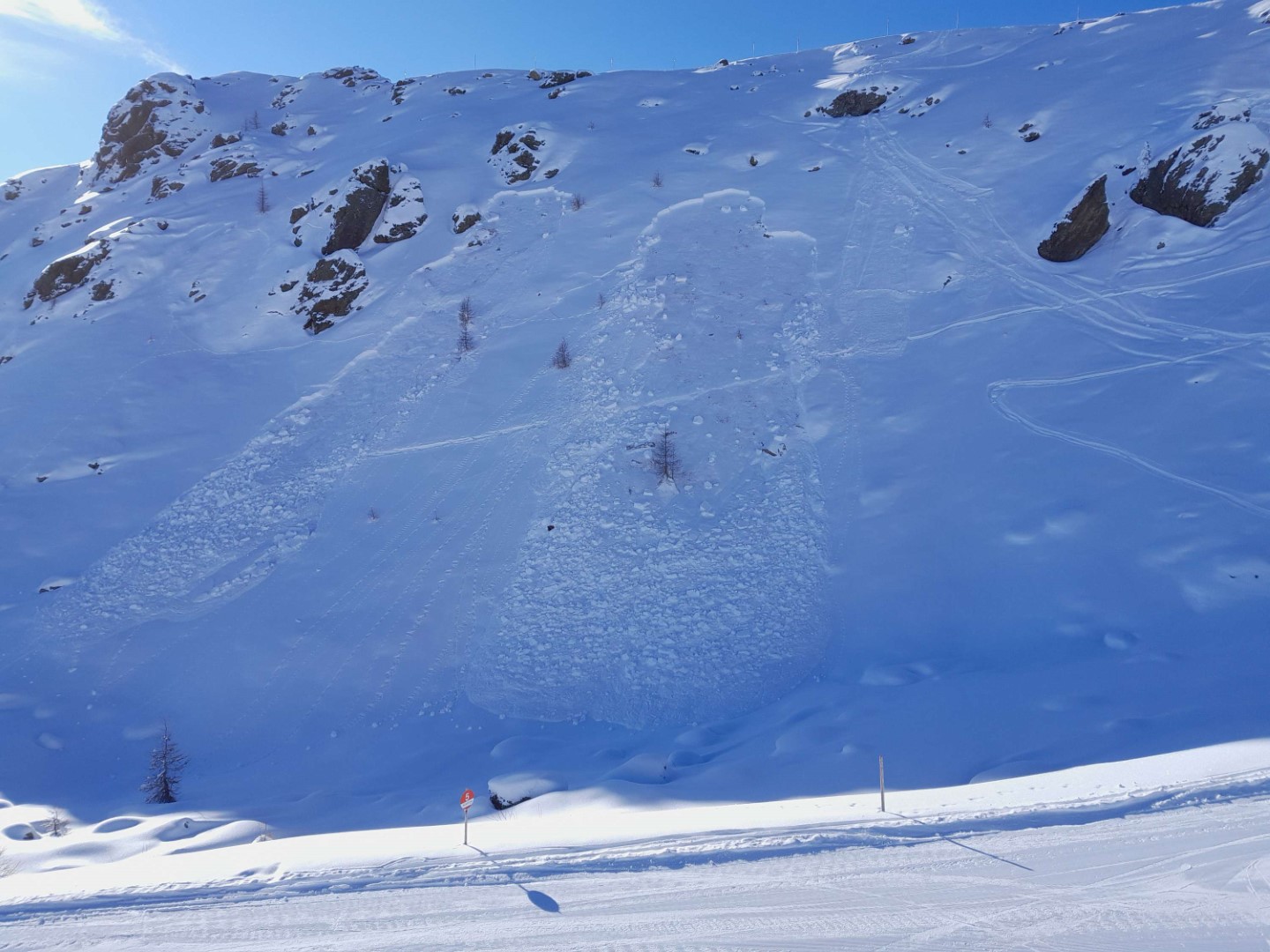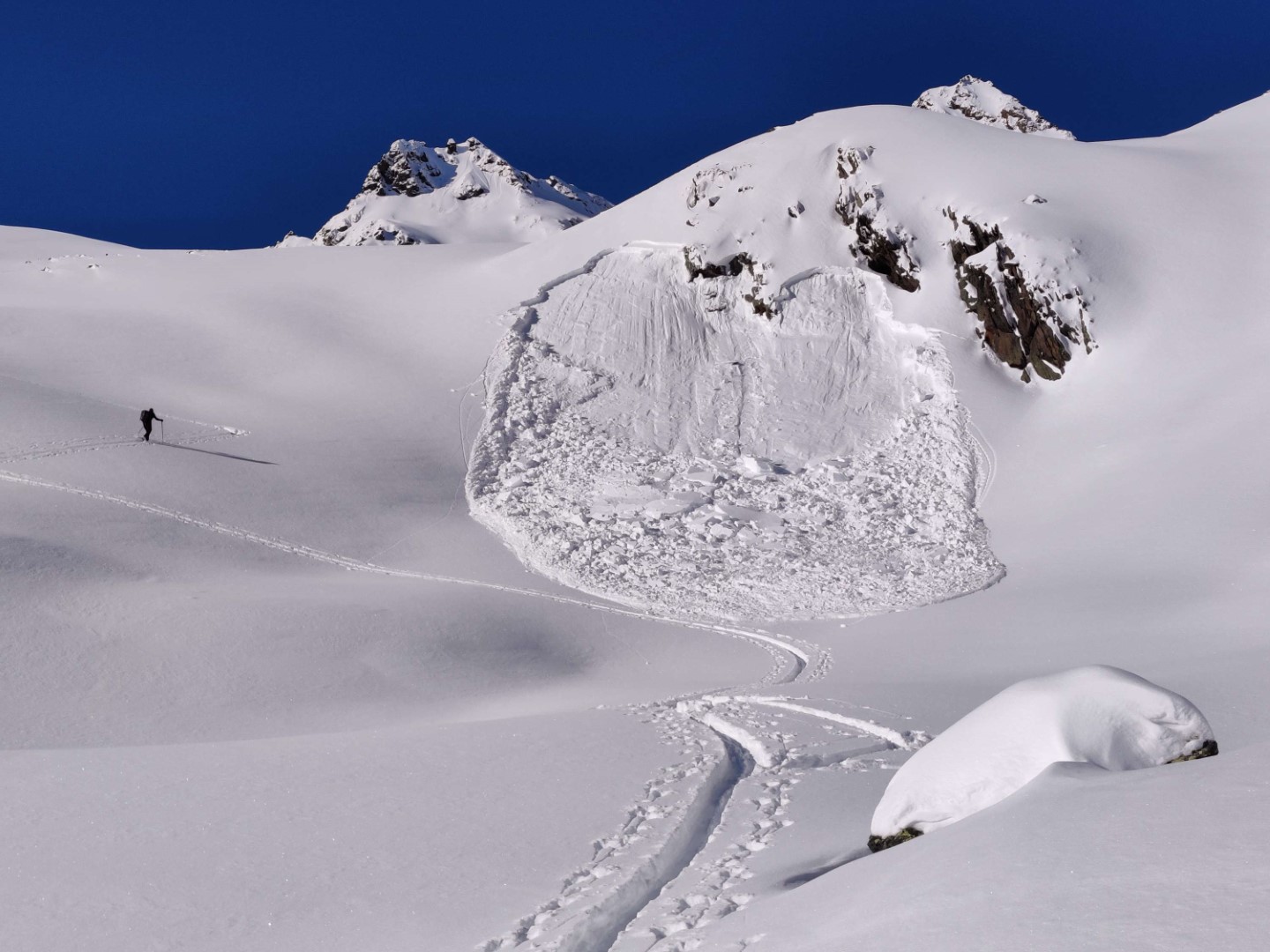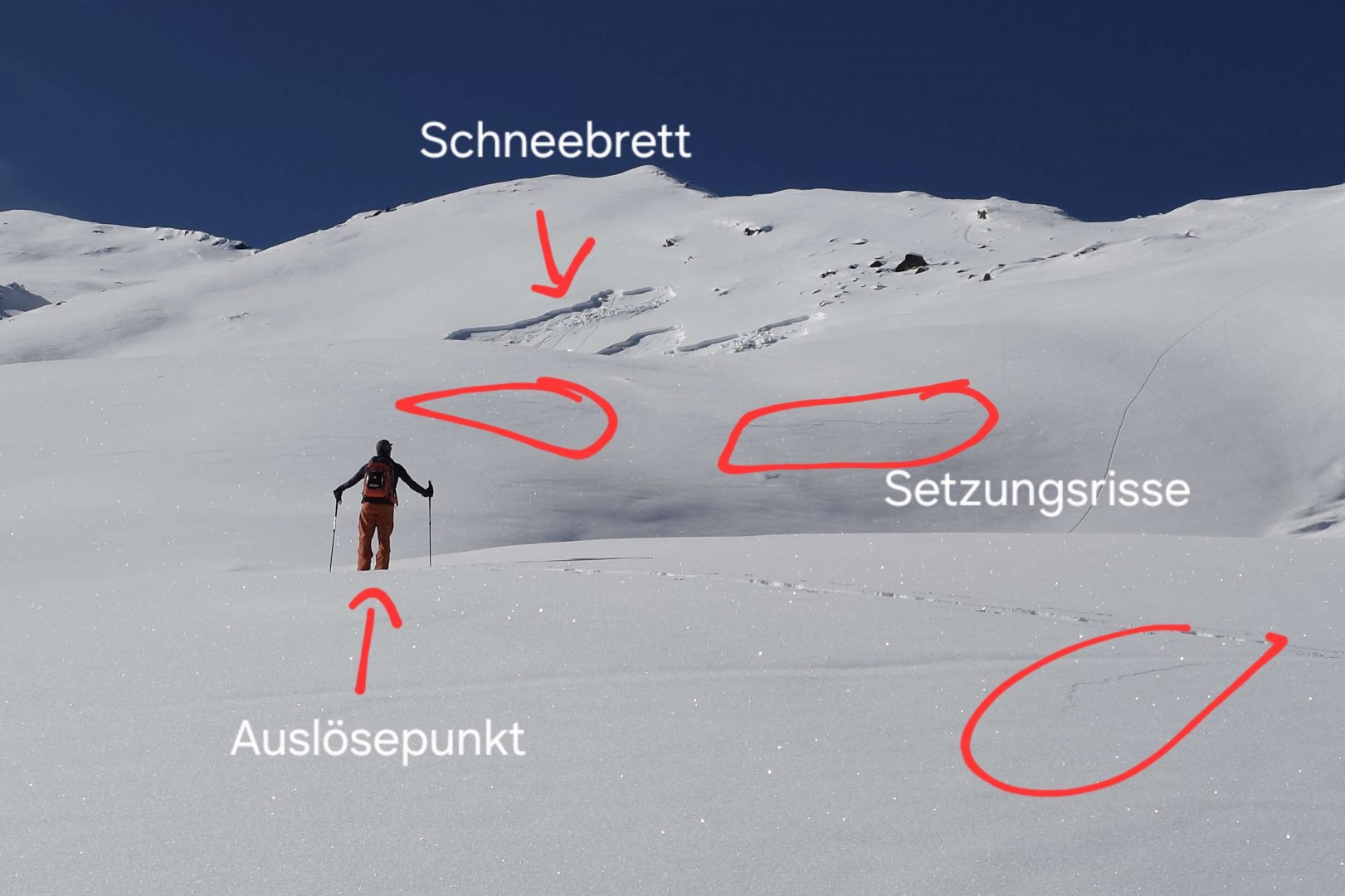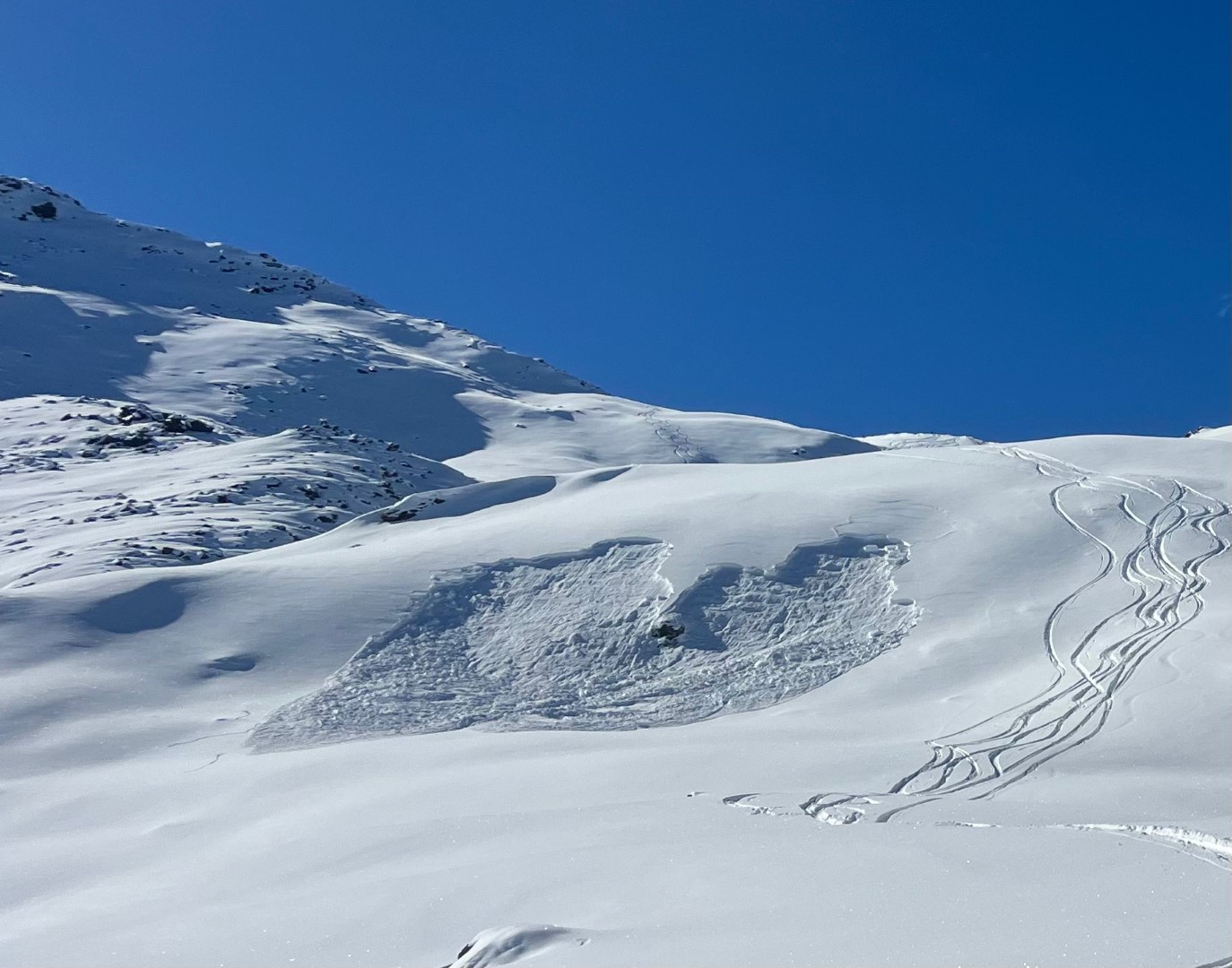
Fernausgelöste Lawine am Weg zum Fotscher Windegg in der Region Kalkkögel (© Alexander Radlherr, 31.01.2026)

No change: highly trigger-sensitive snowpack, continuing avalanche period. In backcountry: restraint required!

With regard to snowpack stability and likelihood of triggering, little has changed. We continue to face a delicate and often treacherous avalanche situation. A cautious, defensive route selection helps to keep risks at a minumum in outlying terrain.

A long-enduring situation of danger

Just under one month, this phase of significantly heightened proneness to triggering of the snowpack has persisted. The reason lies in the extremely marked weak layer (usually faceted crystals and rotten snow in the middle of the snowpack, including surface hoar near the uppermost surface) including a well formed slab on top of it all. The latter component has become amplified over the last week, due to snowfall, on the one hand, and heavy wind impact on the other. Correspondingly numerous have been reports of well-known alarm signals, avalanche triggerings (naturally triggered, unleashed by persons and remote triggerings), fractures forming on the surface and settling noises.

To start with: the solution to the problem

Currently, to be en route with little risk, a great deal of experience and an equal measure of restraint are necessary in far-reaching parts of Tirol. The motto applies: “When the avalanche is the problem, the terrain is the solution.” Backcountry tours in moderately steep terrain, far removed from the huge, evenly-unfolding steep slopes is at this time an often-observed and exemplary manner of conduct.
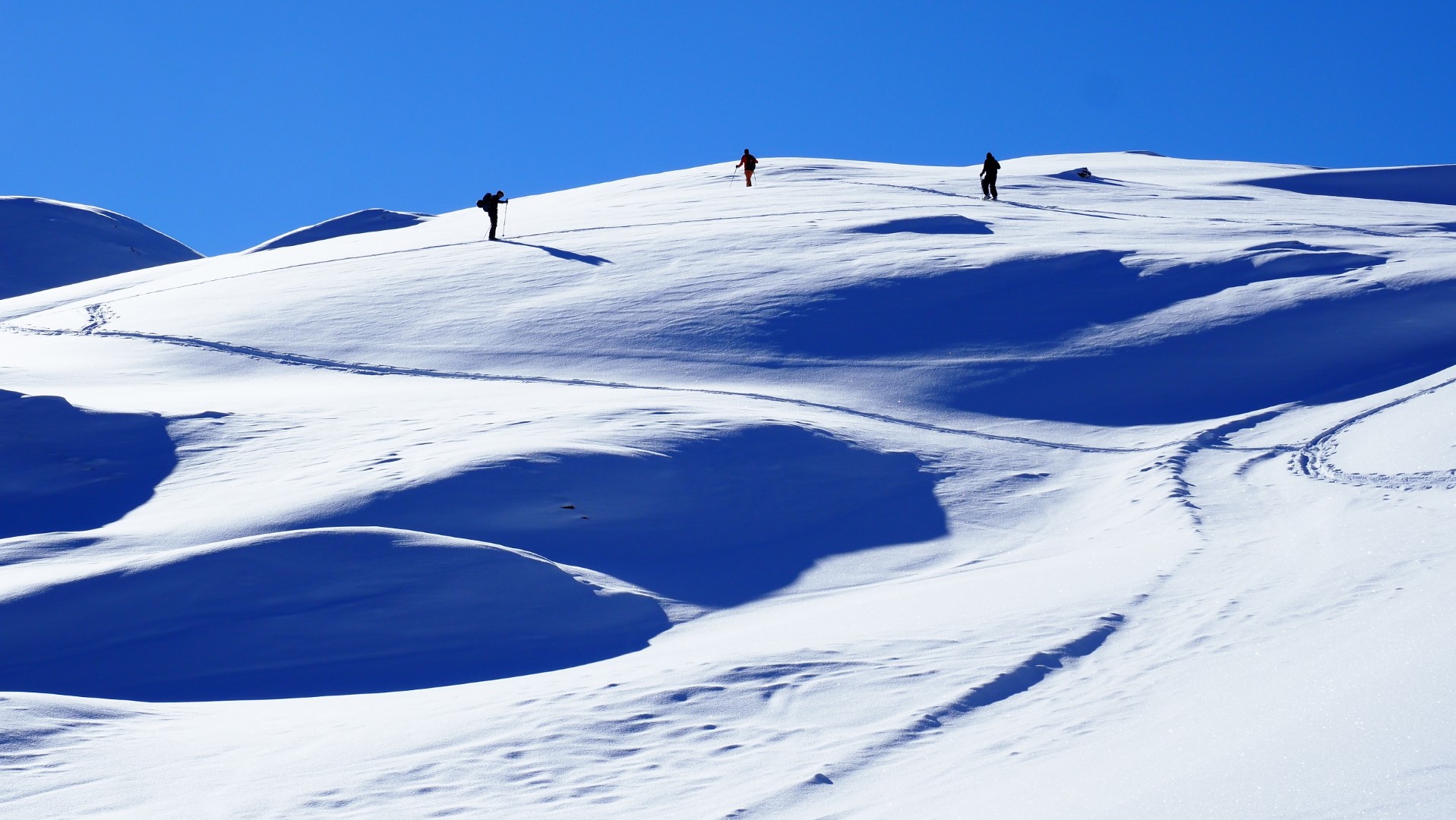
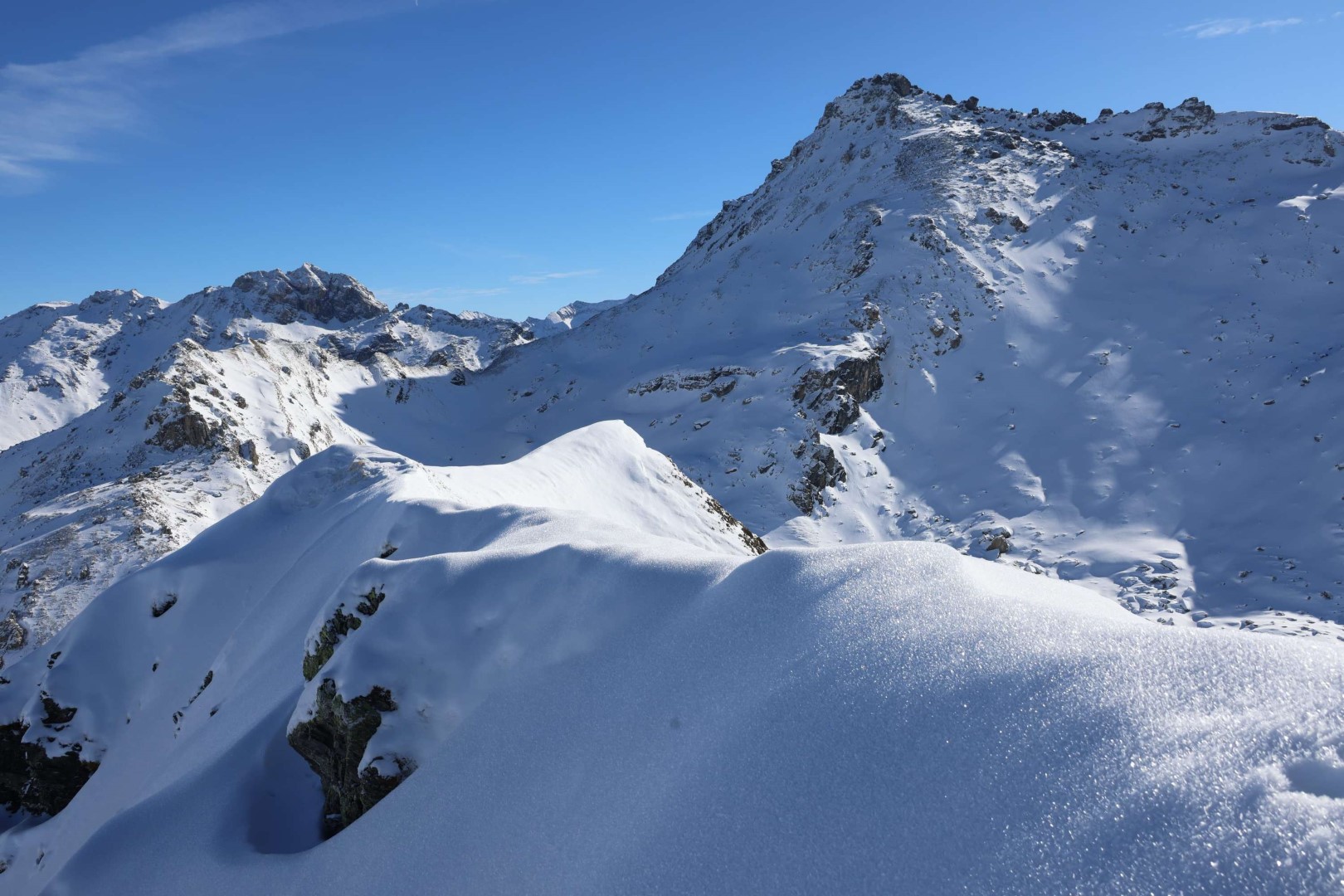
Sanftes, aktuell perfekt der Lawinensituation angepasstes Tourengelände. Region Zillertaler Alpen Nordwest (© LWD Tirol, 30.01.2026)
Gentle terrain, perfectly adapted to the present avalanche situation. Zillertal Alps Northwest region (© LWD Tirol, 30.01.2026)

“Winter sports enthusiasts-high”

Twice during the last week Danger Level 4 (high) was assigned, in the form of “winter sports enthusiasts-high”. Avalanches could be triggered extremely easily by winter sports enthusiasts, also trigger naturally, usually of medium size, sometimes large-sized.
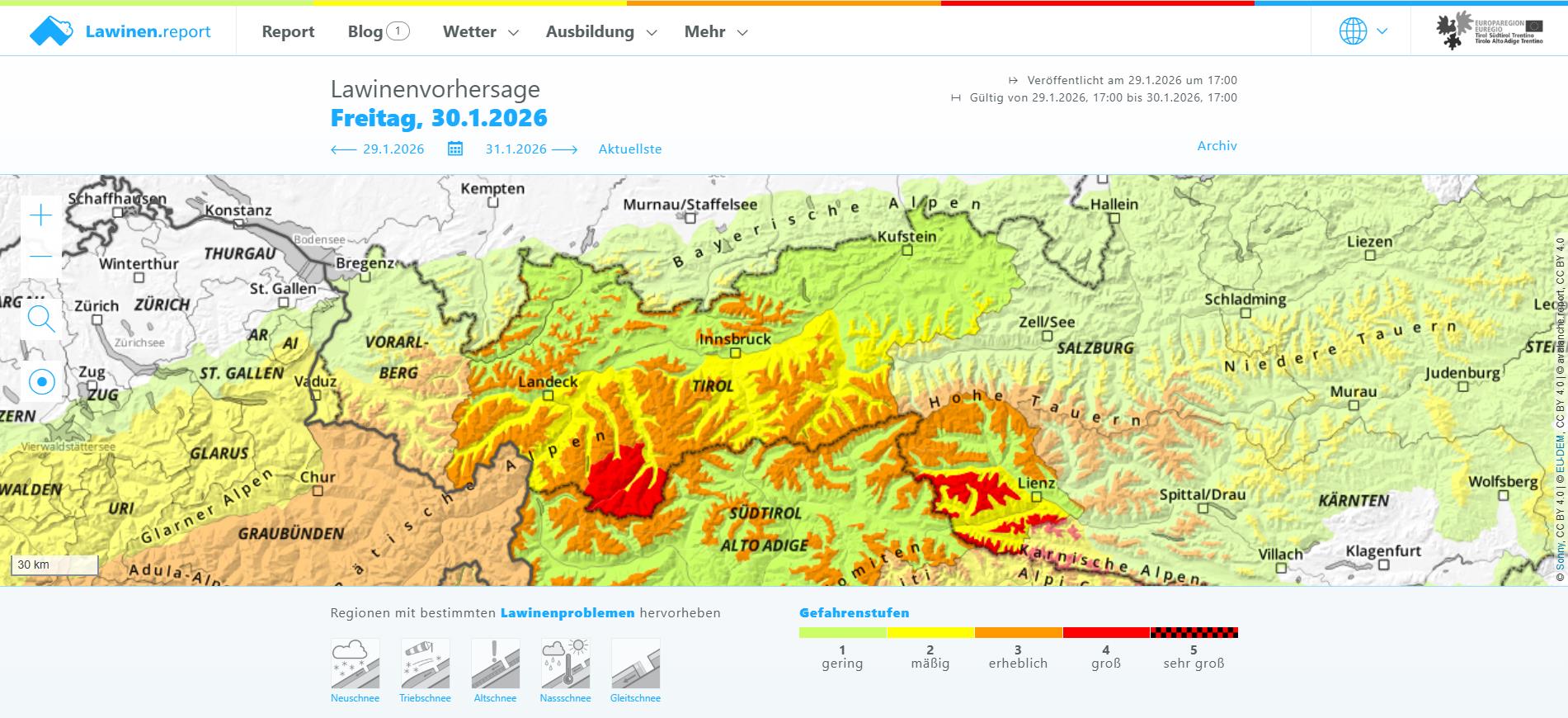
Gefahrenstufenkarte vom 30.01.2026
Map of danger levels on 30.01.2026
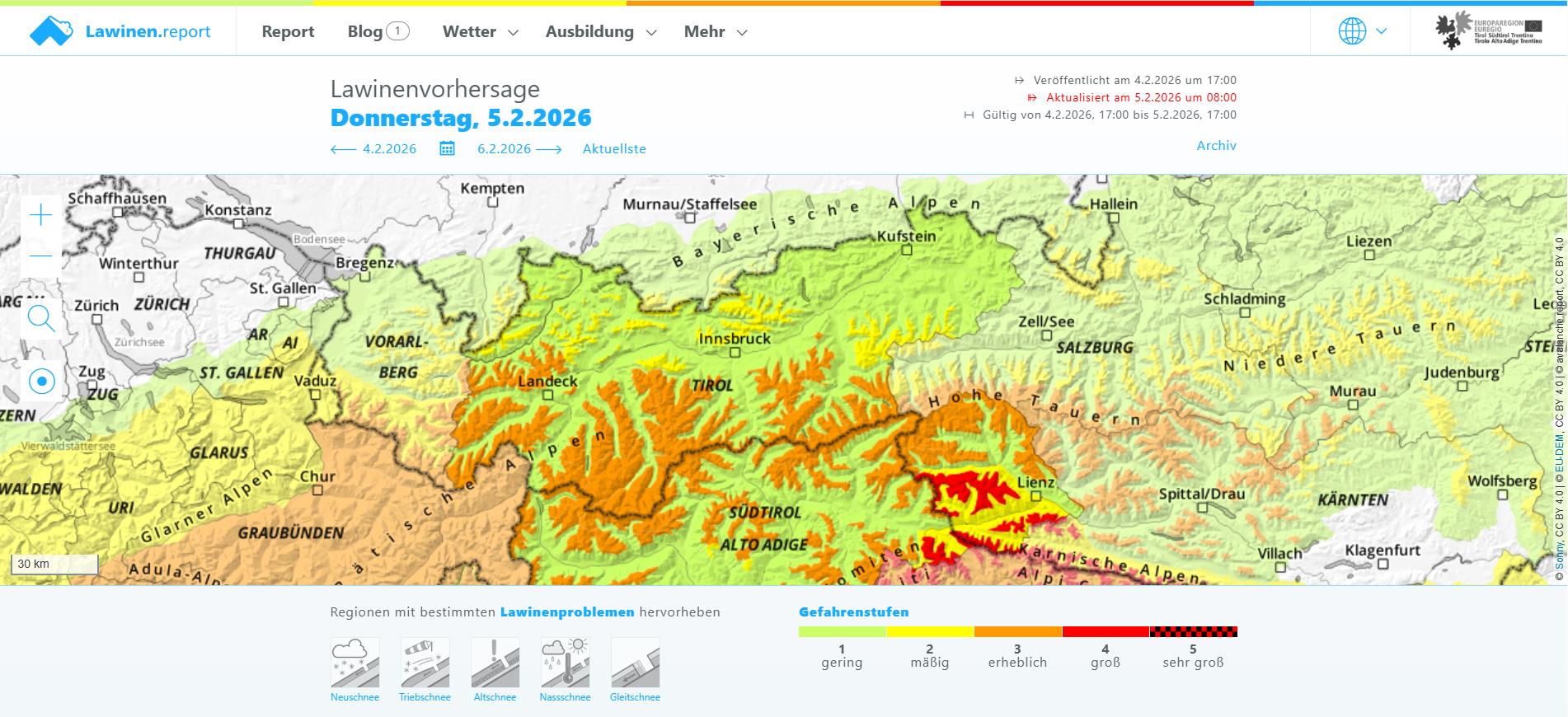
Gefahrenstufenkarte vom 05.02.2026
Map of danger levels on 05.02.2026

Impressions from last week

To round out our last Blog, a few photos to reflect pretty impressively the present situation.

Naturally triggered avalanches and outstandingly successful explosions
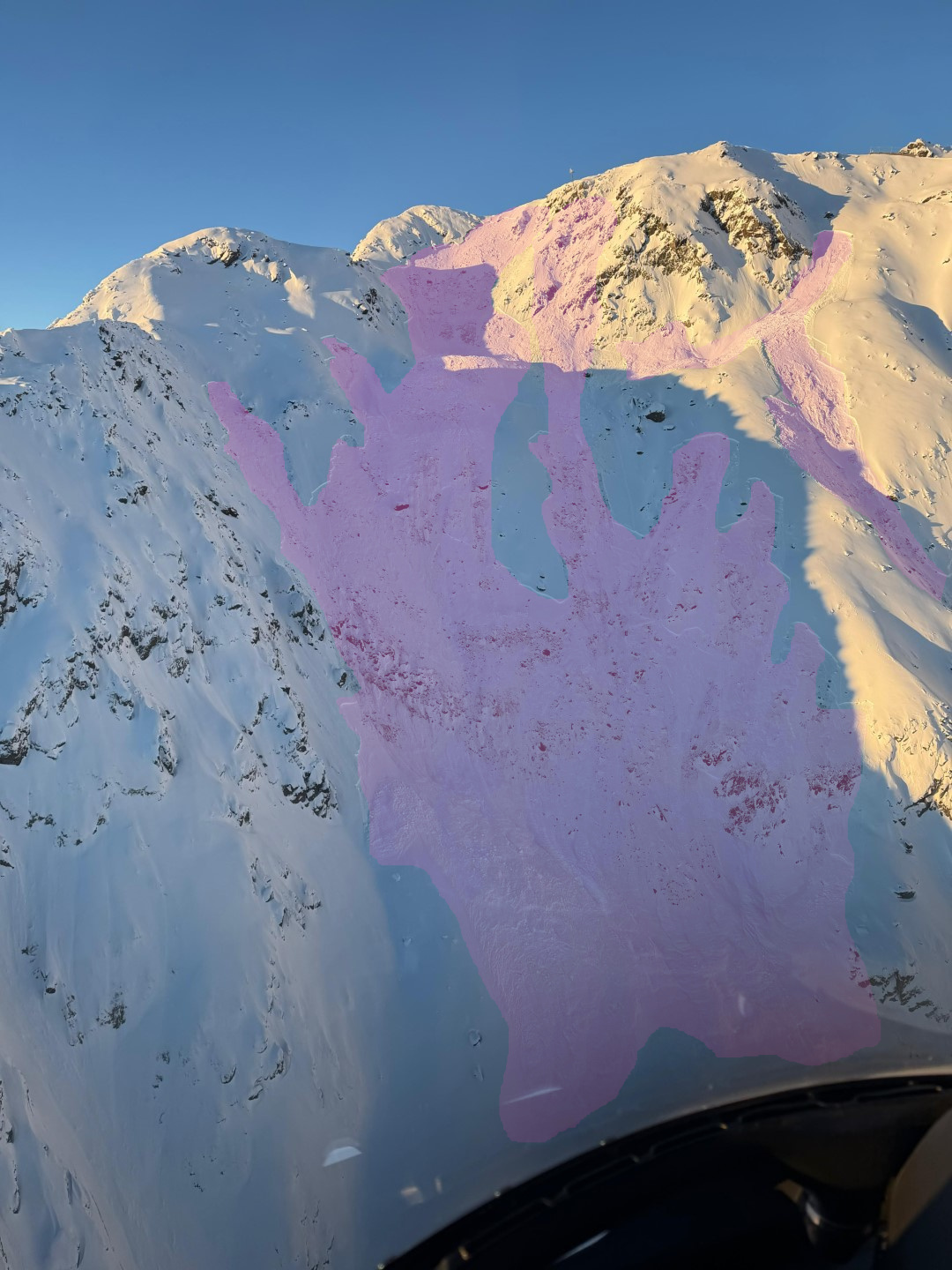
Nach den Niederschlägen vom 28.01. auf den 29.01. wurde uns in den neuschneereichen Regionen von sehr guten Sprengerfolgen berichtet, wie hier am Gaislachkogel in der Weißkugelgruppe (© Tobias Holzknecht, 30.01.2026)
Following the precipitation on 28-29 January we received reports of highly successful artificial triggerings through explosions from the regions where snowfall was heaviest, such as above on Gaislachkogel in the Weisskugel Massif. (© Tobias Holzknecht, 30.01.2026)
Kleine Schneebrettlawinen im Bereich von Böschungen in der Region Karnische Alpen Osttirol (© LWD Tirol, 30.01.2026)
Small slab avalanche on a hillside in the Carnic Alps East Tirol region (© LWD Tirol, 30.01.2026)
Großflächige Bruchausbreitungen im Eisenkar am Geigenkamm (© Clemens Gufler, 31.01.2026)
Wide-sweeping fracture propagation in the Eisenkar on Geigenkamm (© Clemens Gufler, 31.01.2026)
Zahlreiche spontane Lawinen am Roten Schofen in der Region Kaunergrat während umfangreicher Verfrachtungen am 03.02.2026 (© Benjamin Zanon)
Numerous naturally triggered avalanches on Roten Schofen in Kaunergrat region due to vast snow transport on 03.02.2026 (© Benjamin Zanon)

Avalanches triggered by persons (inc. remote triggerings)
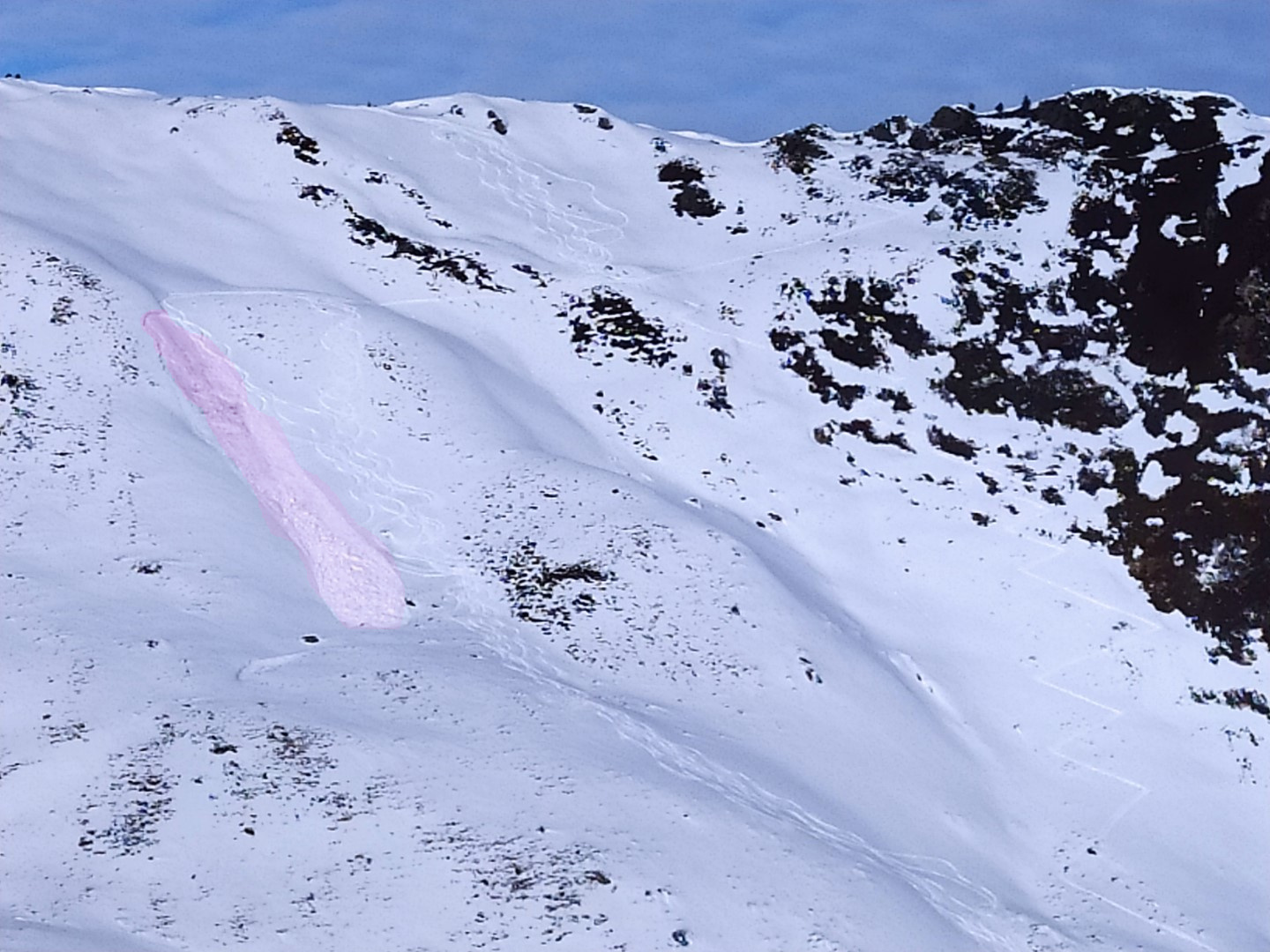
Lawinenauslösung durch WintersportlerInnen im Bereich der Maschentalalm in der Region Tuxer Alpen Ost (© Achim Scherzer, 30.01.2026)
Avalanche triggered by winter sports enthusiasts near Maschentalalm in Tux Alps East region (© Achim Scherzer, 30.01.2026)
Lawinenauslösungen im Pistennahbereich. Thurntaler in der Region  Deferegger Alpen Ost (© Barbara Fink, 01.02.2026)
Avalanches triggered near public ski runs. Thurntaler in the Deferegger Alps East region (© Barbara Fink, 01.02.2026)
Fernauslösung im Schöntal in der Region Sellrain - Alpeiner Berge (© Simon Legner, 30.01.2026)
Remote triggering in Schöntal in Sellrain – Alpeiner Berge region (© Simon Legner, 30.01.2026)
Fernauslösung beim Kastengrat in der Region Kalkkögel (© Thilo Rek, 01.02.2026)
Remote triggering on Kastengrat in Kalkkögel region (© Thilo Rek, 01.02.2026)
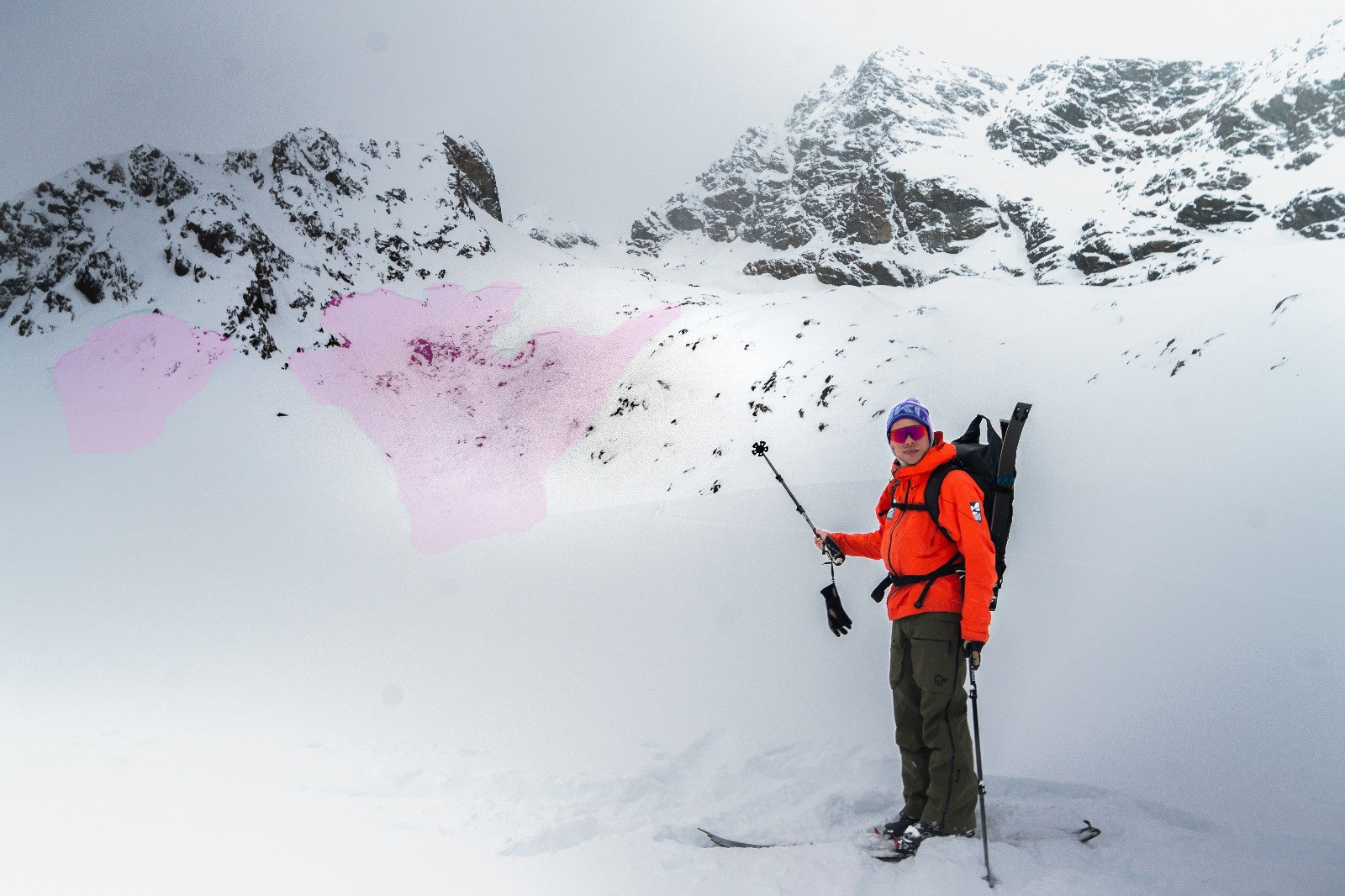
Fernauslösung vom Beobachtungsstandort am Weg zum K2 im Pitztal in der Region Weißkugelgruppe (© Jef Verstraeten, 04.02.2026)
Remote triggerings from observation point on trail to K2 in Pitztal in Weisskugel Massif region (© Jef Verstraeten, 04.02.2026)

Fractures forming, settling noises
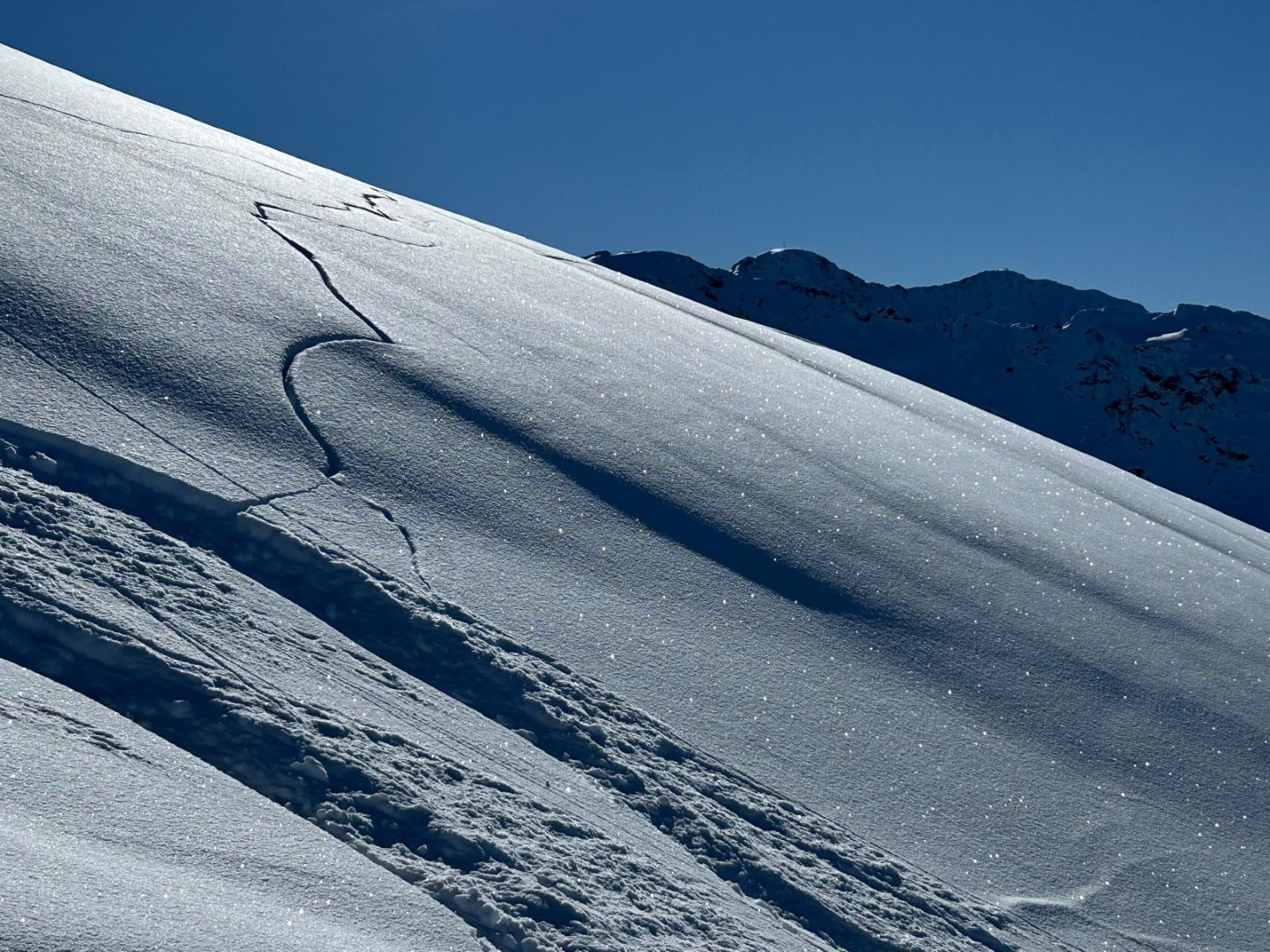
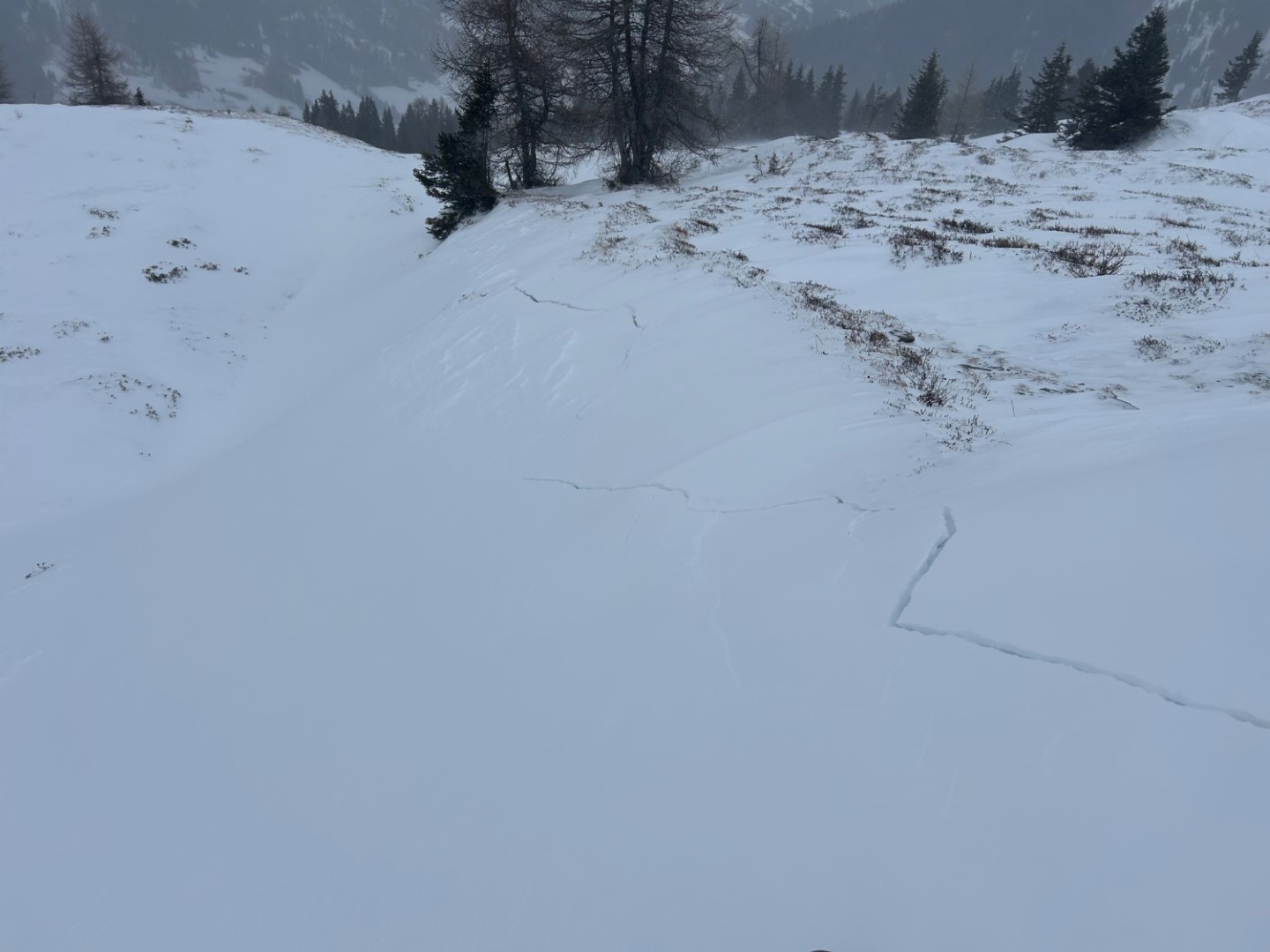
Rissbildung und großflächige Bruchfortpflanzung am Gamsberg in der Samnaungruppe (© Stefan Jungmann, 01.02.2026)
Fractures forming and wide-sweeping fracture propagation on Gamsberg in the Samnaun Massif (© Stefan Jungmann, 01.02.2026)
Rissibildugn bei der Allerleigrubenspitze in der Region Stubaier Alpen Mitte (© Jef Verstraeten, 04.02.2026)
Fracture forming on Allerleigrubenspitze in Stubai Alps Middle region (© Jef Verstraeten)

Review: weather and snowpack

During last week, fine weather conditions prevailed amid a southerly air current. Starting on 3 February, skies began to cloud up from the south, snowfall set in (focus in southernmost East Tirol). Up to 50cm of fresh snow was registered there. The frequently very heavy wind impact on 3-4 February had a marked effect: far-reaching snow transport. The additional burden of the fresh snowfall on the snow cover plus the transported snow heightened the dangerousness of the avalanche situation due to the marked slab.
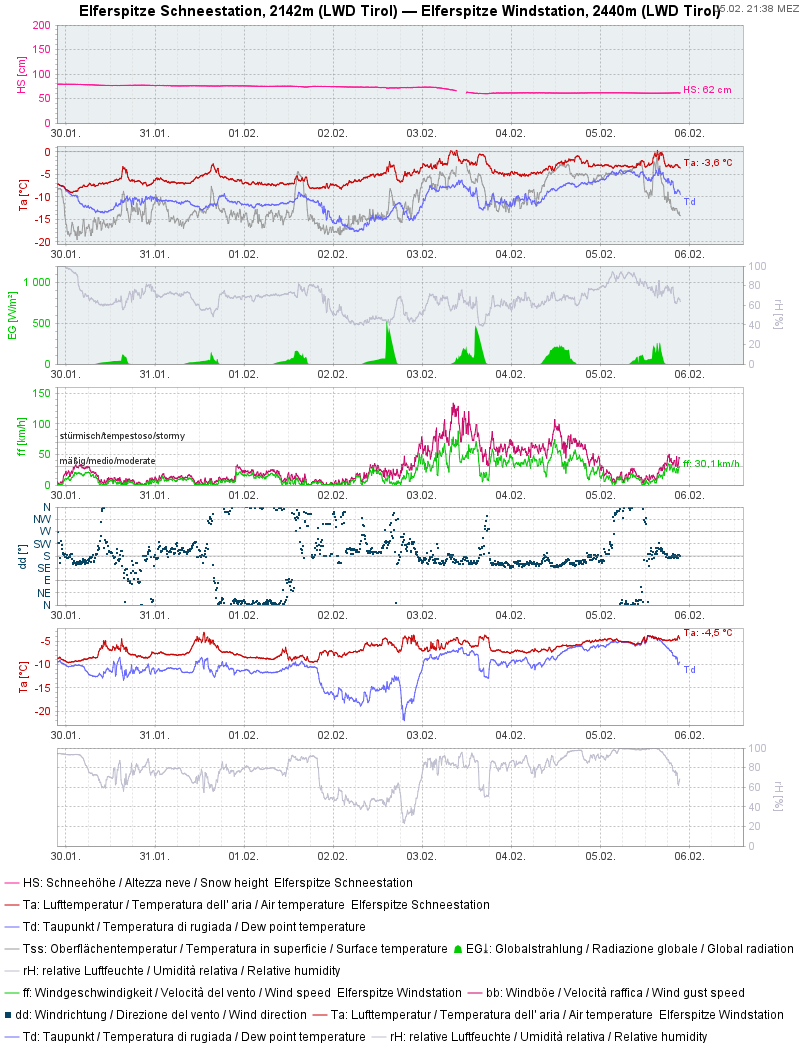
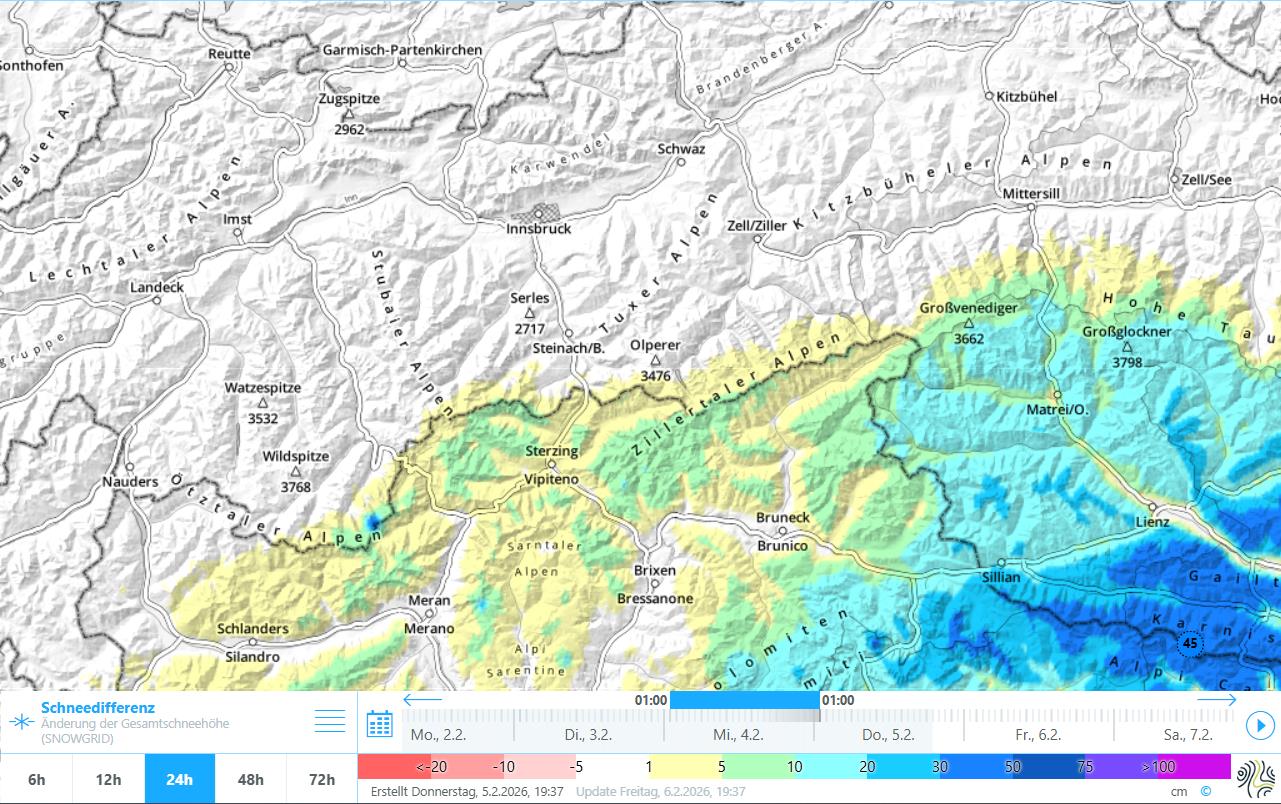
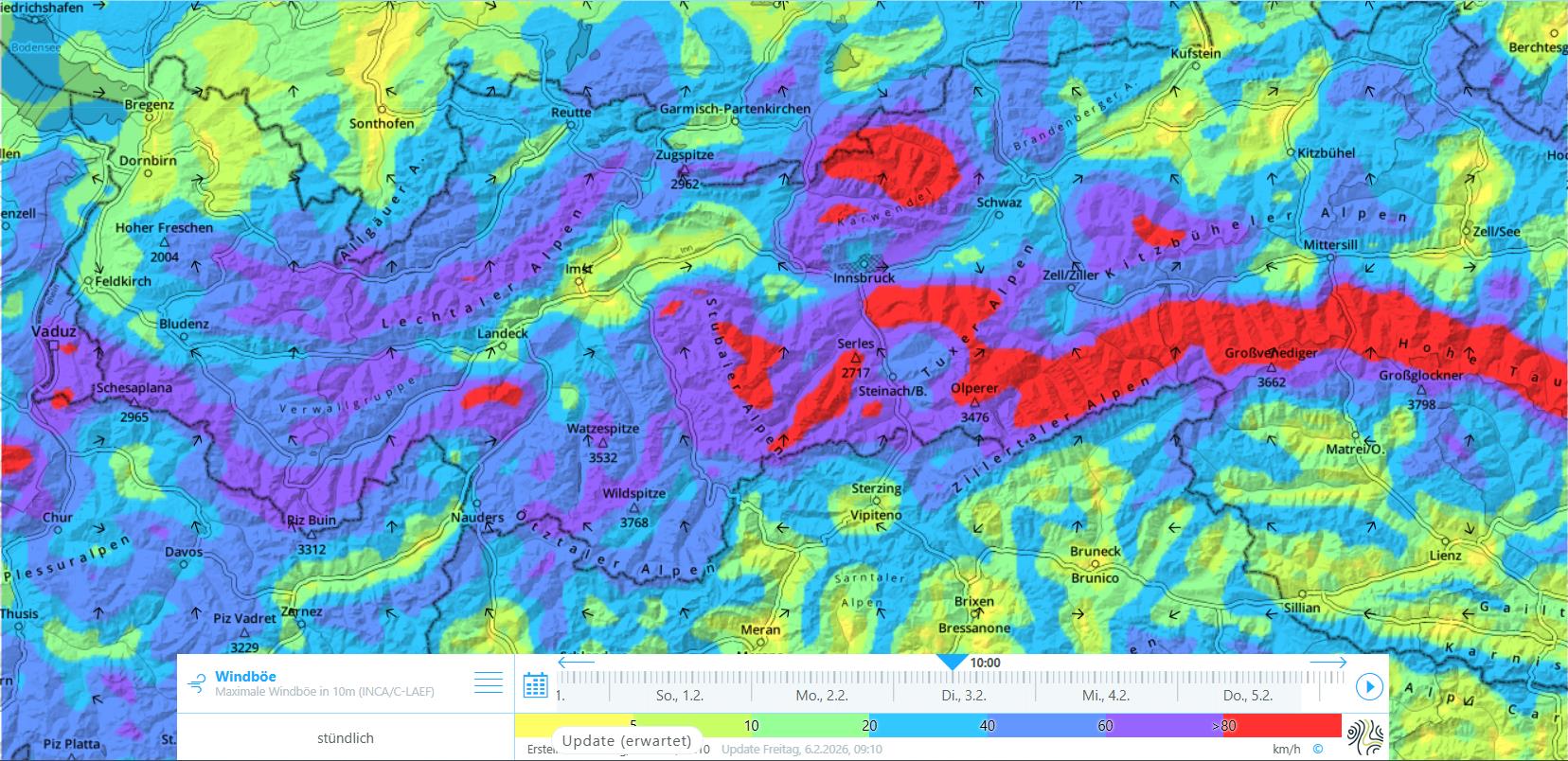
Freundlicheres Wetter in Nordtirol als in Osttirol. Prägend u.a. der starke Windeinfluss am 03.02. und 04.02. v.a. in den Regionen entlang des Alpenhauptkammes.
More pleasant weather conditions in North Tirol than in East Tirol. The heavy wind impact on 3-4 February was conspicuous, especially in the regions along the Main Alpine Ridge.
24h Schneedifferenz vom 04.02. auf den 05.02.2026
24-hr snow-depth differences on 4-5 February 2026
Starker Windeinfluss insbesondere am 03.02.2026
Heavy wind impact, particularly on 03.02.2026
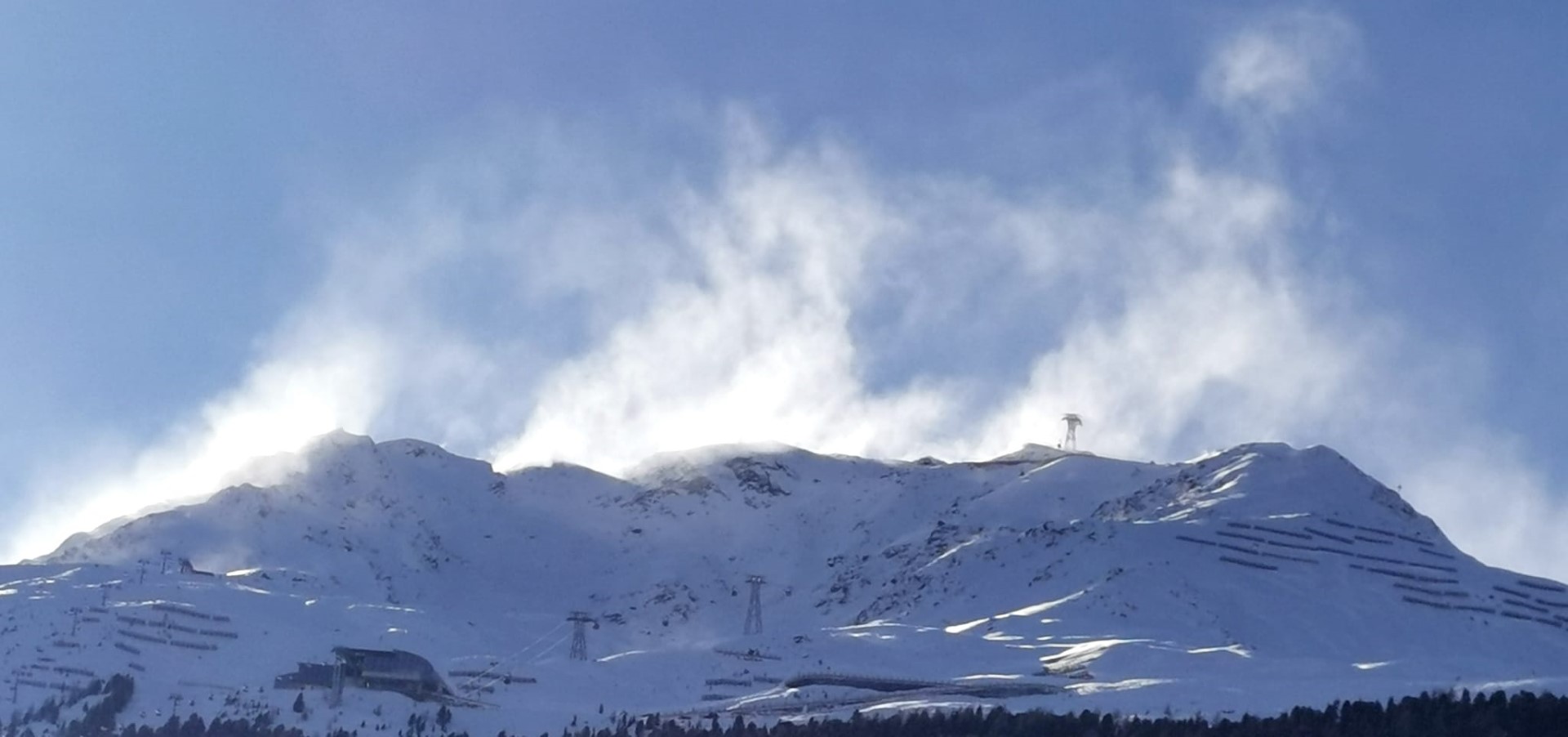
Im Süden, am Hauptkamm und etwas nördlich davon beobachtete man häufig große Schneefahnen als Zeichen umfangreicher Schneeverfrachtungen. Sölden, Weißkugelgruppe (© Peter Raich, 03.02.2026)
In the south, on the Main Ridge and somewhat north therefrom, snow plumes were often observed: a sign of far-reaching snow transport. Sölden, Weisskugel Massif (© Peter Raich, 03.02.2026)

(Blanketed) surface hoar

It is important to note that as of the snowfall starting on 3 February, the widespread surface hoar was blanketed by fresh snow, even though it was largely dispersed by wind impact, particularly near the Main Alpine Ridge on west-facing and east-facing slopes. Under all circumstances, that brought about a further, extremely prone-to-triggering weak layer inside the snowpack in many places and regions. One sign of this was the naturally triggered shallow snowslides in steep terrain. Following the snowfall, unfortunately impossible to recognize.
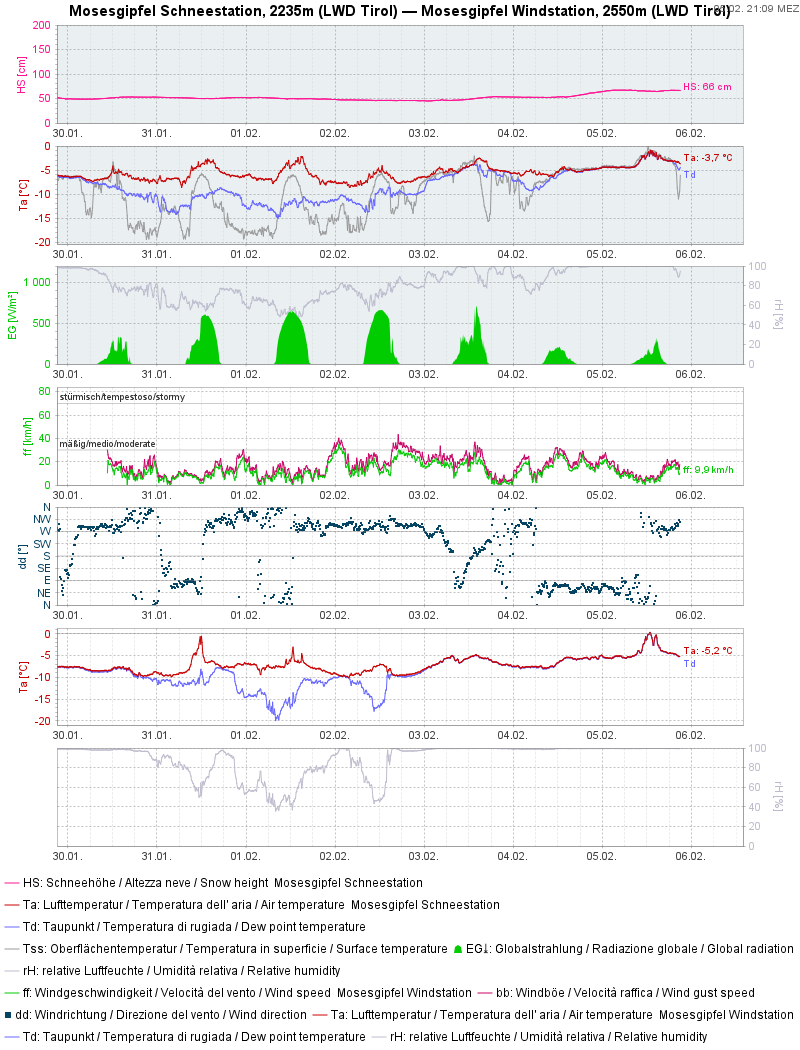
Im südlichen Osttirol war es trüber als im Norden. Dort schneite es allerdings auch am meisten. An der zweiten Grafik von oben erkennt man aufgrund der Differenz der Schneeoberflächentemperatur zum Taupunkt auch das erhöhte Potential zur Oberflächenreifbildung.
In southern East Tirol, skies were more heavily clouded than in the north. Most of the snowfall was there. In the second graph, the heightened potential of surface hoar formation is visible through the difference between surface-snow temperature and thaw point.
Unsere Rückmeldungen über Oberflächenreif während der vergangenen Woche
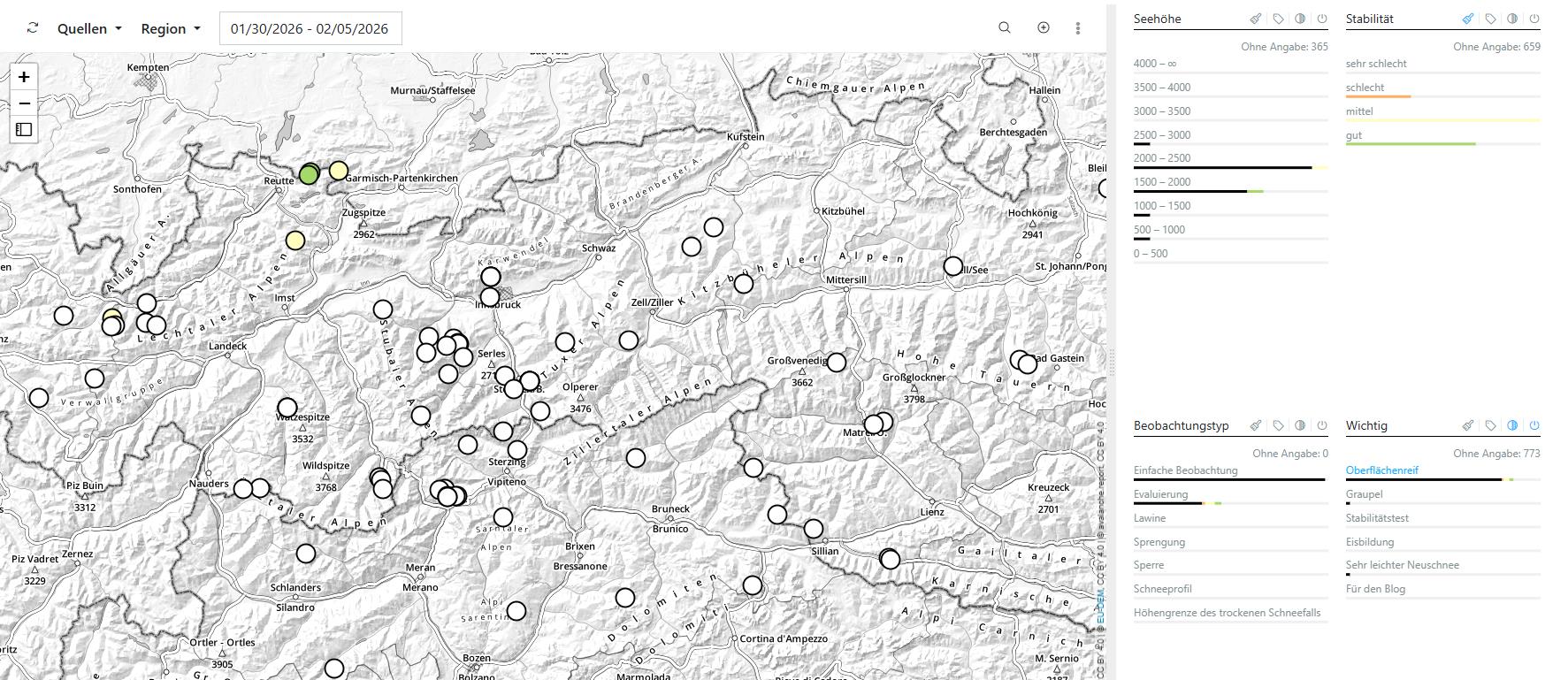
Reports of surface hoar received last week
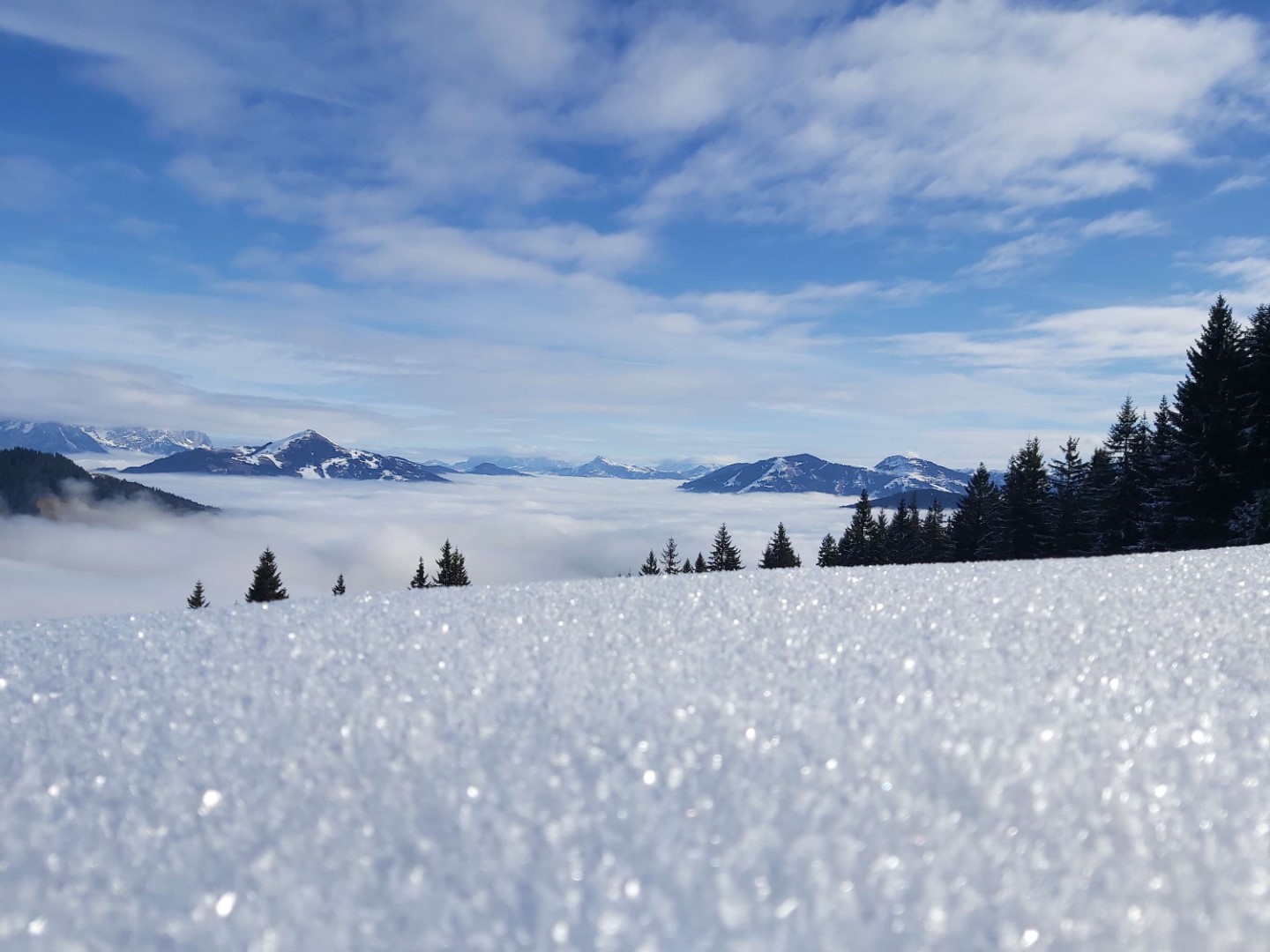
Oberlfächenreif im Unterland (© Andreas Stefan Mayr, 01.02.2026)
Surface hoar in Lower Inn Valley (© Andreas Stefan Mayr, 01.02.2026)
Oberflächenreif im Bereich der Mölser Sonnenspitze in der Region Tuxer Alpen West (© Michael Gasteiger, 31.01.2026)
Surface hoar near Mölser Sonnenspitze in Tux Alps West region (© Michael Gasteiger, 31.01.2026)

What remains, unfortunately, are the marked weak layers in the middle part of the snowpack.
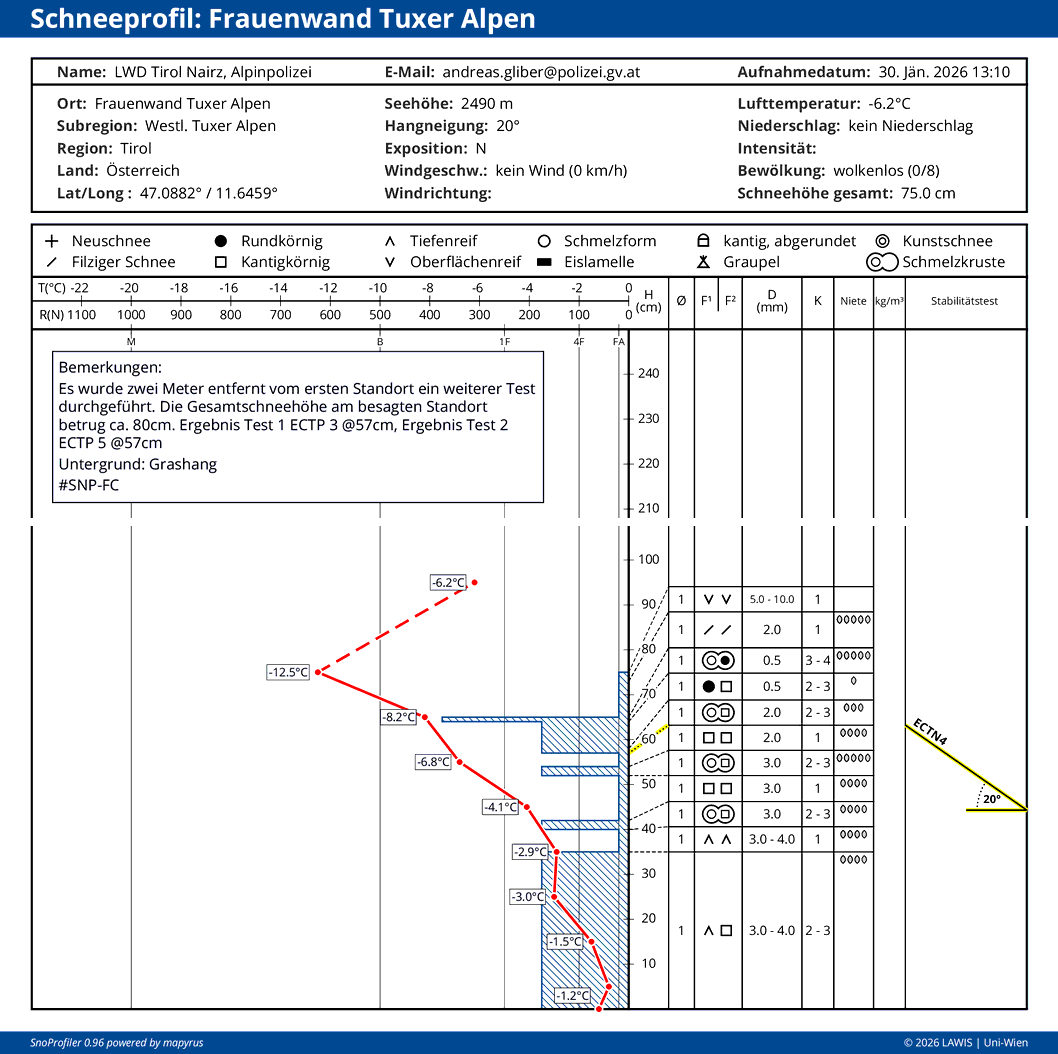
Ein recht typisches Schneeprofil mit potentiellen Schwachschichten aus kantigen Kristallen und Schwimmschnee. Am Profil erkennt man an der Oberfläche auch noch Oberflächenreif. An diesem Standort war zum Profilzeitpunkt das Brett zu wenig ausgeprägt. 2 Meter von diesem Standort entfernt war die Schneeauflage auf der Schwachschicht dicker, das Brett ausgeprägter, was zu einem durchgängigen Bruch innerhalb der Schneeblocks führte.
A quite typical snow profile with potential weak layers of faceted crystals and rotten snow (wedged between crusts). Visible in the profile on the surface is also surface hoar. At this location, the slab was not as marked at the moment of the profile. Two meters away from this spot, fresh snow deposited was deeper, so the slab was more pronounced, leading to a thorough fracture inside the snow block.

Other developments

A brief perturbance, then tranquil weather conditions til mid-week

According to GeoSphere Austria, dense clouds followed by light rainfall or snowfall will spread in North Tirol in early morning hours on 6 February, thereafter reaching central areas close to midday and the the Lower Inn Valley in the afternoon. For the remainder of the day it will be cloudy, intermittently wet with light-to-moderate rainfall or snowfall. Snowfall is expected only above 1100-1400m. In East Tirol, skies will remain heavily clouded to overcast, but apart from the Main Tauern Ridge is will remain dry.
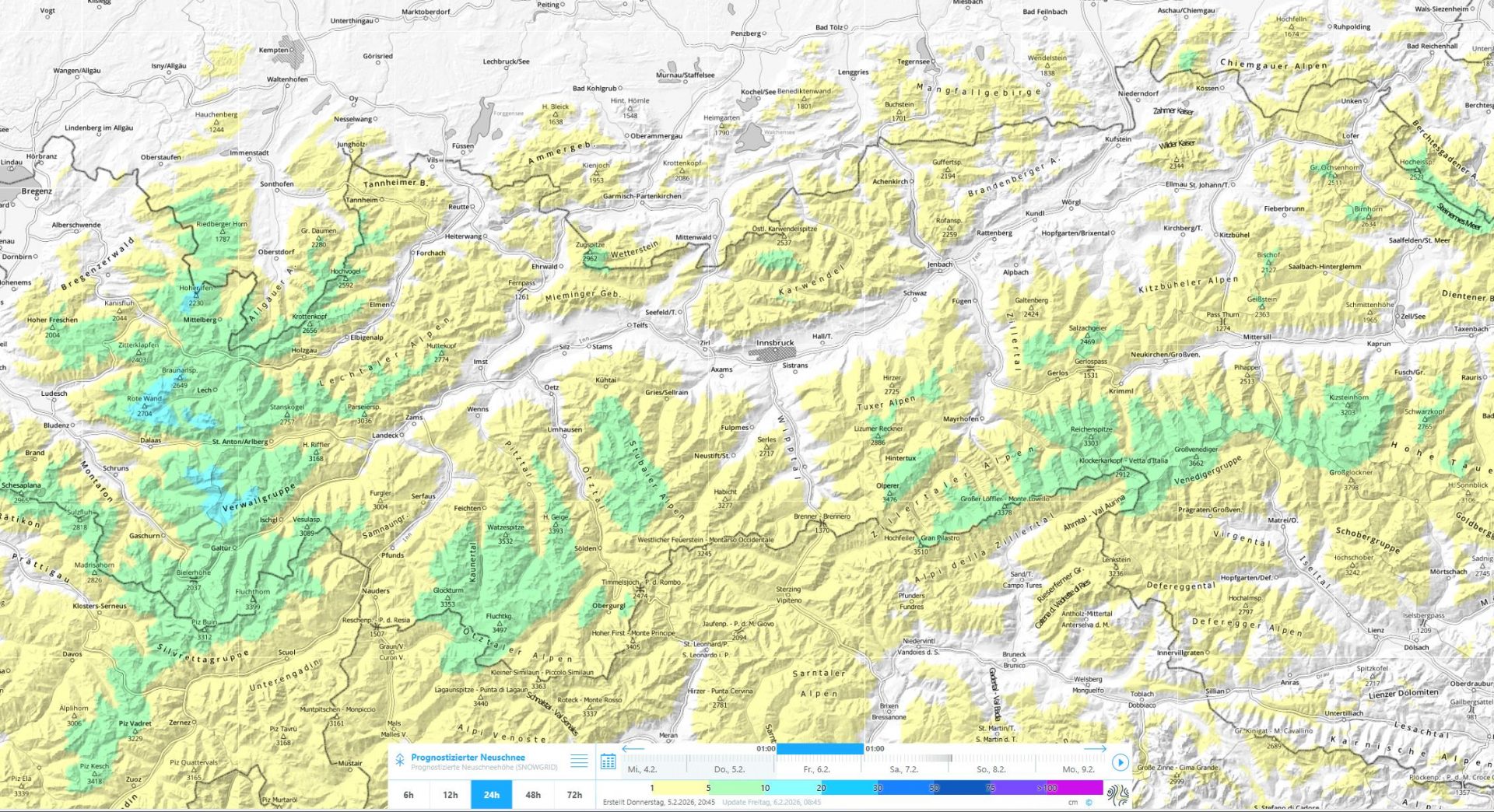
Etwas Neuschnee in weiten Teilen Tirols. 24h Prognose  06.02.2026
Some fresh snowfall in far-reaching parts of Tirol. 24-hr forecast 06.02.2026

Thereafter, weak high-pressure front conditions will continue into next week. It will remain mild for this juncture of the season. Starting at mid-week, weather will become less stable, snowfall is then possible.
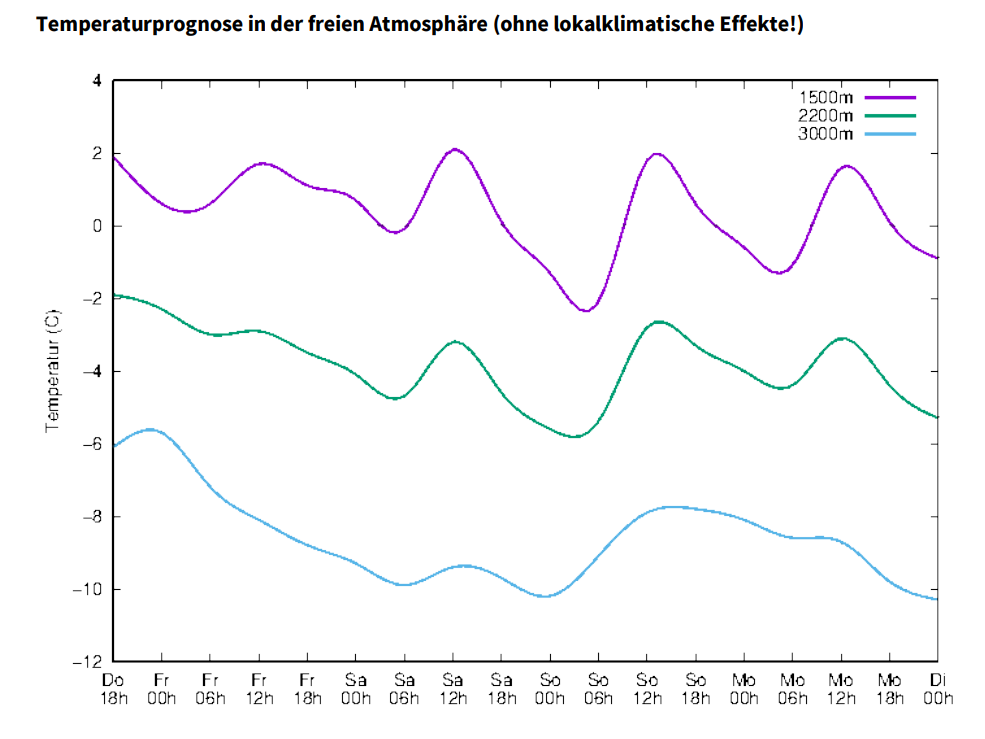
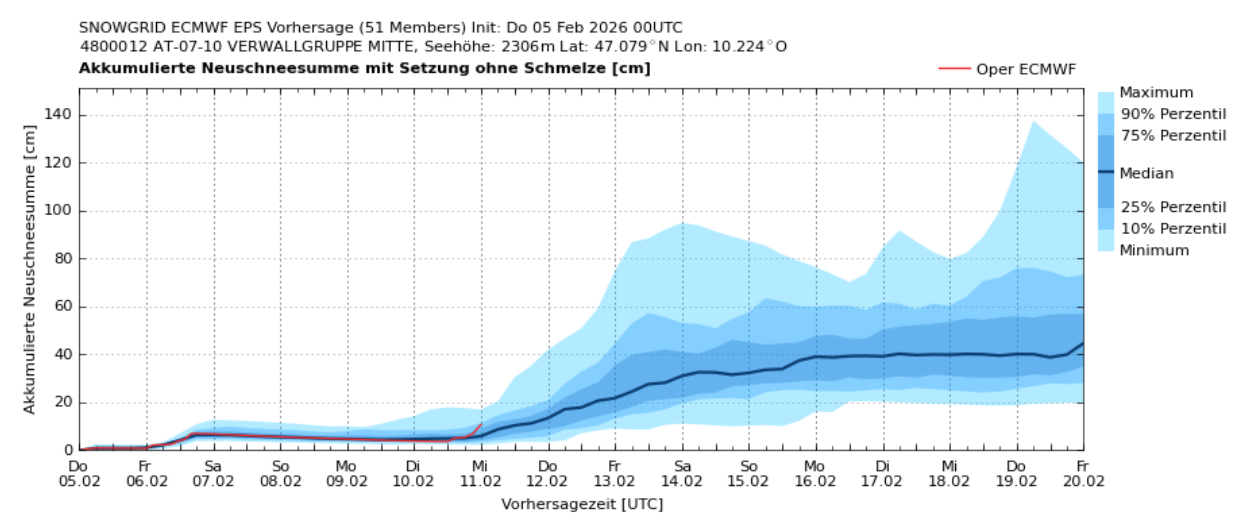
Prognostizierter Temperaturverlauf bis inklusive Montag, 9.02.2026.
Forecast temperature development through Monday, 9.02.2026.
Bis Wochenmitte bleibt es niederschlagsfrei, gegen Wochenende hin ist Neuschnee auf Tirols Bergen möglich.
Until mid-week, no precipitation is anticipated. Around mid-week, fresh snowfall is possible in the mountains of Tirol.

Effects on avalanche danger

In case the rainfall extends to higher altitudes on 6 February, that would reinforce slab formation. That would make the snowpack even more prone to triggering than now.

For winter sports enthusiasts, the unfavorable avalanche situation will persist!