Lawine Velilltal-Bürkelkopf im freien Skiraum im Nahbereich der Piste. (© LWD Tirol, 16.01.2026)

Avalanche incident analysis Velilltal-Bürkelkopf (15.01.2026)

On 15.01.2026 a person died in the open skiing zone near the secured ski runs of the Silvretta Arena ski area in an avalanche that triggered in very steep terrain. Cause: a marked persistent weak layer.

This tragic avalanche incident again confirms the extremely prone-to-triggering snowpack in some regions.

Course of events

Yesterday, 15.01.2026, a person who had come from the Pardatschgratbahn in the Silvretta Arena ski area left the red-marked ski run no. 7 and skied into open terrain. There, a medium-sized slab avalanche triggered which totally buried the person. The avalanche was apparently not noticed by anyone. When the person did not appear at breakfast on 16.01, a missing-persons report was filed.

In the course of a search-and-rescue operation the search was limited to the area of the Silvretta Arena ski area, where the avalanche was discovered during the morning hours. Soon thereafter the deceased person was able to be dug out. The uncovery of the person was enabled partly by a ski stick jutting out of the avalanche snow, since the person had no emergency avalanche equipment.

The avalanche

The avalanche triggered in Velilltal west of the Bürkelkopf in the Samnaun Massif on an extremely steep north-facing slope at about 2500m altitude. It was a medium-sized, 95m-long and 60-wide slab avalanche with a fracture depth between 20cm and 60cm. The avalanche zone had often been skiied on previously, at least in the area near the ski run. The avalanche came to a halt about 20m before the ski run.
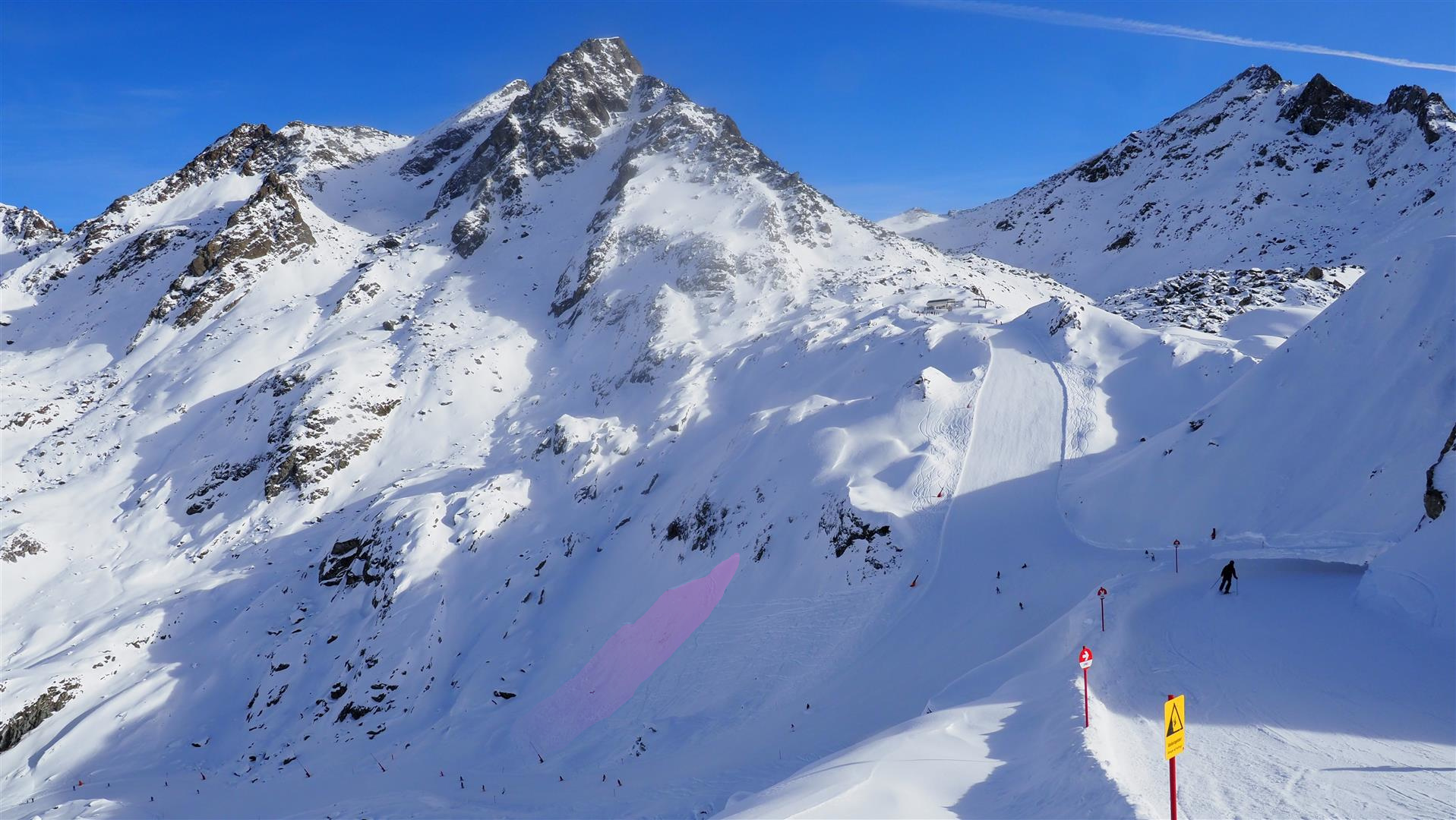
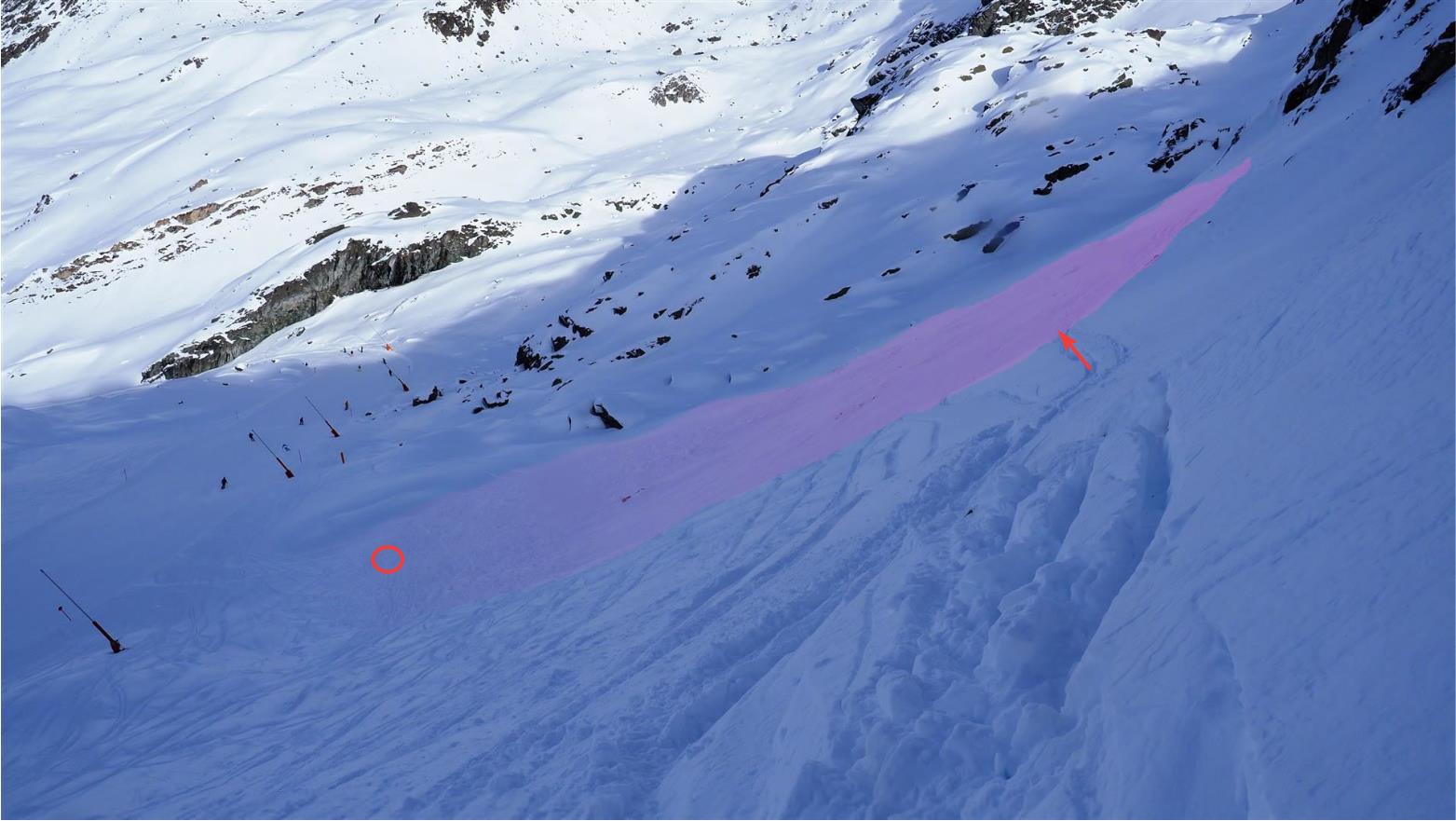
Die Lawine Velilltal-Bürkelkopf im Überblick. Die Lawine ging im freien Gelände im Pistennahbereich ab. Im Hintegrund der Bürkelkopf. (© LWD Tirol, 16.01.2026)
Overview of the Velilltal-Bürkelkopf avalanche. The release triggered in open terrain in the vicinity of the secured ski runs. In background, the Bürkelkopf. (© LWD Tirol, 16.01.2026)
Der Pfeil zeigt die vermutete Einfahrtsspur, der Kreis die Verschüttungsstelle. (© LWD Tirol, 16.01.2026)
Arrow shows the likely entry track. Circle shows the point of snow burial. (© LWD Tirol, 16.01.2026)
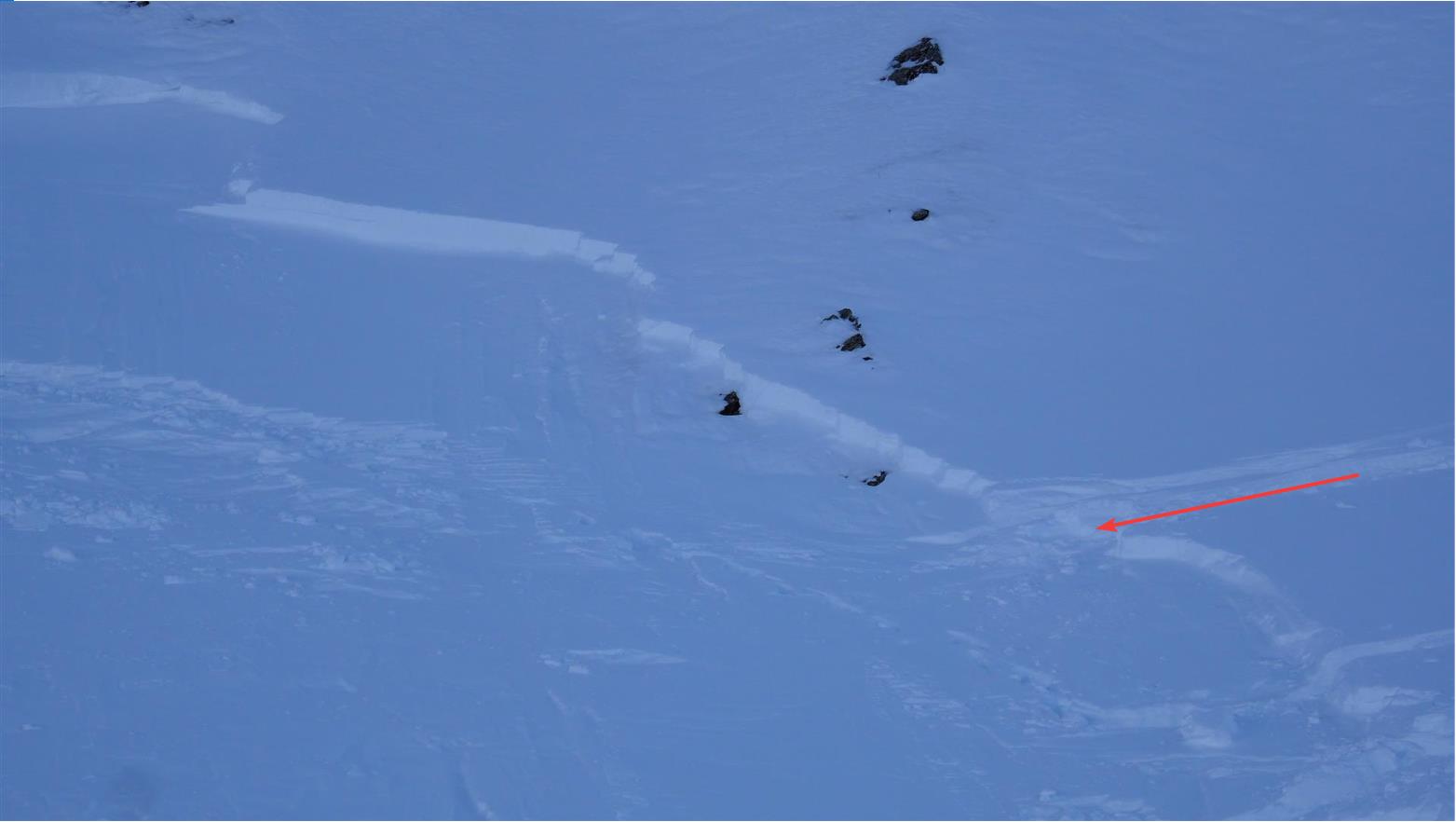
Ein Teil des Lawinenanrisses mit der vermuteten Einfahrtsspur. (Die darüber befindliche Spur stammte von einem Snowboarder.) Gut ersichtlich ist auch die unterschiedlich ausgeprägte Anrissmächtigkeit. (© LWD Tirol, 16.01.2026)
One part of the avalanche fracture, with likely point of entry. (The track above it is from a snowboarder.) Clearly visible, the disparity in fracture depths. (© LWD Tirol, 16.01.2026)
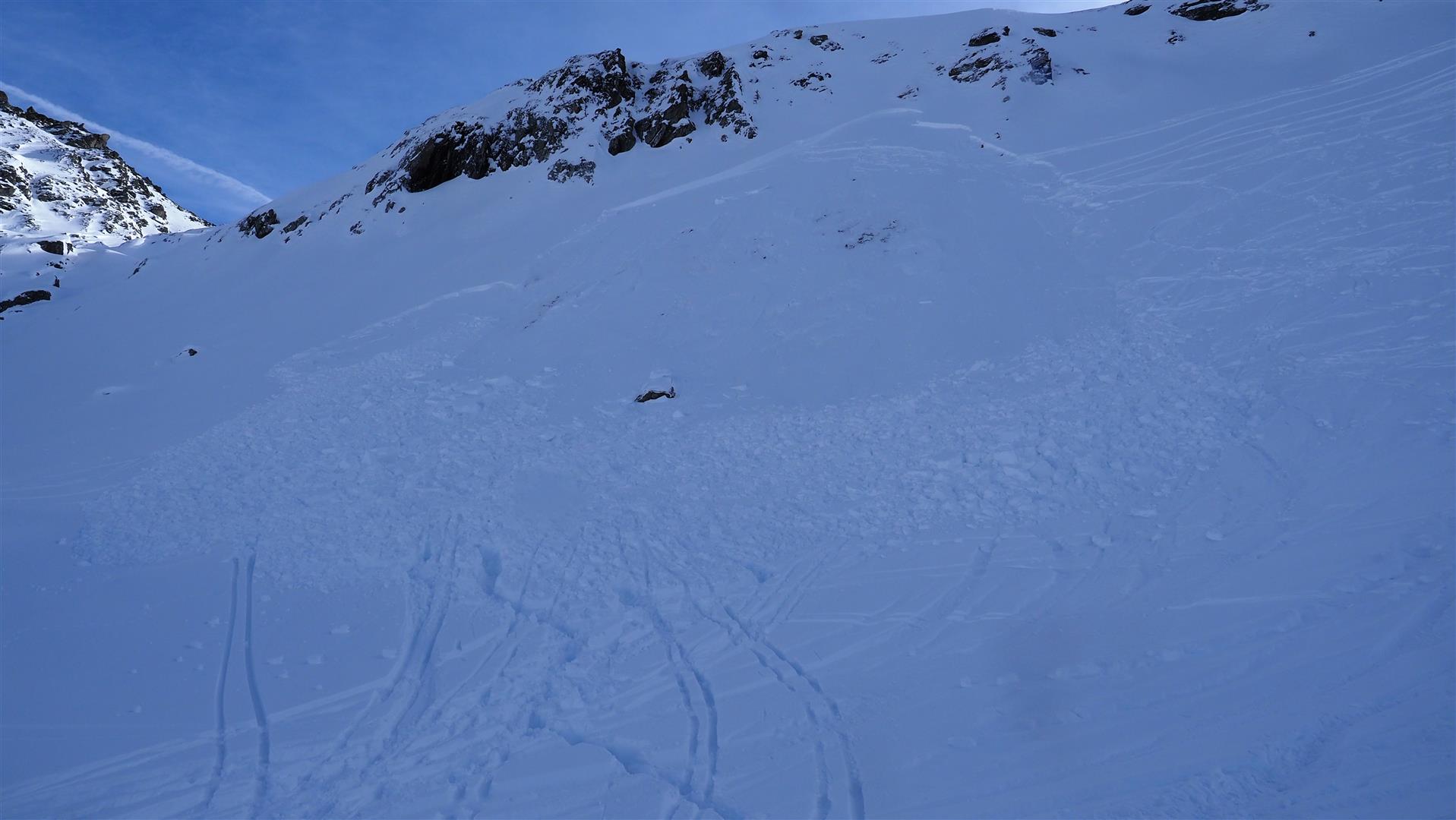
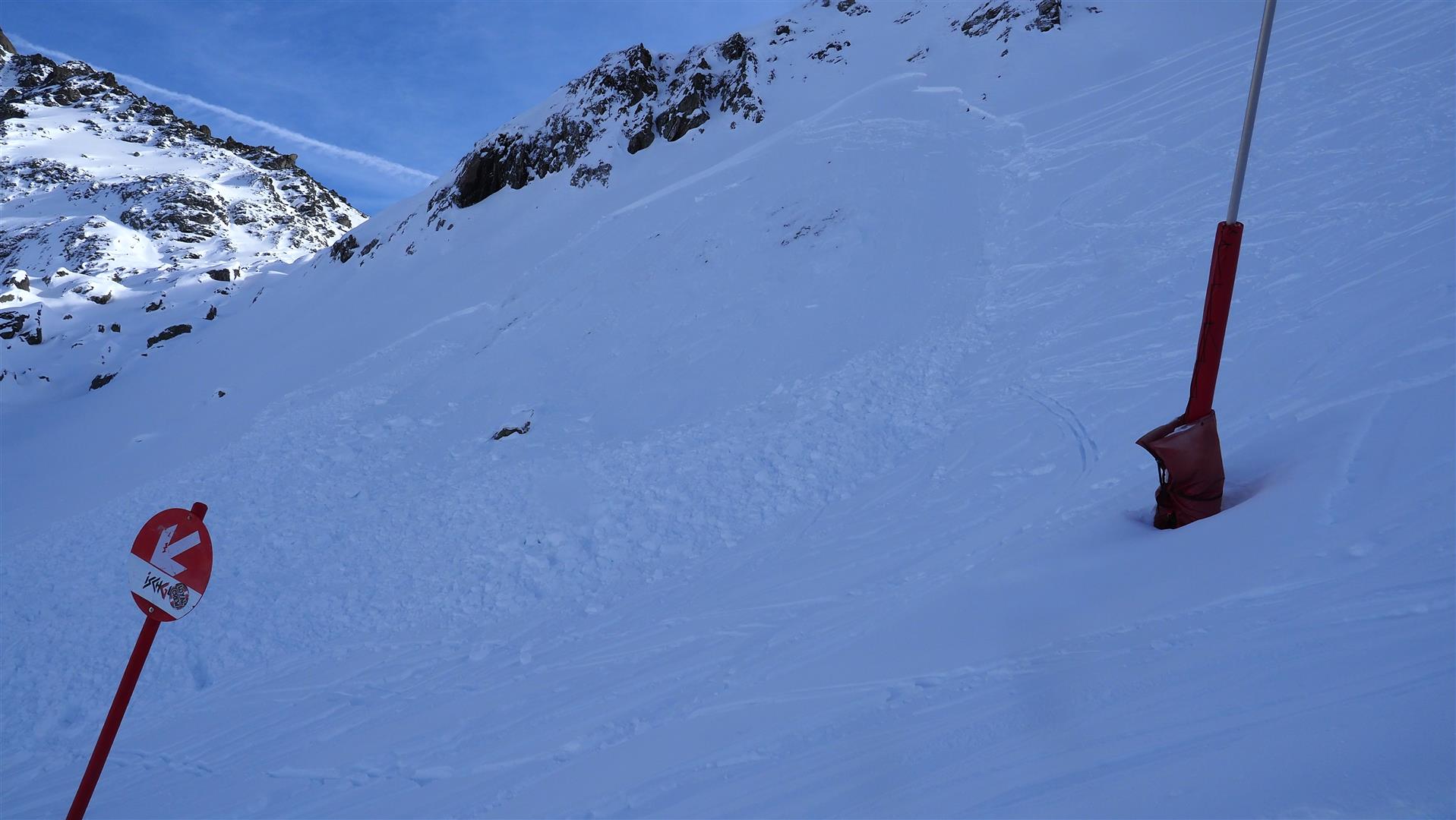
Blick von der Piste zum Lawinenanriss und zur Lawinenablagerung. (© LWD Tirol, 16.01.2026)
View from the ski run to the avalanche fracture and the avalanche deposit. (© LWD Tirol, 16.01.2026)

The snowpack

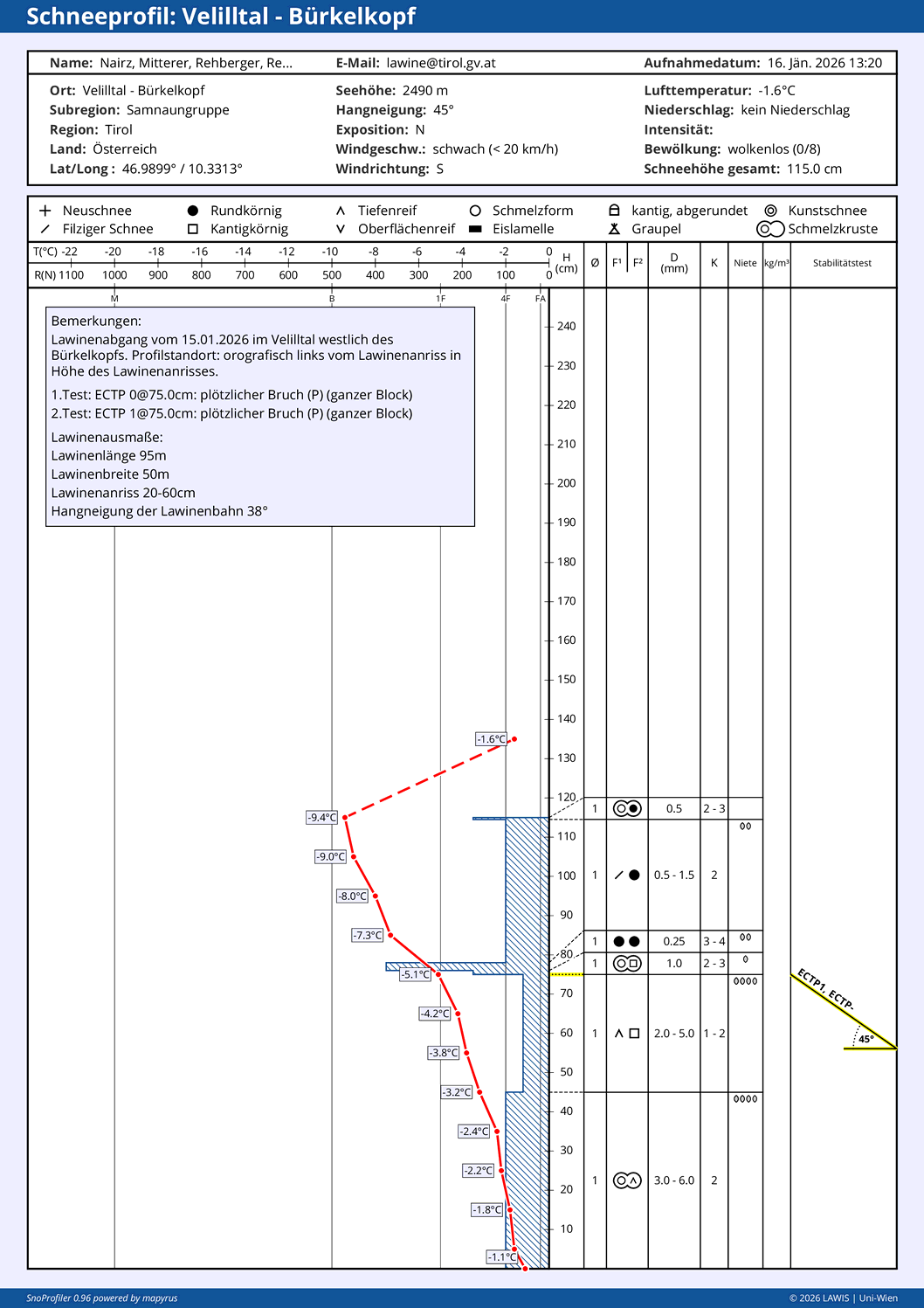
It fits into the overall picture that at the time of the avalanche, the snowpack continued to be highly prone to triggering. The snow which had fallen since last Thursday, 08.01.2026, intermittently amid heavy wind impact, formed the slab, beneath which were marked weak layers composed of faceted and cup-shaped crystals (beneath the rain crust which formed on 08.12.2025). During our stability analysis, blocks of snow triggered either immediately upon being cut or upon being slightly tapped.
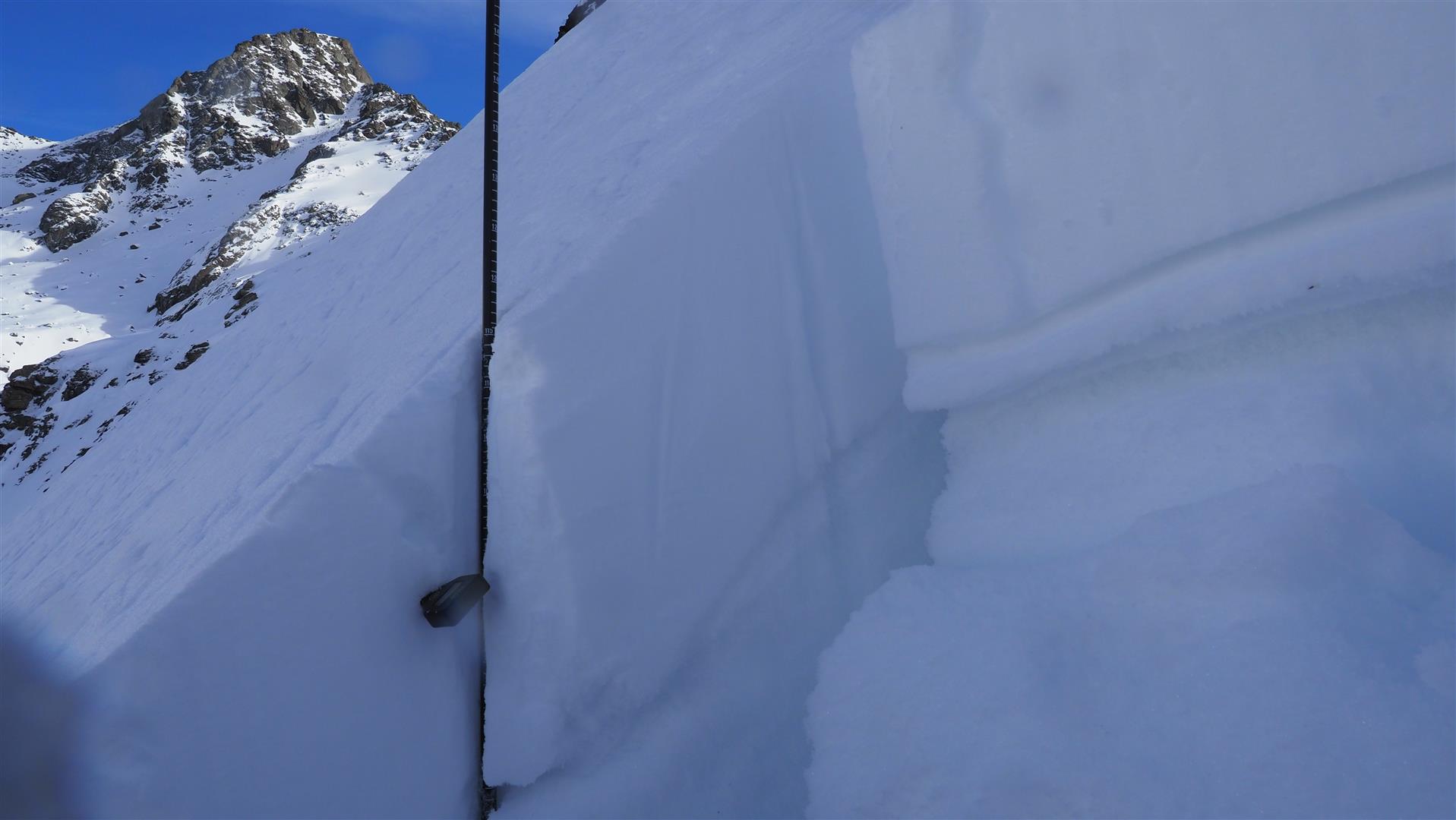
Schneeprofil orographisch links des Lawinenanrisses. Der oberste Block (samt der dünner hervorgehobenen Schicht) stellt Neu- und Triebschnee seit dem 09.01.2026 dar. Darunter rieselte uns der Schnee daher: Viel Schwimmschnee und lockere kantige Kristalle als ausgeprägte Schwachschicht (© LWD Tirol, 16.01.2026)
Snow profile orographically left of the avalanche fracture. The uppermost block of snow (including the thin protruding layer) is the fresh-fallen and drifted snow since 09.01.2026. Beneath that the snow poured forth freely and loosely: lots of rotten snow and loose, faceted crystals constituted the conspiciously weak layer. (© LWD Tirol, 16.01.2026)
Das zu obigem Foto passende Schneeprofil. Es zeigt den für die aktuelle Situation recht typischen Aufbau. Das Schneebrett brach unterhalb der dünnen Schmelzkruste bei 75cm.
The snow profile of the photo above it. It depicts the snow structure typical of the current situation. The slab broke away beneath the thin melt-freeze crust at 75cm.

Lawinenabgänge im Nahbereich

Coincidentally, we were in the Silvretta on 15.01, the day of the avalanche incident, en route in the Samnaun Massif and also used the Pardatschgratbahn as a lift. During the ascent we noticed several avalanche releases beneath the cablecar which had apparently been triggered by winter sports enthusiasts.
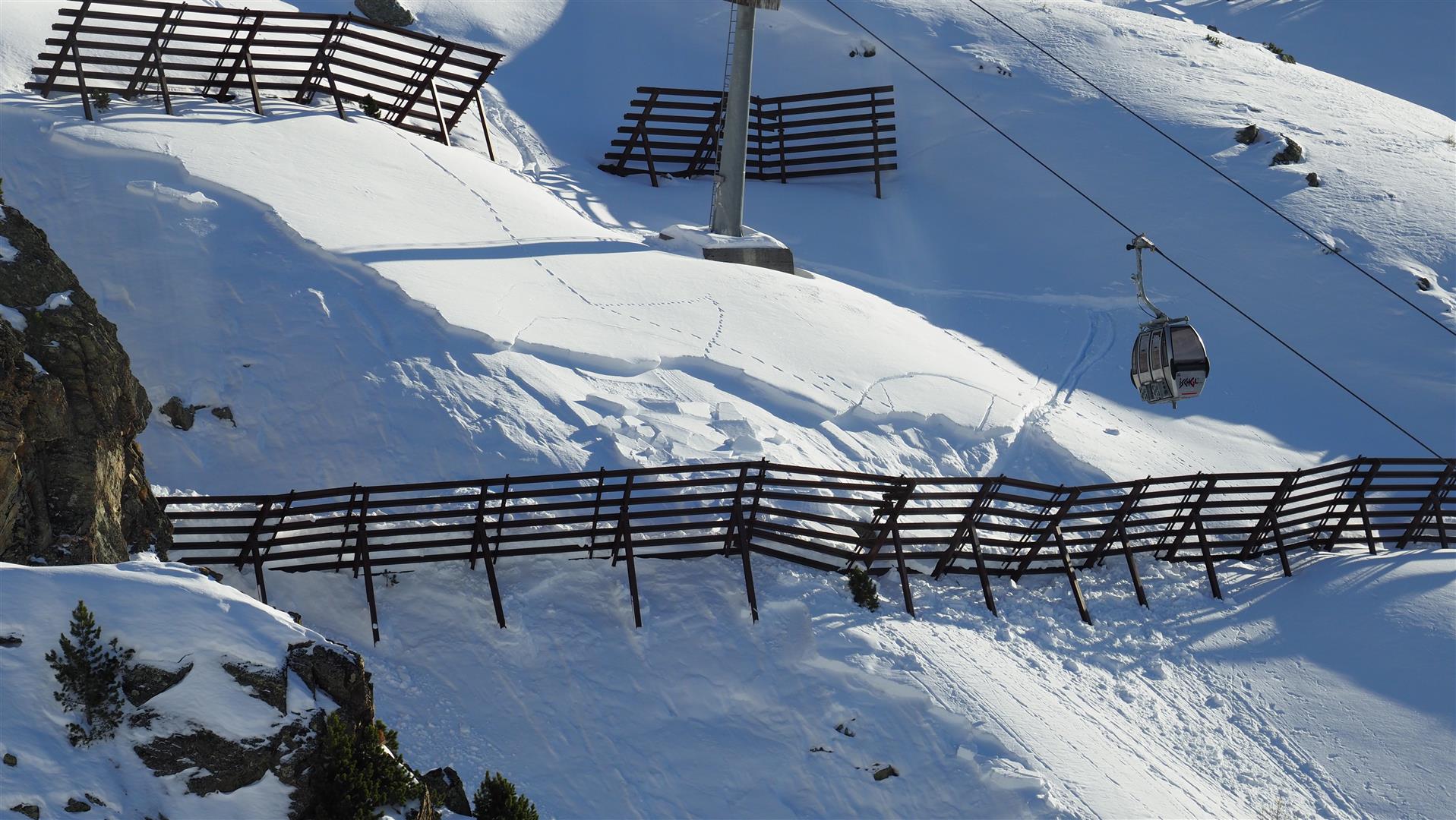
Ein von der Gondel der Pardatschgratbahn aus fotografiertes Schneebrett. (Zur Einfahrtsspur gab es auch wieder eine Ausfahrtsspur aus der Lawine.) (© LWD Tirol, 15.01.2026)
A slab photographed from the Pardatschgratbahn cablecar. (Visible was both an entry track into and an exit track out of the avalanche.) (© LWD Tirol, 15.01.2026)