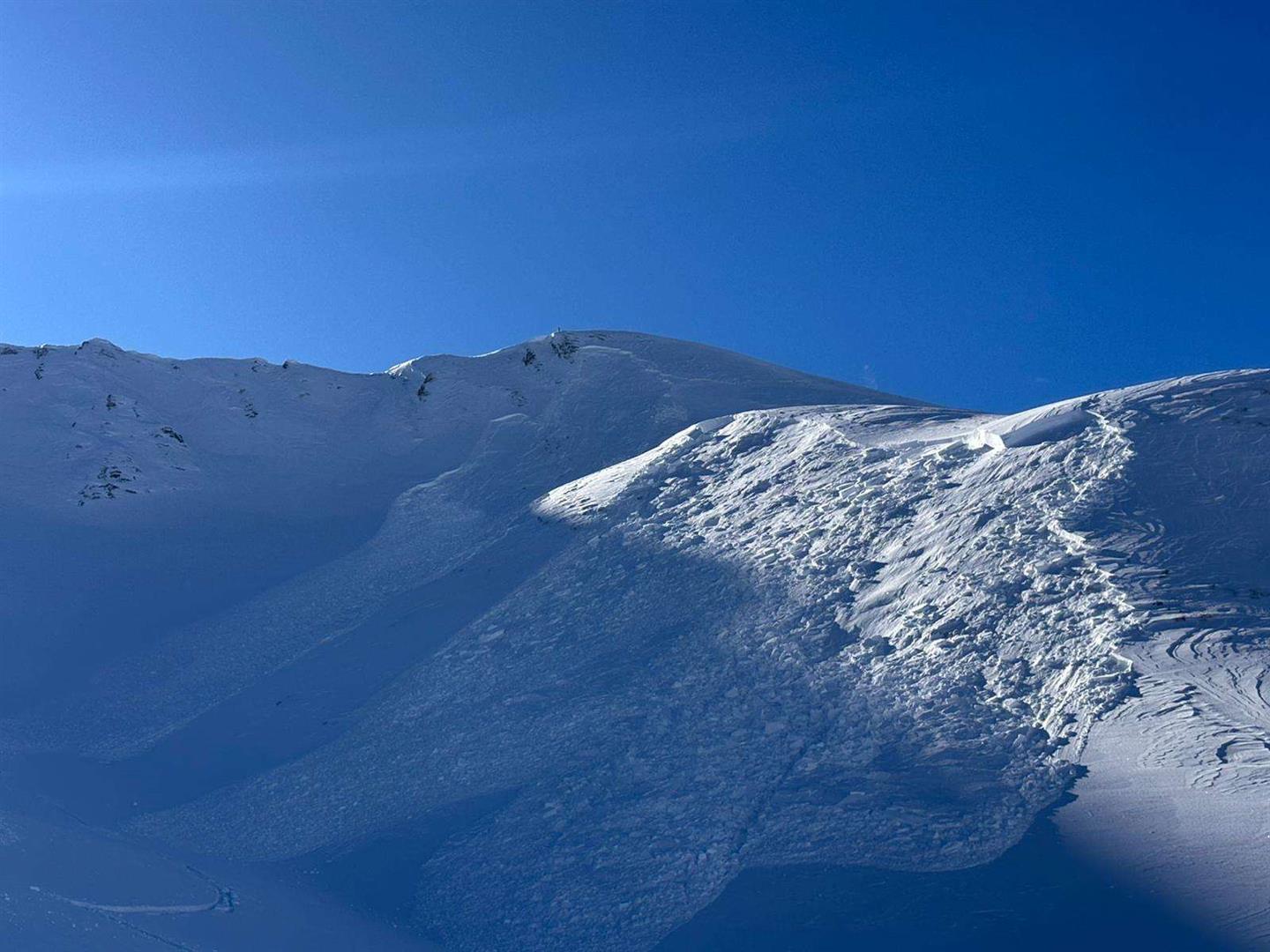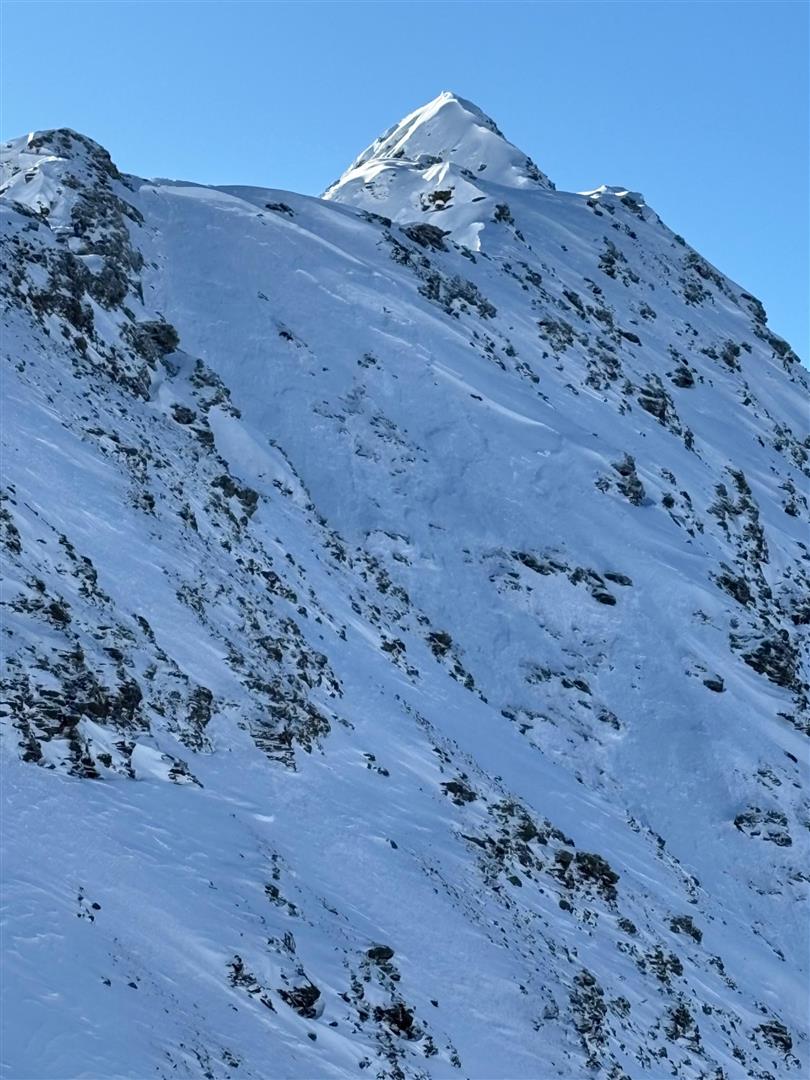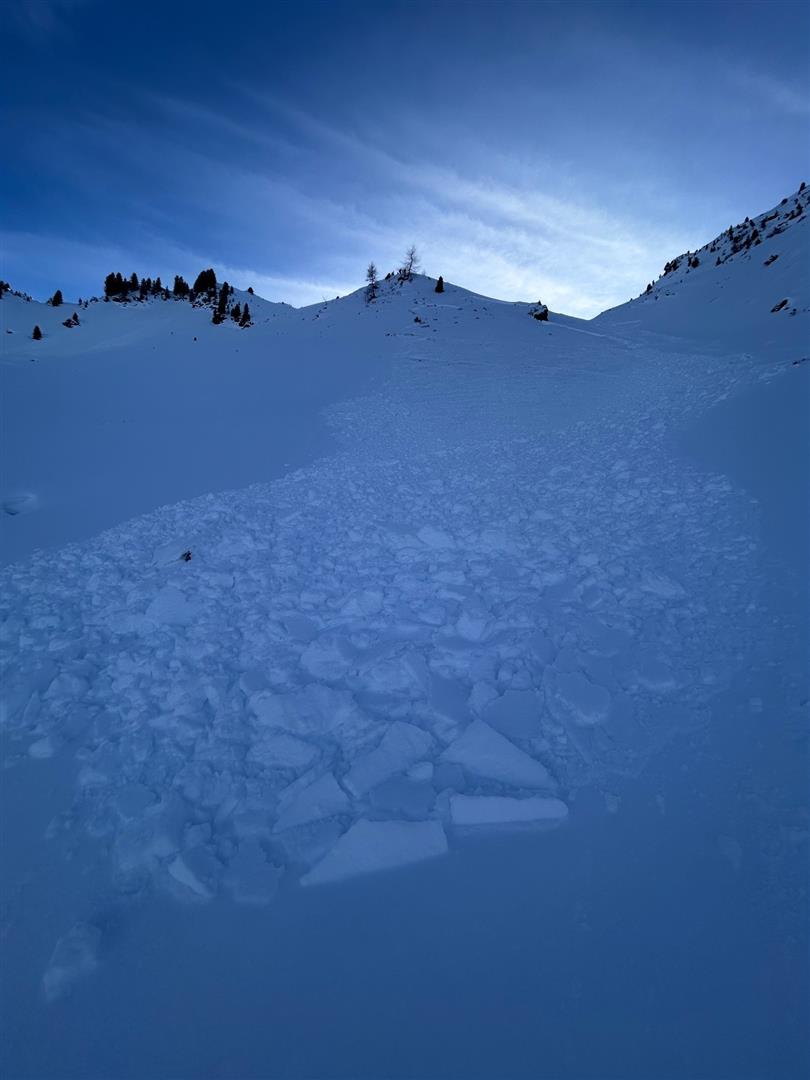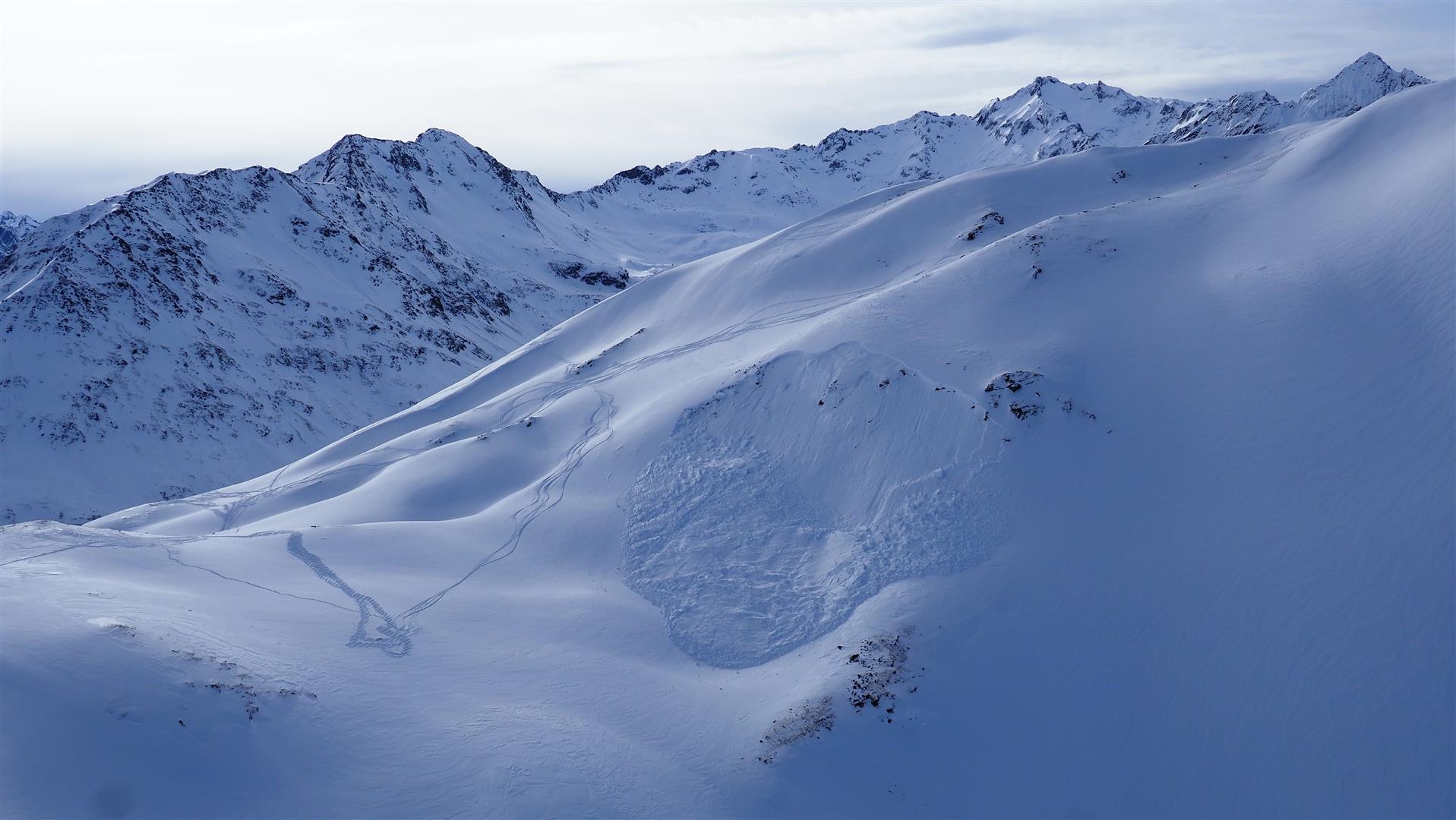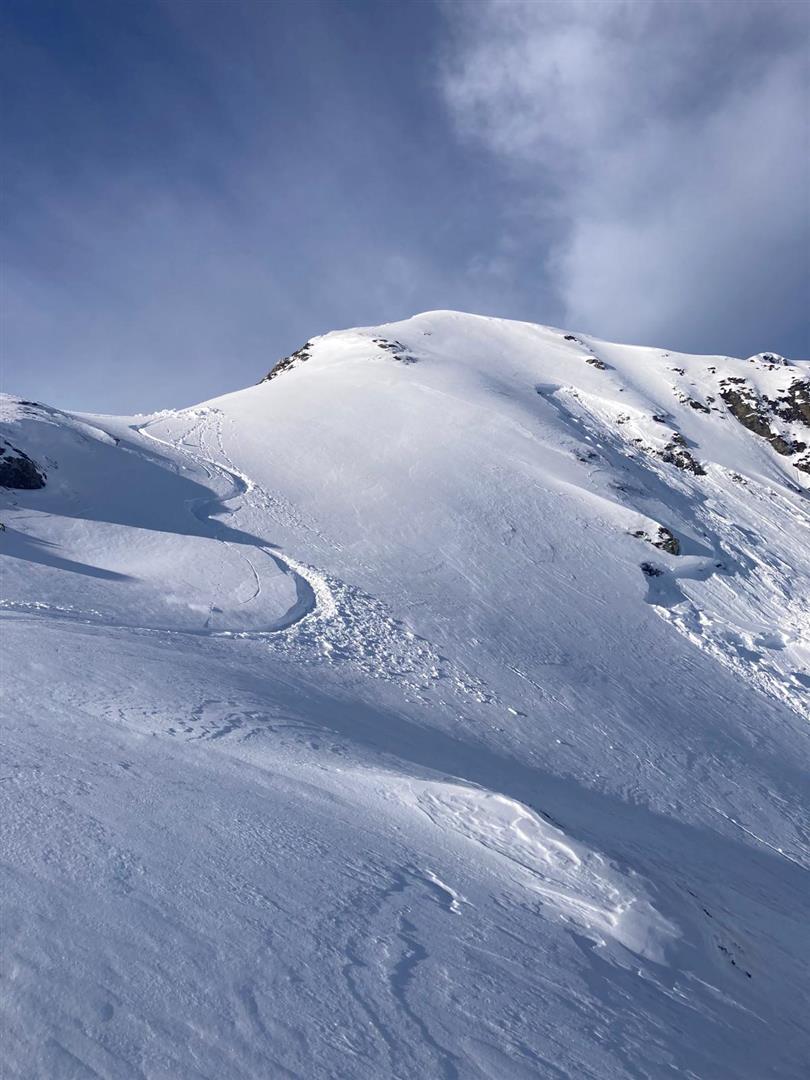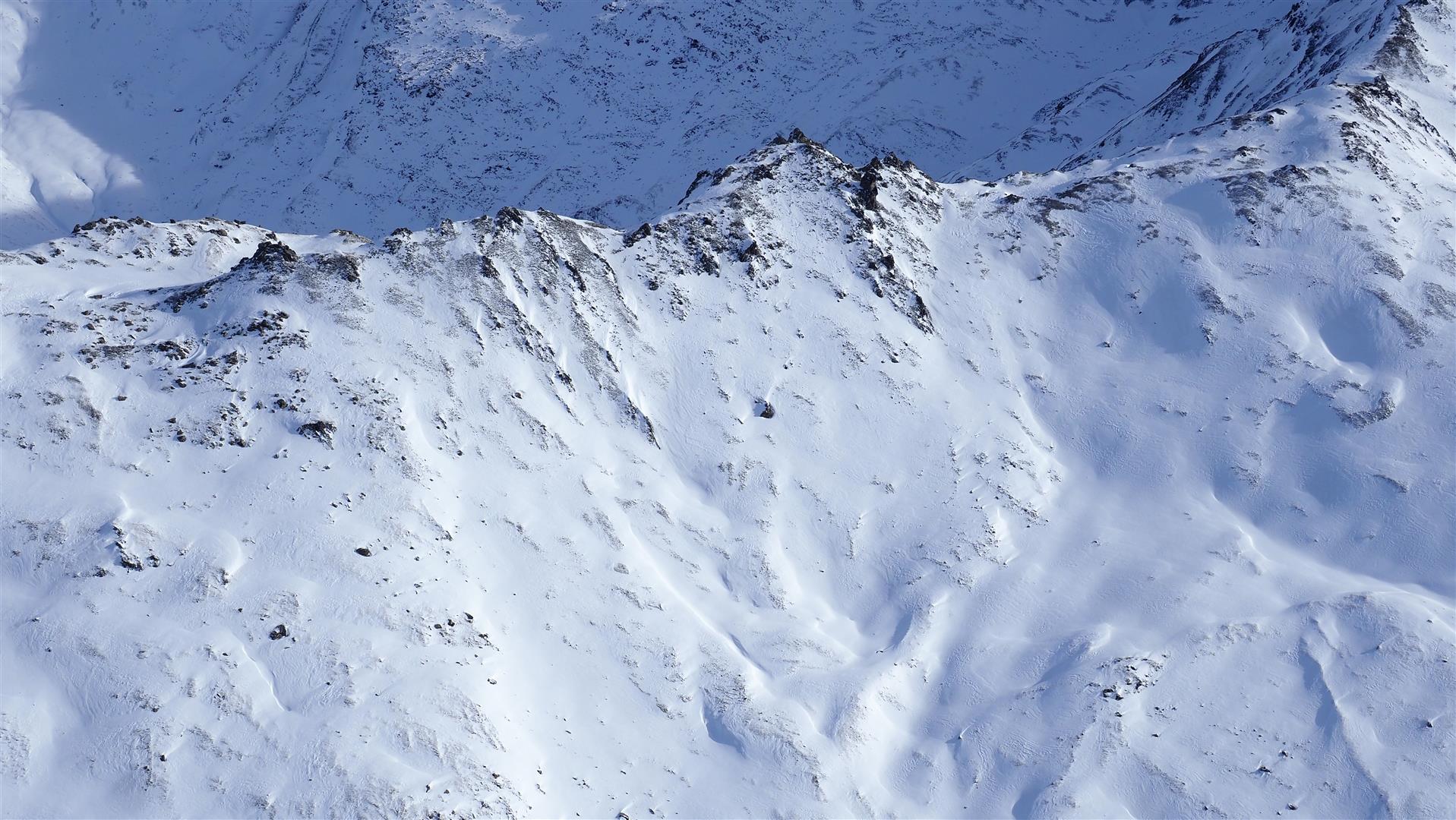
Spontane Lawine vom vergangenen Wochenende (© LWD Tirol. 13.01.2026)

Only gradually receding avalanche danger. Wetterkreuz avalanche incident analysis.

Without much change, we are still faced with an extremely prone-to-triggering snowpack widespread. Reports we receive daily including today, 15.01, corroborate this assessment: reports of avalanche releases from winter sports enthusiasts, of settling noises, fractures on the surface and remote triggerings. Avalanche danger is receding continually, but only slowly. Experience and restraint are thus imperative in outlying terrain. Briefly, we also analyze in detail the fatal avalanche incident below the Wetterkreuz on 11.01.2026.

Avalanche incident analysis Wetterkreuz (11.01.2026)

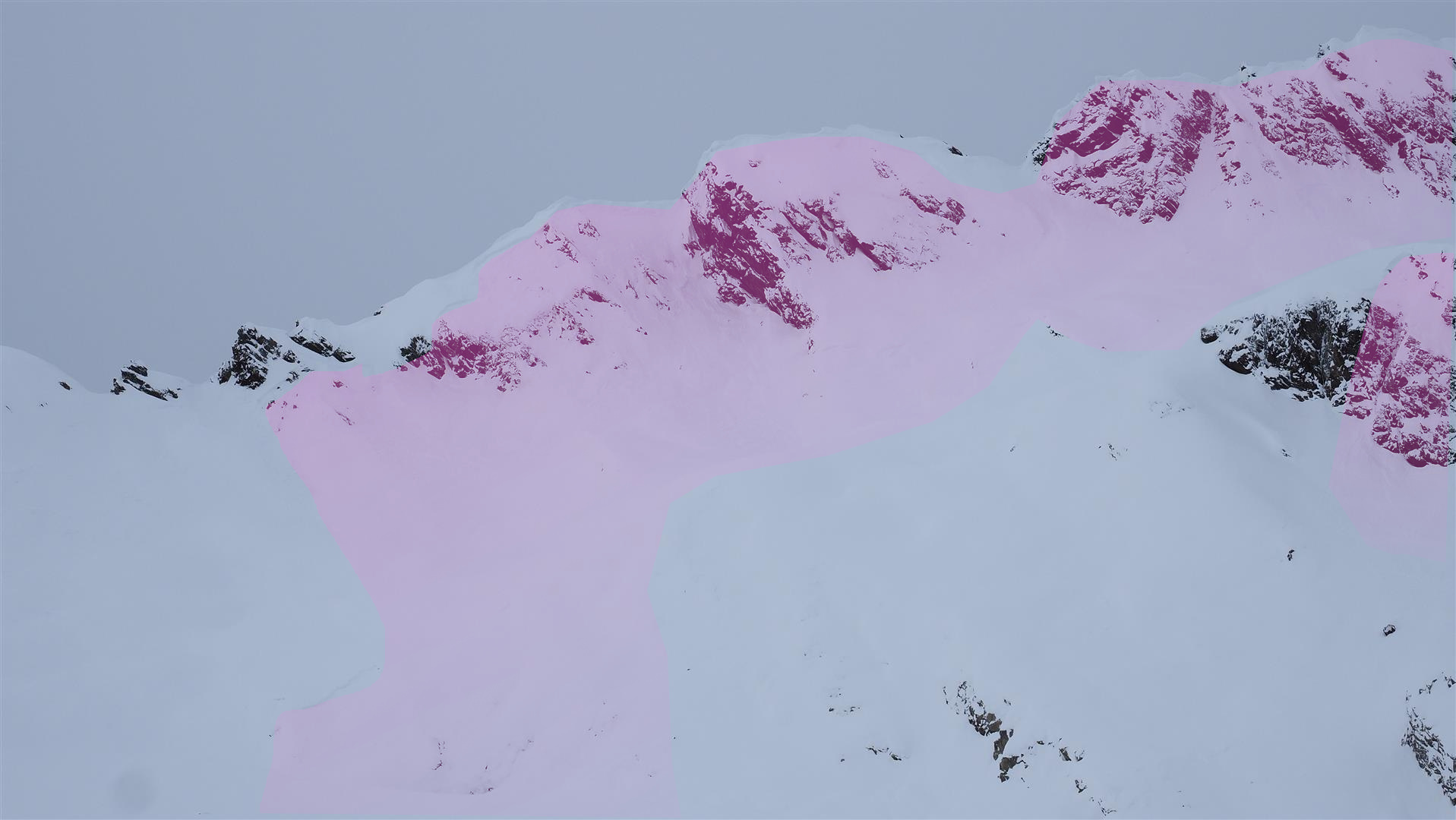
Two persons launched their skiing tour from Gasthaus Hüttegg, initially over the secured ski run, then over backcountry terrain towards the Gilfert. In the area of the Wetterkreuz below the Gilfert they ended their tour and decided to descend on the north-facing slopes. They proceeded to follow the four already evident fresh ski tracks. The persons maintained their distance from each other on the descent. When the person skiing first crossed the north-facing slope, a 100m-wide, 40m-long slab avalanche triggered on the 35°-steep north-facing slope, with an average fracture depth of about 30cm.

The person skiing second was outside the slab path, perceived it immediately and tried to warn the first skier. But the first skier was caught in the slab and in a terrain drop of 1.7 metres buried deeply in snow masses. Due to a lack of emergency equipment, no efficient rescue operation could be carried out. Very rapidly – just 10 minutes after the avalanche triggered – the first rescue team arrived. After approximately 90 minutes, the person who was buried in snow was uncovered through snow probes, but died the same day in the clinic.
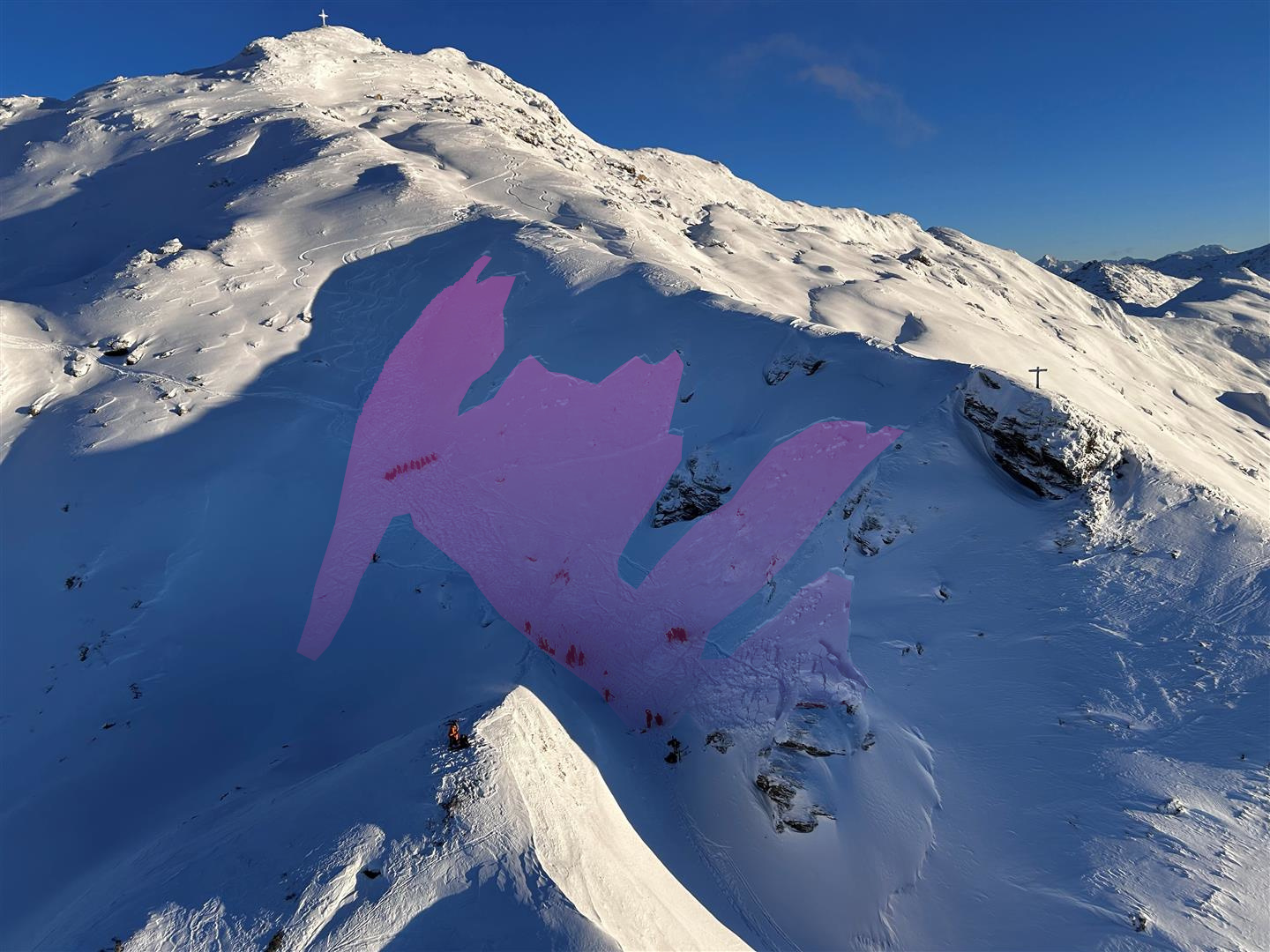
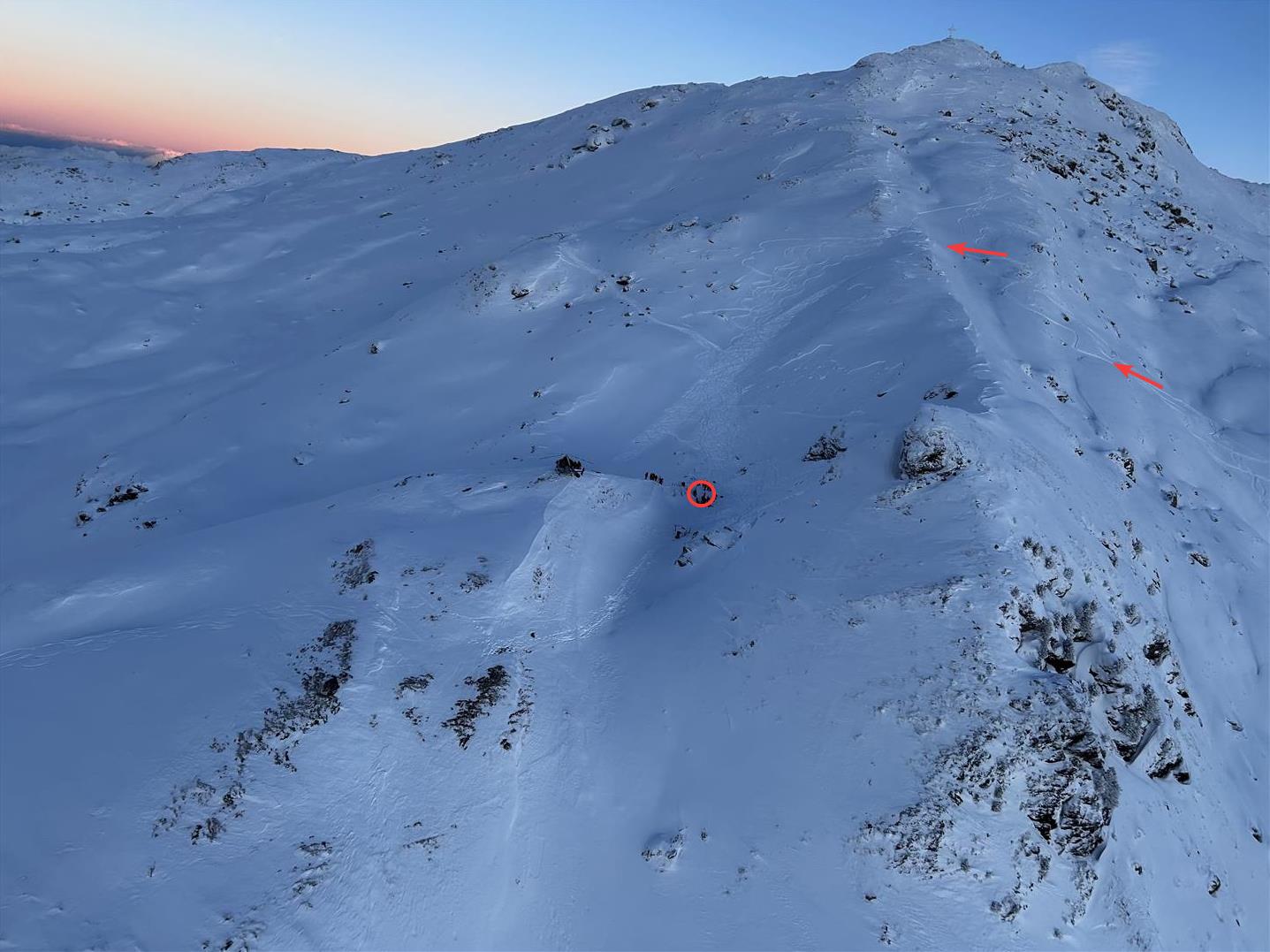
Überblicksbild auf das Schneebrett unterhalb des Wetterkreuzes in der Region Tuxer Alpen Ost. (© Alpinpolizei, 11.01.2026)
Overview of the slab below the Wetterkreuz in the region Tux Alps East. (© Alpinpolizei, 11.01.2026)
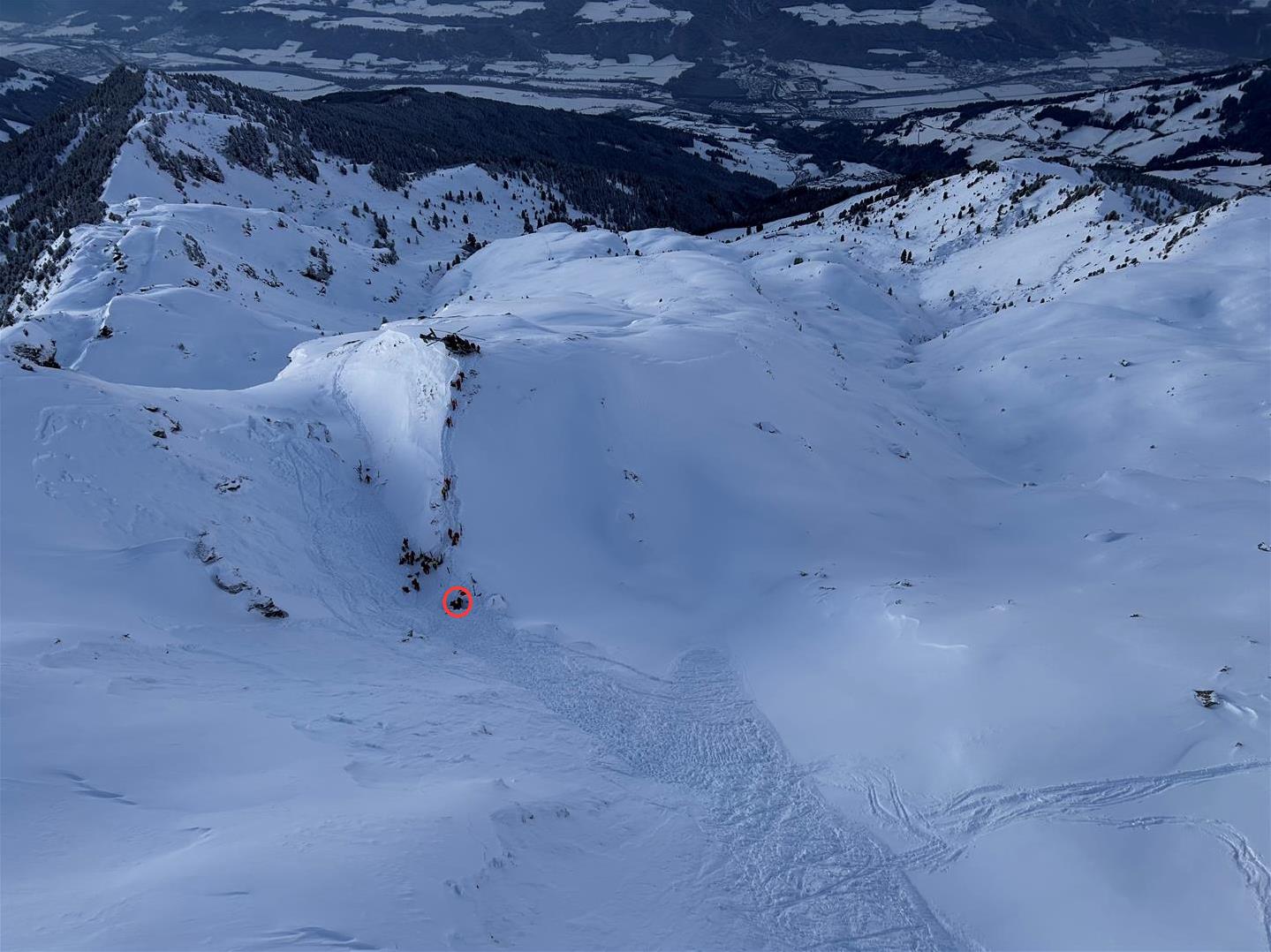
Überblicksbild auf das Schneebrett unterhalb des Wetterkreuzes in der Region Tuxer Alpen Ost. Eingezeichnet mit Pfeilen ist die Aufstiegsspur. Der Kreis symbolisiert die Verschüttungsstelle. (© Alpinpolizei, 11.01.2026)
Overview of the slab below the Wetterkreuz in the region Tux Alps East. Arrows depict the ascent track. The circle depicts the point of snow burial. (© Alpinpolizei, 11.01.2026)
Ein Blick aus der Luft zeigt nochmals eindrucksvoll die Auswirkung der Geländefalle auf den Auslauf der Schneebrettlawine. Rechts - ohne Geländefalle - lief das Schneebrett gut aus. Rechts staute sich die Lawine in der ausgeprägten Mulde.  (Kreis zeigt die Verschüttungsstelle.) (© Alpinpolizei, 11.01.2026)
An aerial view shows impressively the terrain’s drop on the plummet path of the slab avalanche. On the right – without terrain drop – the slab continued unproblematically, on the right the avalanche accumulated in the marked bowl. (Circle depicts the point of snow burial.) (© Alpinpolizei, 11.01.2026)

The snowpack

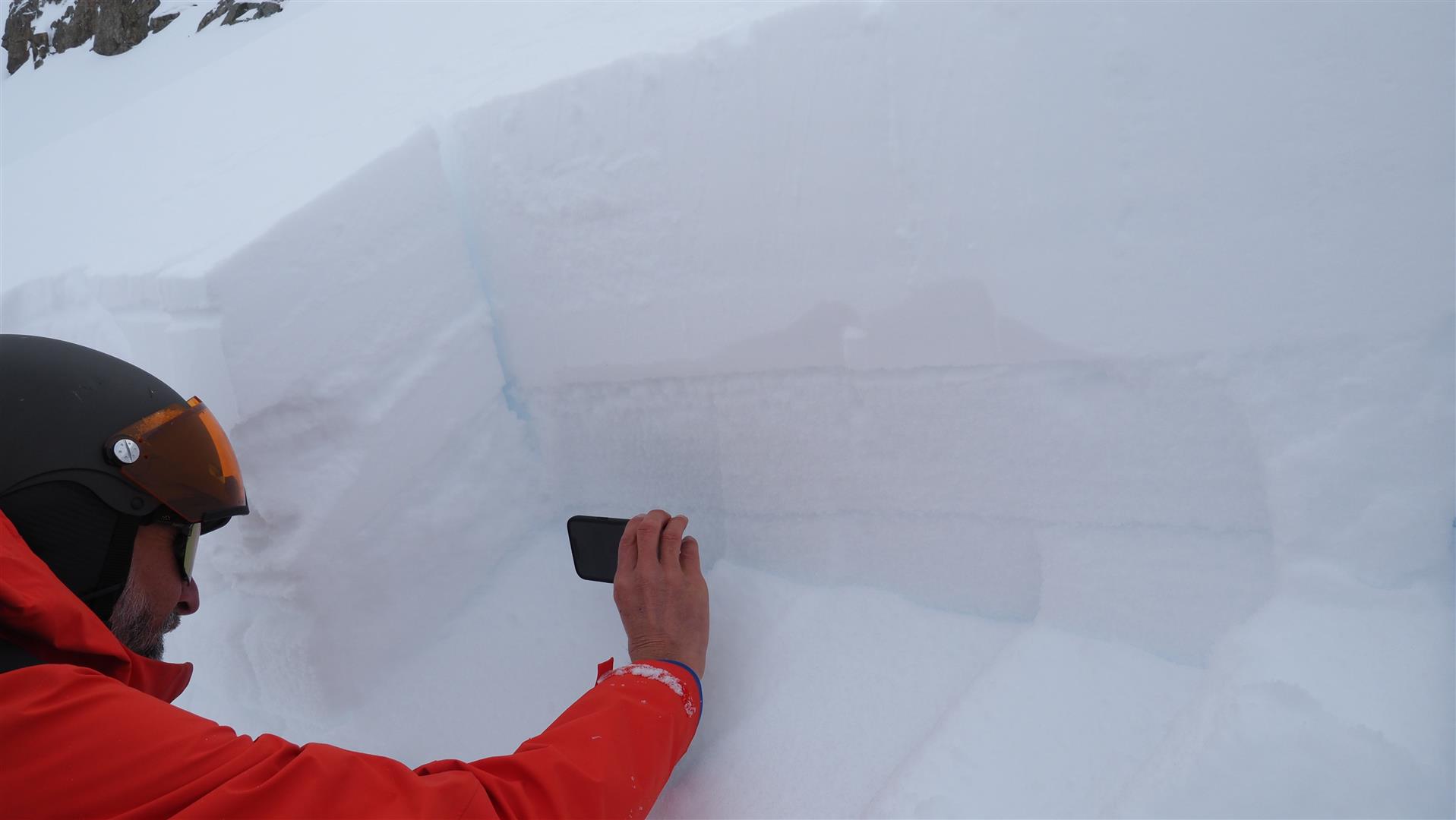
Near the avalanche, we carried out a snowpack analysis together with the Alpine Police and one of our observers on 12.01. What was decisive was the combination of fresh fallen snow/freshly generated snowdrifts and a very weak snowpack surface.
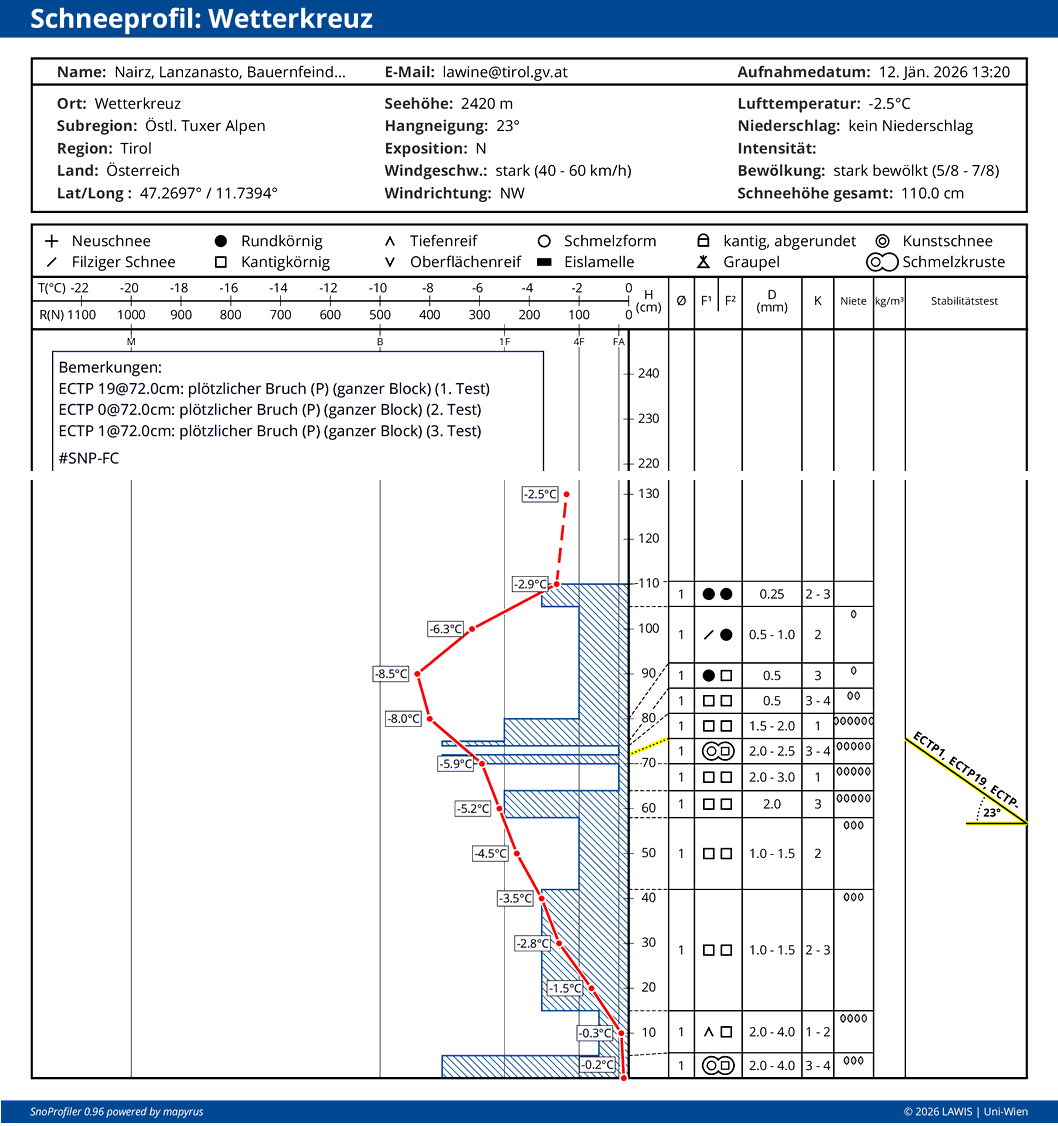
Schneeprofil im Nahbereich der Unfallstelle. Das Schneebrett löste sich bei einer ausgeprägten Schwachschicht angrenzend an die Regenkruste vom 08.12.2026. Die durchgeführten Stabilitätstests  
zeigten eine hohe Störanfälligkeit und gute Bruchfortpflanzung.
Snow profile in the vicinity of the avalanche incident. The slab triggered in a marked weak layer bordering on a rain crust formed on 08.12.2025. The stability tests carried out demonstrated high proneness-to-triggering and good fracture propagation.

As in far-reaching parts of Tirol, the snow depths were below average for this juncture of the season. What stood out most was the disparity between the snow cover in the region of ascent and behind the ridge, where many snowdrift accumulations lay deposited.
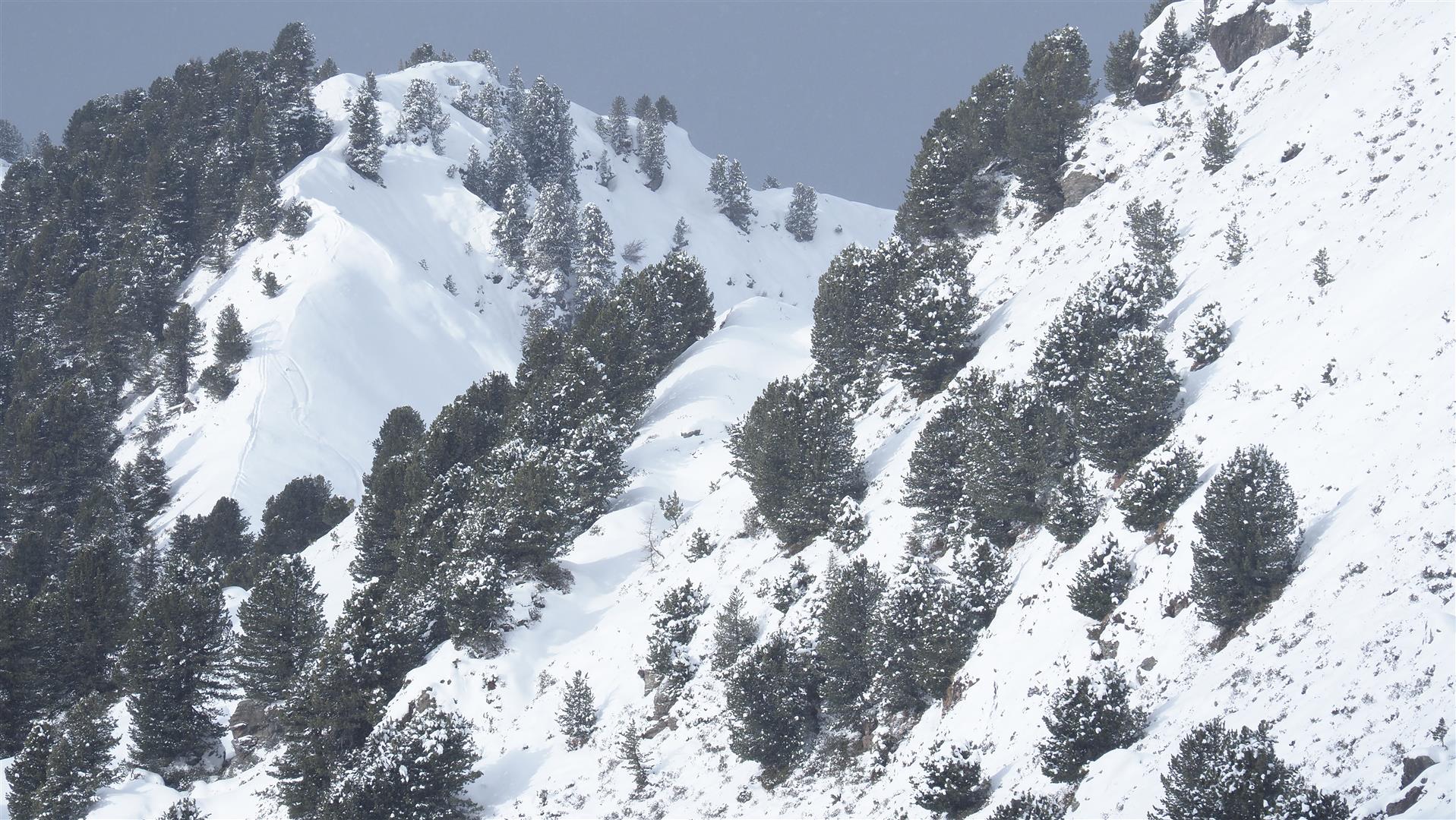
Im Aufstieg zum Wetterkreuz. Im Vordergrund dominieren schneeärmere Bereiche, im Hintergrund kammnah eingewehte Bereiche. Ähnlich ausgerichtet, nur etwas höher ist der Unfallhang. (© LWD Tirol, 12.01.2026)
On the ascent to the Wetterkreuz. In foreground, areas with very little snow dominate, in background near the ridgeline are wind-loaded areas. Similar, but somewhat higher in altitude, is the slope where the incident took place. (© LWD Tirol, 12.01.2026)

Ongoing alarm signals point to a snowpack prone to triggering

As already mentioned, reports arrived daily all last week about the host of alarm signals, in other words, fresh avalanches, settling noises, fractures forming on the surface and, in addition, remote triggerings. We hope that several photos, complementing those in our last blog, will give a fuller impression of the unusual, long period of reports from outlying terrain.

Avalanche releases
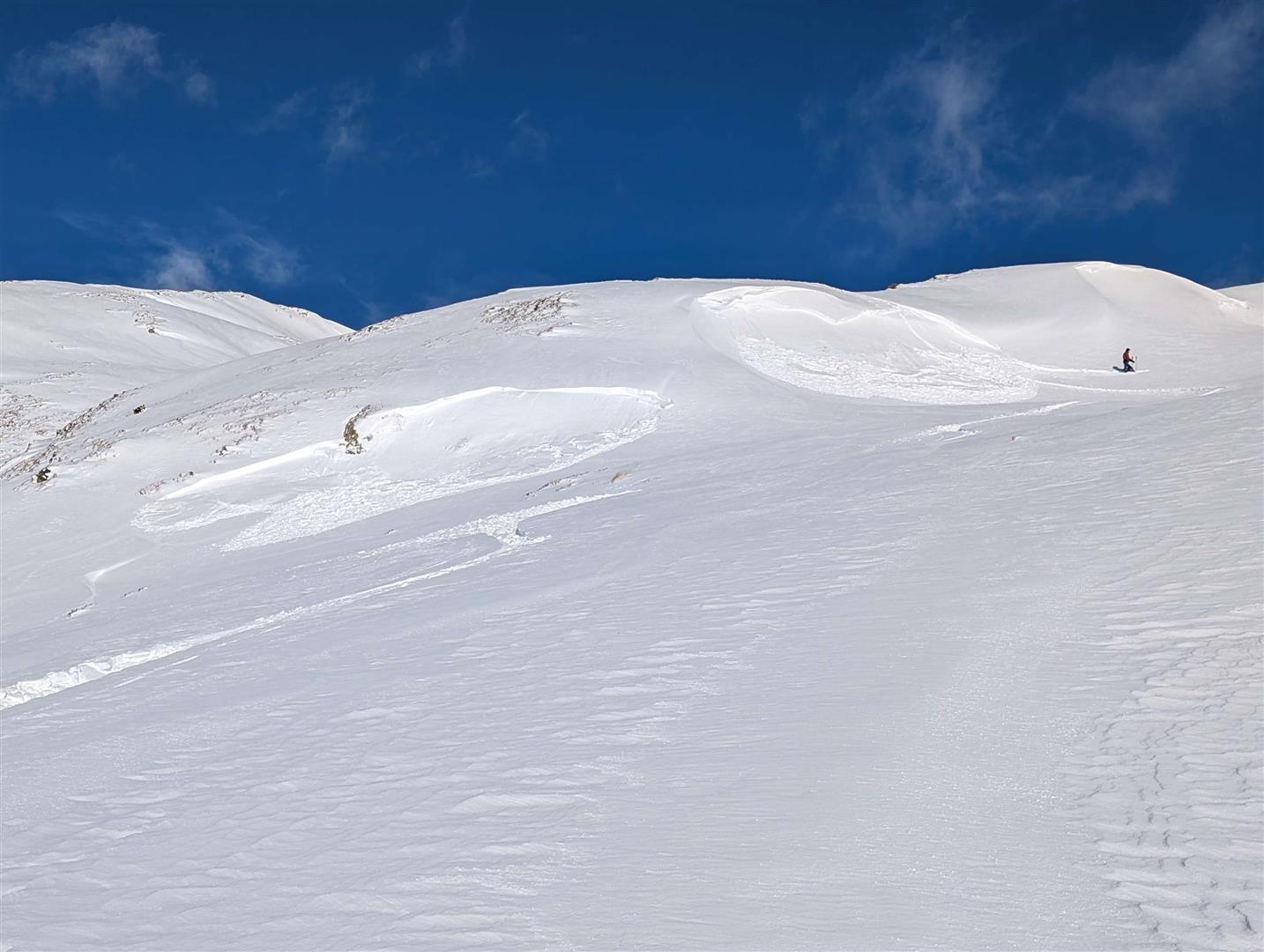
Fernauslösungen beim Albonagrat (© Fynn Renner, 09.01.2026)
Remote triggering at Albonagrat ridge in the region “Mid-Verwall Massif” (© Fynn Renner, 09.01.2026)
Fernauslösungen beim Naviser Kreuzjöchl in der Region Tuxer Alpen West (© Fabian Schuster)
Remote triggerings at Navis Kreuzjöchl in the region “Tux Alps West” (© Fabian Schuster)
Interessanter Lawinenabgang bei der Stertaspitze in der Region "Verwallgruppe Mitte". Der Bruch pflanzte sich über den Kamm auf die andere Hangseite fort. (© Nico Metz, 11.01.2026)
Interesting avalanche release at Stertaspitze in the region “Mid-Verwall Massif”. The fracture propagated over the ridge onto the other flank of the slope. (© Nico Metz, 11.01.2026)
Fernauslösung am Gamskopf in der Region "Kitzbüheler Alpen Wildschönaui". Durch die am 12.01. über Tirol ziehende Warmfront verbesserte sich bis etwa 2300m hinauf die Bretteigenschaft, was die Auslösewahrscheinlichkeit erhöhte. (© Christoph Silberberger, 13.01.2026)
Remote triggering on Gamskopf in the region “Kitzbühel Alps Wildschönau.” Due to the warm front passing through Tirol on 12.01 the slab quality sharpened up to about 2300m, which then heightened the likelihood of triggering. (© Christoph Silberberger, 13.01.2026)
Fernauslösung am Knödelkopf in der Region "Verwallgruppe Mitte" (© LWD Tirol, 13.01.2026)
Remote triggering on Knödelkopf in the region “Mid-Verwall Massif” (© LWD Tirol, 13.01.2026)
Fernauslösung am Kreuzjoch in der Region "Zillertaler Alpen Nordwest" (© Christian Eberharter)
Remote triggering on Kreuzjoch in the region “Zillertaler Alps Northwest” (© Christian Eberharter)

Fractures on the surface, settling noises
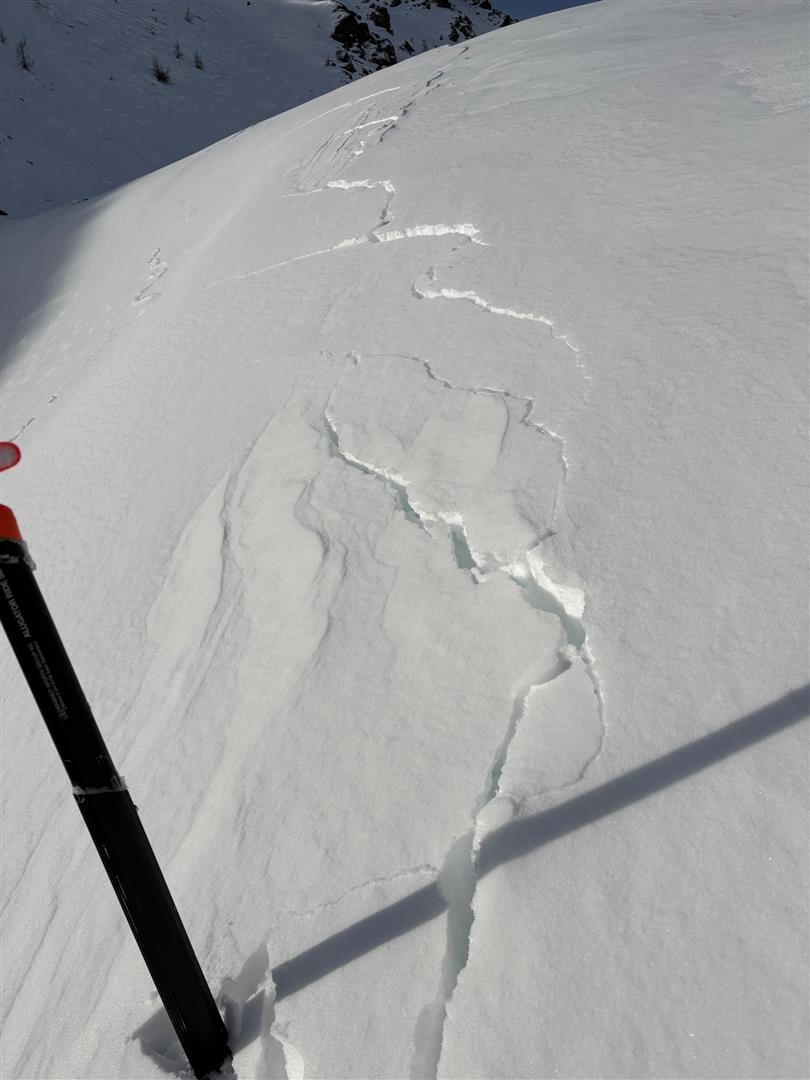
Ein, diese Woche häufiger Begleiter: Setzungsgeräusche und Rissbildungen in der Schneedecke. Skigebiet Thurntaler in der Region "Deferegger Alpen Ost" (© Anton Riepler, 13.01.2025)
A constant signal this week: settling noises and fractures forming on the surface. Thurntal ski area in the region “Deferegger Alps East” (© Anton Riepler, 13.01.2025)

Further details about last week

To complete our last Blog, a few final remarks: Fresh fallen snow plus strong-velocity winds dominated the weather from 08.01 until Sunday, 11.01. On Sunday, weather conditions improved during the morning hours. A brilliant sunny day followed, full of people in outlying terrain as a delicate avalanche situation prevailed widespread. On Monday, 12.01, a warm front brought a bit of precipitation: rainfall widespread up to 2000m. However – and this was a surprise to us – we found a thin rain crust up to 2600m during our flight with the Airbourne Police, which must have been generated on 12.01. Therefore, a huge request: we are currently highly interested in reports about this recently generated near-surface crust (send reports of location and altitude directly to SNOBS), since this may well have an effect on avalanche danger in the future (expansive metamorphosis of snow crystals near this crust).
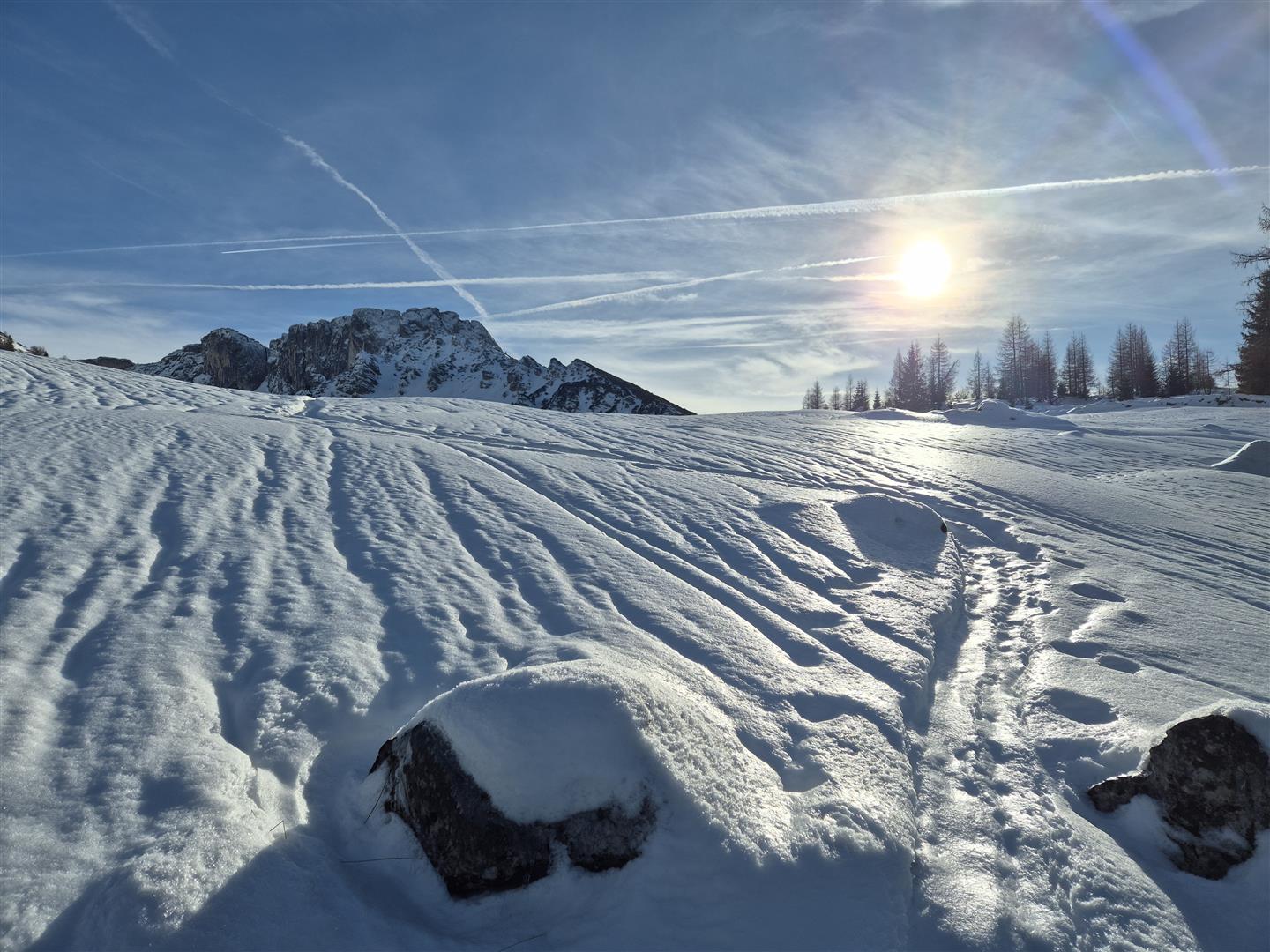
Regenkruste bei der Kotalm im Rofan (© Bernd Hassmann, 13.01.2026)
Rain crust at Kotalm in the Rofan (© Bernd Hassmann, 13.01.2026)
Einhergehend mit dem Regen lösten sich auch Lockerschneerutsche. (© Stefan Zangerl, 13.01.2026)
Accompanying the rainfall, loose-snow slides also released. (© Stefan Zangerl, 13.01.2026)
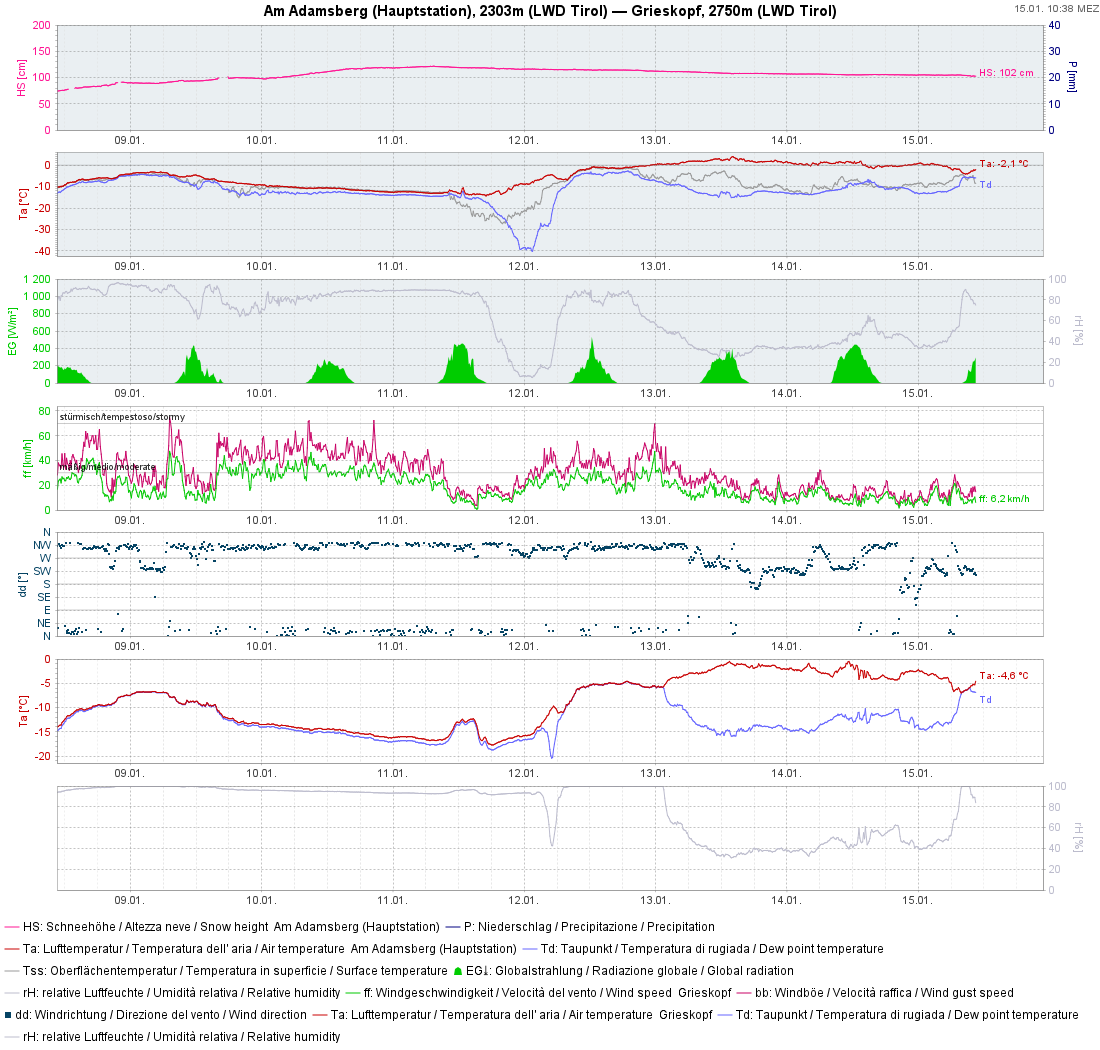
Wetterstationsgrafik Am Adamsberg oberhalb von Galtür. Neuschnee. Anfangs Schnee samt Wind, dann kurze Wetterbesserung am Sonntag, dann Warmfront mit etwas Niederschlag, dann Wetterbesserung.
Graph from Adamsberg weather station, above Galtür. Fresh snowfall. Initially, snow with wind impact, then weather improvement on Sunday, then a warm front with some precipitation, then weather improvement.
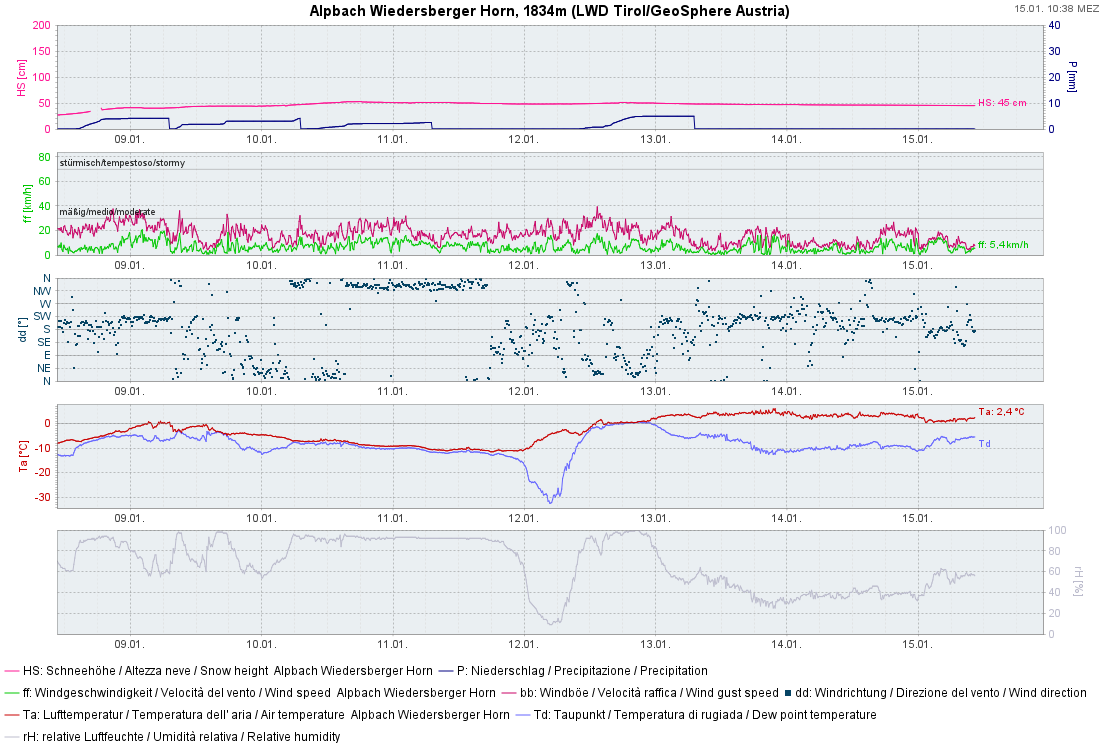
Zum Vergleich die Wetterstation Alpbach-Wiedersberger Horn. Weniger Niederschlag als im Westen. Gut zu erkennen auch der Temperaturanstieg durch die Warmfront am 12.01.2026
As a comparison, the Alpbach-Wiedersberger Horn weather station. Less precipitation than in western regions. Clearly visible: rise in temperatures due to warm front on 12.01.2026.
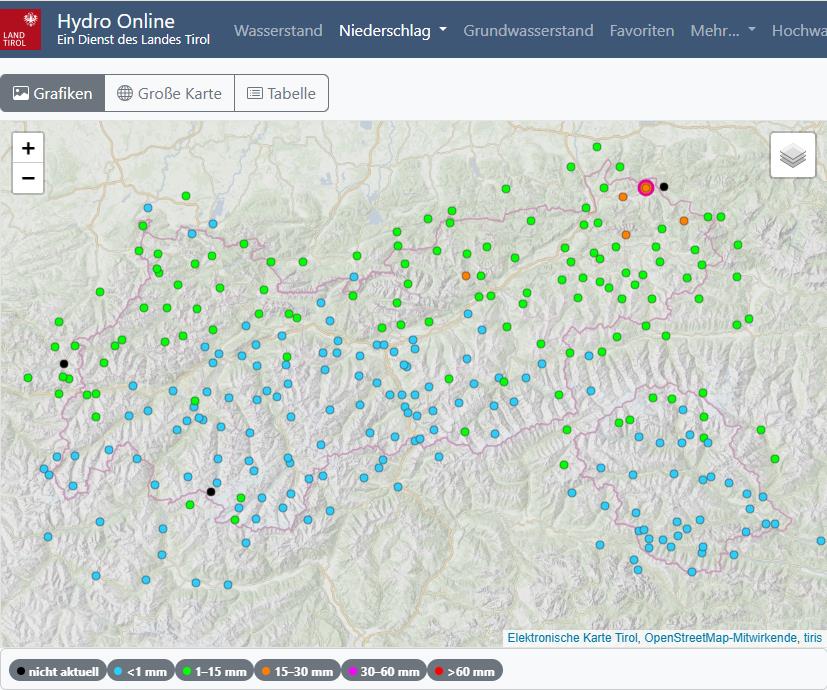
Niederschlagsverteilung der Warmfront vom 12.01.2026
Distribution of precipitation in warm front on 12.01.2026
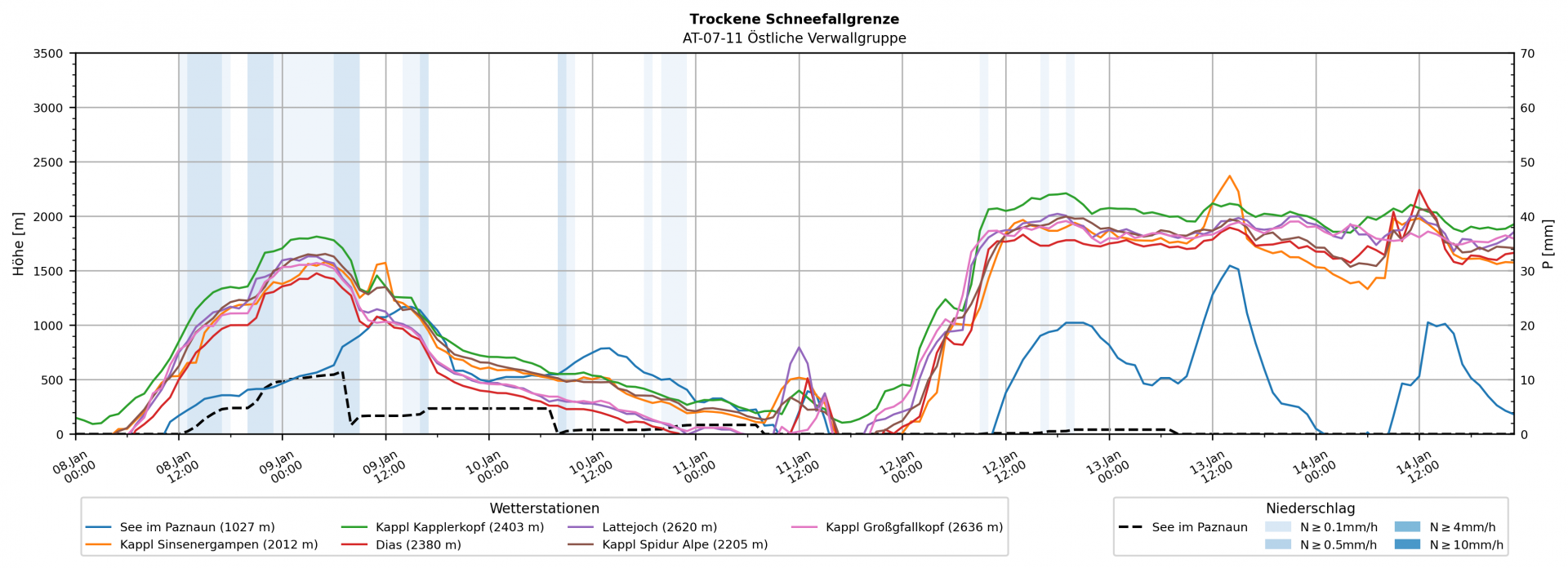
Berechnete "trockene Schneefallgrenze" in der Region "Östliche Verwallgruppe"
Calculated “dry-snowfall level” in the region “Verwall Massif East”

On 13.01 with the help of the Airbourne Police and their helicopter, we gained an overview of the situation. A few impressions follow below.
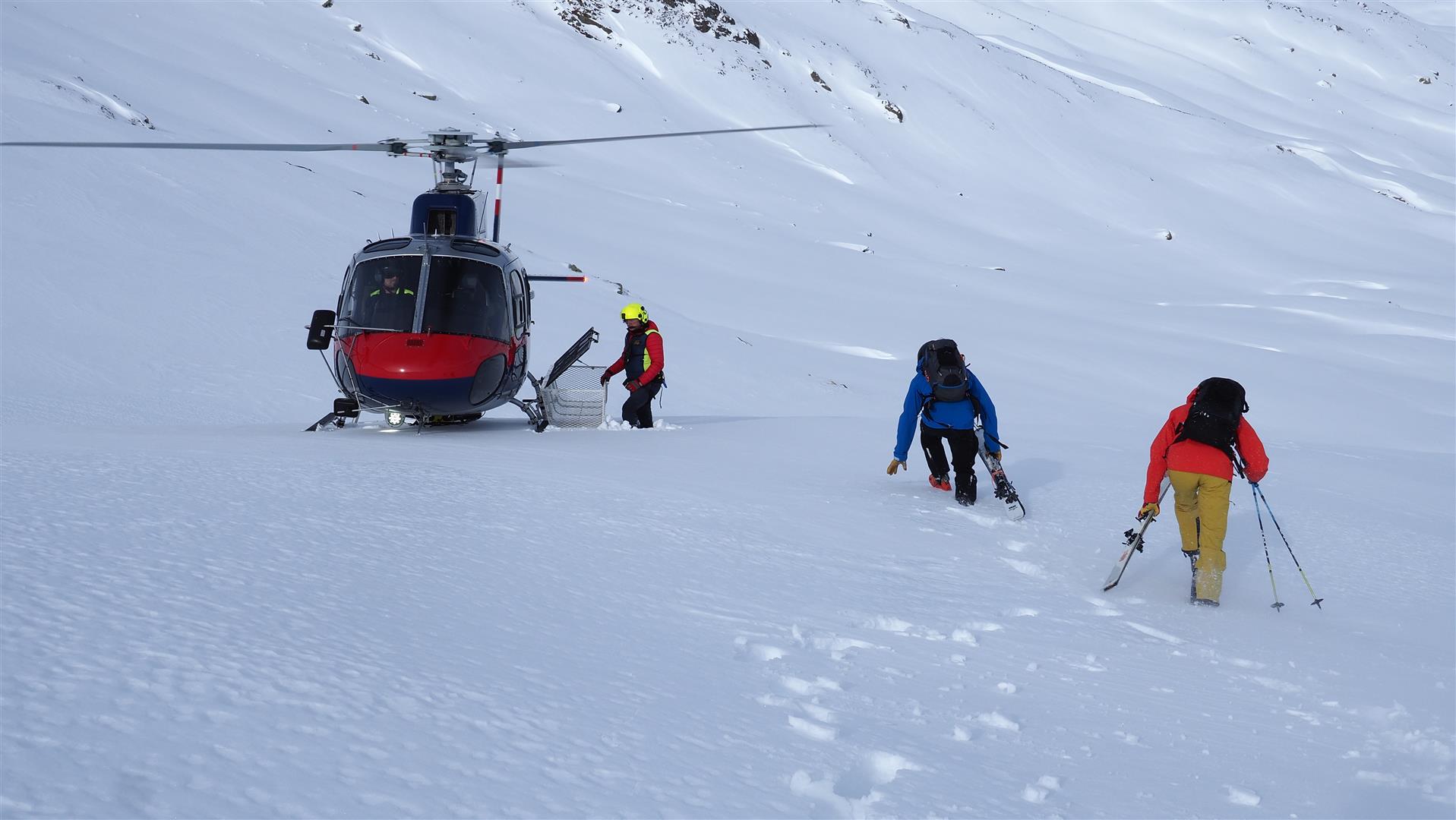
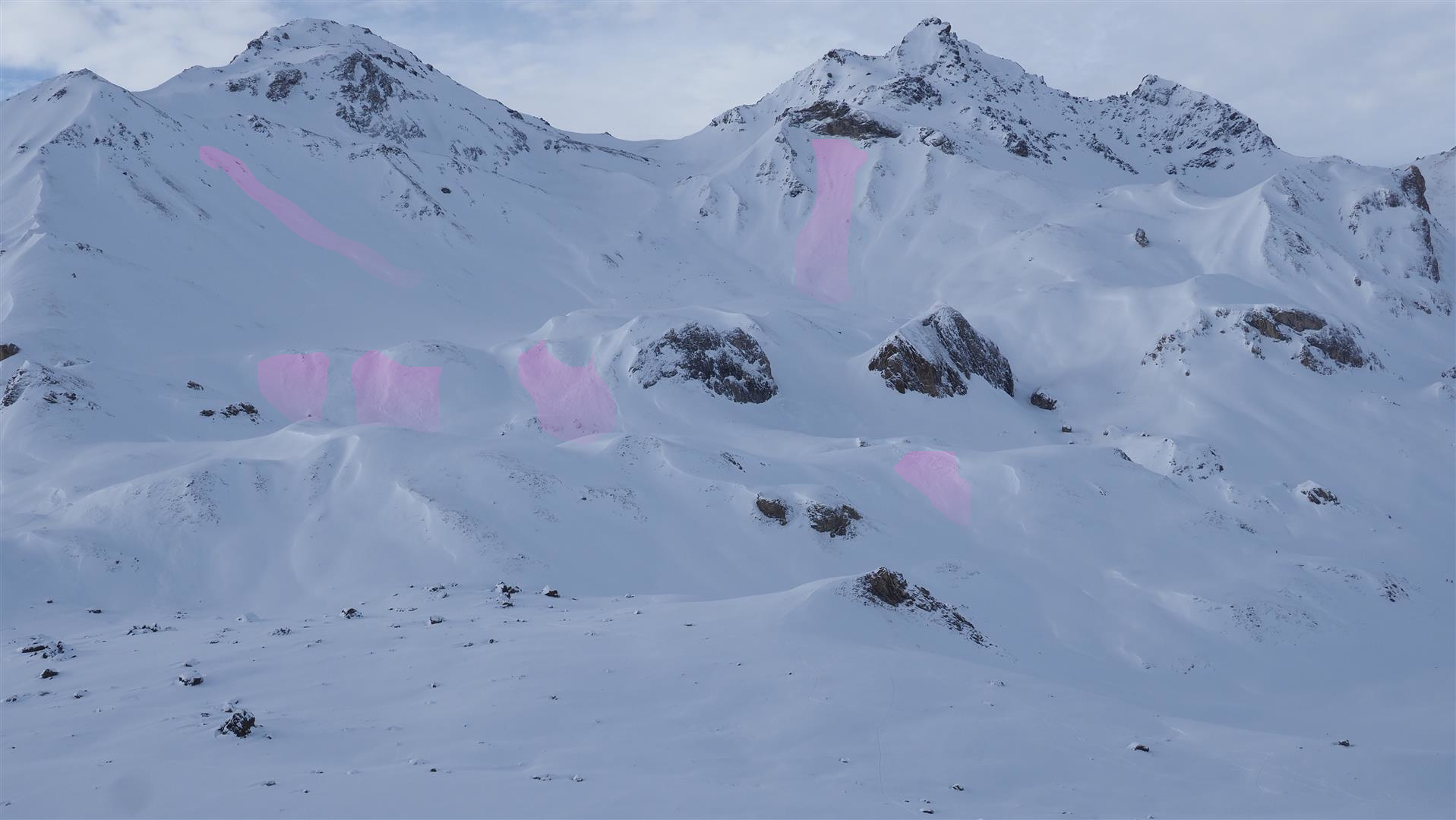
Dank des Hubschraubers konnten wir an verschiedensten Orten effizient Schneedeckenuntersuchungen durchführen und uns zudem einen Überblick über die spontane Lawinenaktivität verschaffen. (© LWD Tirol, 13.01.2026)
Thanks to the helicopter we were able to carry out efficient snowpack analysis at different locations and also gain an overview of the snow distribution and naturally triggered avalanche activity. (© LWD Tirol, 13.01.2026)
Spontane Lawinenabgänge im Fimbatal in der Silvretta (© LWD Tirol, 13.01.2026)
Naturally triggered avalanche releases in Fimbatal in the Silvretta (© LWD Tirol, 13.01.2026)
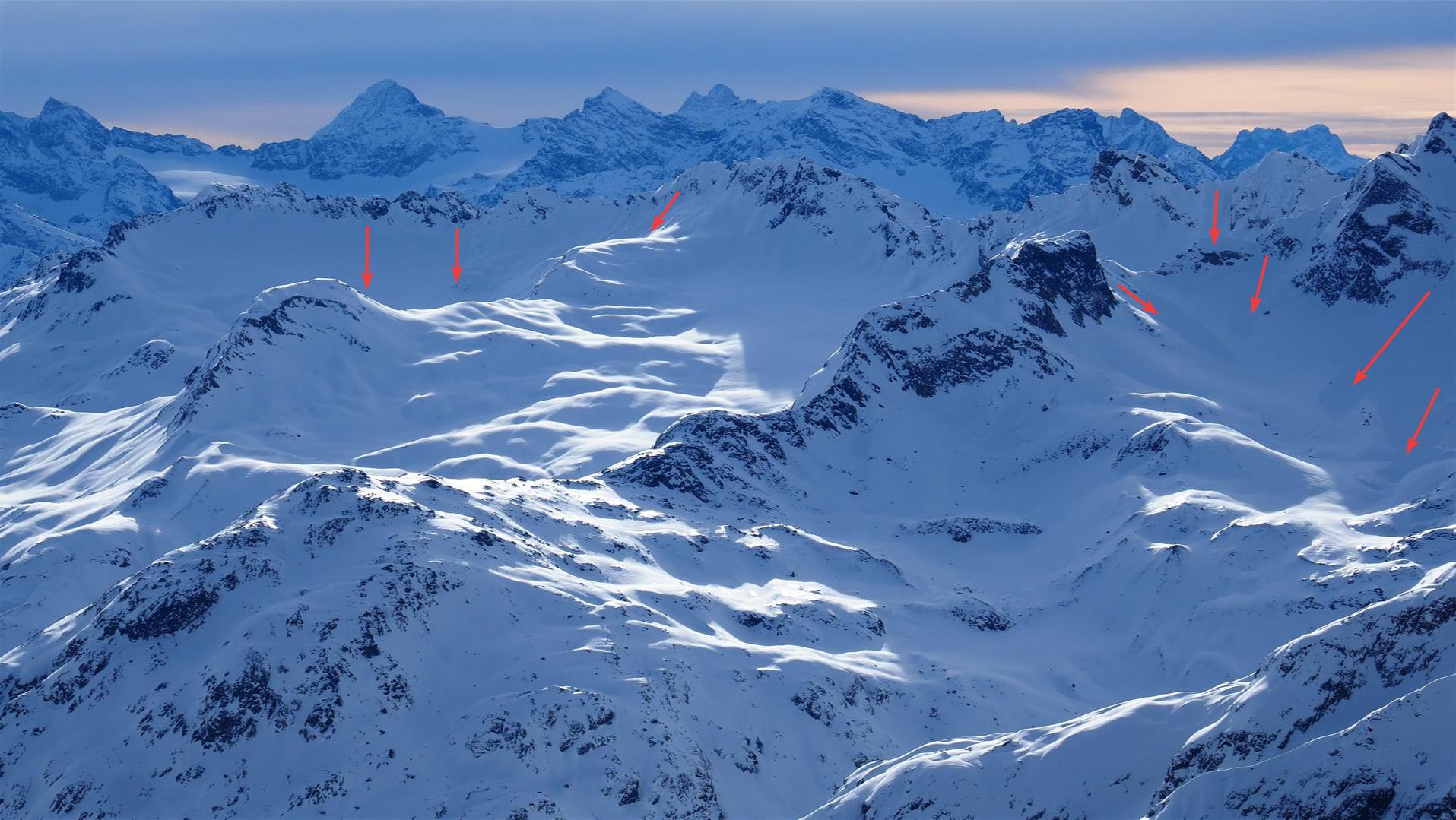
Die Pfeile zeigen auf spontane Lawinenabgänge im Südwesten Nordtirols. (© LWD Tirol, 13.01.2026)
Arrows point to naturally triggered avalanches in southwestern regions of North Tirol. (© LWD Tirol, 13.01.2026)
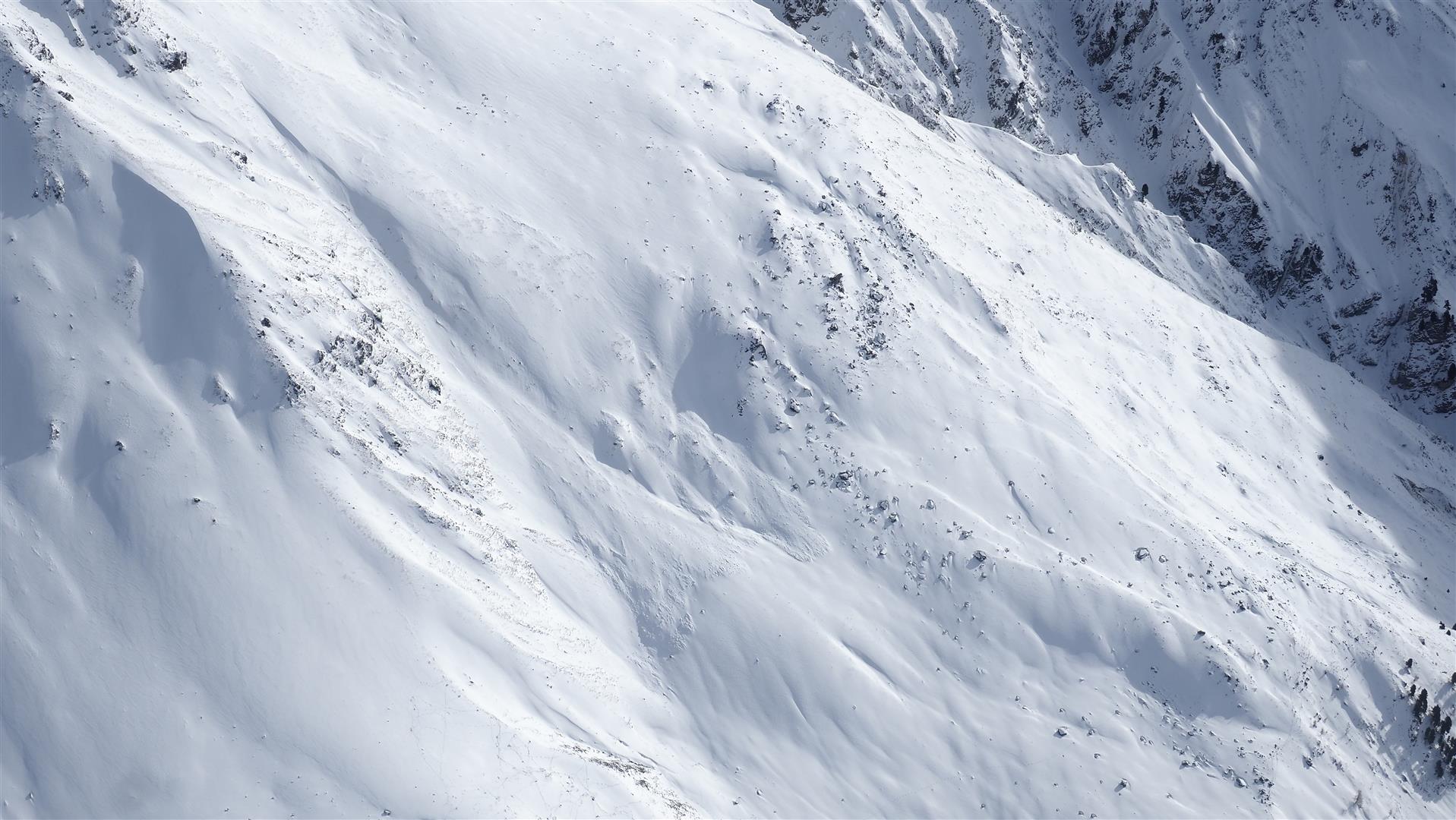
Oftmals waren die Lawinen bereits wieder überschneit bzw. überweht, wie hier leicht links unterhalb der Bildmitte (© LWD Tirol, 13.01.2026)
Frequently the avalanches were already blanketed over by fresher snow, as above left, below middle of photo. (© LWD Tirol, 13.01.2026)
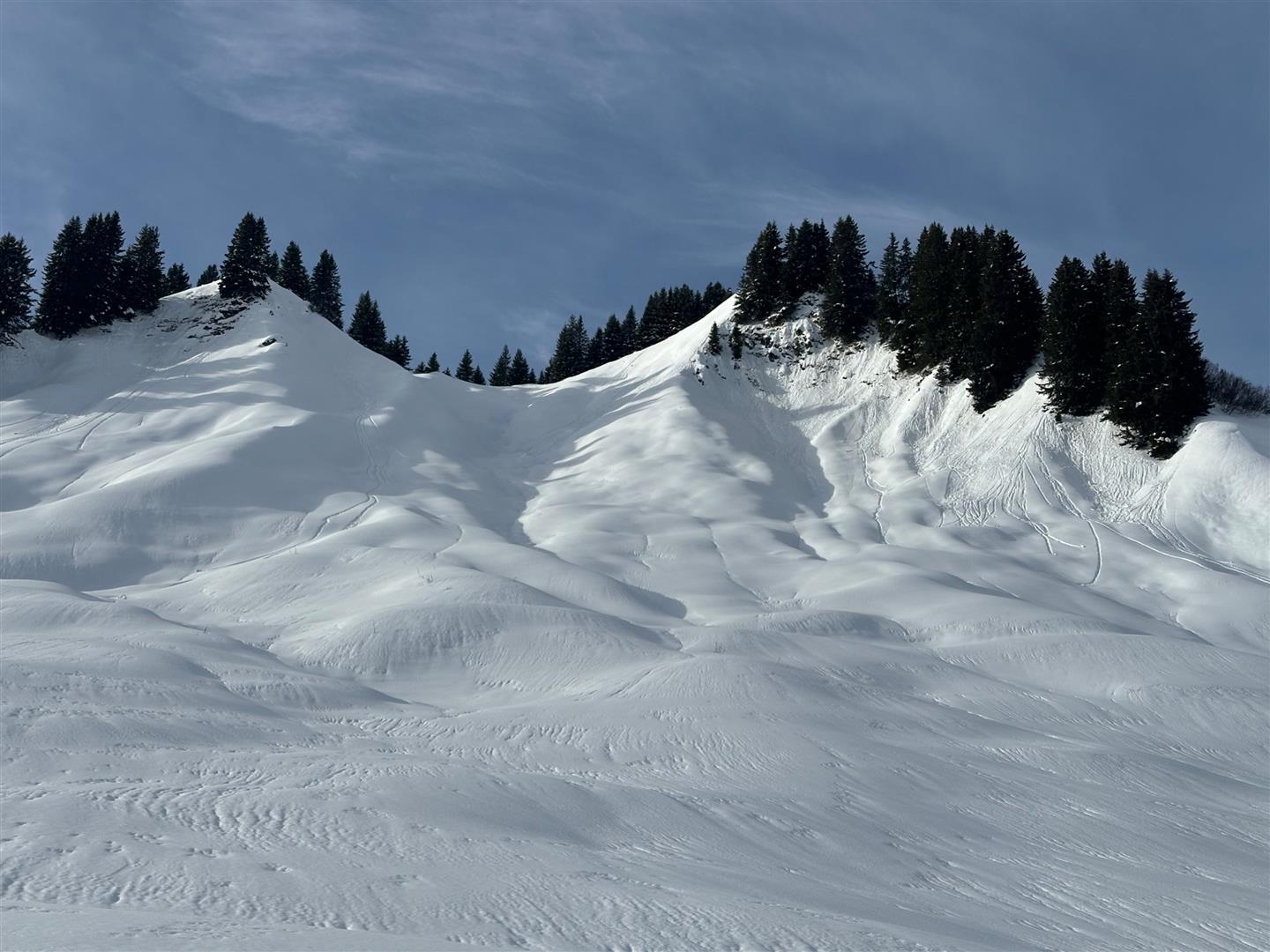
Bezeichnend für viele Regionen Tirols. Immer noch wenig Schnee. Unregelmäßige Schneeverteilung aufgrund des Windeinflusses (© LWD Tirol, 13.01.2026)
Indicative of many regions of Tirol. Still too little snow on the ground. Irregular snow distribution due to wind impact. (© LWD Tirol, 13.01.2026)
Überall ein ähnliches Bild. Ausgeprägte Schwachschichten im Altschnee (meist unter oder zwischen Krusten). Geigenkamm (© LWD Tirol, 13.01.2026)
A similar picture wherever we looked. Marked weak layers inside the old snow (mostly beneath or between crusts). Geigenkamm (© LWD Tirol, 13.01.2026)

The snowpack throughout the land is similarly structured, i.e. poor. Only the snow depth varies. Currently, most snow lies in western regions of North Tirol and in northern East Tirol at high altitudes.
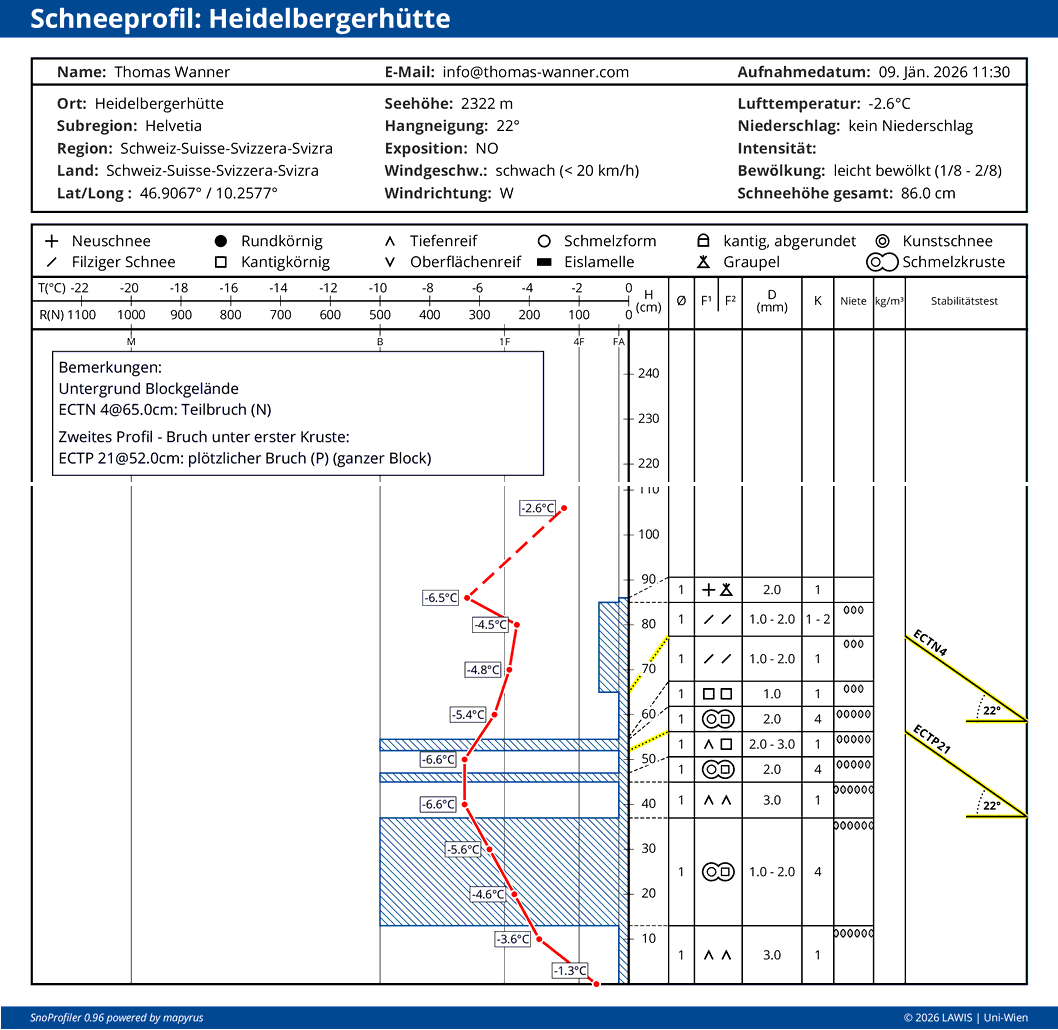
Mehrere potentielle Schwachschichten im Fimbatal in der Silvretta.
Several potential weak layers in Fimbatal in the Silvretta.
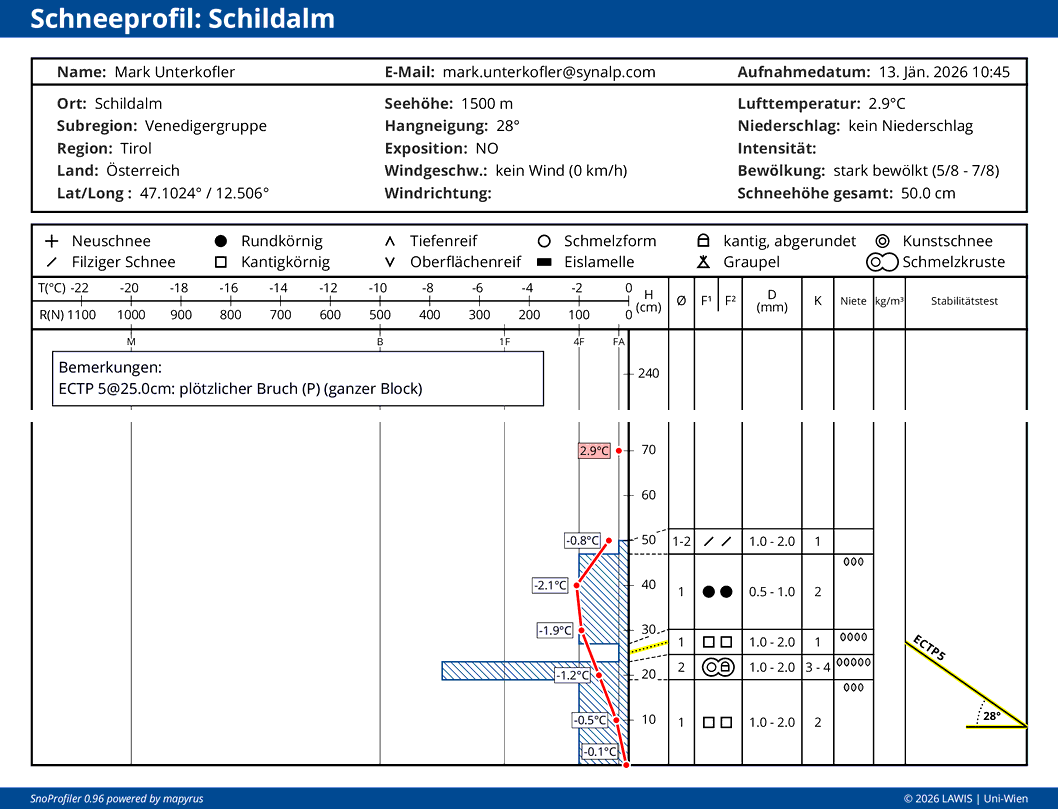
Hier ein Profil aus der Venedigergruppe mit  kantigen Schichten auf  einer Kruste.
Above, a profile from the Venediger Massif with faceted layers atop a crust.

Other profiles can be looked at here on our website:

What lies ahead?

According to Geosphere Austria (GSA), the air current in western Austria will shift heavily towards the south as the weekend approaches, conditions will be slightly foehn-impacted. Air masses moving in will be mild. Precipitation not in sight.

Avalanche danger will gradually recede. We still expect a widespread heightened likelihood of avalanches triggering. Whenever the snowpack is the essential problem, the terrain is the solution! Therefore, we plead with all of you: continue to conduct yourselves defensively in your route selection.