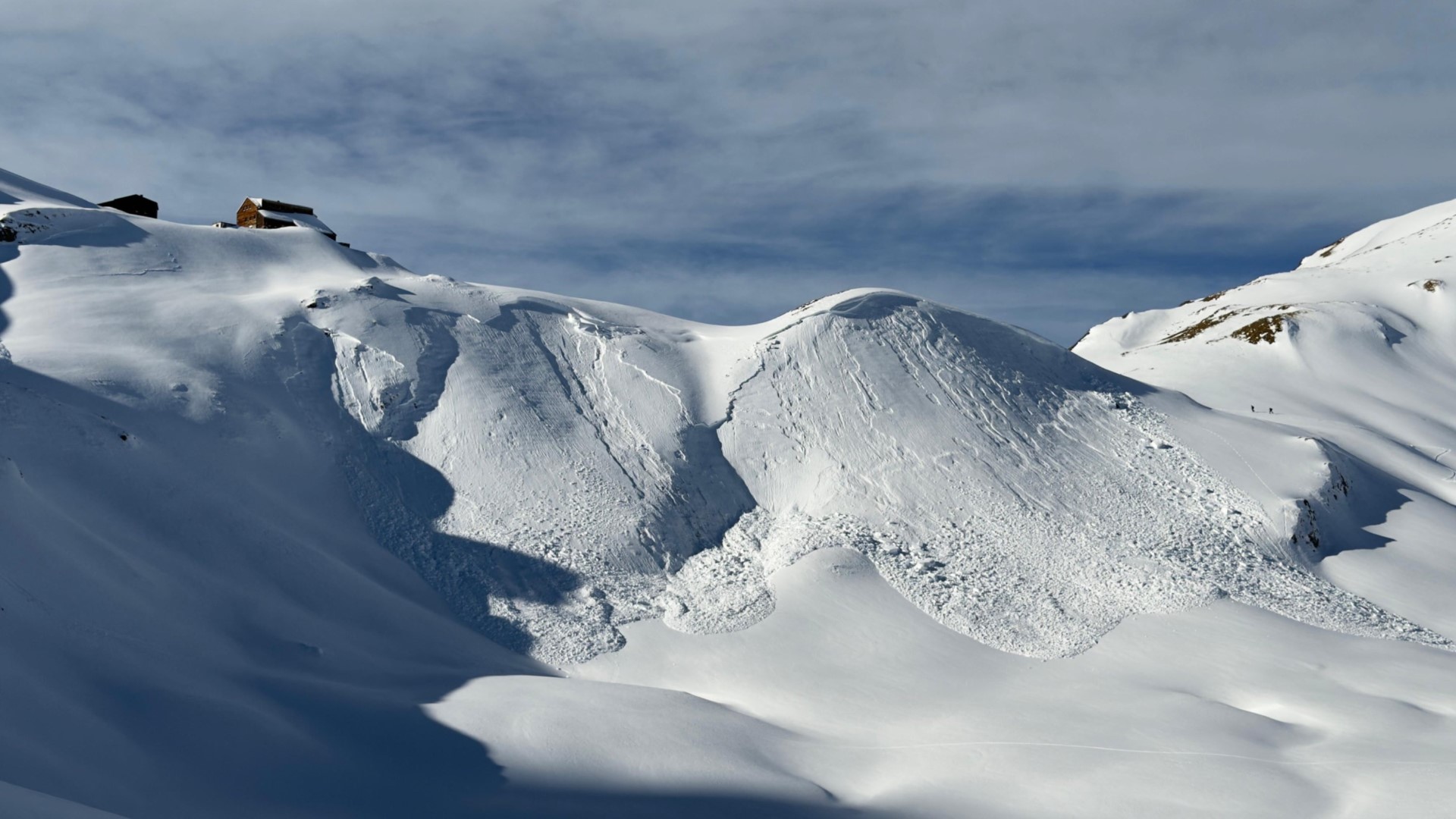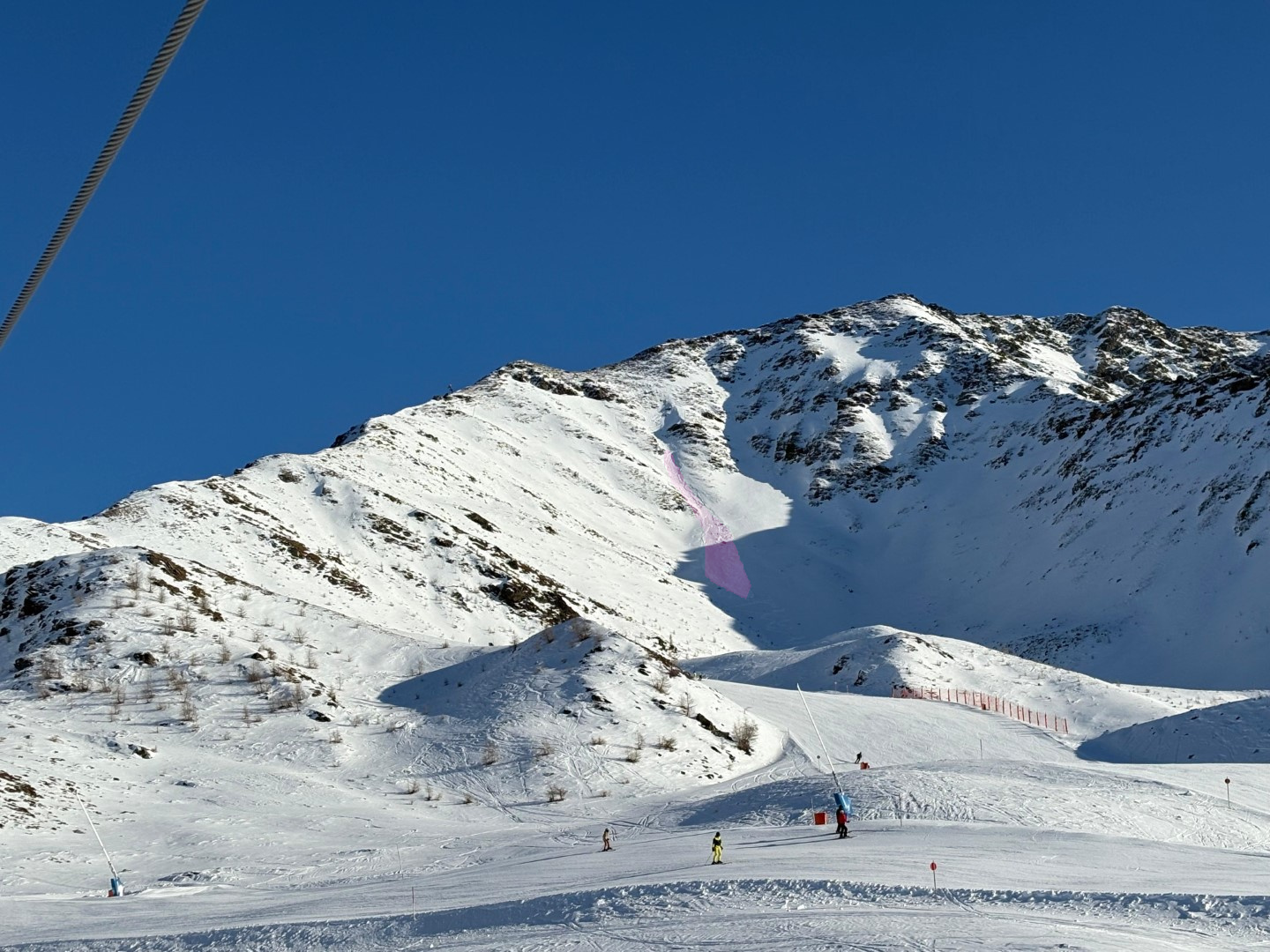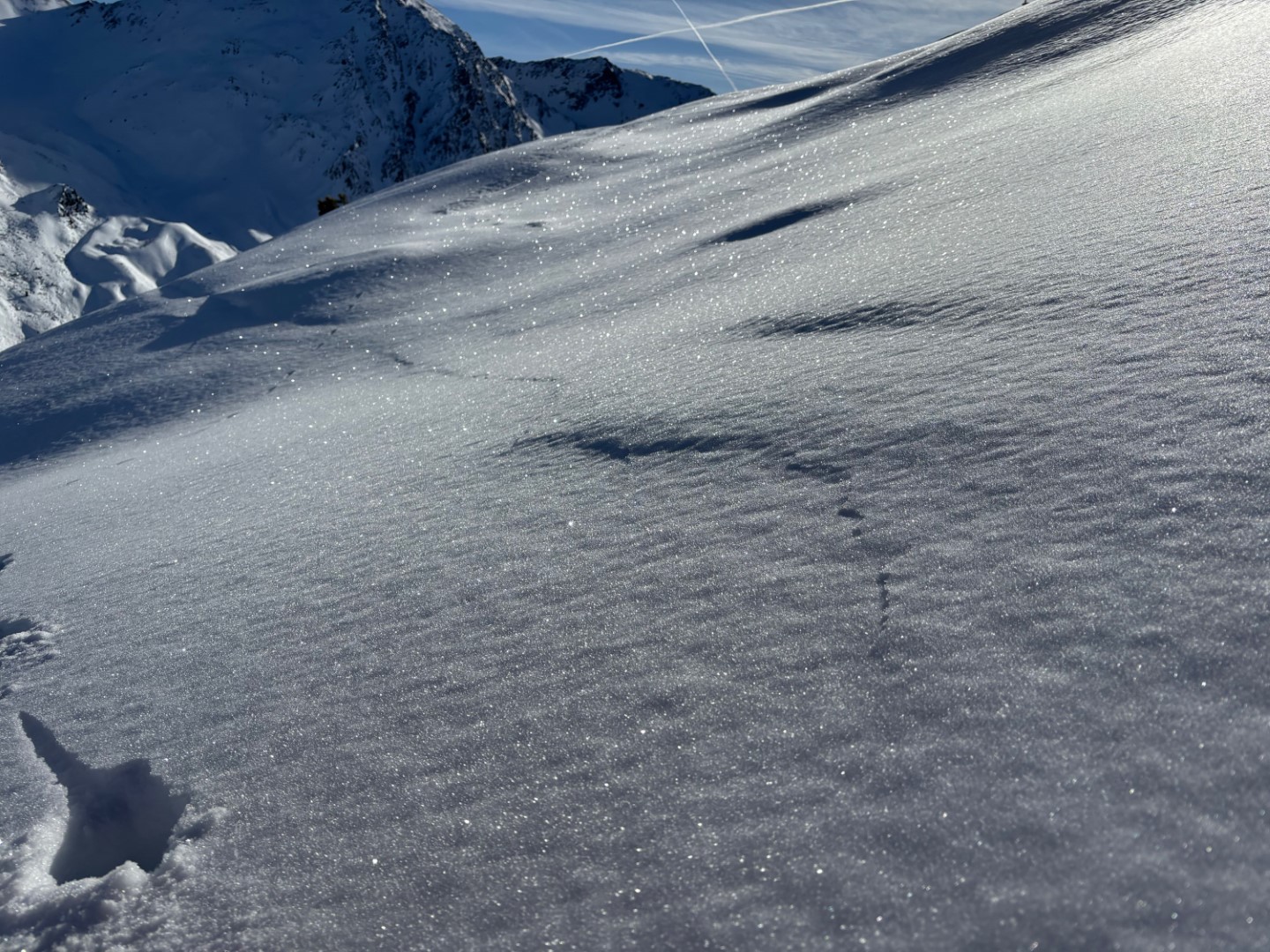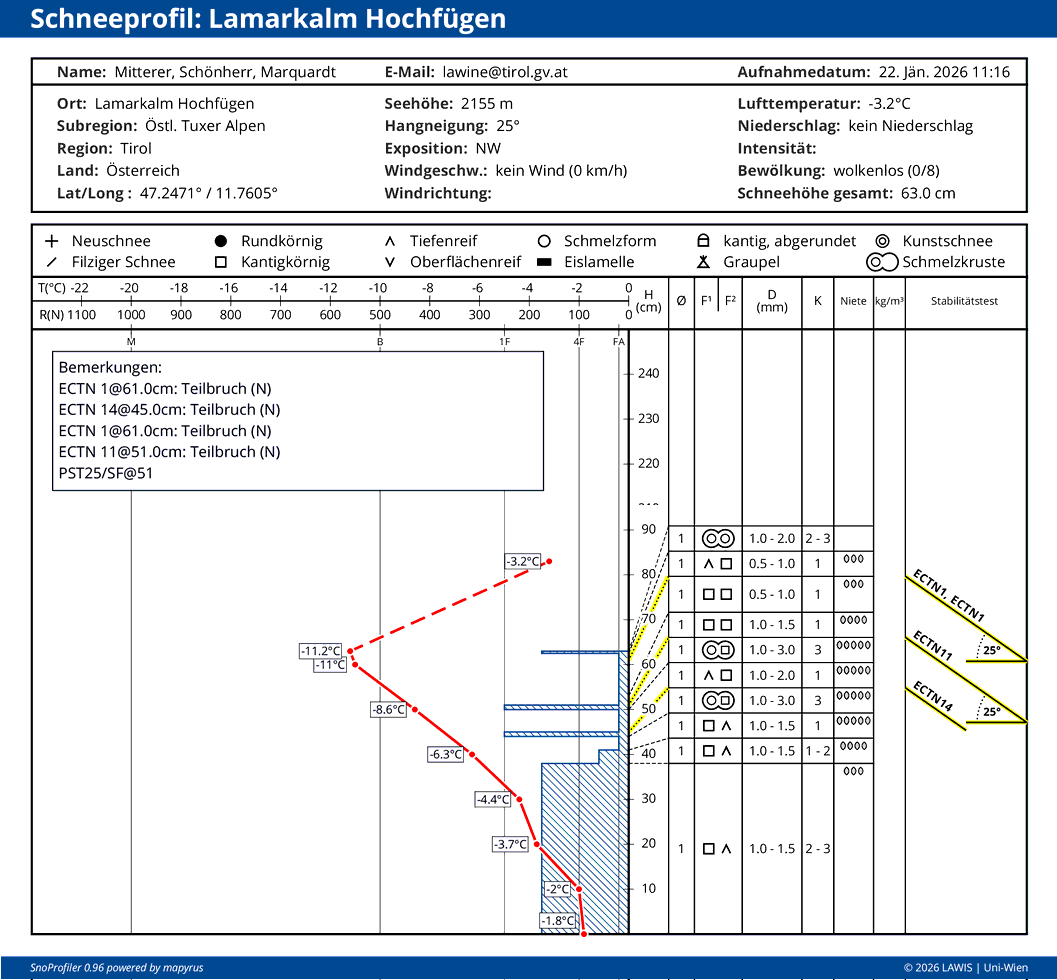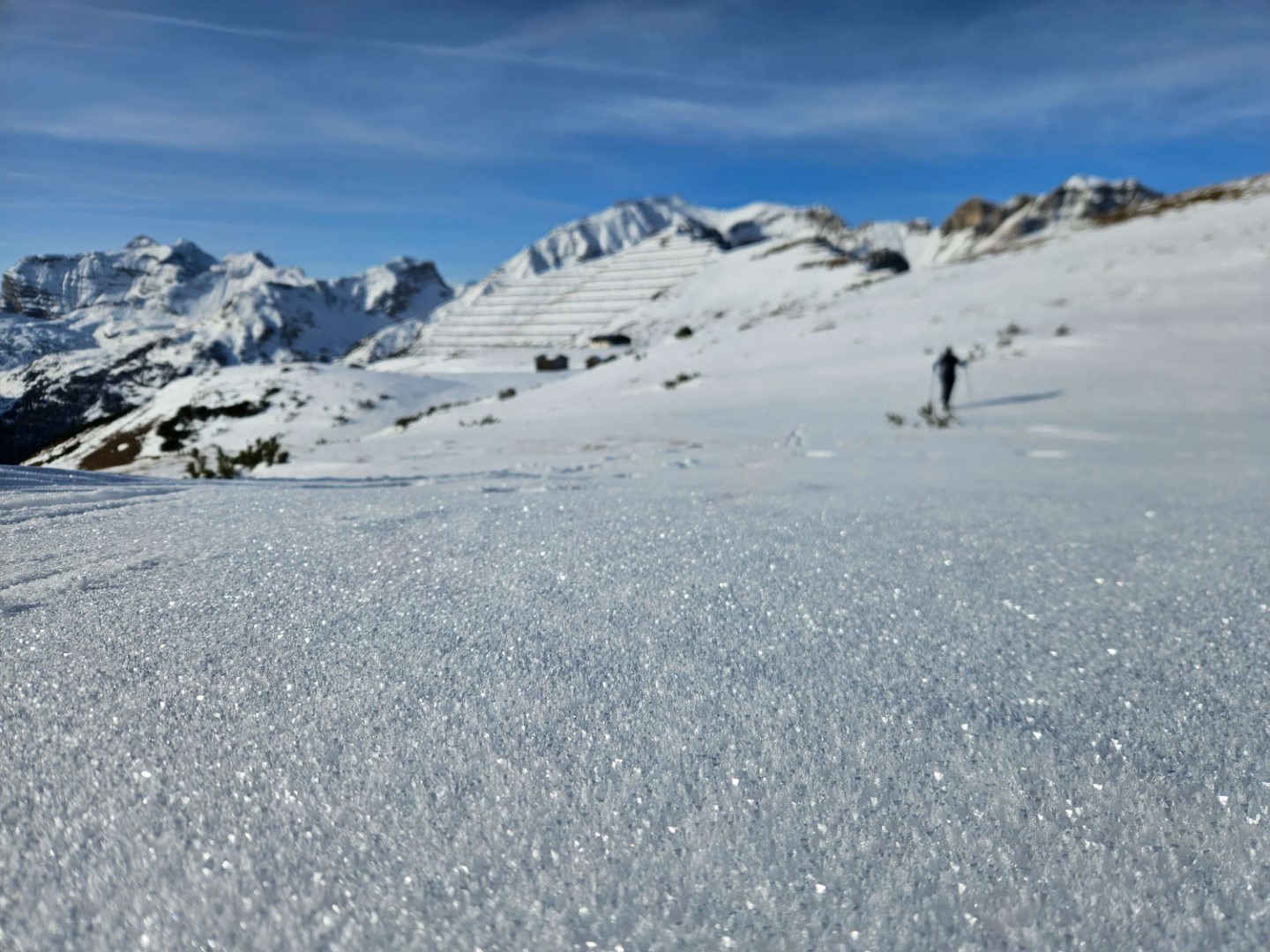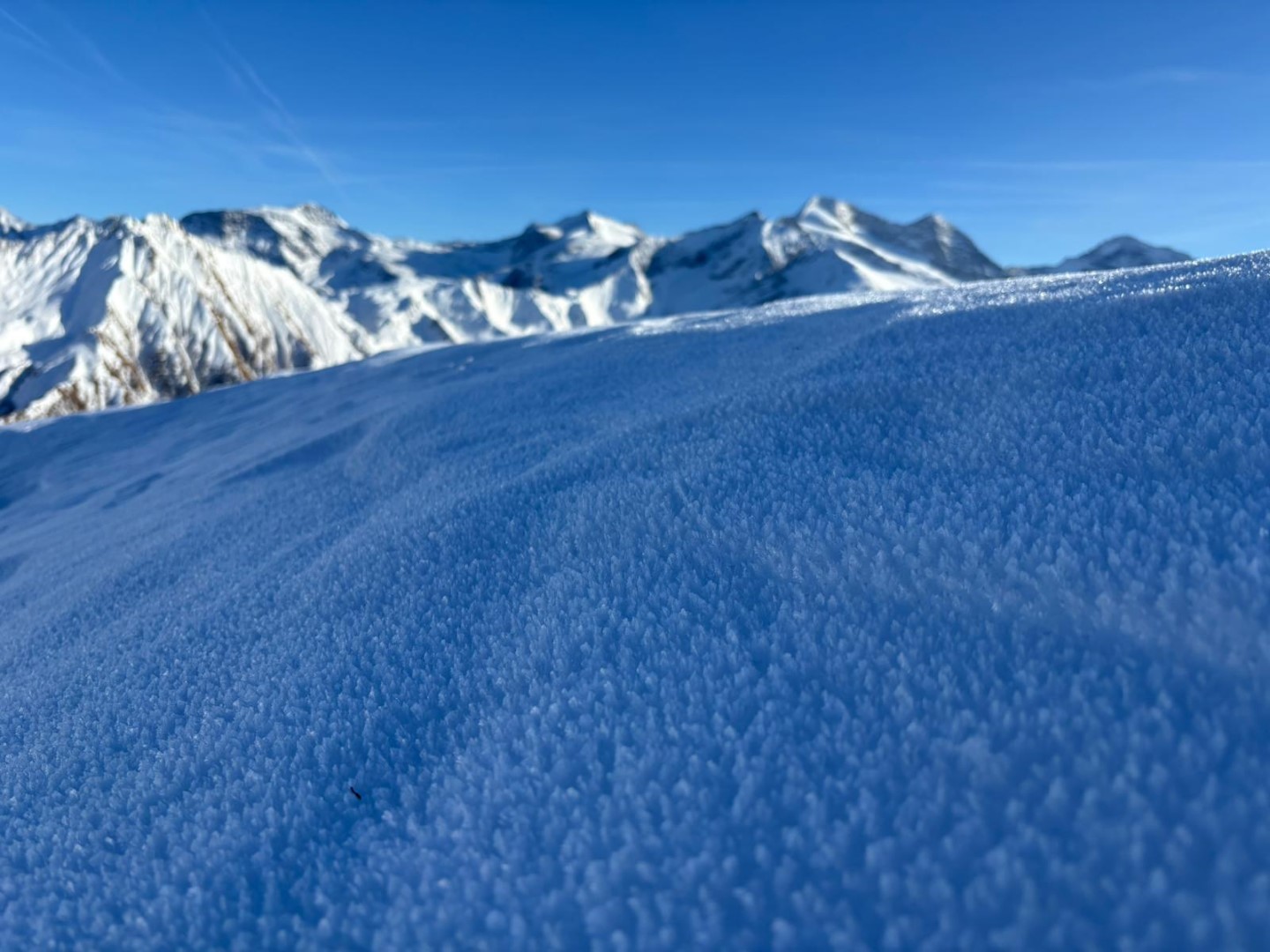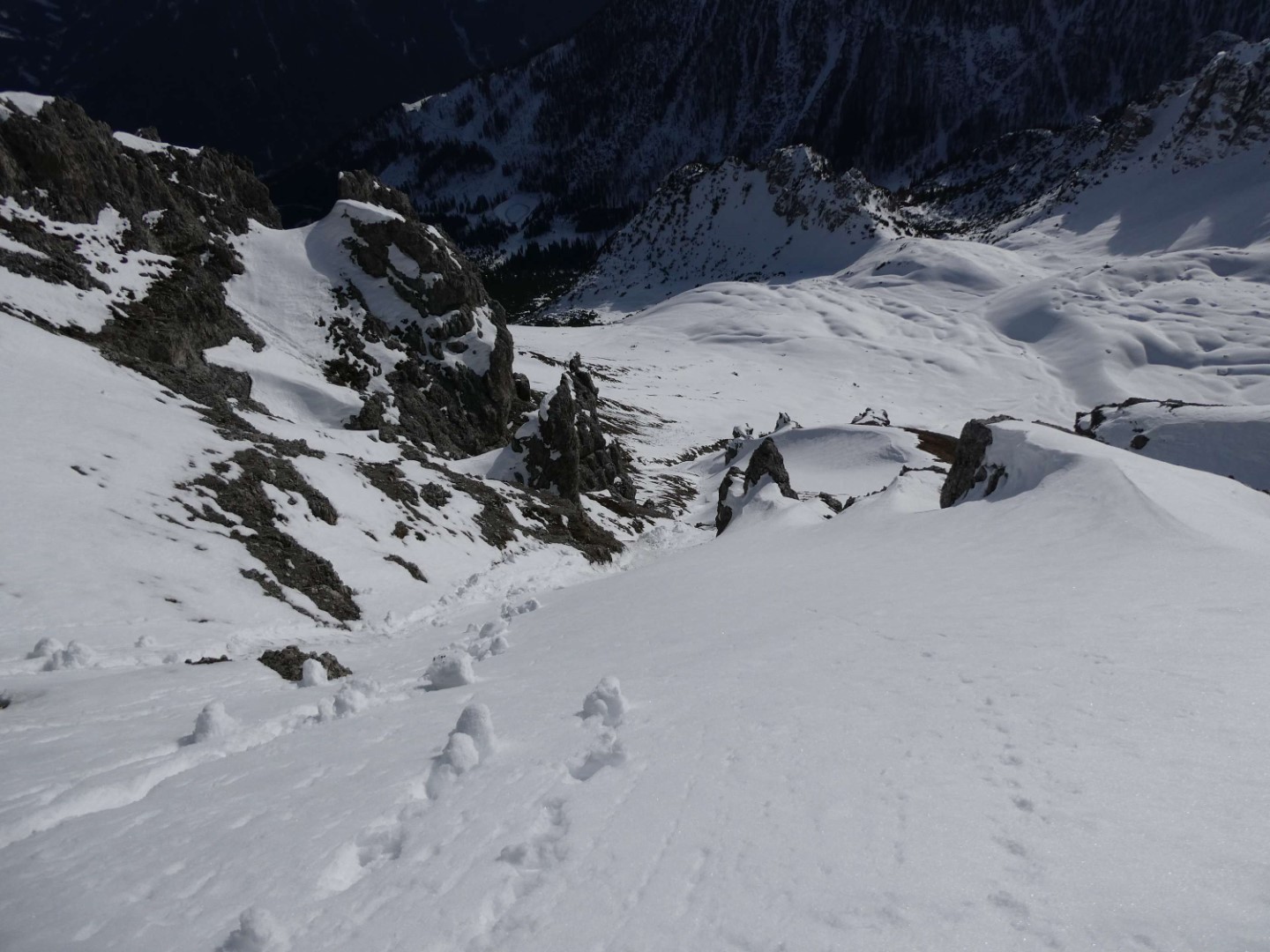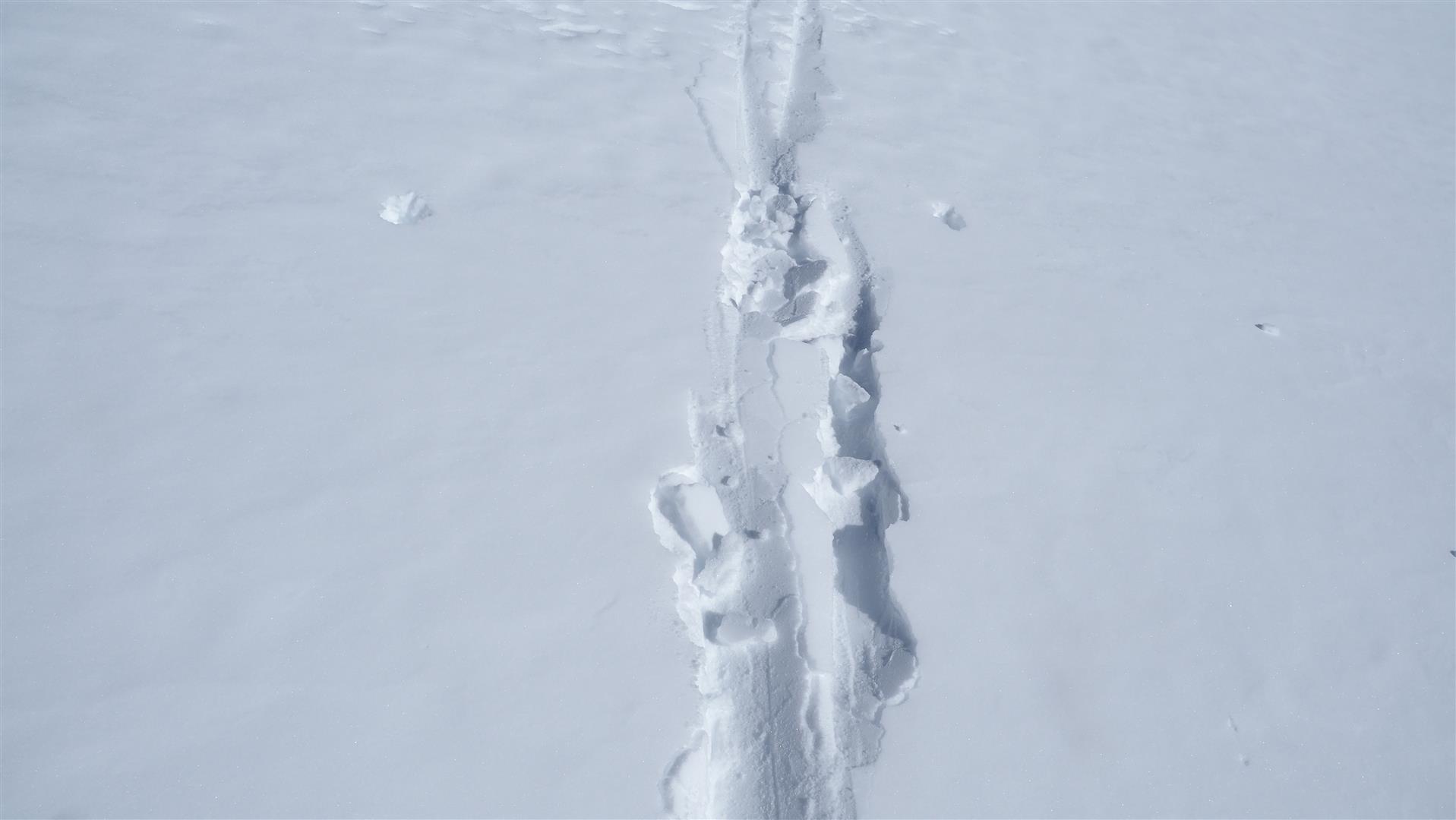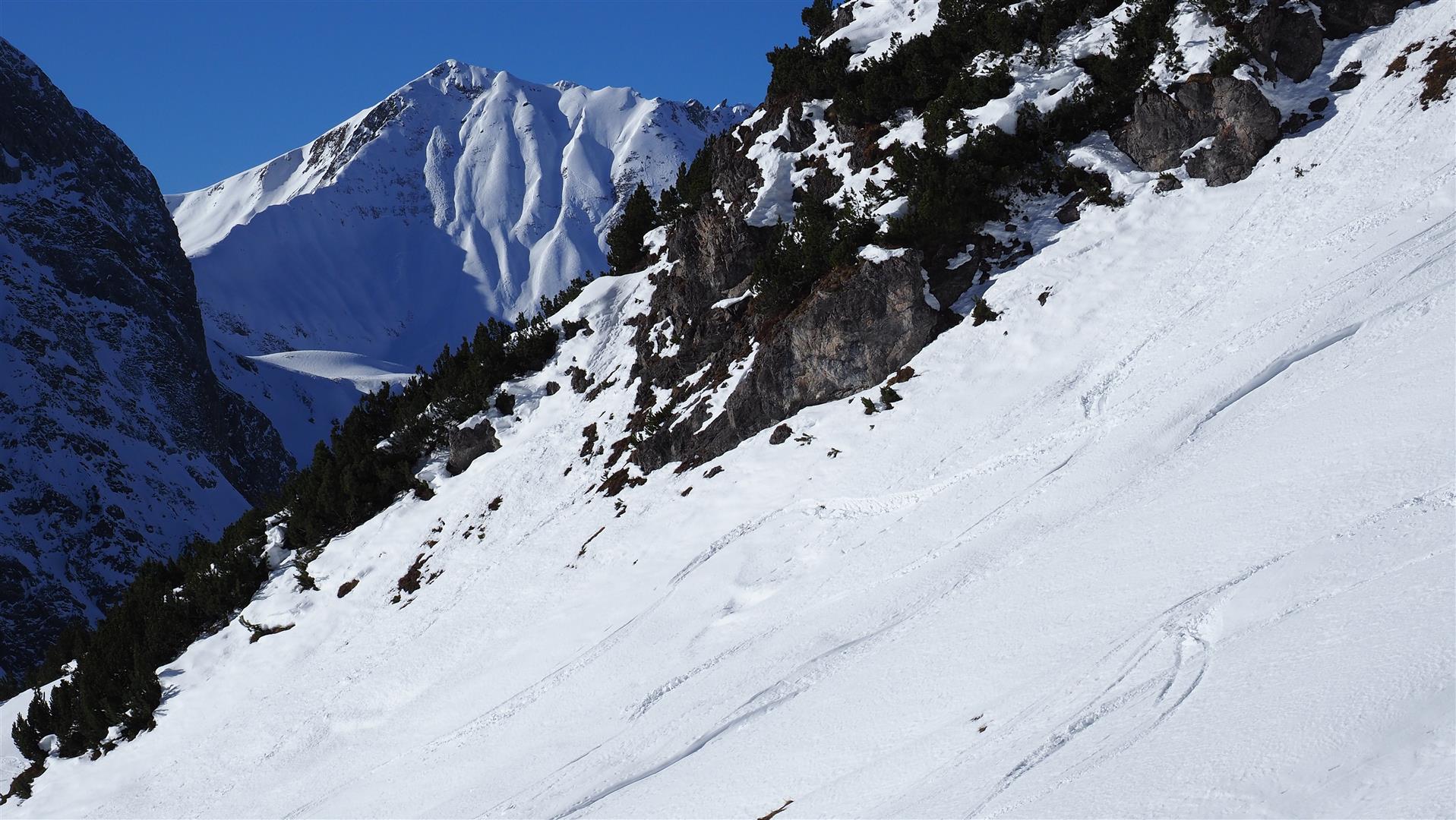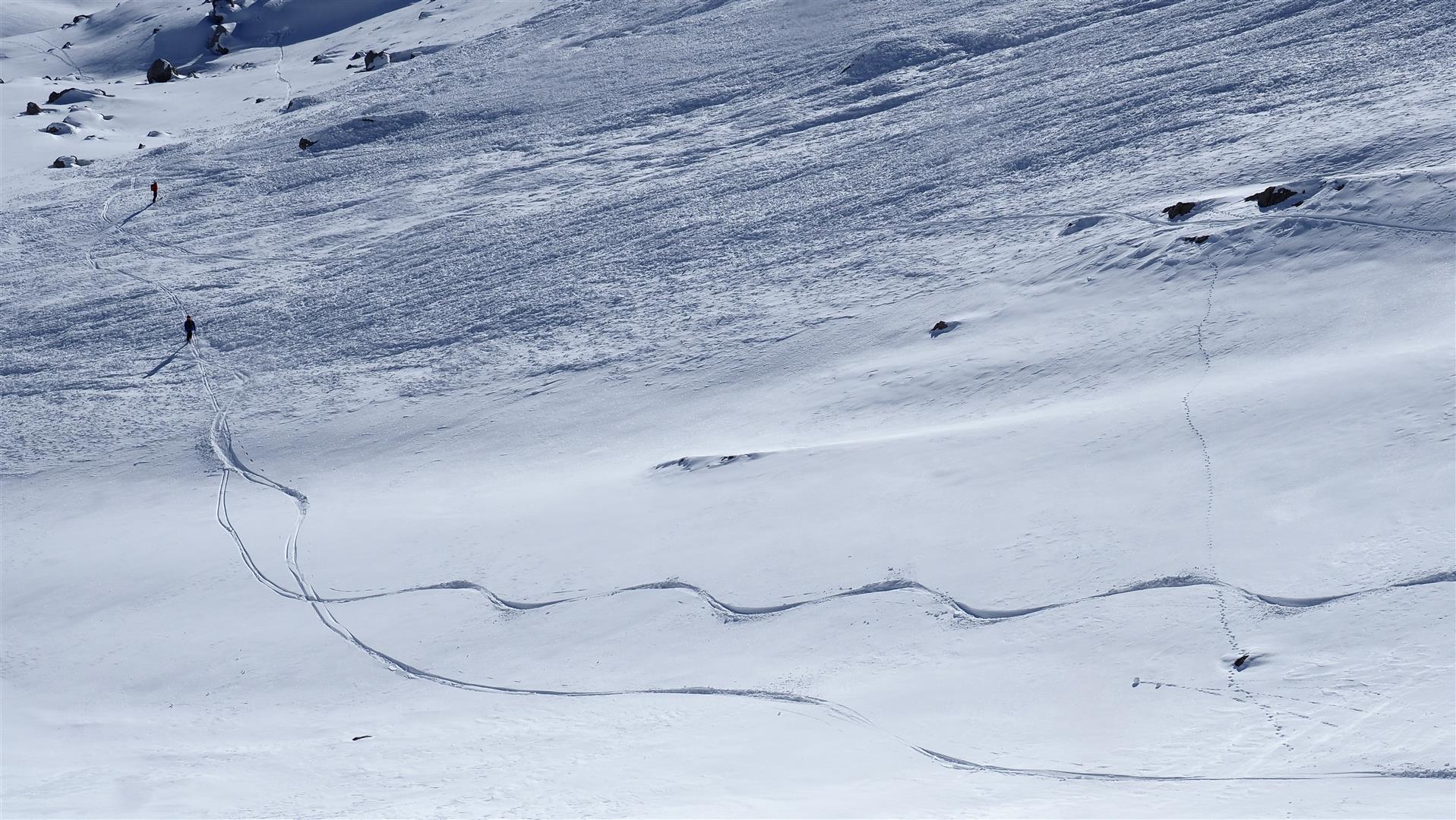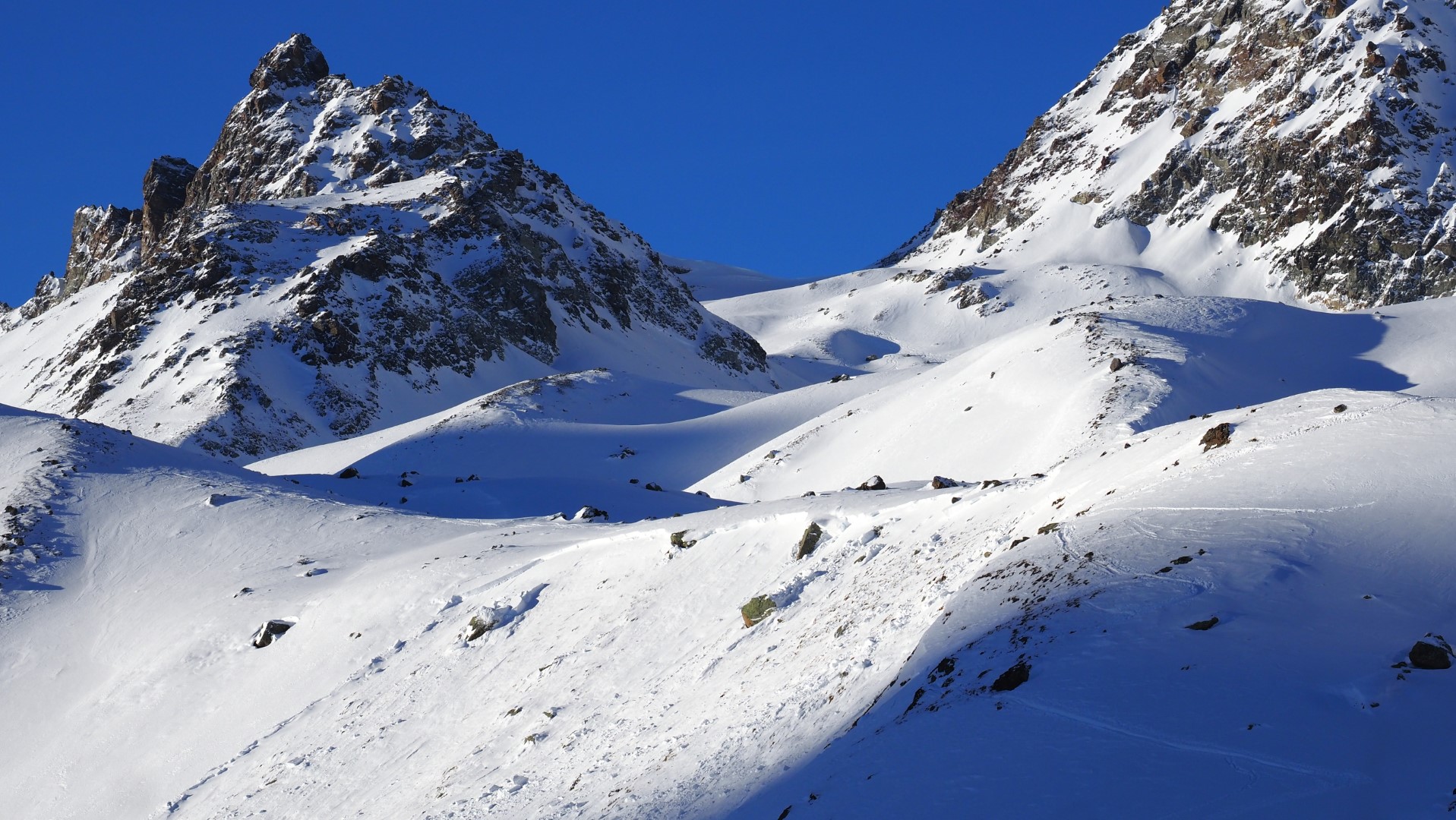
Schneebrettlawinen können weiterhin von Wintersporterlinnen im Steilgelände ausgelöst werden.

Despite calm situation, avalanche risks still threaten

All last week we were confronted by a rather treacherous avalanche situation. The dominant problem: persistent weak layers.

In the interim it is clear, at least in those regions with less snow, how the near-surface layers are metamorphosing expansively to an increasing degree or else are going through melt-freeze processes on very steep sunny slopes. This decreases the likelihood of winter sports enthusiasts triggering avalanches.

Nevertheless: the situation remains treacherous in some regions. Heightened caution is still necessary, particularly on very steep north and east-facing little skied-on slopes.

A long avalanche interval is evolving into a “normal” situation

The“avalanche interval” which began, at latest, on 11.01.2026 (see Blog) persisted into this week. We had a great many avalanche triggerings involving persons, most of them on 11.01.2026. The first day when we received no further such reports was 22 January .
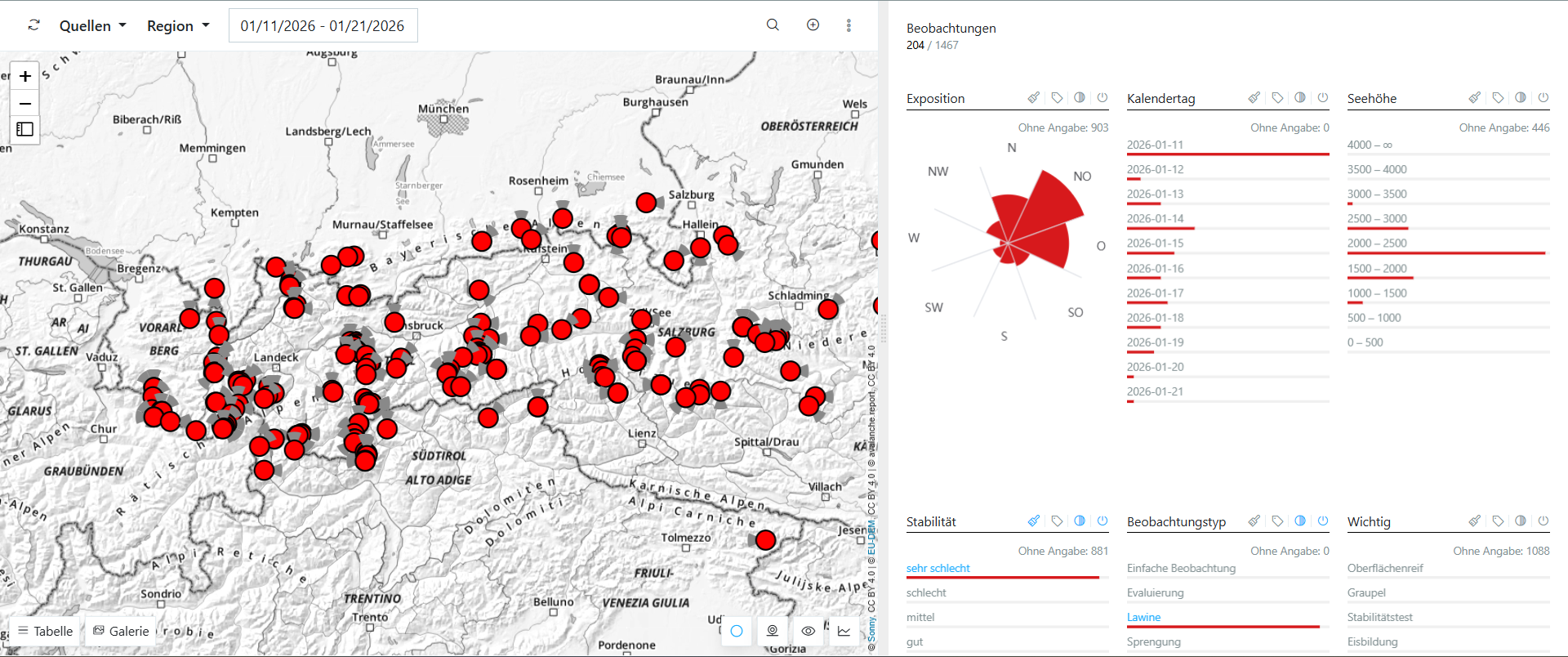
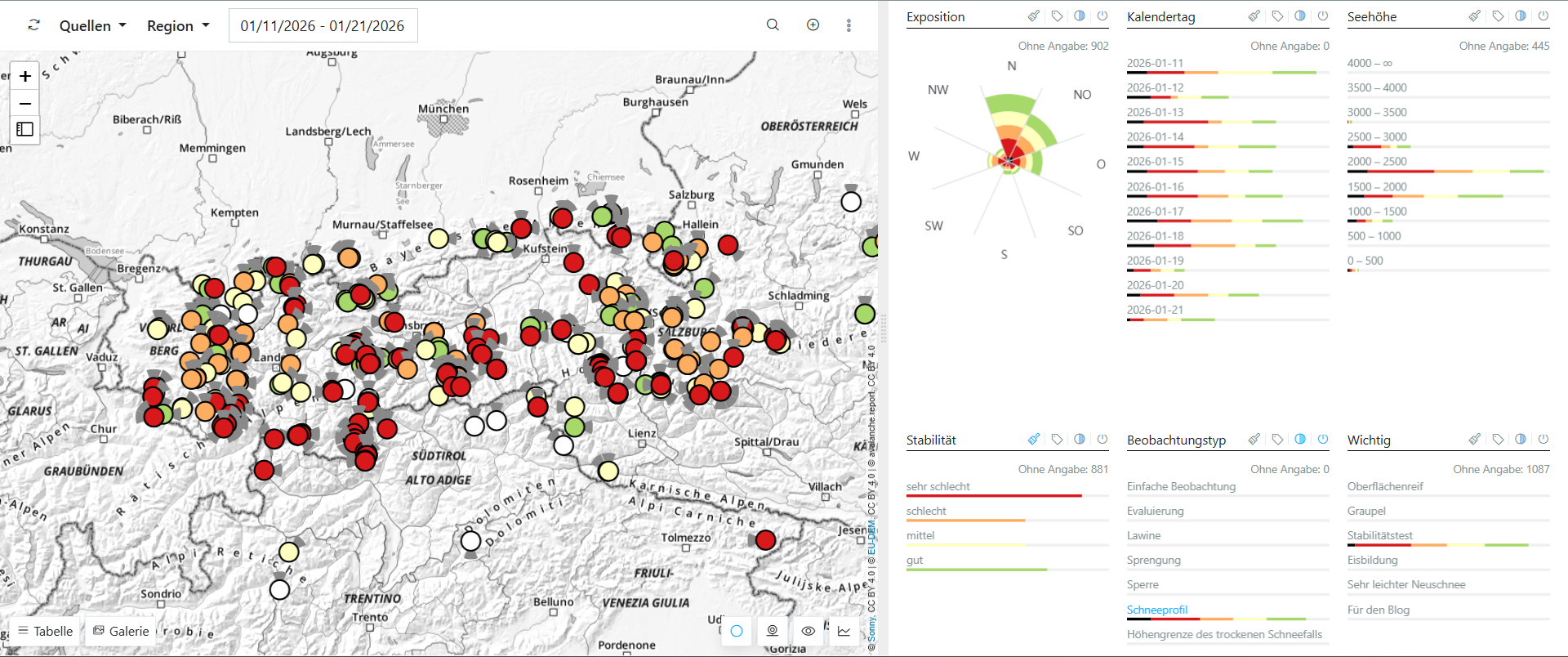
Übersicht der eingegangenen Lawinenmeldungen zwischen dem 11.01. und dem 22.01.2026
Overview of avalanches reported between 11.01 and 22.01.2026. The dates clearly show decreasing numbers of reports.

Also reports of remote triggerings went on for unusually long: until 17.01. The last report of settling noises reached us on 21 January.
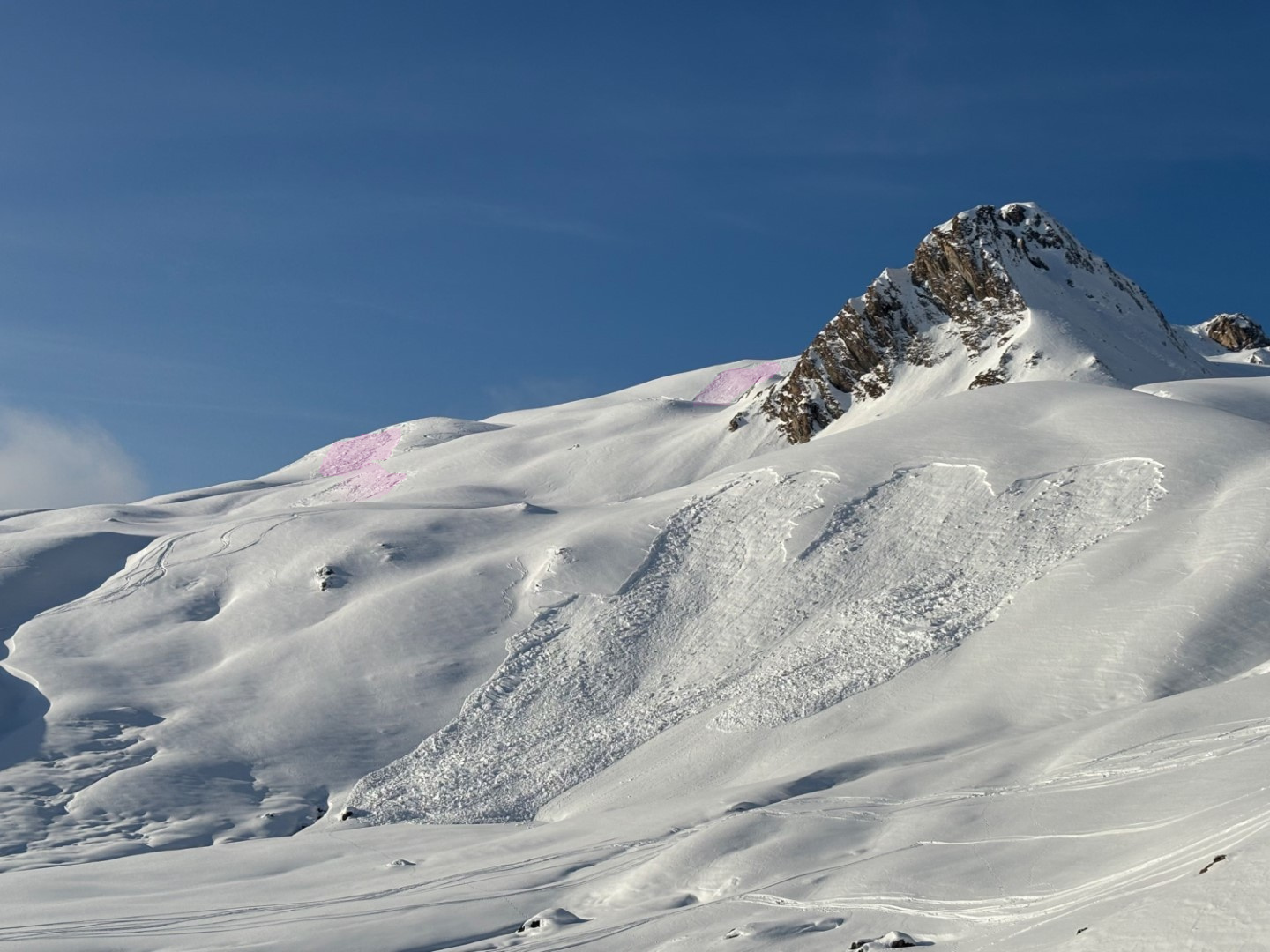
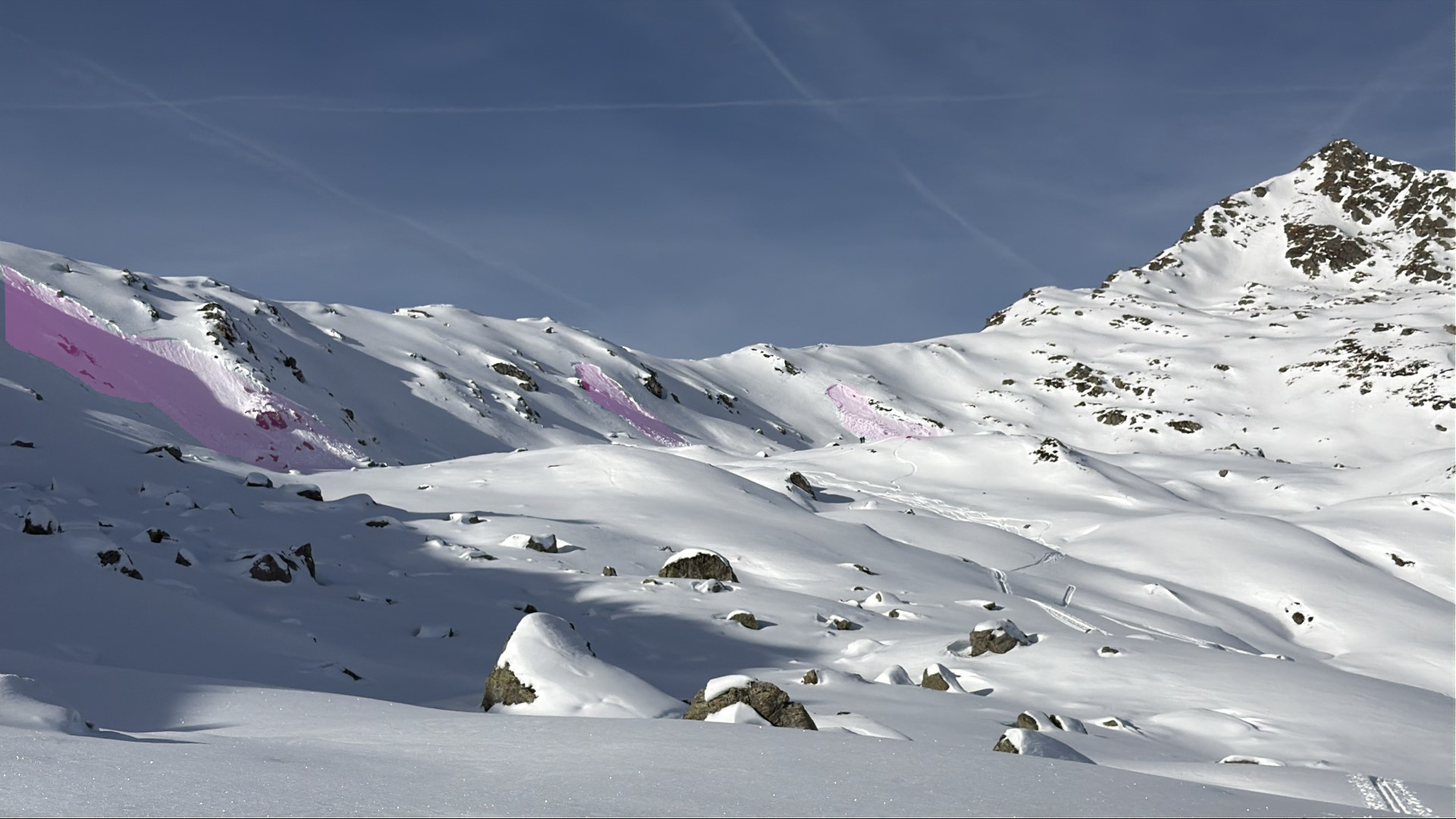
Fernauslösungen in der Samnaungruppe (© Tobias Peer, 18.01.2026)
Remote triggerings in the Samnaun Massif (© Tobias Peer, Foto: 17.01.2026)
Fernauslösungen beim Salzachgeier in den Kitzbüheler Alpen (© Jenifer Pock-Baier, 17.01.2026)
Remote triggerings on Salzachgeier in the Kitzbühel Alps (© Jenifer Pock-Baier, Foto: 17.01.2026)
Eindrucksvolle Fernauslösung knapp unterhalb der  Stuttgarter Hütte in der Region Lechtaler Alpen West (© Mike Perl, 16.01.2026)
Impressive remote triggering just below the Stuttgart Refuge in Lechtal Alps West region (© Mike Perl, 16.01.2026)
Eine personenausgelöste Schneebrettlawine ohne Schäden am Gorner in der Goldriedgruppe (© Anton Riepler, 19.01.2026)
A slab avalanche triggered by persons (no injuries) on Gorner in the Goldried Massif (© Anton Riepler, 19.01.2026)
Rissbildungen standen ab dem 08.01. auf der Tagesordnung, wie hier am Angerbergkopf in der Kalkkögelgruppe (© Jan Wördenweber, 16.01.2026)
Fractures forming on the surface were a daily occurrence as of 08.01, such as above on Angerbergkopf in the Kalkkögel Massif (© Jan Wördenweber, 16.01.2026).

Meanwhile we also see in numerous snowpack analyses, both those we carried out ourselves and those reported to us, that the number of danger zones is slowly but steadily decreasing. On the one hand (and predominantly) this is because the slab formation has changed: particularly in regions with less snow on the ground, on clear cold nights the process of expansive metamorphosis has set in, which loosens the snow crystals; on south-facing slopes, melt-freeze processes have started. Triggering of an avalanche is becoming less likely, as is fracture propagation.

And also, very gradually the dominant weak layer (usually near the rain crust of 08.12.2025) is beginning to bond better with the surrounding layers. Here the emphasis lies on “very gradually” because very soft weak layers of faceted crystals and/or rotten snow still occur. Nevertheless, we also see an ongoing, very slow crust formation of crystals inside the weak layer.
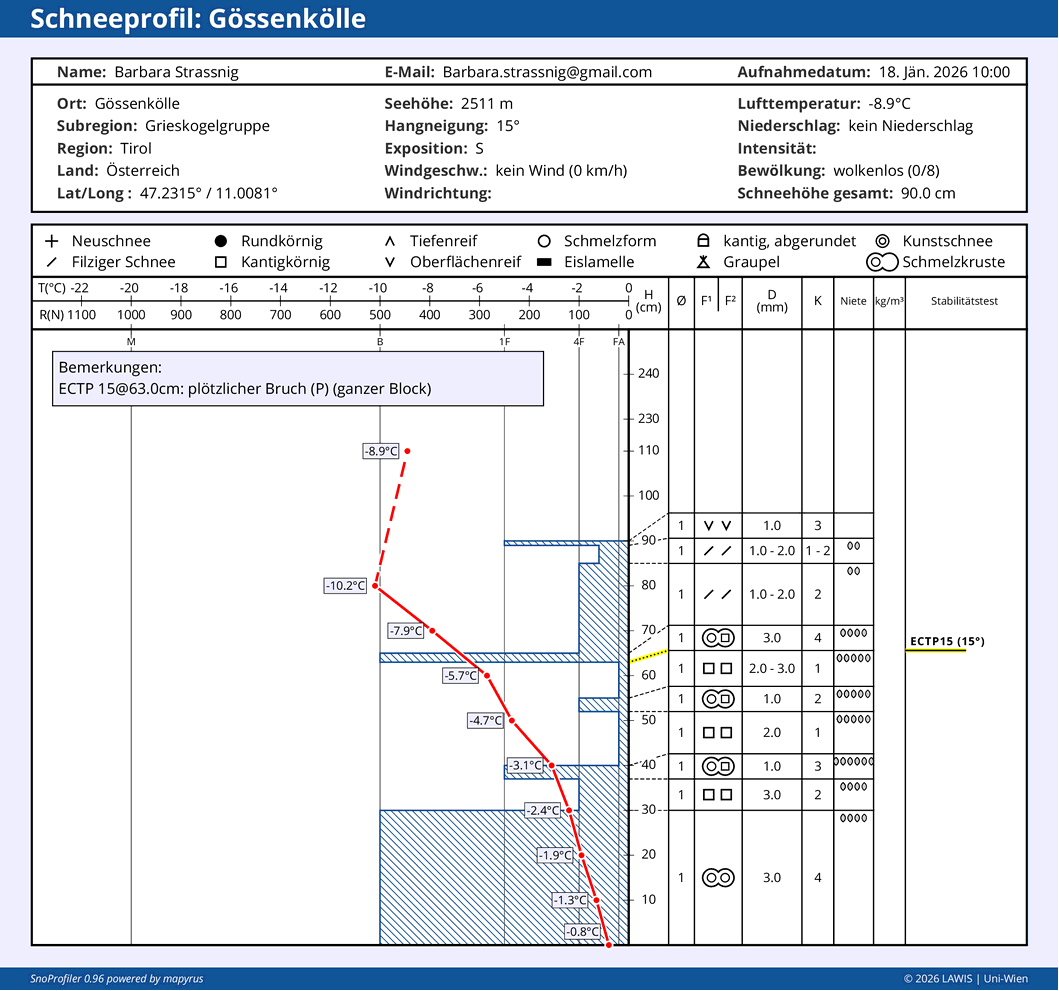
Die "sehr schlechten" und "schlechten" Profile werden tendenziell weniger.
The “very bad” and the “bad” snow profiles are decreasing in number.
Immer noch (aber deutlich seltener als noch vor einer Woche) kann man bei Stabilitätstest einen Bruch samt Bruchfortpflanzung erzeugen.
Fractures and fracture propagation can still be generated in stability tests, albeit much less often than a week ago.
Gleichzeitig wird das "Brett" immer lockerer, sodass sich an immer mehr Stellen, keine Brüche mehr fortpflanzen können.
Simultaneously, the “slab” is becoming more and more loose so that fracture propagation is no longer possible in an increasing number of places.
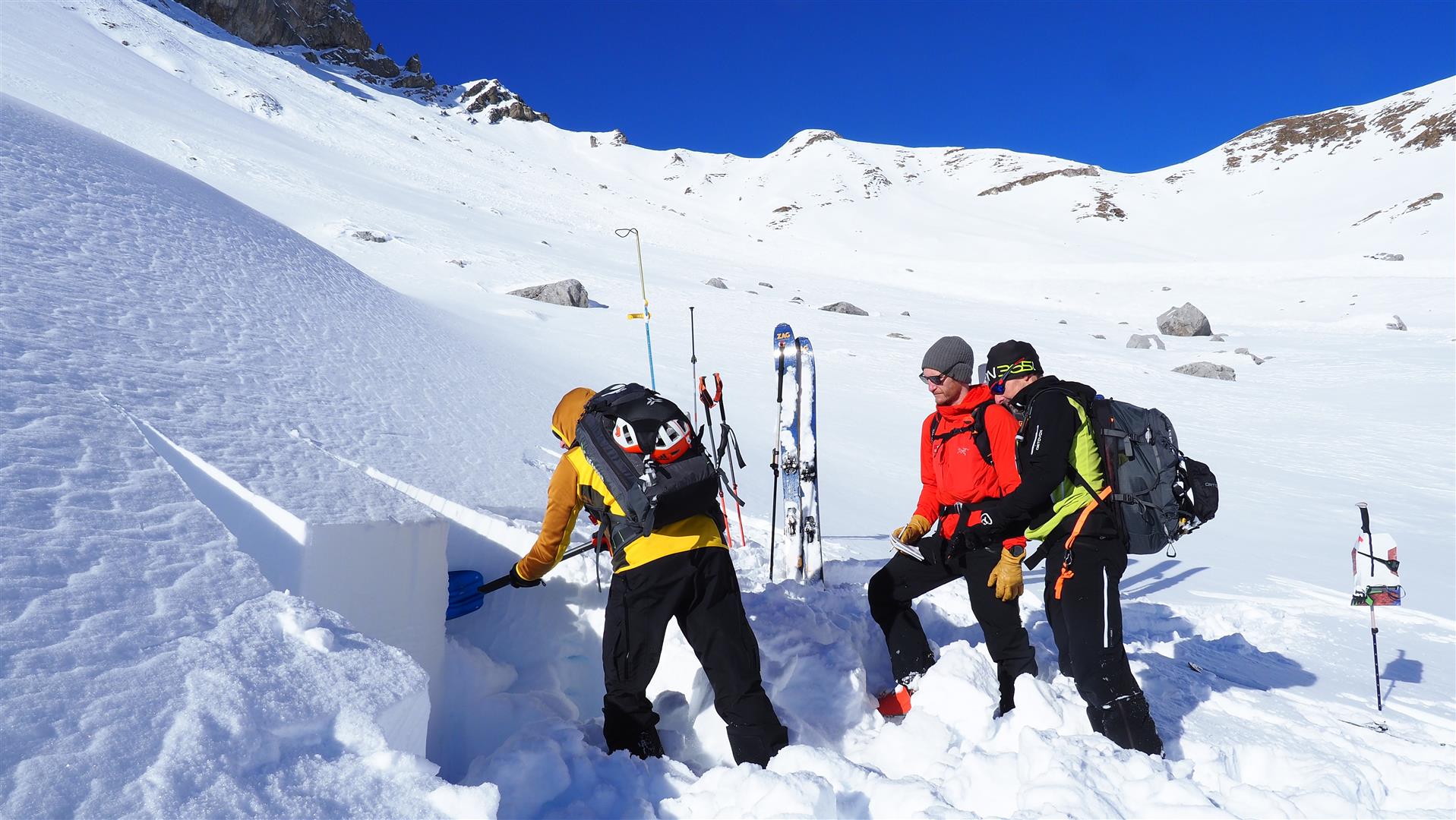
Eine von vielen Schneedeckenuntersuchungen. Region Lechtaler Alpen West (© LWD Tirol, 21.01.2026)
Conducting one of countless snowpack analyses. Lechtal Alps West region(© LWD Tirol, 21.01.2026)

The (very) sparse-snowfall winter continues

In many regions, this winter is extremely low in snowfall. From our long-term observation stations, we see some of them nearly reaching minimal values.
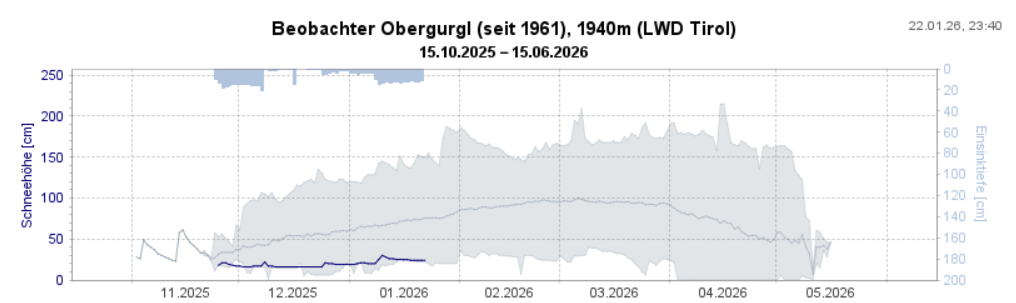
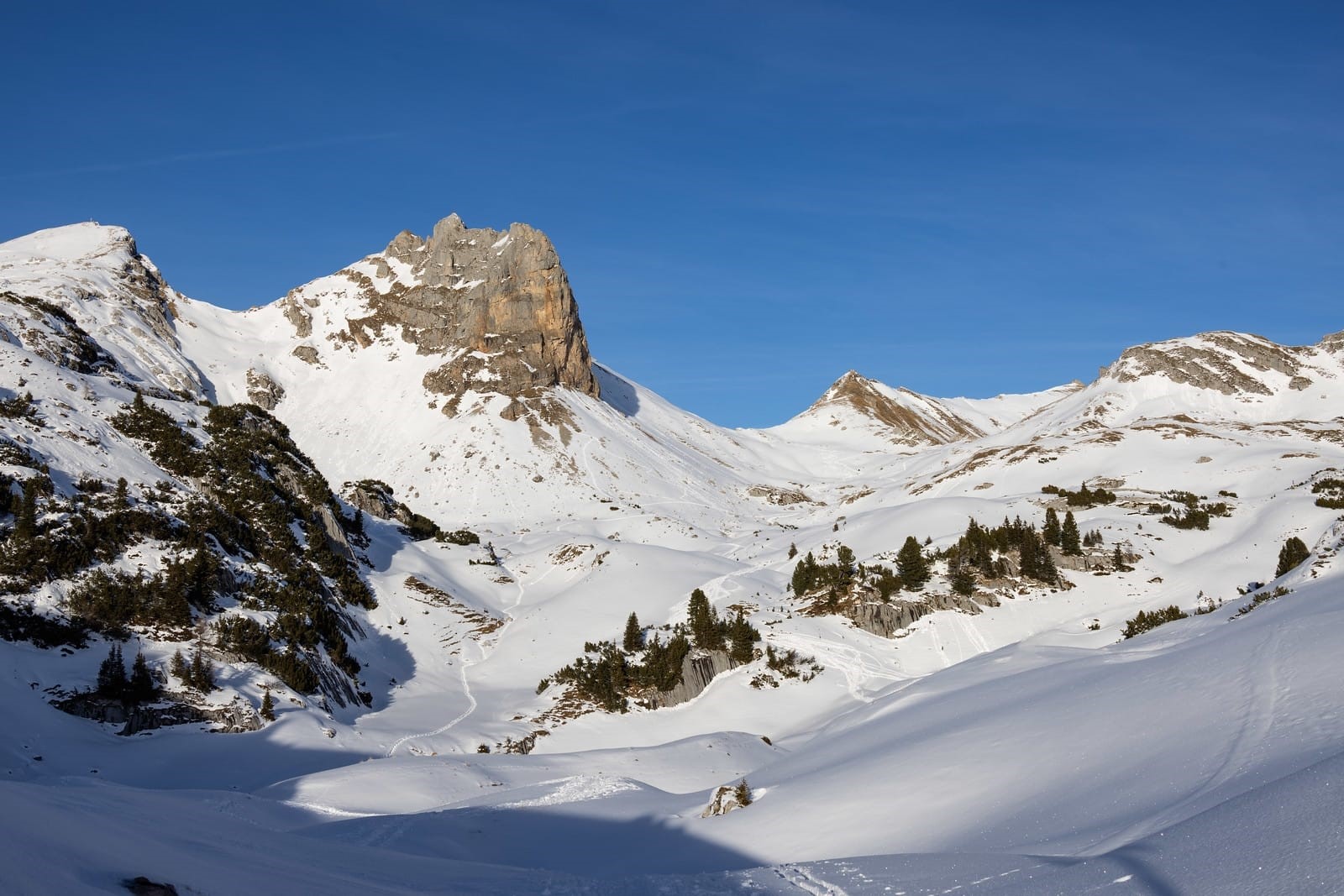
Beobachterstation Obergurgl (Messreihe seit 1961). Die dicke Linie zeigt die Schneehöhe des diesjährigen Winters. Eingehüllt sind die bisher gemessenen Minima, der Mittelwert und das Maximum seit Messbeginn.
Obergurgl observation station (measurements since 1961). The thick line depicts snow depths this winter. Minimums, mid-values and maximums since beginning of measurements are shown.
Tourenmöglichkeiten sind schneebedingt eingeschränkt. Rofan - Region Brandenberger Alpen (© Julia Hitthaler, 17.01.2026)
Backcountry touring possibilities depend on amounts of snow on the ground – very limited. Rofan – Brandenberg Alps region (© Julia Hitthaler, 17.01.2026)
Ein ähnliches Bild am Kellerjoch in der Region Tuxer Alpen Ost. (© Barbara Fink, 17.01.2026)
Similar picture on Kellerjoch in the Tux Alpen East region. (© Barbara Fink, 17.01.2026)
Somit besteht weiterhin die Gefahr von "shark" bei der Abfahrt. Silvretta (© LWD Tirol, 16.01.2026)
And thus, there is still danger of “sharks” on the descent. Silvretta (© LWD Tirol, 16.01.2026)

Further effects of weather on the current snow structure

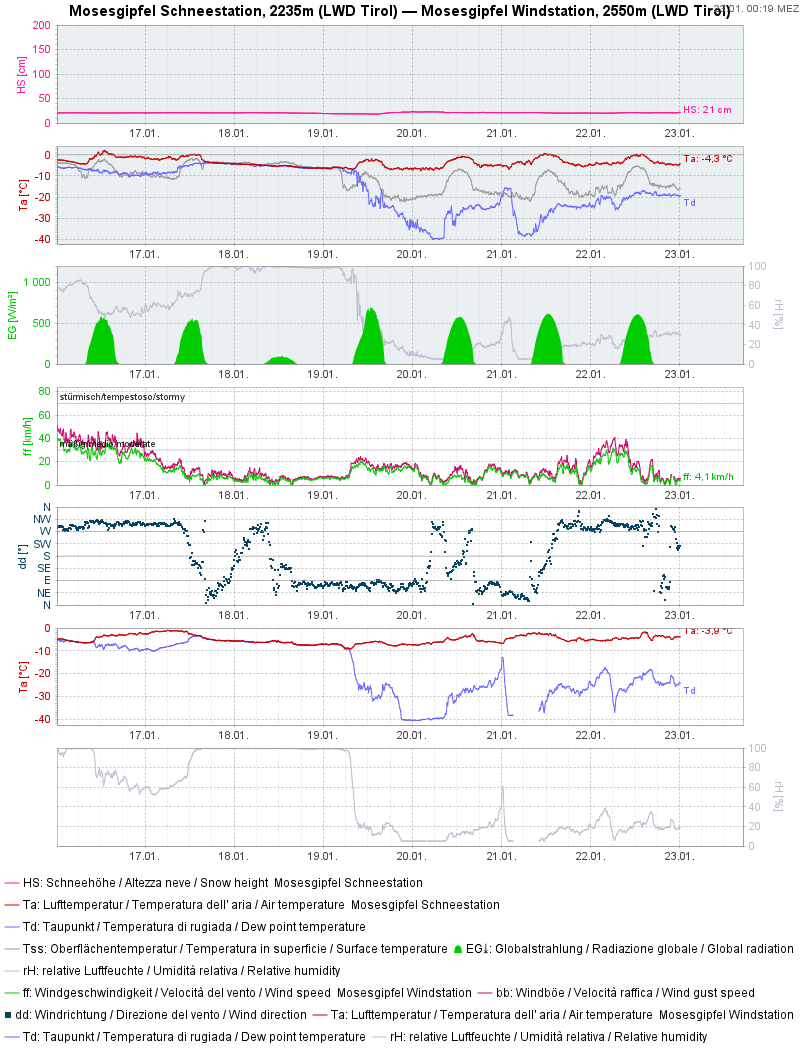
A glance at last week’s weather shows it split into two parts. In North Tirol, weather was mostly fine, whereas in the south between 17.01 and 19.01 a blanket of high fog reached nearly up to the highest summits. Strong-velocity southerly winds were an accompanying factor. The potential for snow transport was nonetheless low. In many places, there were prerequisites for formation of surface hoar.
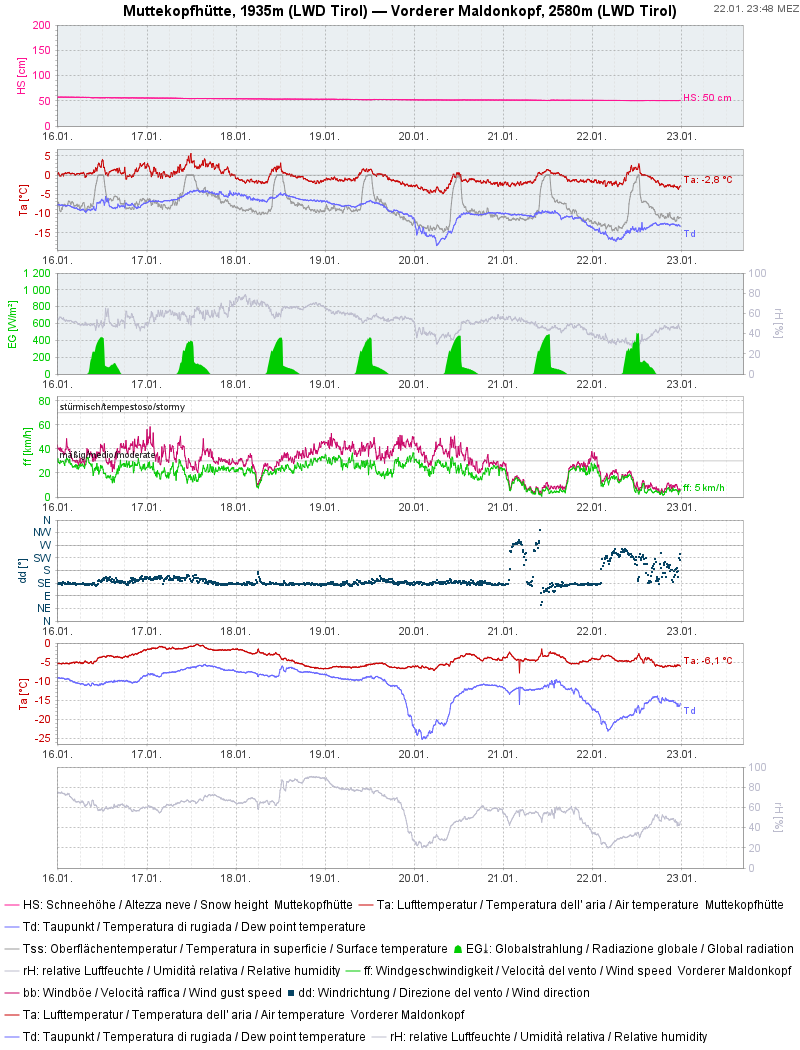
Station Muttekopfhütte. Ruhiges Winterwetter. Dort wo die Schneeoberflächentemperatur unter den Taupunkt fiel, hatten wir es mit Potential zur Oberflächenreifbildung zu tun.
Muttekopfhütte station. Tranquil winter weather. Wherever the snowpack surface temperature dropped below the thaw point there was potentially surface hoar formation.
Zum Vergleich die Wetterstation Mosesgipfel in Osttirol. Man erkennt in der zweiten Grafik von oben die Wolkenbedeckung.
As a comparison: Mosesgipfel weather station in East Tirol. Visible in the second graph from top: cloud cover.
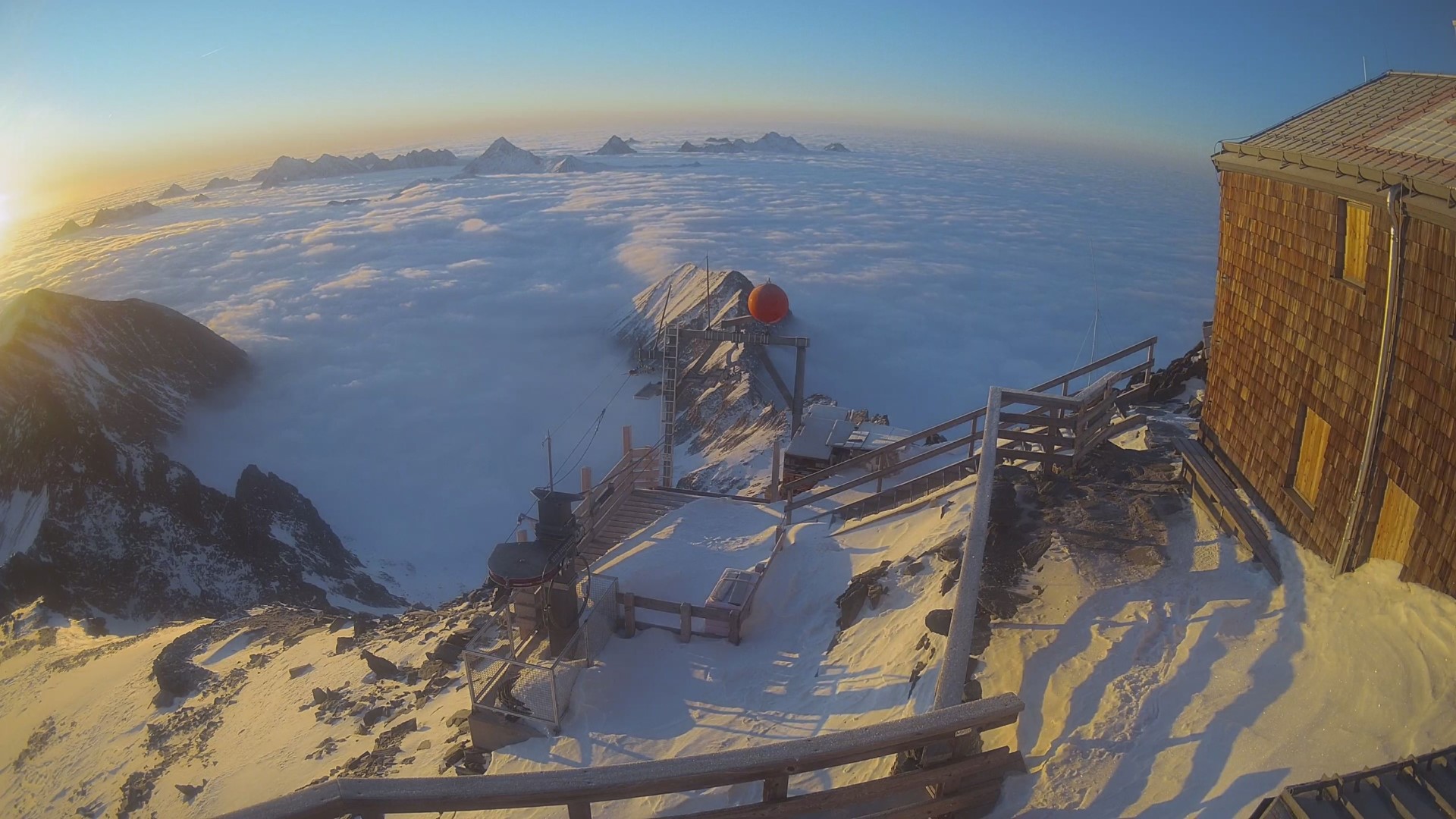
Hochnebel unterhalb der Adlersruhe in der Glocknergruppe (© Anton Riepler, 18.02.2026)
High fog below Adlersruhe in the Glockner Massif (© Anton Riepler, 18.01.2026)
Oberflächenreif beim Serleskamm (© Dominik Jenewein, 17.01.2026)
Surface hoar on Serleskamm (© Dominik Jenewein, 17.01.2026)
Ausgeprägter "Nigg-Effekt", also kammnah verstärkt gebildeter Oberflächenreif im Navistal in der Region Tuxer Alpen West (© Thomas Wanner)
Marked “Nigg Effect” – heightened surface hoar near ridgeline in Navistal in the Tux Alps West region (© Thomas Wanner)
Südseitig wirkten Strahlung und Wärme, sodass dort die Schneeoberfläche oberflächennah angefeuchtet und über Nacht wieder gefroren wurde. Region Kalkkögel (© Barbara Fink, 17.01.2026)
On south-facing slopes, solar radiation and higher temperatures had heavy effect: the surface was moist and froze again overnight. In isolated cases snow lumps formed. Kalkkögel region (© Barbara Fink, 17.01.2026)
Die Schneequalität variiert sehr stark. Bruchharsch scheint gerade zu überwiegen. (© LWD Tirol, 21.01.2026)
Snow quality varied heavily. Breakable crusts seemed to outweigh everything else (© LWD Tirol, 21.01.2026).
Firnähnliche Verhältnisse in sehr steilen Südhängen. Lechtaler Alpen West (© LWD Tirol, 21.01.2026)
Firn-like conditions on very steep south-facing slopes. Lechtal Alps West region (© LWD Tirol, 21.01.2026)
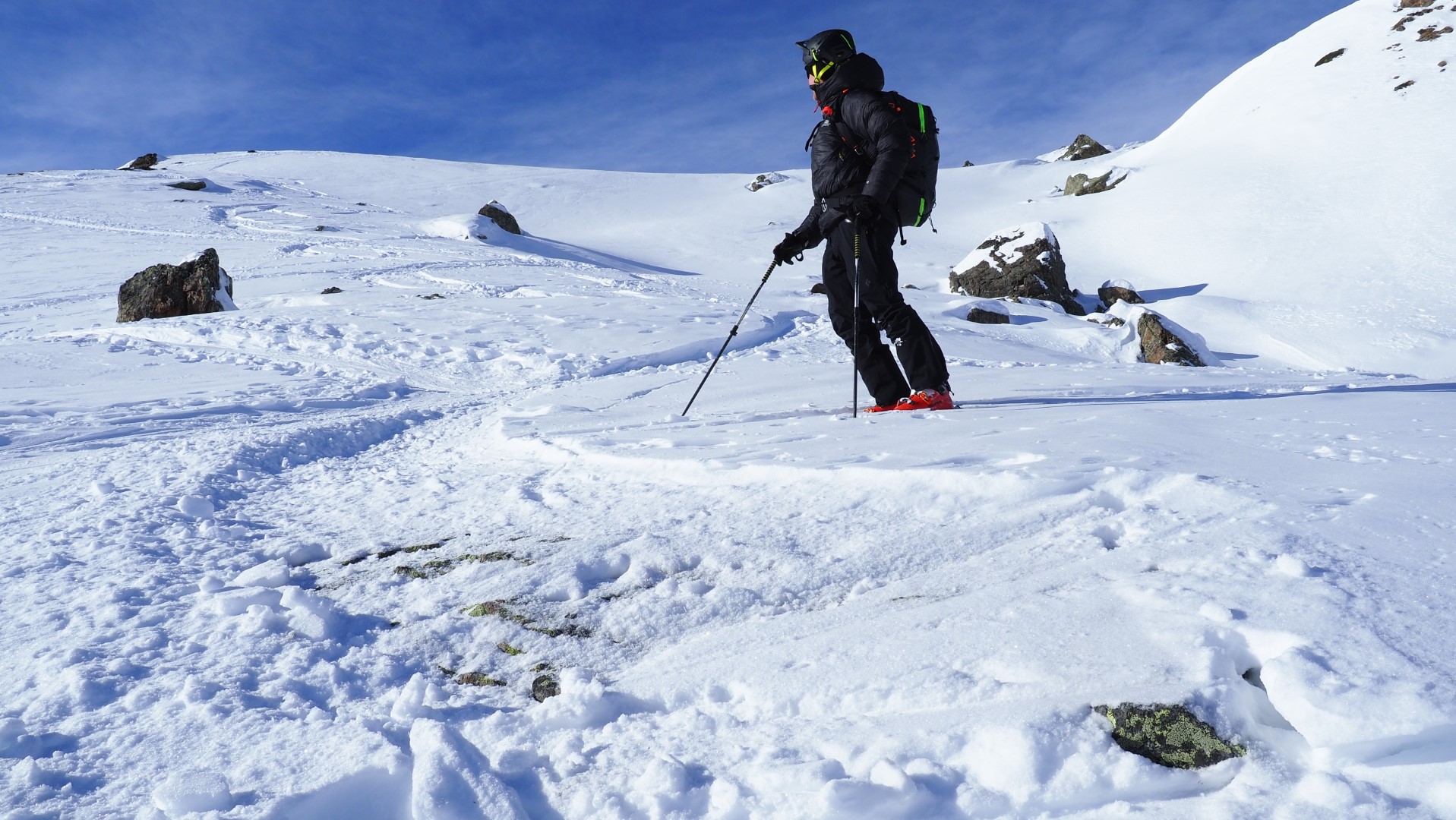
Es gibt aber auch noch pulverähnliche Verhältnisse. Lechtaler Alpen West (© LWD Tirol, 21.01.2026)
And yet, there is still powder snow to be found. Lechtal Alps West (© LWD Tirol, 21.01.2026)

What’s coming?

Very little snowfall in sight
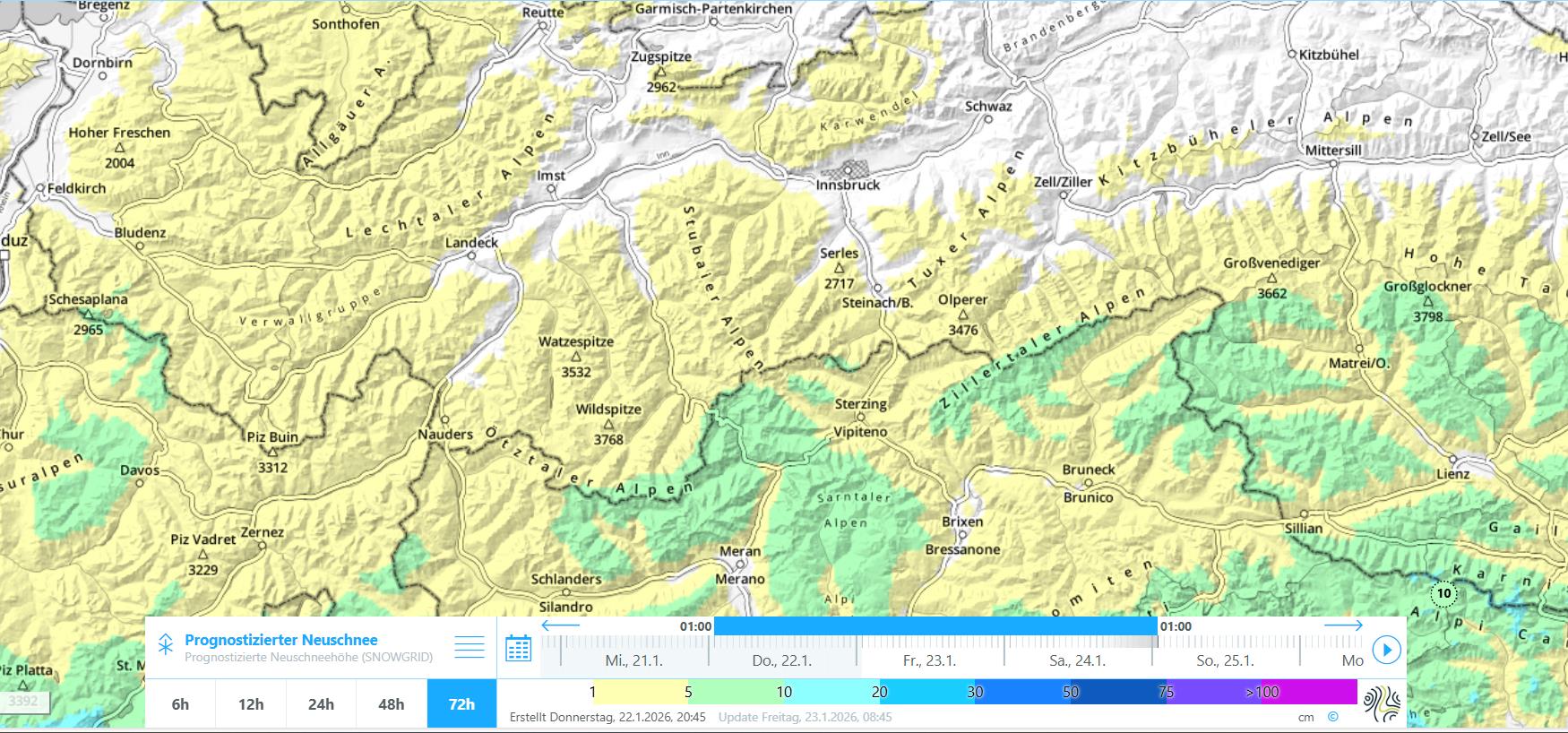
72-hr forecast of fresh snowfall: merely a dusting of snow in most parts of Tirol

According to Geosphere Austria (GSA), “high pressure influence is weakening further, Tirol is gradually facing the frontal side of an Atlantic low. Thus, the high-altitude air current will shift by Friday, 23.01.2026, to southwesterly, it will intensify and bring some moist air masses to high altitudes. In North Tirol, moderate-intensity foehn winds will arise, in southern regions the moist air will be locked in the barrier cloud regions of the mountains. On Saturday, a weak cold front will pass through, followed by a brief improvement on Sunday in North Tirol only, in East Tirol it will be wetter on Sunday.”

In high alpine regions, the general weak persistent layer problem and also freshly generated small snowdrift accumulations require continued caution. Wherever snowdrifts get deposited atop surface hoar, higher proneness to triggering can be expected. With ample experience of backcountry terrain, these situations can easily be recognized.