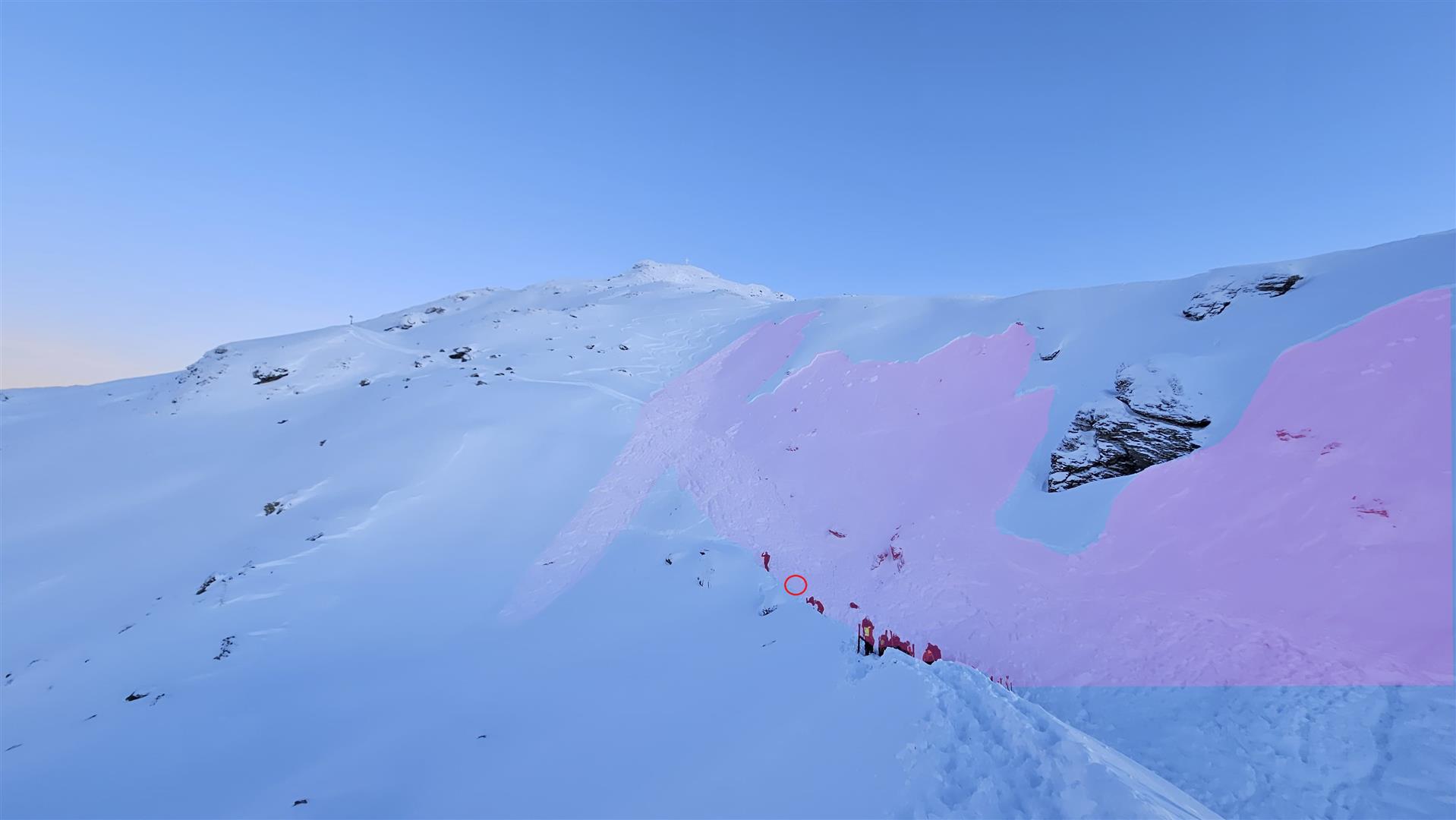
Our forecasts of an extremely trigger-sensitive snowpack on Sunday, 11.01, have been fully confirmed. Among numerous avalanche releases with personal involvement, 1 person was killed and 2 were injured.
The regionally delicate avalanche situation and often highly prone-to-triggering snowpack will continue
Avalanche releases: an overview
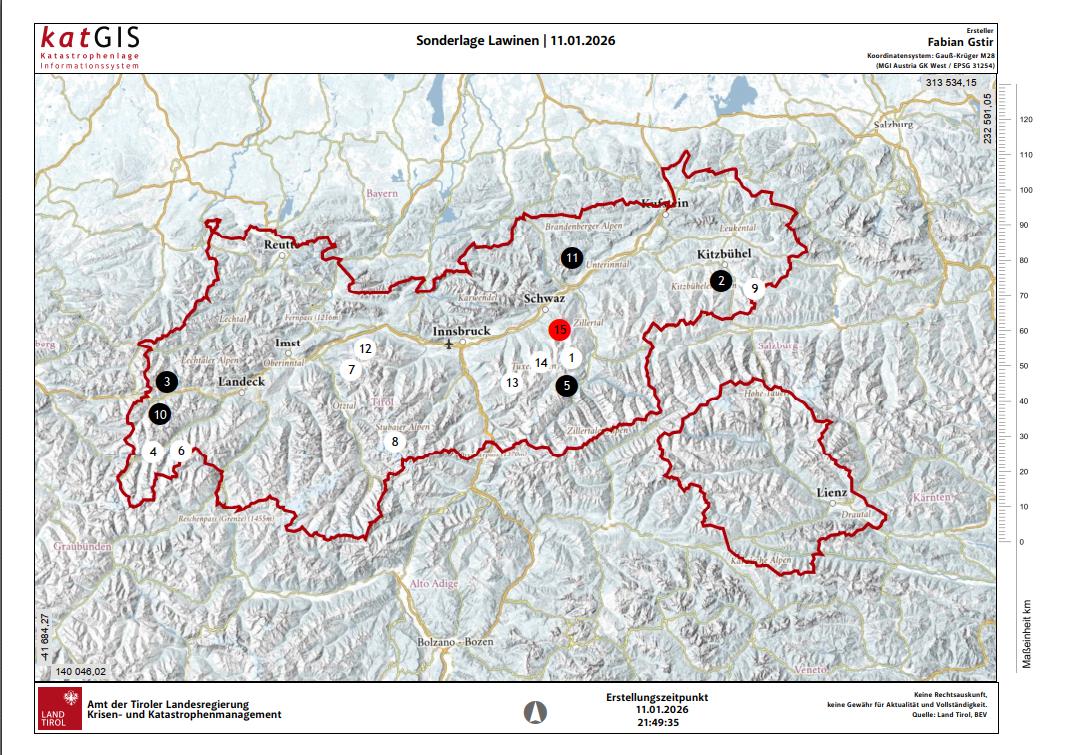
Not an ordinary day: at Headquarters Tirol, 15 avalanche releases involving persons (actual number of avalanches involving persons was certainly far higher.) A release below the Wetterkreuz near the Gilfert in the region “Tux Alps East” proved fatal. In two avalanches in the Arlberg region (Galzig and Kapall) one person was injured in each release.
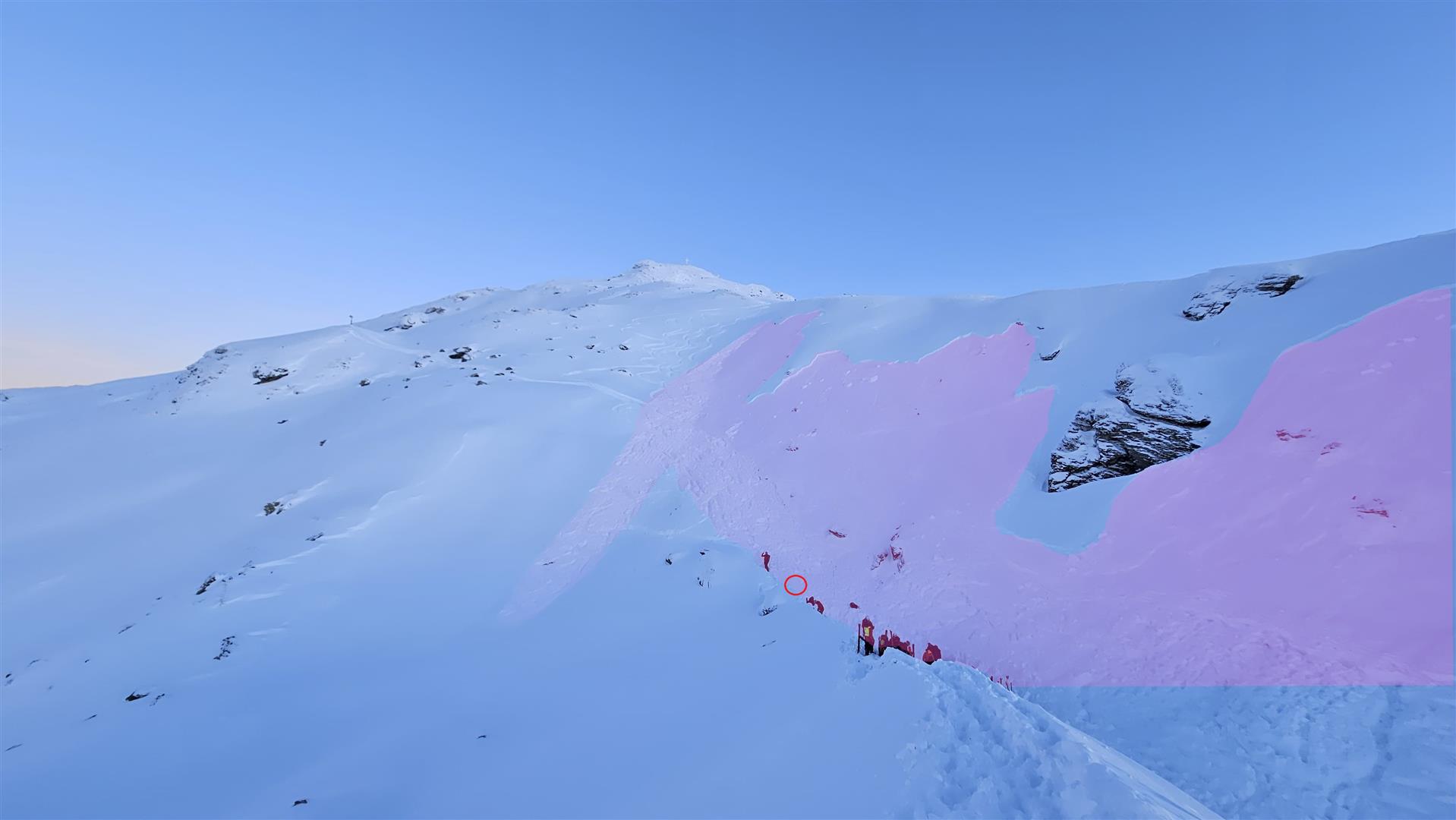
Fatal avalanche incident Wetterkreuz – Gilfert
Further details of the fatal avalanche incident will be published in an analysis in its own blog. The analysis will be conducted over the coming days together with the Alpine Police, dependent on weather conditions.
It is already clear that it was a slab avalanche which released below the Wetterkreuz in the vicinity of the Gilfert in the region “Tux Alps East”. One person was buried in snow masses in a narrow trench (landscape drop) and due to a lack of a beamer was not able to be located before the organized search team made the discovery.
A selection of other avalanches
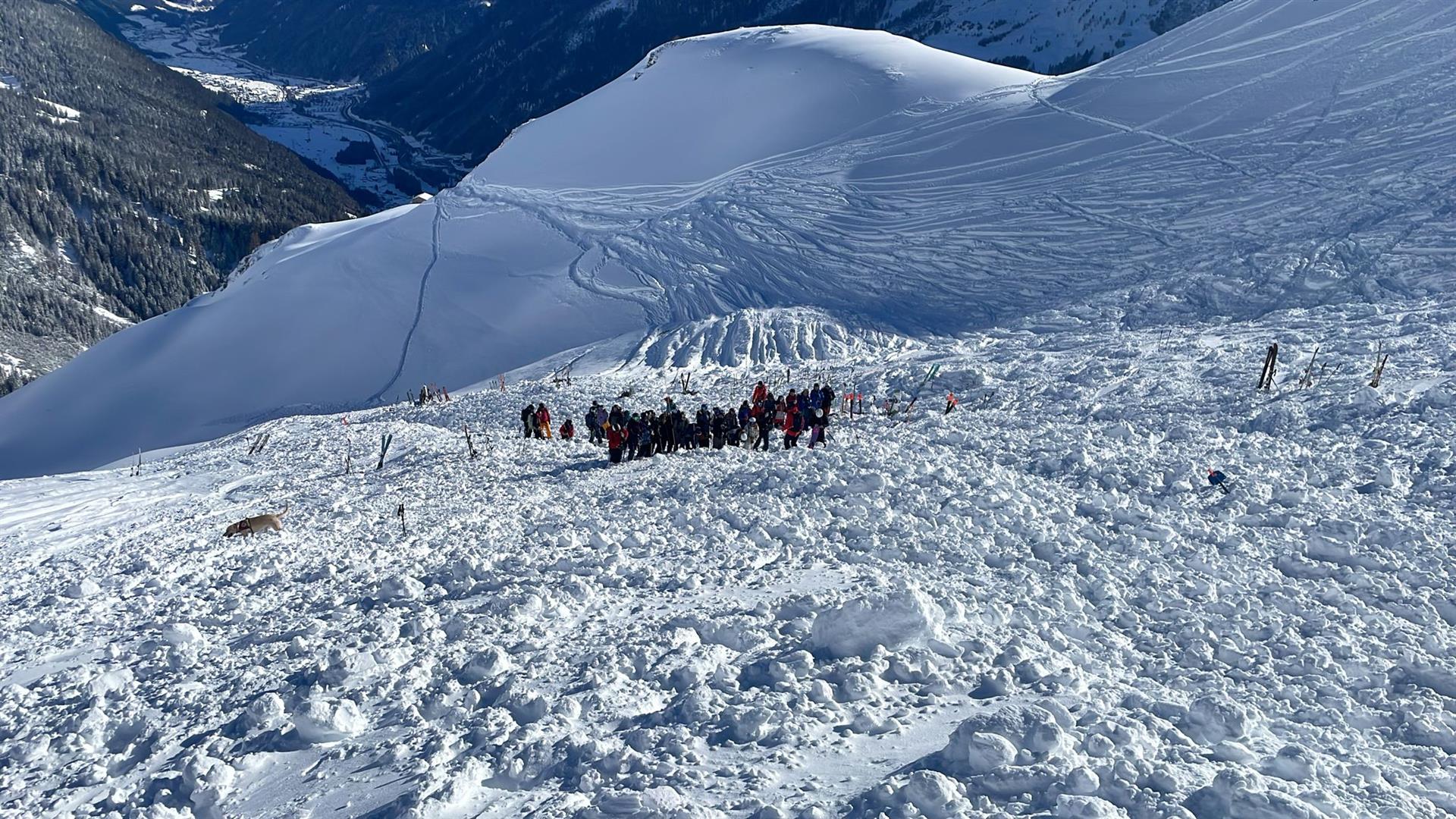
In the Kapall area of the Arlberg region a person was totally buried in snow masses and another person was superficially buried. The person who was totally buried was slightly injured and was flown to the hospital in Zams, the second person escaped without injuries. Since it could not be ruled out that a further person was caught in the avalanche, a large-scale search was organized, later brought to a halt without results.

Below the Galzig, a slab avalanche triggered in the free-riding zone. One person was caught in its plummet path, buried in snow masses, and was flown to Zams Hospital with injuries.
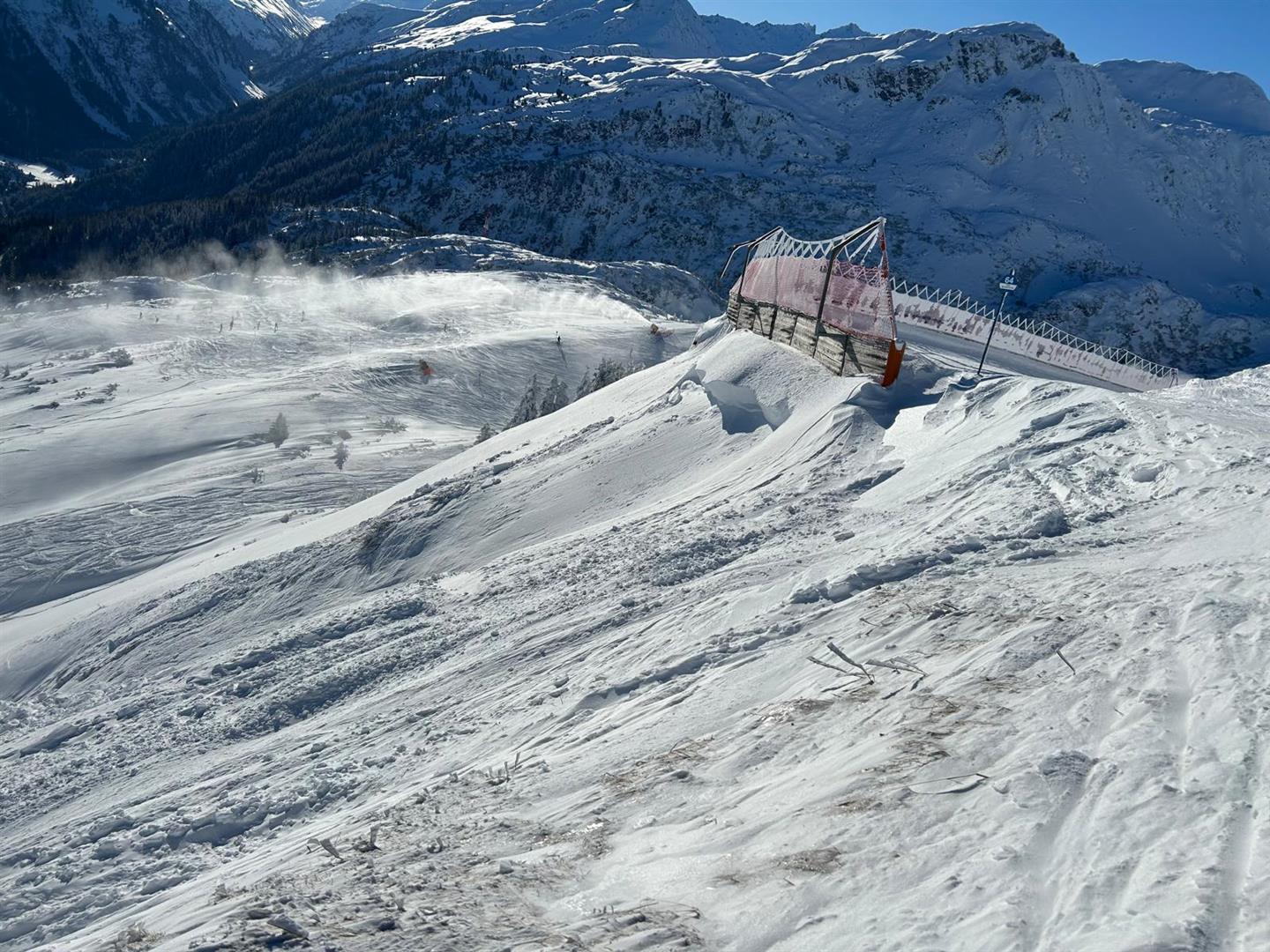
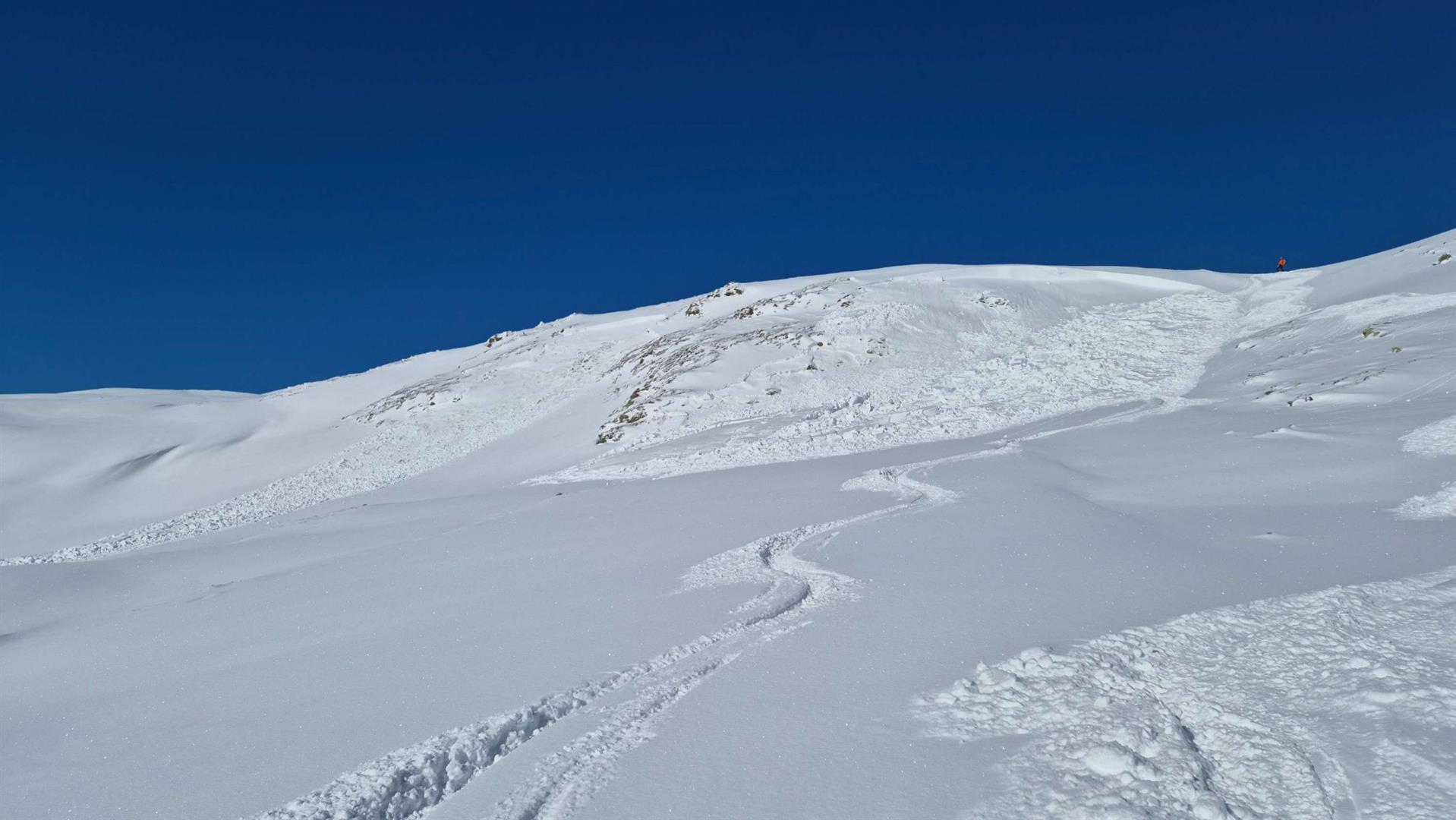
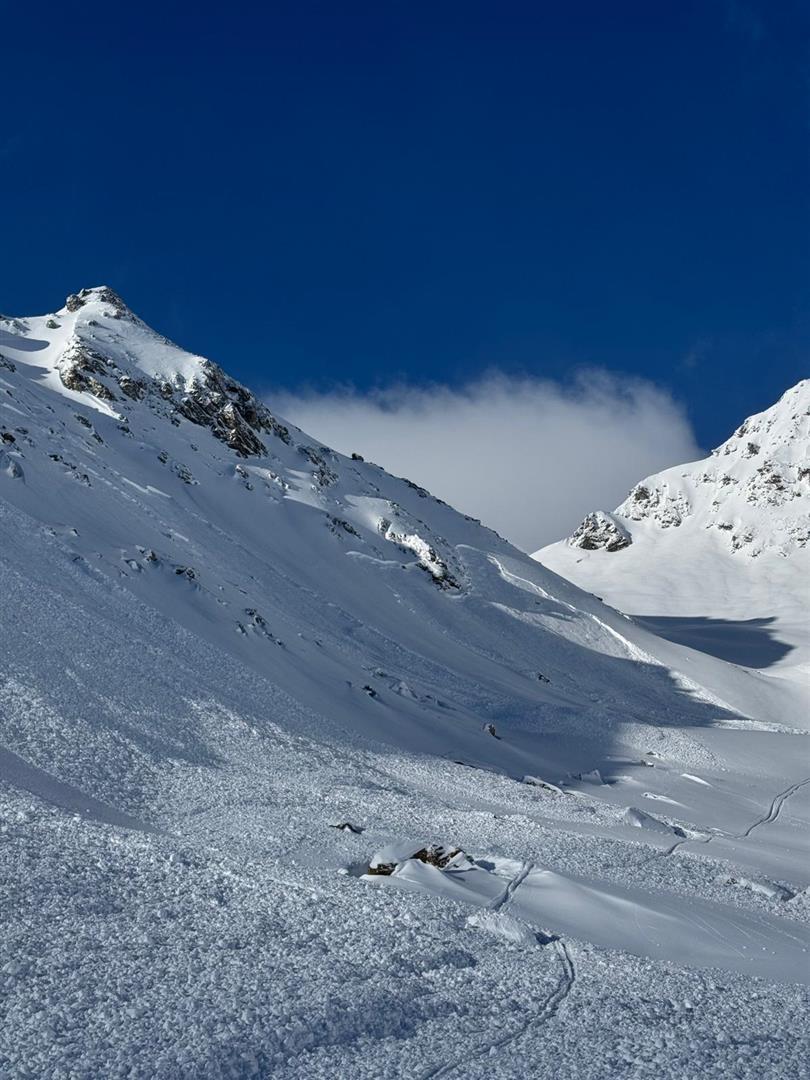
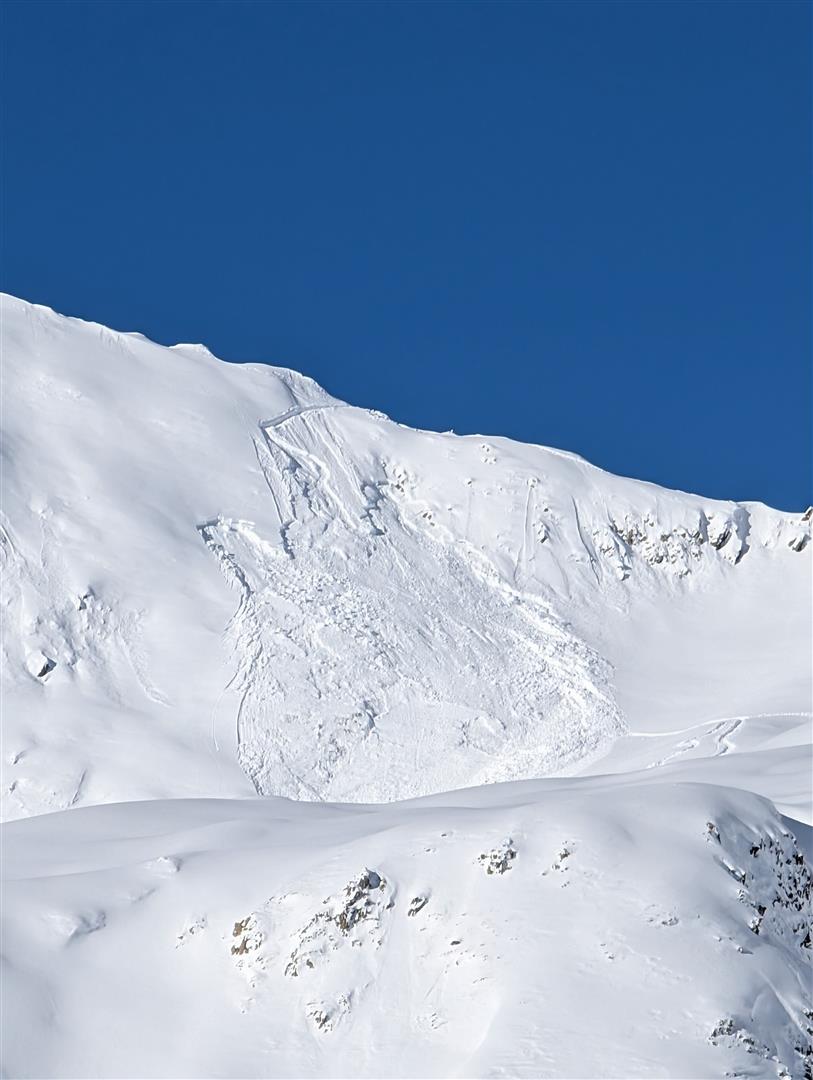
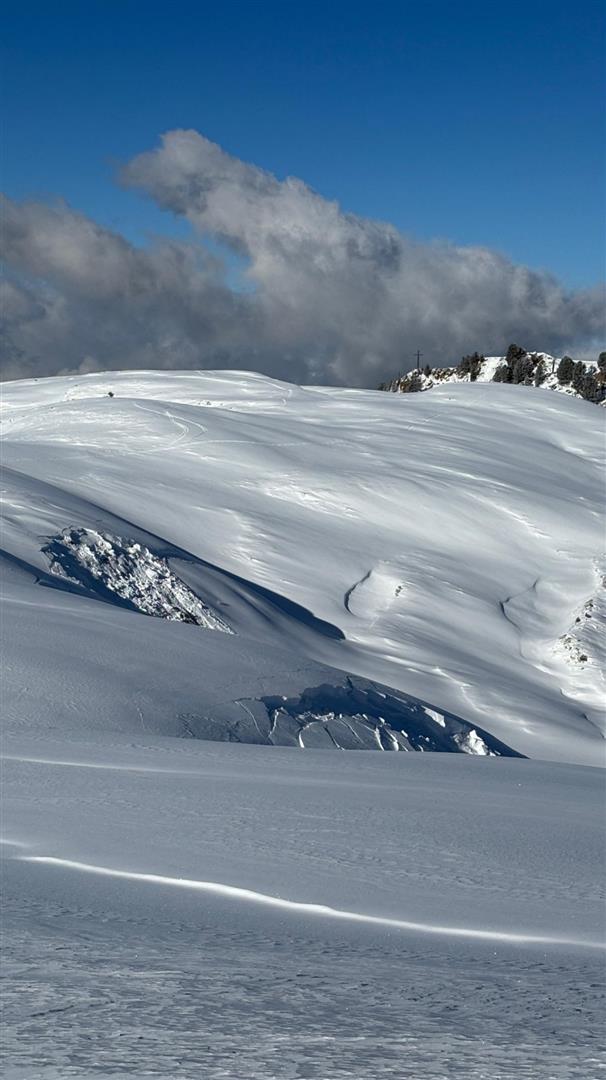
In western regions where precipitation was heaviest, there were also successful artificial triggerings.
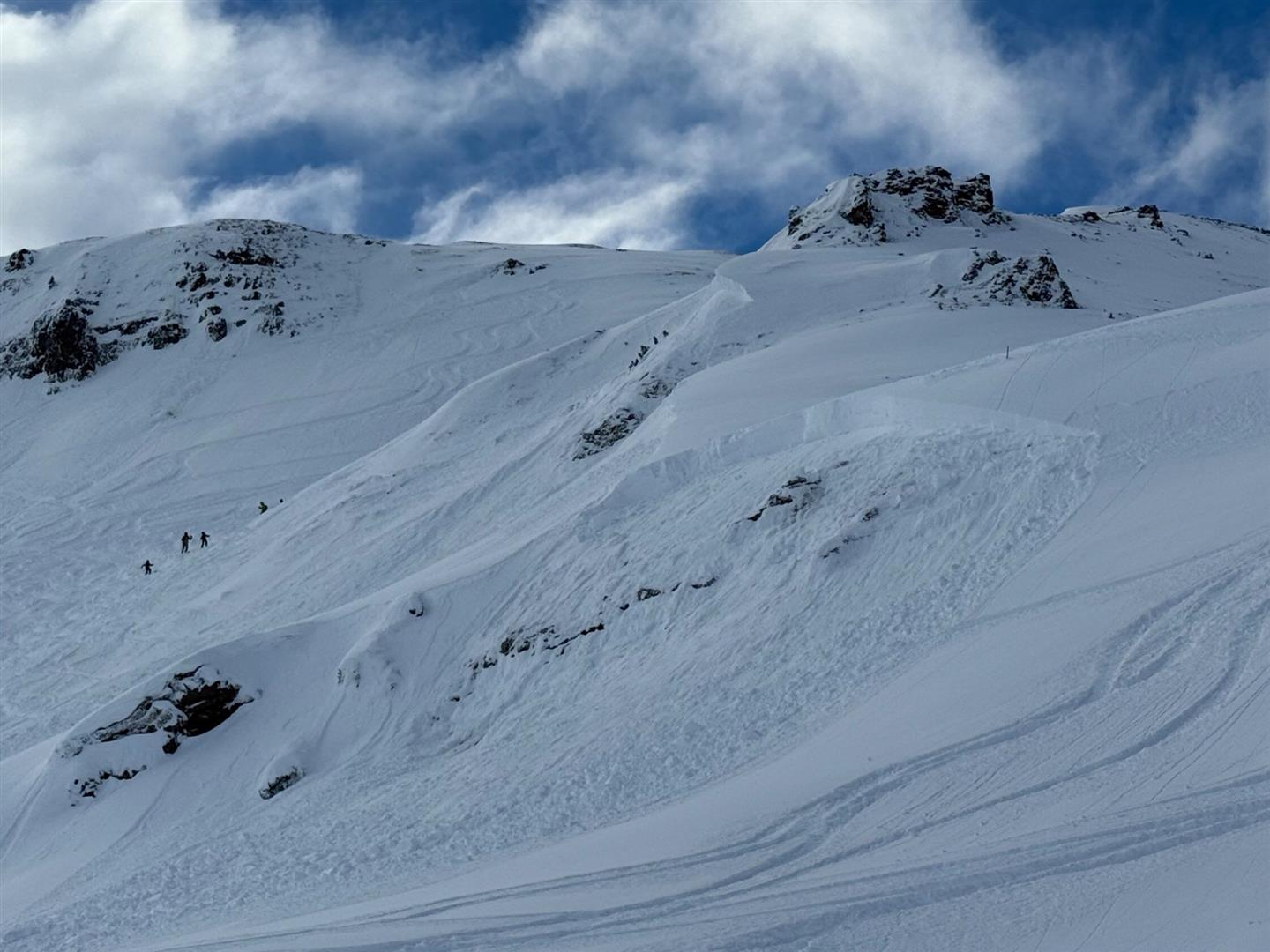
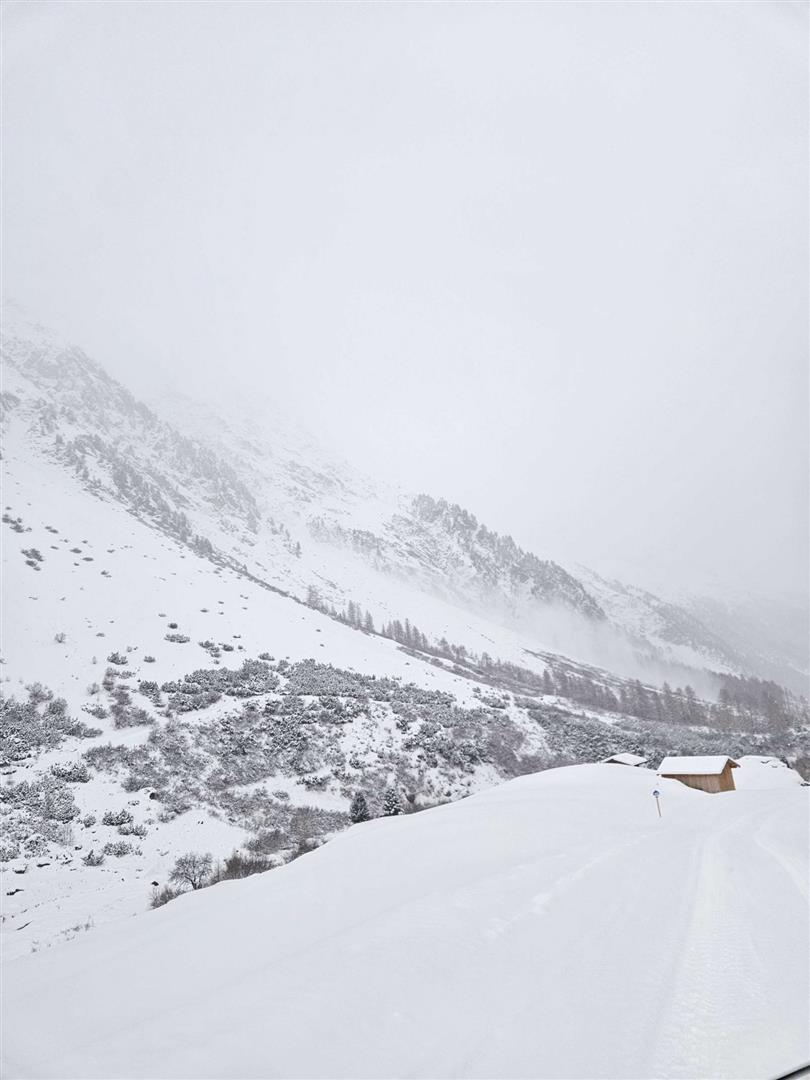
Fractures and settling noises
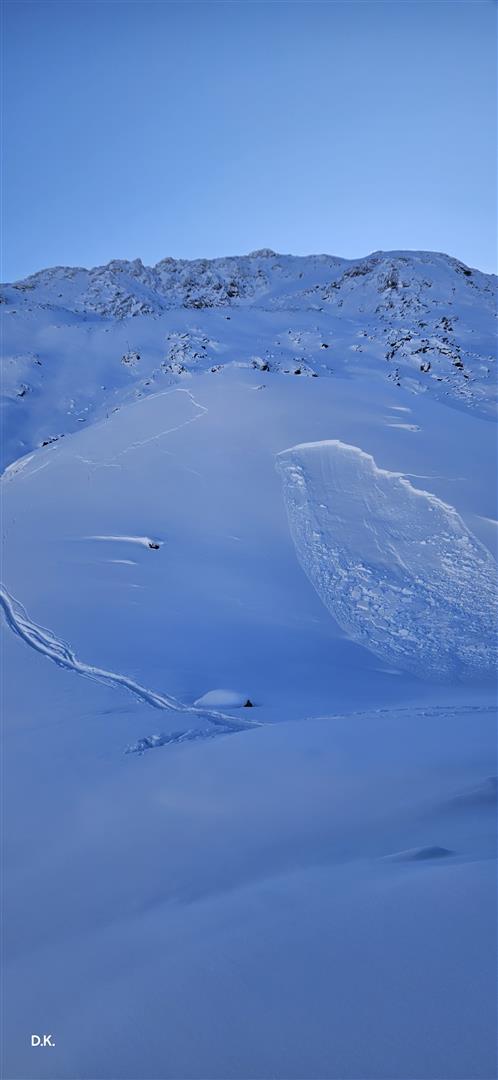
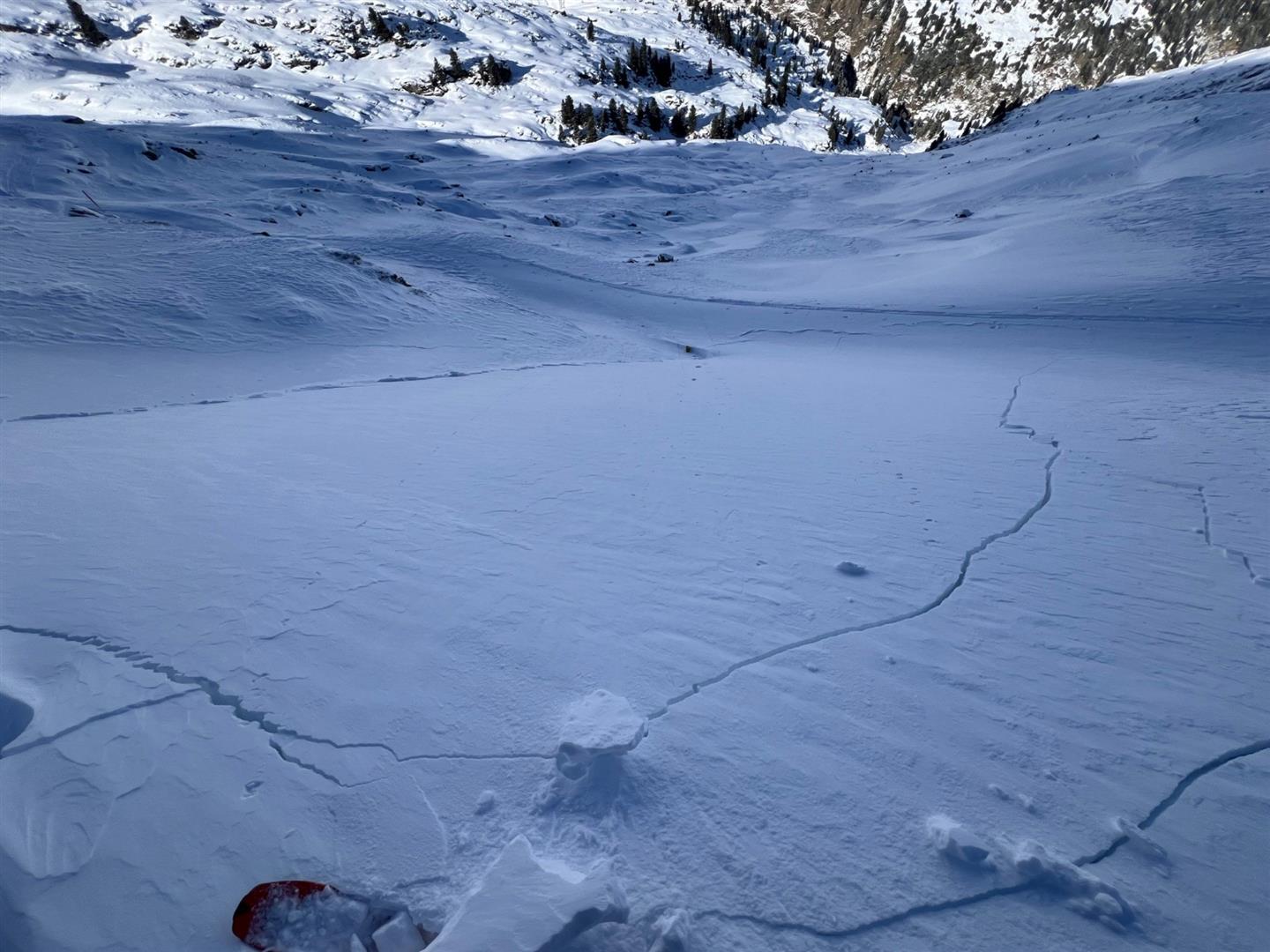
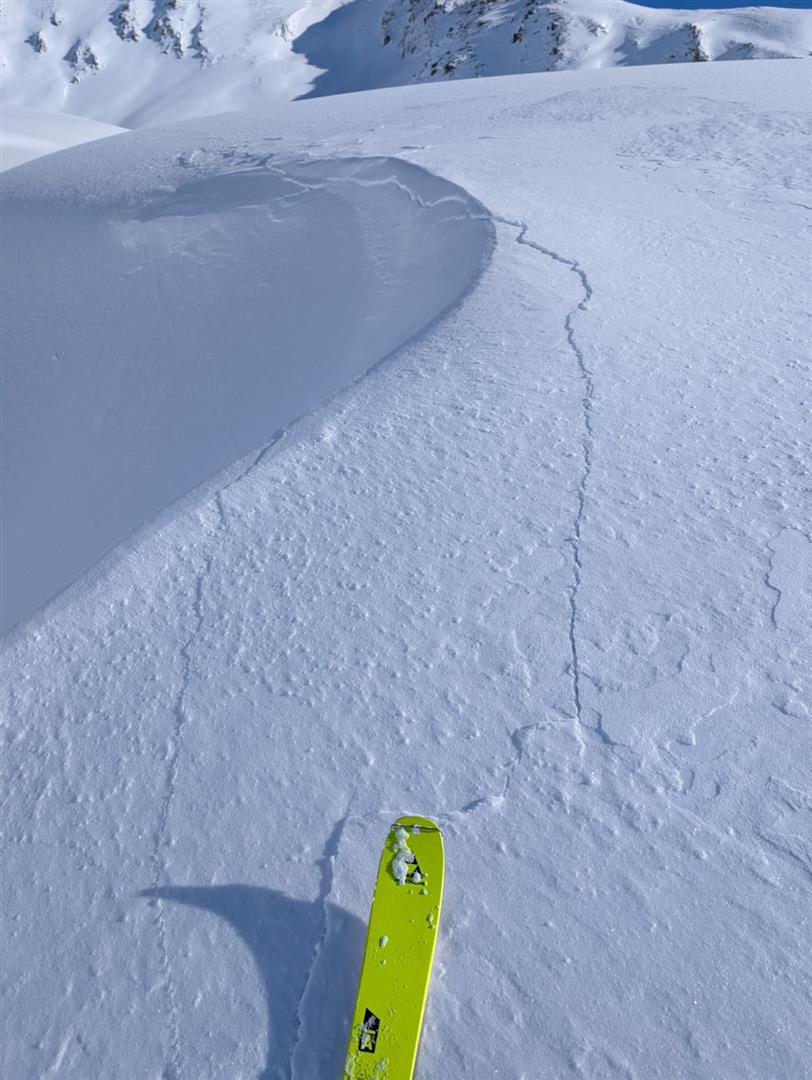
There were also numerous reports of fractures and often highly marked settling noises. These are extremely serious alarm signals. In most cases, avalanches did not release for the simple reason that the terrain was too flat for a slab avalanche to trigger. Some fractures and settling noises were doubtless caused by remote triggering.
Weather analysis
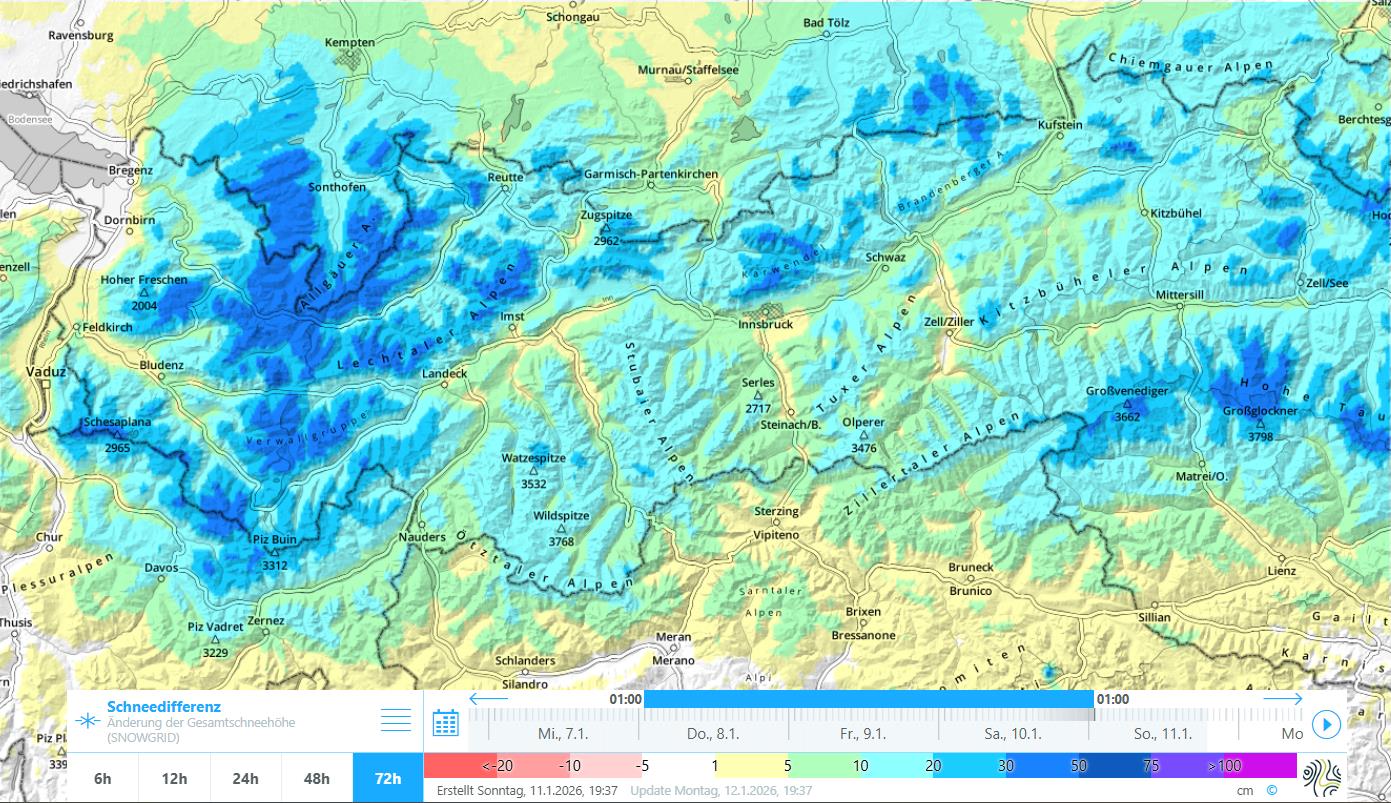
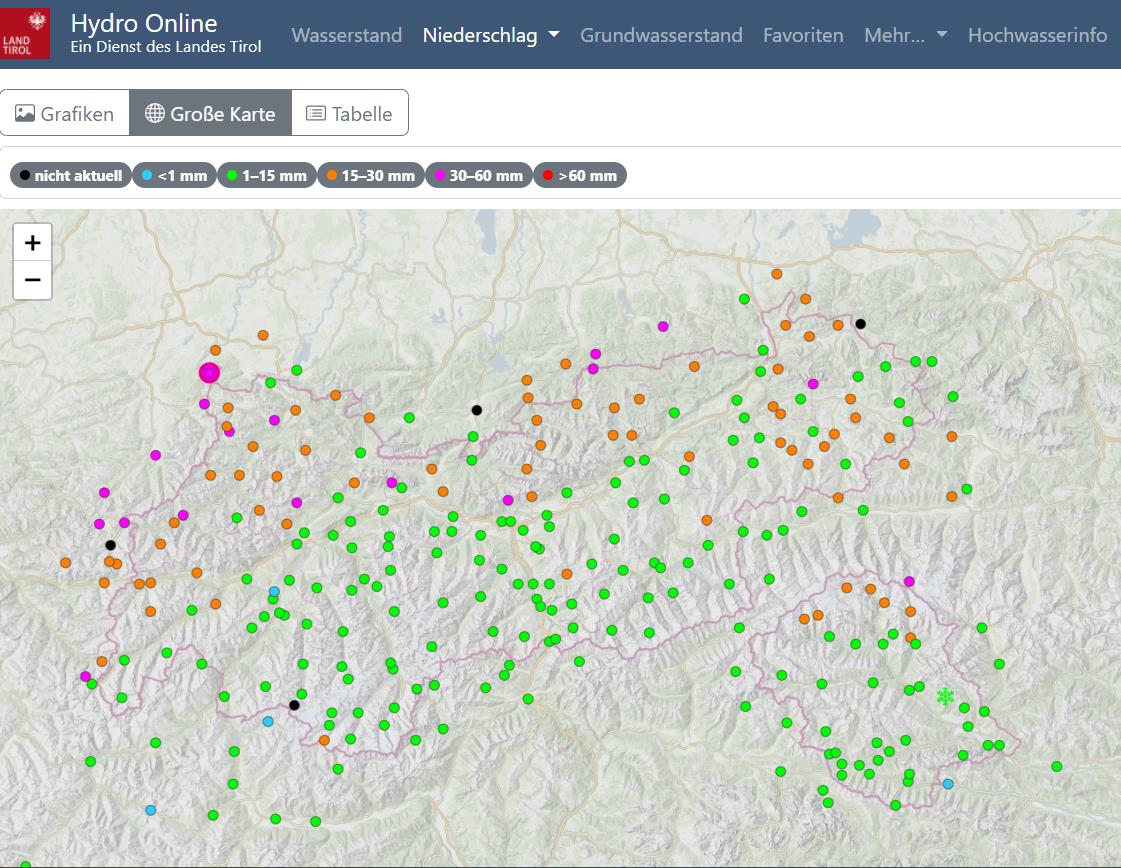
Let’s cast a glance at a few different maps and weather station graphs. That way, a coherent picture results which fits into the forecasts.
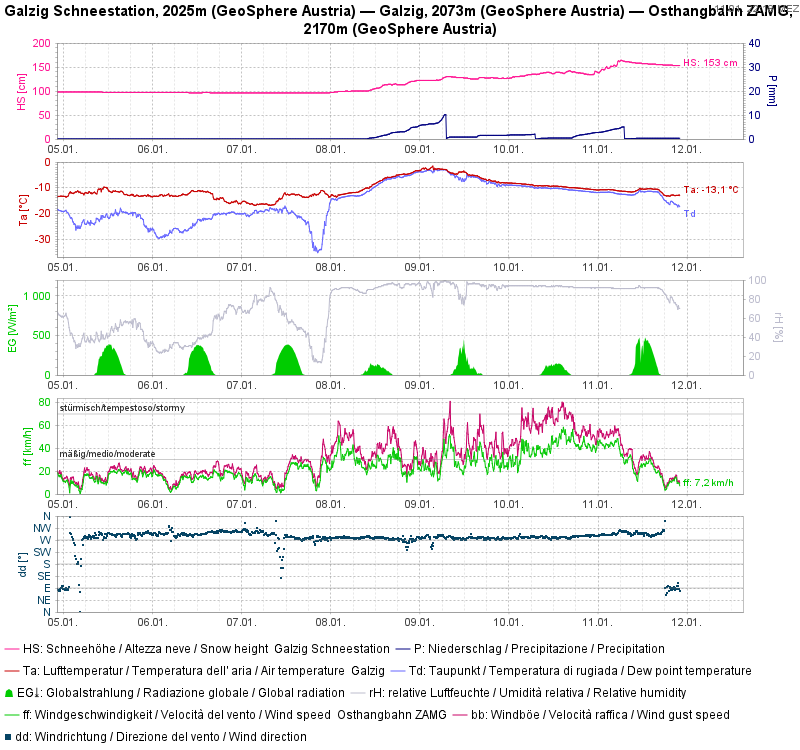

What’s coming?
On Monday, 12.01, according to Geosphere Austria, a warm front will bring us a measurable rise in mountain temperatures as a result of intensifying westerly winds, particularly on the northern flank of the Alps. In the morning hours, precipitation will set in, the snowfall level ascending to about 1500m. Moderate to brisk westerly winds. On Tuesday, further weather improvement.
For the snowpack this weather means: initially no improvement. Through the rising temperatures during the course of the day and the ascending snowfall level, there is a tendency that an even more marked slab will be able to form. The distinctly weak layers inside the snowpack will persist, in other words.
The fact remains that the highly prone-to-triggering snowpack will persist to start with. On south-facing slopes where the ground was bare of snow prior to the snowfall, the situation will be far more favorable, as long as the snow cover is deep enough so that “sharks” present no danger.
An additional important fact is that we continue to have below-average snow cover in far-reaching parts of Tirol.